
Albumin Market Outlook: Size, Share, Trends, Growth Analysis, Competitive Landscape & Forecast, 2026-2033

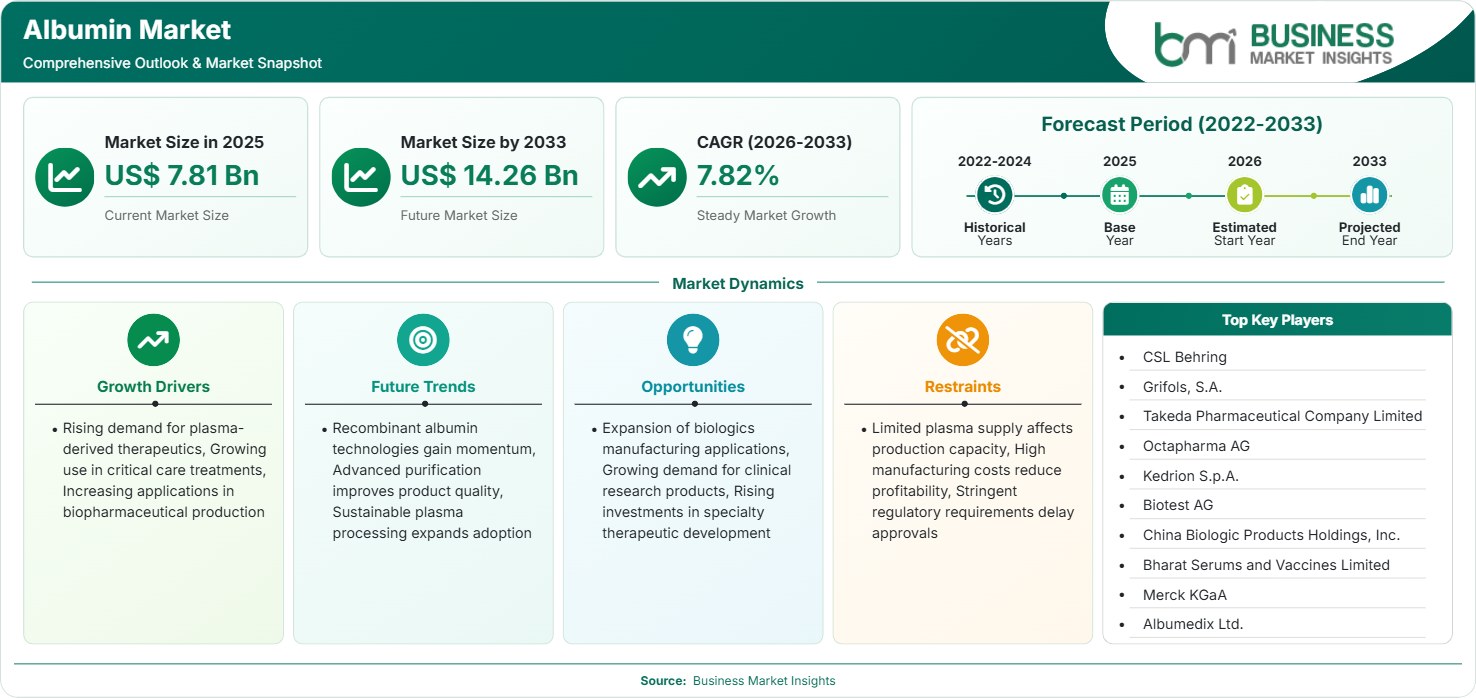
The Albumin Market size was valued at US$ 7.81 billion in 2025 and is projected to reach US$ 14.26 billion by 2033, growing at a CAGR of 7.82% during 2026–2033. Rising demand for plasma-derived therapeutics, expanding critical care applications, and increasing use of albumin in biopharmaceutical manufacturing continue to support sustained market development.

Report Coverage
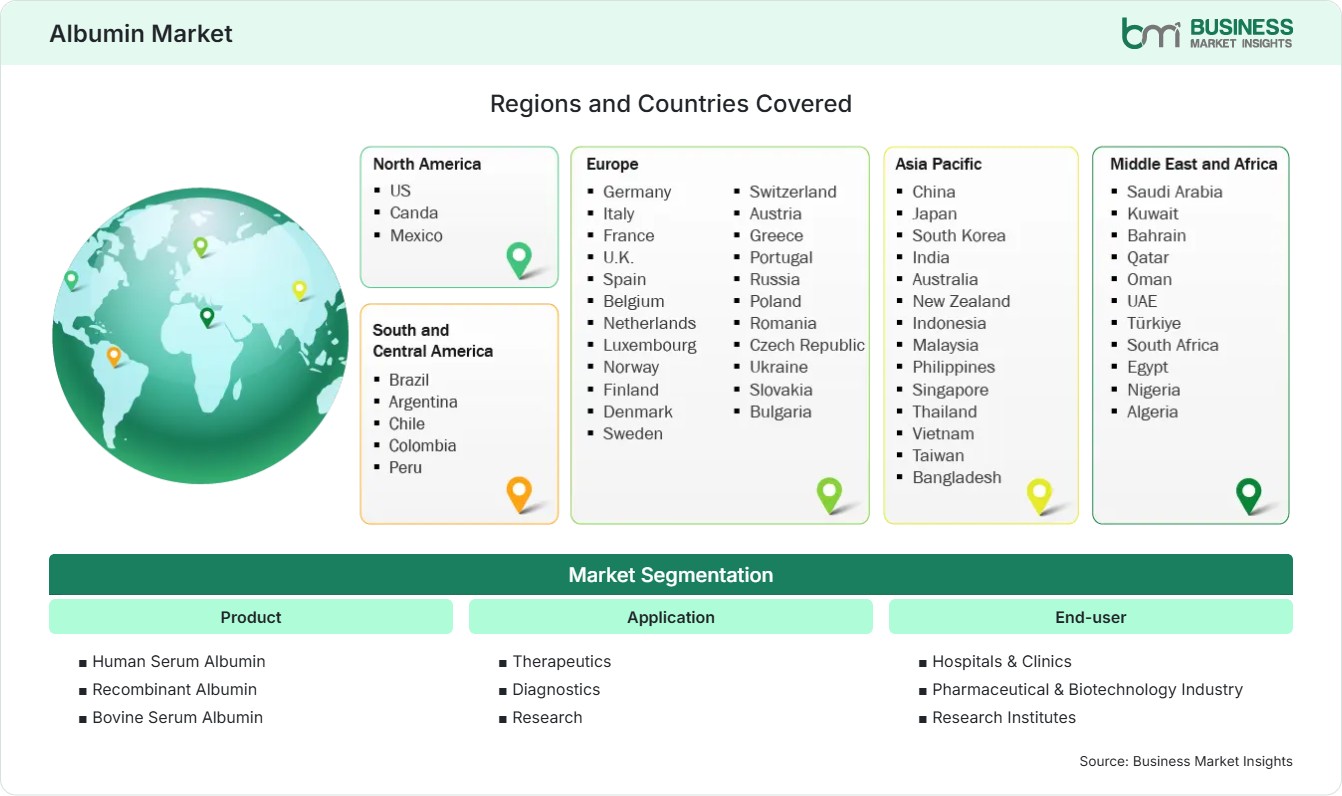
  • Product: Human Serum Albumin, Recombinant Albumin, Bovine Serum Albumin
  • Application: Therapeutics, Diagnostics, Research
  • End-user: Hospitals & Clinics, Pharmaceutical & Biotechnology Industry, Research Institutes
US$ 7.81 Bn Market size in 2025
US$ 14.26 Bn Market Size by 2033
7.82% CAGR, 2026 - 2033
2026-2033 Forecast Period

AI Overview

Albumin Market Summary

  • North America Region: North America accounts for 38%–41% market share in 2025 and is projected to expand at a CAGR of 7.4%–7.9% during 2026–2033. Advanced plasma collection infrastructure, strong biologics manufacturing, and increasing demand for critical care therapies continue driving regional expansion. The U.S. remains the largest contributor with a CAGR of 7.5%–8.0%, supported by a mature healthcare system and sustained investment in plasma-derived medicines.
  • Fastest Growing Region: Asia Pacific represents 24%–27% market share in 2025 and is expected to register a CAGR of 8.6%–9.2%, supported by expanding healthcare infrastructure, increasing biologics production, higher healthcare expenditure, and growing clinical research activities.
  • Leading Segment: Human Serum Albumin accounts for 69%–72% market share in 2025 and is anticipated to grow at a CAGR of 7.8%–8.3%, driven by extensive therapeutic use in critical care, liver diseases, burns, and surgical procedures.
  • High Growth Segment: Therapeutics captures 58%–61% market share in 2025 and is projected to record a CAGR of 8.0%–8.5%, supported by increasing use in intensive care, trauma management, and plasma-derived treatment protocols.
  • Key Market Opportunity: Rising biologics manufacturing, recombinant protein research, advanced cell culture technologies, and expanding specialty therapeutics continue creating long-term opportunities for albumin manufacturers worldwide.
  • Major Market Players: CSL Behring, Grifols, S.A., Takeda Pharmaceutical Company Limited, Octapharma AG, Kedrion S.p.A., Biotest AG, China Biologic Products Holdings, Inc., Bharat Serums and Vaccines Limited, Merck KGaA, and Albumedix Ltd.
Strategic Insights

Albumin Market: Strategic Insights

Albumin Market Strategic Framework
FREE PDF
Request your free sample
Request free sample
Stakeholder View

Key Takeaways

  • Expanding plasma collection networks remain essential for maintaining stable albumin supply and supporting increasing therapeutic demand across hospitals and specialty healthcare centers.
  • Therapeutic applications continue generating the largest revenue contribution as healthcare providers expand the use of albumin in intensive care, trauma management, and chronic liver disease treatment.
  • Recombinant albumin technologies are gaining industry attention by providing scalable manufacturing alternatives for research, cell culture, and advanced biologic production.
  • Asia Pacific presents the strongest long-term investment opportunity due to expanding healthcare infrastructure, rising biologics manufacturing capacity, and increasing pharmaceutical research expenditure.
  • Strategic partnerships between plasma fractionation companies and biotechnology firms are accelerating innovation while strengthening global manufacturing and distribution capabilities.
  • Continuous investment in quality assurance, plasma safety, and advanced purification technologies remains critical for maintaining regulatory compliance and competitive positioning.
Geographic Outlook

Albumin Market Regional Highlights

North America Albumin Market

North America accounts for 38%–41% Albumin Market share in 2025 and is expected to grow at a CAGR of 7.4%–7.9% during 2026–2033. The region benefits from established plasma collection infrastructure, advanced healthcare systems, and widespread adoption of plasma-derived therapies. Increasing biologics manufacturing and strong investments in pharmaceutical research continue supporting regional demand for therapeutic and research-grade albumin products.

  • Expanding plasma donation programs continue strengthening raw material availability for plasma fractionation facilities across the region.
  • Pharmaceutical manufacturers increasingly utilize high-purity albumin in biologics manufacturing and advanced drug development.
  • Strong regulatory oversight supports production quality while encouraging continuous investment in manufacturing modernization.
  • Rising demand for intensive care therapies continues supporting hospital procurement of plasma-derived albumin products.

US Albumin Market

The United States contributes 82%–85% of North American revenue and is projected to register a CAGR of 7.5%–8.0% during 2026–2033. Advanced biotechnology capabilities, high plasma donation rates, and increasing biologics production continue strengthening domestic demand across therapeutic and research applications.

  • Large plasma collection networks provide a stable foundation for commercial albumin production.
  • Healthcare providers continue expanding albumin use in critical care and complex surgical procedures.
  • Biopharmaceutical companies invest in recombinant protein manufacturing technologies.
  • Clinical research activities increase demand for high-purity laboratory-grade albumin products.

Europe Albumin Market

Europe represents 28%–31% market share in 2025 and is expected to expand at a CAGR of 7.2%–7.7% during the forecast period. Established pharmaceutical manufacturing, advanced healthcare infrastructure, and growing demand for plasma-derived medicines continue supporting market expansion. Germany leads regional demand, while Spain demonstrates the fastest growth through expanding plasma collection and fractionation capabilities.

  • Growing biologics production increases consumption of pharmaceutical-grade albumin.
  • Plasma fractionation investments continue improving regional manufacturing capacity.
  • Research institutions expand albumin utilization across biotechnology and life sciences.
  • Healthcare systems prioritize plasma-derived therapies for complex medical conditions.

Asia Pacific Albumin Market

Asia Pacific accounts for 24%–27% market share in 2025 and is projected to record the fastest 8.6%–9.2% CAGR through 2026–2033. Rising healthcare expenditure, expanding pharmaceutical manufacturing, increasing chronic disease prevalence, and stronger government support for biotechnology continue driving regional demand for albumin products.

  • China continues expanding plasma fractionation and biologics manufacturing capacity.
  • India strengthens domestic plasma processing through increasing pharmaceutical investment.
  • Research organizations increase adoption of recombinant albumin for life science applications.
  • Growing healthcare access supports wider use of plasma-derived therapeutic products.

Rest of World Albumin Market

The Rest of World region accounts for 6%–8% market share in 2025 and is expected to expand at a CAGR of 7.6%–8.1% during 2026–2033. Improving healthcare infrastructure, expanding access to specialty medicines, and increasing investment in plasma processing continue supporting market development across Latin America, the Middle East, and Africa.

  • Brazil continues strengthening plasma processing and specialty pharmaceutical production.
  • GCC countries increase healthcare investment and demand for advanced biologic therapies.
  • Regional hospitals expand access to critical care treatments requiring albumin administration.
  • International partnerships improve technology transfer and plasma processing capabilities across emerging markets.
Global Market Geography
FREE PDF
Request your free sample
Request free sample
Segment Analysis

Albumin Market Segmentation

Product

The product segment forms the backbone of commercial albumin production as manufacturers continue expanding plasma-derived and recombinant technologies to meet growing clinical and research requirements. It accounted for 69%–72% market share in 2025 and is projected to register a CAGR of 7.8%–8.3% during 2026–2033. Increasing therapeutic demand, technological advancements, and broader biologics production continue to strengthen the Albumin Market scope, encouraging investment in high-purity and scalable albumin manufacturing.

  • Human Serum Albumin: Remains the dominant product owing to extensive clinical use in trauma care, liver disease management, hypovolemia treatment, burns, and critical care procedures requiring plasma volume expansion.
  • Recombinant Albumin: Adoption continues increasing across biologics manufacturing, vaccine production, regenerative medicine, and cell culture applications because of consistent quality, animal-free production, and reduced contamination risks.
  • Bovine Serum Albumin: Widely utilized in diagnostic kits, laboratory research, protein stabilization, immunoassays, and biotechnology applications where reliable biochemical performance and cost efficiency remain essential.

Application

Application diversity continues expanding as albumin products support therapeutic care, pharmaceutical development, and advanced biomedical research. The segment represented 58%–61% market share in 2025 and is expected to grow at a CAGR of 8.0%–8.5% through 2026–2033. Rising healthcare expenditure and continuous innovation in biologic medicines are supporting broader adoption across multiple clinical and scientific disciplines.

  • Therapeutics: Represents the largest application, supporting treatment of liver disorders, burns, shock, sepsis, trauma, hypoalbuminemia, and other critical care conditions requiring plasma volume restoration.
  • Diagnostics: Utilized in clinical laboratory testing, reagent preparation, diagnostic assay development, and quality control processes where protein stability and analytical accuracy are important.
  • Research: Increasingly adopted in cell culture media, vaccine development, drug discovery, molecular biology, and life science research because of its excellent stabilizing and binding properties.

End-user

Demand across end-user groups continues expanding as healthcare providers, pharmaceutical manufacturers, and research organizations increase albumin utilization for therapeutic and scientific purposes. This segment accounted for 47%–50% market share in 2025 and is forecast to expand at a CAGR of 7.9%–8.4% during 2026–2033. Current Albumin Market trends indicate sustained investment in advanced healthcare infrastructure and biopharmaceutical research across both developed and emerging economies.

  • Hospitals & Clinics: The largest end-user category, driven by increasing surgical procedures, critical care admissions, trauma treatment, and management of chronic liver diseases requiring albumin therapy.
  • Pharmaceutical & Biotechnology Industry: Continues expanding albumin utilization in biologics manufacturing, vaccine production, recombinant protein development, formulation stabilization, and advanced pharmaceutical research.
  • Research Institutes: Growing investment in biomedical research, molecular diagnostics, regenerative medicine, and academic life science programs continues supporting demand for high-purity laboratory-grade albumin products.
Market Forces

Albumin Market Dynamics

Key Market Drivers

Rising demand for plasma-derived therapeutics

The rising instances of chronic liver diseases, immune deficiency diseases, severe burns, trauma cases, and critical conditions are expected to keep up the demand for therapeutic products derived from plasma across the globe. Albumin is a vital plasma protein, which is used to replenish the volume of the blood. As per the World Health Organization, initiatives related to blood and plasma donation are being expanded across the world to ensure availability of plasma-derived therapies. Growing therapeutic utilization across hospitals and specialty care centers continues supporting Albumin Market growth, encouraging manufacturers to strengthen plasma collection networks and invest in advanced fractionation technologies.

Growing use in critical care treatments

Critical care units increasingly depend on albumin for managing hypovolemia, septic shock, liver cirrhosis, major surgeries, and intensive care procedures. Healthcare providers value albumin because of its ability to maintain oncotic pressure and improve circulatory stability in complex clinical conditions. Rising hospital admissions associated with chronic diseases and aging populations are contributing to sustained product demand. Clinical guideline updates supporting evidence-based albumin therapy continue encouraging healthcare institutions to expand procurement of plasma-derived products for emergency and intensive care settings.

Increasing applications in biopharmaceutical production

Biopharmaceutical companies have found increasing applications of albumin in stabilizing vaccines and other biologics such as recombinant proteins and monoclonal antibodies. The growing research on cell and gene therapy is one reason for increasing demand for recombinant albumin. Pharmaceutical companies are still making efforts to innovate new manufacturing technologies. These developments are reshaping Albumin Market trends, creating new commercial opportunities beyond conventional plasma-derived therapeutic applications while supporting rapid growth in biologics manufacturing worldwide.

Key Market Opportunities

Expansion of biologics manufacturing applications

Rapid growth in the manufacturing of biologics presents new business prospects for albumin producers all around the world. Both recombinant and highly purified albumin have found their application in the manufacturing of vaccines, monoclonal antibodies, cell therapy, and regenerative medicines, as albumins stabilize proteins and enhance the efficacy of cell cultures. Pharmaceutical companies keep building big biologics plants for producing more advanced drugs. Albumin Market Forecasts indicate that continued expansion of biologics manufacturing capacity, particularly across Asia Pacific and North America, will create sustained demand for specialized albumin products with higher purity, consistency, and regulatory compliance.

Growing demand for clinical research products

Clinical research has been steadily rising in all fields such as oncology, immunology, infectious diseases, and rare diseases, thus resulting in an increase in the need for laboratory grade albumin products. High-purity albumin is needed by research institutions and companies to use in the development of assays, drug formulation, and cell culture. Advances in precision medicine and biologics have made this product even more attractive in terms of adoption. Companies that are bringing out animal-free recombinant albumin products have an advantage in this scenario.

Rising investments in specialty therapeutic development

Healthcare companies are increasing investments in specialty therapeutics targeting chronic diseases, genetic disorders, and complex medical conditions requiring advanced biologic formulations. Albumin is becoming increasingly popular as a drug delivery system due to its biochemical attributes and proven track record. The synergy of pharmaceutical firms and biotechnology companies is speeding up the process of creating new treatments using albumin as their foundation. This will result in future business prospects for those able to provide the appropriate products.

Market Restraints and Challenges

Limited plasma supply affects production capacity

Plasma-derived albumin manufacturing depends heavily on consistent plasma donations, making supply availability a significant industry challenge. Factor: Fluctuations in plasma collection volumes, donor participation, and collection infrastructure can restrict raw material availability for fractionation facilities. Impact: Limited amount of plasma restricts production capacity, delays product delivery time, and leads to increased costs of sourcing material, making it hard for producers to cope with increasing demand for therapeutic products.

High manufacturing costs reduce profitability

Albumin production requires sophisticated fractionation technologies, strict quality control systems, advanced purification processes, and compliance with stringent regulatory standards. Factor: High operational expenses, specialized production facilities, and continuous regulatory validation substantially increase manufacturing costs. Impact: Increased cost of production lowers profit margin especially for small producers; additionally, there is no flexibility with regards to pricing and increased barriers to entry. Firms still invest in process engineering and recombinant technology for enhanced efficiency and reduced cost of production in the long-run.

Company Analysis

Competitive Landscape

The competitive environment is characterized by investments in plasma collection networks, biologics manufacturing, recombinant protein technologies, and strategic collaborations. Albumin Market analysis indicates that established plasma fractionators and biotechnology companies continue expanding manufacturing capacity while improving purification technologies and regulatory compliance to address rising global demand.

Company Name

Overview

Products and Services Relevant to this Market

CSL Behring

Global biopharmaceutical company specializing in plasma-derived therapies and recombinant medicines for rare and serious diseases.

Human serum albumin, immunoglobulins, coagulation factors, plasma-derived therapeutics, and specialty biologics.

Grifols, S.A.

Leading plasma therapeutics manufacturer with integrated plasma collection, fractionation, and biotechnology operations worldwide.

Human albumin, immunoglobulins, plasma proteins, diagnostic products, and hospital pharmacy solutions.

Takeda Pharmaceutical Company Limited

Global pharmaceutical company focused on rare diseases, plasma-derived therapies, oncology, and gastroenterology.

Plasma-derived albumin, immunoglobulin therapies, specialty medicines, and advanced biologic products.

Octapharma AG

International manufacturer of human proteins and plasma-derived medicines serving hospitals and specialty healthcare providers.

Human serum albumin, coagulation factors, immunoglobulins, plasma fractionation, and critical care therapies.

Kedrion S.p.A.

Plasma-derived therapeutics company supplying specialized biological medicines across global healthcare markets.

Human albumin, plasma proteins, immunoglobulins, coagulation therapies, and specialty biologics.

Biotest AG

Biopharmaceutical manufacturer focused on plasma proteins and immunological therapies for critical medical conditions.

Human albumin, immunoglobulins, coagulation factors, plasma-derived medicines, and biotechnology products.

China Biologic Products Holdings, Inc.

Plasma products company supplying biological medicines across therapeutic and hospital applications.

Human albumin, immunoglobulins, plasma-derived therapeutics, coagulation products, and specialty biological medicines.

Bharat Serums and Vaccines Limited

Indian biopharmaceutical company developing plasma-derived therapies and specialty healthcare products.

Human albumin, critical care products, plasma proteins, biological medicines, and hospital therapeutics.

Merck KGaA

Global science and technology company supplying life science products and pharmaceutical research materials.

Recombinant albumin, laboratory reagents, cell culture media, research proteins, and bioprocessing solutions.

Albumedix Ltd.

Biotechnology company specializing in recombinant human albumin technologies for life science and pharmaceutical applications.

Recombinant human albumin, cell culture products, vaccine development materials, and biologics manufacturing solutions.

Trust & Transparency

Research Methodology

The market analysis combines proprietary research with secondary data from government agencies, company disclosures, regulatory filings, industry databases and expert interviews. Market estimates are validated through data triangulation, cross-market benchmarking and analyst review.

View Full Research Methodology

Questions Answered

Frequently Asked Questions

What does the Albumin Market Report include?

The Market Report provides comprehensive insights into market segmentation, regional performance, competitive developments, technology trends, investment opportunities, regulatory landscape, and future business strategies influencing global market expansion.

Which region is expected to witness the fastest growth?

Asia Pacific is projected to record the highest growth due to expanding healthcare infrastructure, increasing plasma fractionation capacity, rising pharmaceutical manufacturing, and growing investment in biotechnology research and clinical development.

Why is recombinant albumin gaining industry attention?

Recombinant albumin offers high purity, consistent quality, animal-free production, and reduced contamination risks, making it increasingly suitable for biologics manufacturing, vaccine development, regenerative medicine, and advanced research applications.

Which product segment accounts for the largest market share?

Human Serum Albumin remains the leading product segment because of its extensive clinical use in hypovolemia treatment, liver disorders, trauma care, burn management, and other critical medical conditions.

What is driving demand in the Albumin Market?

Growing utilization of plasma-derived therapeutics, increasing critical care admissions, expanding biologics manufacturing, and rising investment in advanced pharmaceutical research continue to drive demand for albumin products across healthcare and life science industries.

Access the Full Albumin Market Report

Get segment-level forecasts, regional estimates, competitive benchmarking, company profiles and downloadable Excel datasets.

Access the full Albumin Market Report
350 pages PDF & Excel | 2026-08-07
Similar Research

Related Market Reports