
Botulinum Toxin Market Outlook: Size, Share, Trends, Growth Analysis, Competitive Landscape & Forecast, 2026-2033

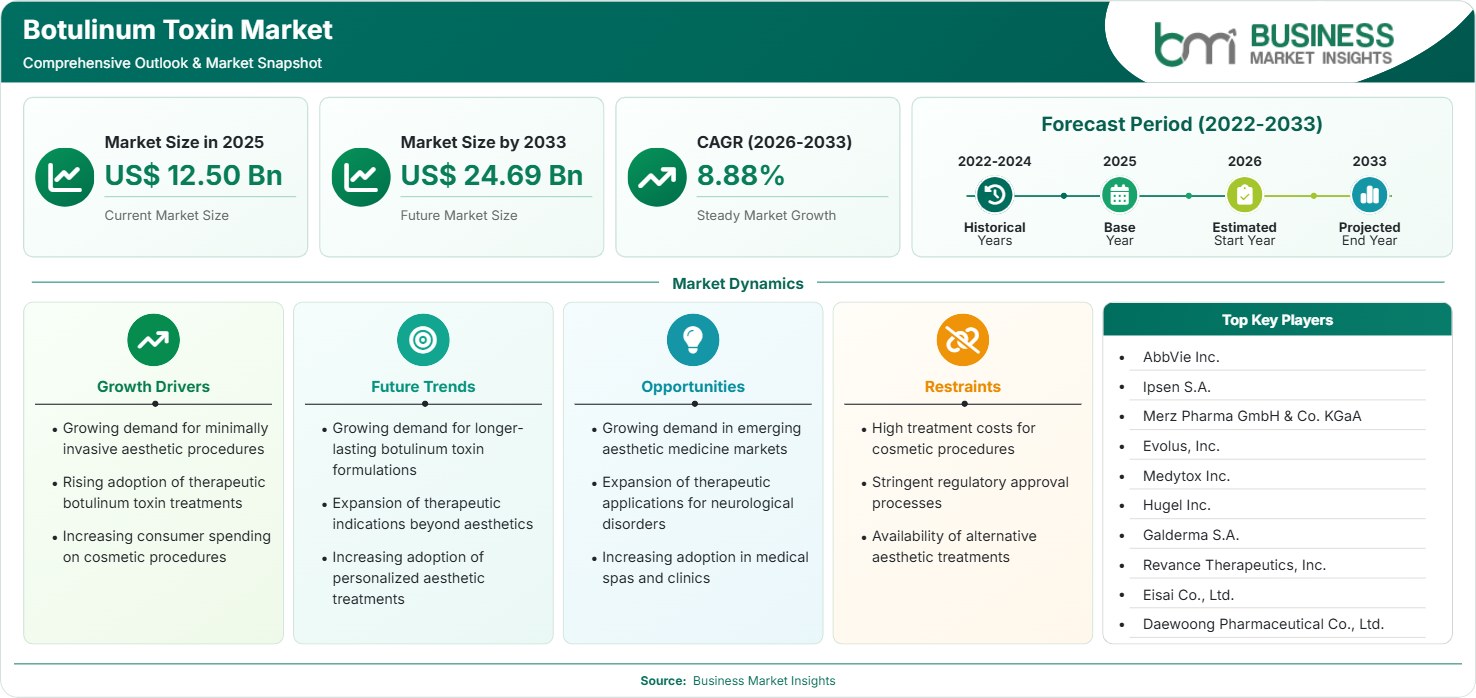
The Botulinum Toxin Market size was valued at US$ 12.50 Billion in 2025 and is projected to reach US$ 24.69 Billion by 2033, growing at a CAGR of 8.88% from 2026 to 2033. Rising demand for minimally invasive aesthetic treatments, therapeutic applications, cosmetic spending, and expanding clinical adoption are supporting market development.

Report Coverage
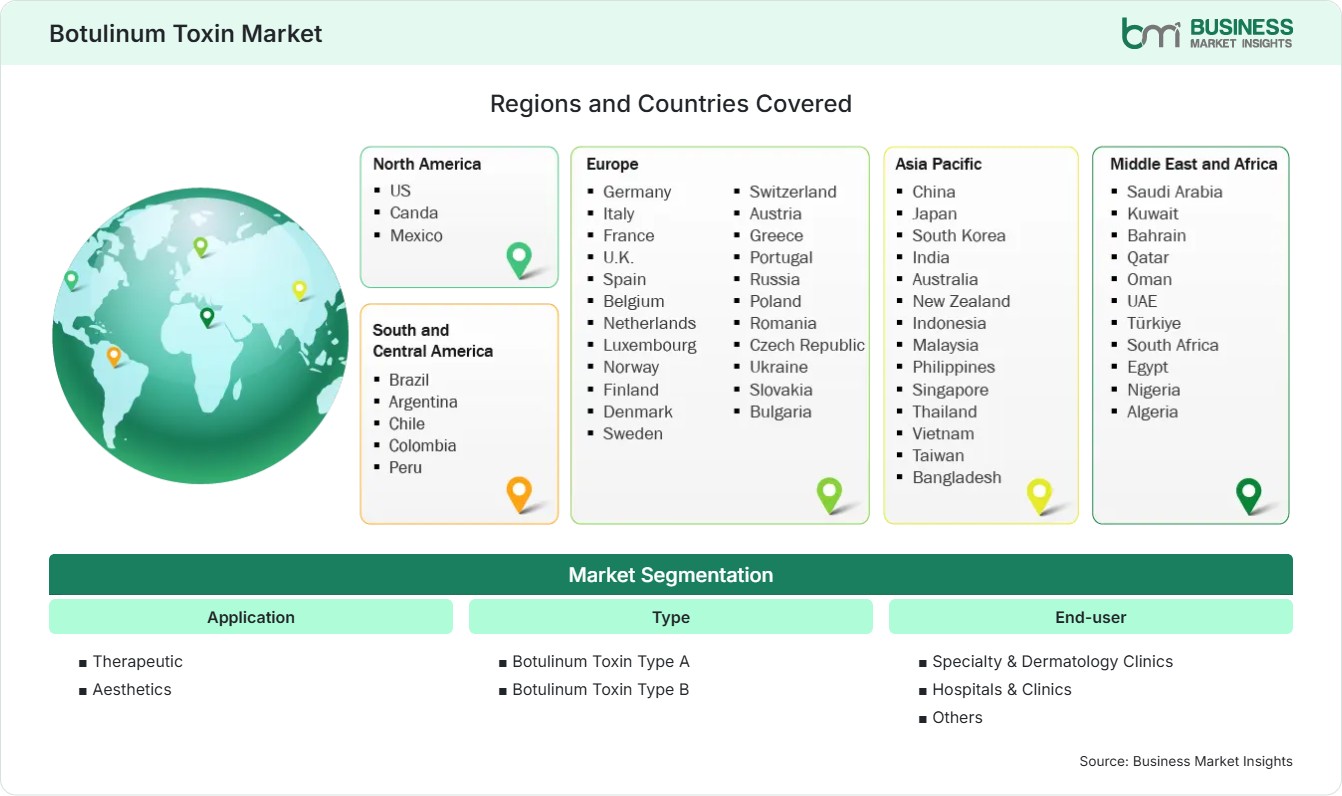
  • Application: Therapeutic, Aesthetics
  • Type: Botulinum Toxin Type A, Botulinum Toxin Type B
  • End-user: Specialty & Dermatology Clinics, Hospitals & Clinics, Others
US$ 12.50 Bn Market size in 2025
US$ 24.69 Bn Market Size by 2033
8.88% CAGR, 2026 - 2033
2026-2033 Forecast Period

AI Overview

Botulinum Toxin Market Summary

  • North America Region: North America holds a 42%–45% market share in 2025 and expands at a 8.2%–8.7% CAGR during 2026–2033, supported by strong aesthetic procedure demand, advanced dermatology infrastructure, therapeutic adoption, and high consumer spending. The U.S. market demonstrates consistent growth with an 8.3%–8.8% CAGR due to cosmetic procedure volume and neurological treatment adoption.
  • Fastest Growing Region: Asia Pacific represents 20%–23% market share in 2025 and grows at a 10.0%–10.6% CAGR during 2026–2033, driven by increasing aesthetic awareness, expanding medical tourism, rising disposable income, and development of specialized cosmetic clinics.
  • Leading Segment: Aesthetic application accounts for 55%–58% market share in 2025 with a 9.0%–9.5% CAGR during 2026–2033, supported by demand for facial wrinkle treatments, minimally invasive procedures, and growing consumer preference for cosmetic enhancements.
  • High Growth Segment: Therapeutic applications represent 42%–45% market share in 2025 and expand at a 9.2%–9.8% CAGR during 2026–2033 due to increasing treatment adoption for neurological disorders, chronic migraine, movement disorders, and bladder-related conditions.
  • Key Market Opportunity: Expansion into emerging aesthetic medicine markets, broader therapeutic indications, and increasing adoption across medical spas and specialty clinics are creating new growth opportunities.
  • Major Market Players: AbbVie Inc., Ipsen S.A., Merz Pharma GmbH & Co. KGaA, Evolus, Inc., Medytox Inc., Hugel Inc., Galderma S.A., Revance Therapeutics, Inc., Eisai Co., Ltd., and Daewoong Pharmaceutical Co., Ltd.
Strategic Insights

Botulinum Toxin Market: Strategic Insights

Botulinum Toxin Market Strategic Framework
FREE PDF
Request your free sample
Request free sample
Stakeholder View

Key Takeaways

  • The market ecosystem includes pharmaceutical manufacturers, aesthetic clinics, dermatology specialists, hospitals, distributors, and healthcare professionals. Collaboration across these participants is improving treatment accessibility and patient outcomes.
  • Aesthetic applications remain a major opportunity area due to increasing consumer preference for non-surgical cosmetic procedures, facial rejuvenation treatments, and personalized aesthetic solutions.
  • Therapeutic expansion represents a significant innovation pathway as companies explore additional neurological, muscular, and medical applications for botulinum toxin treatments.
  • Asia Pacific provides strong investment potential due to rising aesthetic awareness, increasing healthcare expenditure, medical tourism growth, and expanding specialty clinic networks.
  • Strategic partnerships, product launches, and portfolio expansion activities are increasing as companies compete to strengthen positions in both aesthetic and therapeutic segments.
  • Growth opportunities are emerging through medical spa expansion, improved practitioner training, and broader adoption of botulinum toxin procedures across developing healthcare markets.
Geographic Outlook

Botulinum Toxin Market Regional Highlights

North America Botulinum Toxin Market

North America accounts for 42%–45% of the global market in 2025 and is projected to expand at a 8.2%–8.7% CAGR during 2026–2033. The region maintains market leadership due to high demand for aesthetic procedures, established dermatology networks, advanced healthcare infrastructure, and strong consumer spending on cosmetic treatments. The Botulinum Toxin Market share remains supported by widespread adoption of injectable treatments, increasing therapeutic applications, and availability of specialized practitioners.

  • The United States represents the largest contributor due to high aesthetic procedure volumes, advanced clinical infrastructure, and strong adoption of therapeutic treatments.
  • Increasing preference for minimally invasive cosmetic procedures is encouraging demand among younger and middle-aged consumer groups.
  • Advanced dermatology clinics and medical spas are expanding treatment availability through specialized aesthetic services.
  • Pharmaceutical companies are investing in product innovation and clinical research to strengthen therapeutic and aesthetic applications.

US Botulinum Toxin Market

The United States represents 85%–88% of the North American market in 2025 and is expected to grow at a 8.3%–8.8% CAGR during 2026–2033. The country benefits from strong consumer awareness, high cosmetic procedure adoption, advanced healthcare facilities, and increasing use of botulinum toxin for neurological and muscular disorders. Growing demand from dermatology clinics, hospitals, and medical aesthetic centers continues supporting Botulinum Toxin market expansion.

  • Cosmetic procedures remain a major growth contributor due to increasing demand for facial rejuvenation and wrinkle reduction treatments.
  • Therapeutic adoption is increasing through applications in chronic migraine, spasticity, and other neurological conditions.
  • Medical spa expansion is improving access to injectable aesthetic treatments across urban and suburban areas.
  • Strong presence of leading manufacturers supports product availability, practitioner training, and clinical innovation.

Europe Botulinum Toxin Market

Europe represents 26%–29% of the market in 2025 and is forecast to grow at a 8.0%–8.5% CAGR during 2026–2033. The region benefits from developed aesthetic medicine practices, advanced healthcare systems, and increasing demand for cosmetic procedures. Germany remains a leading Botulinum Toxin market, while the United Kingdom and France demonstrate growth through expanding dermatology services, aesthetic clinics, and therapeutic treatment adoption.

  • Germany supports regional demand through advanced healthcare infrastructure, specialist clinics, and strong aesthetic medicine adoption.
  • The United Kingdom is expanding through increasing consumer interest in minimally invasive procedures and growing medical aesthetic services.
  • France demonstrates market development through established cosmetic treatment culture and increasing availability of specialized clinics.
  • European countries are adopting advanced botulinum toxin products through improved practitioner expertise and clinical research initiatives.

Asia Pacific Botulinum Toxin Market

Asia Pacific accounts for 20%–23% of the global market in 2025 and is expected to grow at a 10.0%–10.6% CAGR during 2026–2033. The region represents the fastest-growing Botulinum Toxin market due to increasing aesthetic awareness, rising disposable income, expanding medical tourism, and improving healthcare infrastructure. South Korea, China, and India are major contributors, supported by growing demand for cosmetic procedures and specialized aesthetic clinics.

  • South Korea demonstrates strong adoption due to advanced cosmetic treatment culture, medical tourism, and aesthetic clinic expansion.
  • China is experiencing growth through increasing consumer spending, urbanization, and rising demand for minimally invasive procedures.
  • India shows potential through expanding healthcare infrastructure, growing aesthetic awareness, and increasing specialty clinic availability.
  • Southeast Asian countries are benefiting from medical tourism growth and increasing investments in aesthetic healthcare services.

Rest of World Botulinum Toxin Market

The Rest of World region contributes 6%–8% market share in 2025 and is projected to grow at a 8.5%–9.0% CAGR during 2026–2033. South America, the Middle East, and Africa are witnessing gradual adoption due to increasing cosmetic awareness, improving healthcare access, and expanding aesthetic treatment facilities. Brazil leads South America, while Gulf countries are developing premium aesthetic healthcare markets through investments in specialized clinics Botulinum Toxin Market.

  • Brazil represents a significant regional market due to increasing demand for cosmetic procedures and expanding aesthetic healthcare services.
  • Middle Eastern countries are investing in premium dermatology clinics and medical tourism infrastructure to attract aesthetic treatment demand.
  • African markets are gradually developing through improved healthcare facilities and increasing awareness of cosmetic procedures.
  • Rising disposable income and urbanization are supporting demand for minimally invasive aesthetic treatments.
  • Partnerships between global manufacturers and regional clinics are improving product accessibility and practitioner capabilities.
Global Market Geography
FREE PDF
Request your free sample
Request free sample
Segment Analysis

Botulinum Toxin Market Segmentation

Application

The application segment includes therapeutic and aesthetics categories, with both segments benefiting from expanding clinical usage and rising consumer acceptance of injectable treatments. The segment is projected to grow at a 8.88%–9.3% CAGR during 2026–2033. The Botulinum Toxin Market scope is increasing due to broader therapeutic indications, growing aesthetic procedure demand, and continuous product development. Aesthetic applications maintain a leading position, while therapeutic uses are expanding through neurological and medical advancements.

  • Therapeutic: Supports market growth through treatment of neurological and muscular conditions, including chronic migraine, spasticity, overactive bladder, and movement disorders.
    • Chronic Migraine: Adoption is increasing as patients seek preventive treatment options for recurring migraine conditions and improved symptom management.
    • Spasticity: Demand is supported by use in managing muscle stiffness associated with neurological disorders and improving patient mobility outcomes.
    • Overactive Bladder: Expanding through increasing awareness of treatment options for urinary disorders and improved patient quality of life.
    • Cervical Dystonia: Maintains demand due to clinical effectiveness in reducing abnormal neck muscle contractions and related symptoms.
    • Blepharospasm: Adoption continues through ophthalmological applications focused on controlling involuntary eyelid muscle movements.
  • Aesthetics: Represents a major application area due to increasing preference for minimally invasive facial enhancement procedures and growing consumer acceptance.
    • Forehead Wrinkles: Demand is increasing as consumers seek non-surgical solutions for facial aging concerns and appearance improvement.
    • Glabellar Lines: Remains a widely adopted treatment area due to high consumer interest in reducing visible facial expression lines.
    • Crow's Feet: Growth is supported by demand for targeted facial rejuvenation procedures around the eye area.

Type

The type segment includes Botulinum Toxin Type A and Botulinum Toxin Type B, with market expansion supported by product innovation, clinical adoption, and increasing treatment availability. The segment is expected to grow at a 8.88%–9.4% CAGR during 2026–2033. Botulinum Toxin Type A maintains dominance due to broad approval, extensive clinical usage, and strong physician familiarity across aesthetic and therapeutic applications.

  • Botulinum Toxin Type A: Leads adoption due to established clinical evidence, wide therapeutic indications, and extensive use in cosmetic procedures.
  • Botulinum Toxin Type B: Gains adoption in selected therapeutic applications, particularly where alternative toxin formulations are required for specific patient needs.

End-user

The end-user segment is expanding as aesthetic clinics, hospitals, and specialty healthcare facilities increase botulinum toxin procedure availability. The segment is forecast to grow at a 8.88%–9.5% CAGR during 2026–2033. Growing demand for specialized cosmetic services, neurological treatments, and outpatient procedures is supporting adoption. The Botulinum Toxin Market trends indicate increasing preference for clinic-based treatments, improved practitioner expertise, and expansion of medical aesthetic facilities.

  • Specialty & Dermatology Clinics: Represent a major user group due to specialized expertise, increasing cosmetic procedure demand, and personalized treatment approaches.
  • Hospitals & Clinics: Adopt botulinum toxin therapies for neurological disorders, rehabilitation procedures, and medically supervised treatment applications.
Market Forces

Botulinum Toxin Market Dynamics

Key Market Drivers

Growing demand for minimally invasive aesthetic procedures

The rising preference for non-surgical cosmetic treatments is increasing demand for botulinum toxin procedures across global aesthetic markets. Consumers are choosing minimally invasive options due to shorter recovery periods, reduced procedural complexity, and improved facial rejuvenation outcomes. Injectable treatments have become widely accepted among individuals seeking wrinkle reduction and appearance enhancement without surgical intervention. Expansion of dermatology clinics, medical spas, and aesthetic centers is improving treatment accessibility. Growing awareness of cosmetic procedures through digital platforms is influencing consumer decisions and supporting broader adoption. These factors are strengthening the Botulinum Toxin Market growth as manufacturers introduce advanced formulations with improved treatment duration and precision.

Rising adoption of therapeutic botulinum toxin treatments

Increasing clinical acceptance of botulinum toxin for neurological and medical conditions is expanding its role beyond aesthetic applications. Healthcare providers are adopting these treatments for chronic migraine, spasticity, cervical dystonia, overactive bladder, and other disorders requiring targeted muscle relaxation. Improved physician training, clinical evidence, and treatment guidelines are supporting wider adoption in hospitals and specialty clinics. Aging populations and increasing prevalence of neurological conditions are creating additional demand for effective therapeutic solutions. Pharmaceutical companies are investing in research programs to expand treatment indications and improve patient outcomes. These developments are contributing to evolving Botulinum Toxin Market forecasts by increasing reliance on therapeutic applications.

Increasing consumer spending on cosmetic procedures

Rising disposable income and changing consumer attitudes toward aesthetic enhancement are increasing expenditure on cosmetic procedures worldwide. Consumers are showing greater acceptance of preventive aesthetic treatments, facial rejuvenation procedures, and personalized appearance management solutions. The increasing popularity of premium aesthetic treatments, celebrity endorsement, and social media presence is encouraging people to seek injectable therapies. Medical spas and cosmetic centers are offering more services due to rising demands. In emerging nations, the usage is increasing as well due to increased healthcare access and knowledge of aesthetics. Consumer spending on aesthetics is contributing positively towards the future market growth of botulinum toxin.

Key Market Opportunities

Growing demand in emerging aesthetic medicine markets

Emerging aesthetic medicine markets are creating significant opportunities due to improving healthcare infrastructure, increasing disposable income, and rising awareness of cosmetic procedures. The countries located in the Asia Pacific region, Latin America and the Middle East are experiencing the fast growth of dermatology clinics and medical aesthetics centers. The growing trend of medical tourism also adds up to the rising demand for modern injection procedures provided at affordable prices. Companies can increase their market presence by creating collaborations with the local clinics, conducting trainings for professionals and improving distribution channels. Entering the market allows the company to satisfy the demand for minimally invasive procedures.

Expansion of therapeutic applications for neurological disorders

Increasing research into therapeutic uses of botulinum toxin is creating opportunities for manufacturers to diversify beyond aesthetic applications. Expanding clinical applications in neurological disorders, muscle-related conditions, and rehabilitation medicine are improving adoption among healthcare providers. The industry is making investments in research and development so that more uses of the drug could be found and its efficacy improved. Rising demand for specific treatment options has led to the rise of personalized medicine. Hospitals and special centers are starting to include botulinum toxin therapies in their treatment regimens. Innovation within the medical sector will help build market potential by raising awareness about botulinum toxin.

Increasing adoption in medical spas and clinics

The expansion of medical spas and specialized clinics is creating new opportunities by improving access to botulinum toxin procedures. These facilities combine medical expertise with aesthetic services, attracting consumers seeking convenient and professionally supervised treatments. Increasing investments in aesthetic healthcare infrastructure are supporting the development of specialized centers across urban and emerging markets. Partnerships between manufacturers and clinics can improve practitioner education, treatment standards, and product awareness. Growing demand for outpatient cosmetic procedures is encouraging healthcare providers to expand service offerings. This trend is expected to support wider adoption by making botulinum toxin treatments more accessible to diverse consumer groups.

Market Restraints and Challenges

High treatment costs for cosmetic procedures

Factor: Cosmetic botulinum toxin procedures often involve repeated sessions, specialized practitioners, and premium-priced formulations, increasing overall treatment expenses. Impact: High costs may limit adoption among price-sensitive consumers and restrict market penetration in developing economies. Since aesthetic treatments are generally paid directly by patients, affordability remains a significant consideration. Providers and manufacturers are exploring strategies to improve treatment efficiency and expand accessibility while maintaining safety standards. However, premium positioning, clinical expertise requirements, and maintenance procedures continue to influence treatment affordability. Managing cost barriers will remain important for companies seeking broader consumer adoption.

Stringent regulatory approval processes

Factor: Botulinum toxin products require extensive clinical validation, safety assessments, and regulatory approvals before commercialization and expansion into new indications. Impact: Complex regulatory procedures can increase research costs, extend development timelines, and create barriers for market participants. Companies must maintain strong compliance capabilities and conduct comprehensive clinical studies to meet evolving regulatory requirements. Although strict regulations support product safety and patient confidence, they may slow innovation and delay market entry for new formulations. Manufacturers with advanced research capabilities and regulatory expertise are better positioned to navigate approval processes and introduce improved therapeutic and aesthetic solutions.

Company Analysis

Competitive Landscape

The Botulinum Toxin Market analysis highlights a competitive environment shaped by pharmaceutical innovation, aesthetic treatment expansion, therapeutic application development, and increasing investment in injectable treatment technologies. Leading companies are strengthening their market positions through product innovation, regulatory approvals, clinical research, strategic partnerships, and expansion of distribution networks. Competitive differentiation depends on product efficacy, safety profile, brand recognition, physician adoption, and the ability to address both aesthetic and therapeutic requirements.

Company Name

Overview

Products and Services relevant to this market

AbbVie Inc.

Global biopharmaceutical company focused on innovative therapies across aesthetics, neuroscience, immunology, and specialty care.

Provides botulinum toxin products for aesthetic procedures and therapeutic applications including neurological disorders.

Ipsen S.A.

Specialty pharmaceutical company developing targeted therapies across neuroscience, oncology, and rare diseases.

Offers botulinum toxin treatments for therapeutic indications including movement disorders and muscle-related conditions.

Merz Pharma GmbH & Co. KGaA

Healthcare company specializing in aesthetic medicine, neuroscience, and specialty healthcare solutions.

Provides botulinum toxin products supporting aesthetic enhancement and therapeutic treatment applications.

Evolus, Inc.

Aesthetic medicine company focused on innovative injectable treatments and cosmetic healthcare solutions.

Offers botulinum toxin-based aesthetic products designed for wrinkle reduction and facial rejuvenation procedures.

Medytox Inc.

Biotechnology company specializing in botulinum toxin products and aesthetic treatment solutions.

Develops botulinum toxin formulations for cosmetic and therapeutic applications across international markets.

Hugel Inc.

South Korean biotechnology company focused on aesthetic medicine and injectable treatment development.

Provides botulinum toxin products for facial aesthetics and medical treatment applications.

Galderma S.A.

Global dermatology-focused company developing aesthetic and therapeutic skin health solutions.

Offers aesthetic injectable products and dermatology solutions supporting cosmetic treatment procedures.

Revance Therapeutics, Inc.

Biotechnology company focused on innovative aesthetic and therapeutic botulinum toxin products.

Develops advanced botulinum toxin formulations for aesthetic and therapeutic applications.

Eisai Co., Ltd.

Pharmaceutical company engaged in healthcare innovation with focus on neurological and specialty treatments.

Supports therapeutic research and pharmaceutical solutions relevant to neurological treatment areas.

Daewoong Pharmaceutical Co., Ltd.

Korean pharmaceutical company developing biotechnology-based medicines and healthcare products.

Provides botulinum toxin products for aesthetic procedures and therapeutic treatment markets.

Trust & Transparency

Research Methodology

The market analysis combines proprietary research with secondary data from government agencies, company disclosures, regulatory filings, industry databases and expert interviews. Market estimates are validated through data triangulation, cross-market benchmarking and analyst review.

View Full Research Methodology

Questions Answered

Frequently Asked Questions

What factors may limit Botulinum Toxin market expansion?

High treatment costs, regulatory requirements, and the need for trained healthcare professionals can influence adoption across certain regions.

Why are emerging markets important for growth?

Emerging markets offer opportunities through rising disposable income, expanding healthcare infrastructure, medical tourism, and increasing awareness of aesthetic procedures.

How is botulinum toxin used therapeutically?

Botulinum toxin is used for conditions such as chronic migraine, spasticity, cervical dystonia, overactive bladder, and other neurological disorders.

Which application segment dominates botulinum toxin demand?

Aesthetic applications represent a major demand area due to widespread use in wrinkle reduction, facial rejuvenation, and cosmetic enhancement procedures.

What is driving the demand for botulinum toxin market report?

Demand is increasing due to rising adoption of minimally invasive aesthetic procedures, therapeutic applications, improved awareness, and expansion of specialty clinics.

Access the Full Botulinum Toxin Market Report

Get segment-level forecasts, regional estimates, competitive benchmarking, company profiles and downloadable Excel datasets.

Access the full Botulinum Toxin Market Report
350 pages PDF & Excel | 2026-08-31