Bioethanol Market Regional Highlights
North America Bioethanol Market
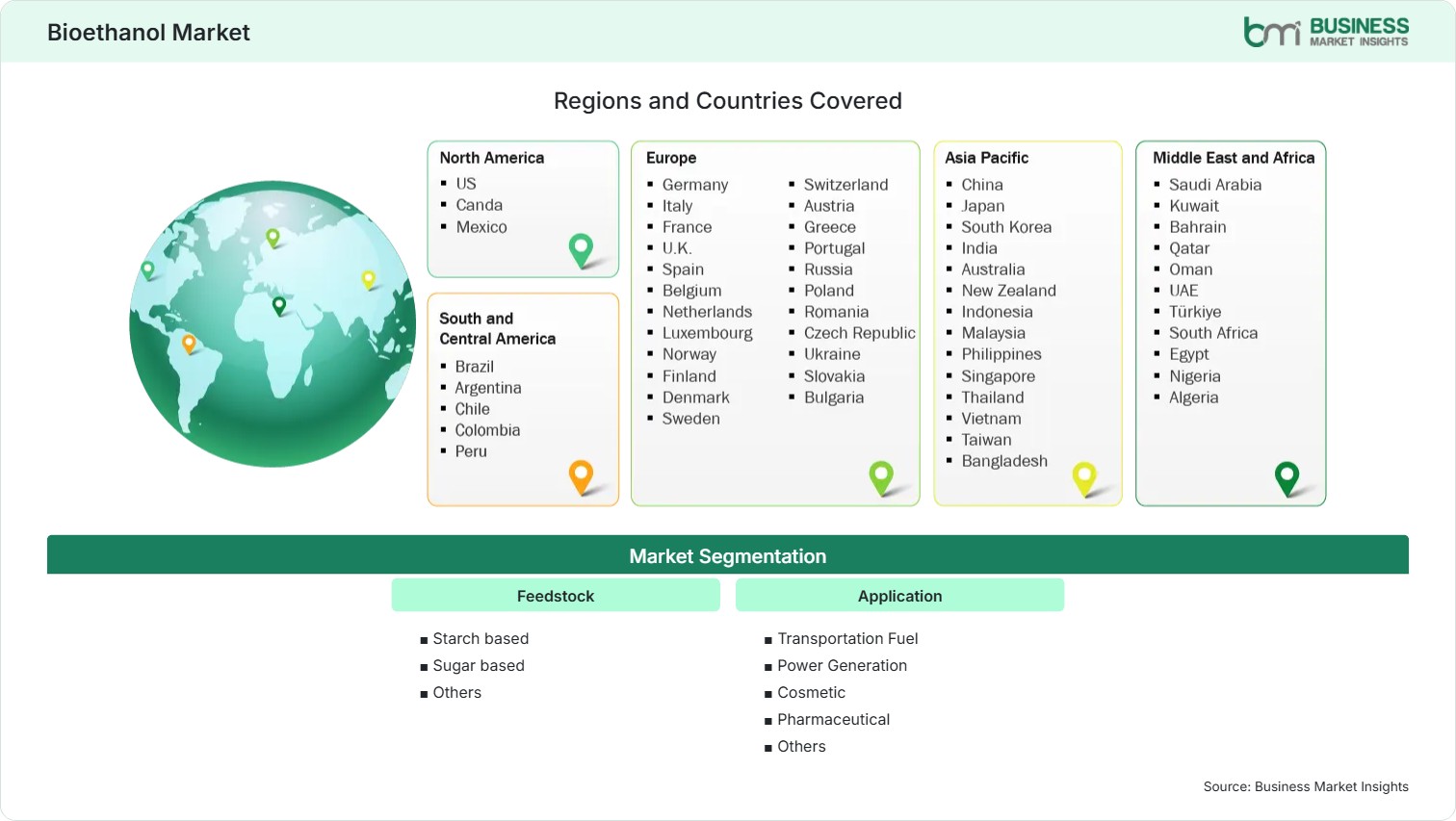
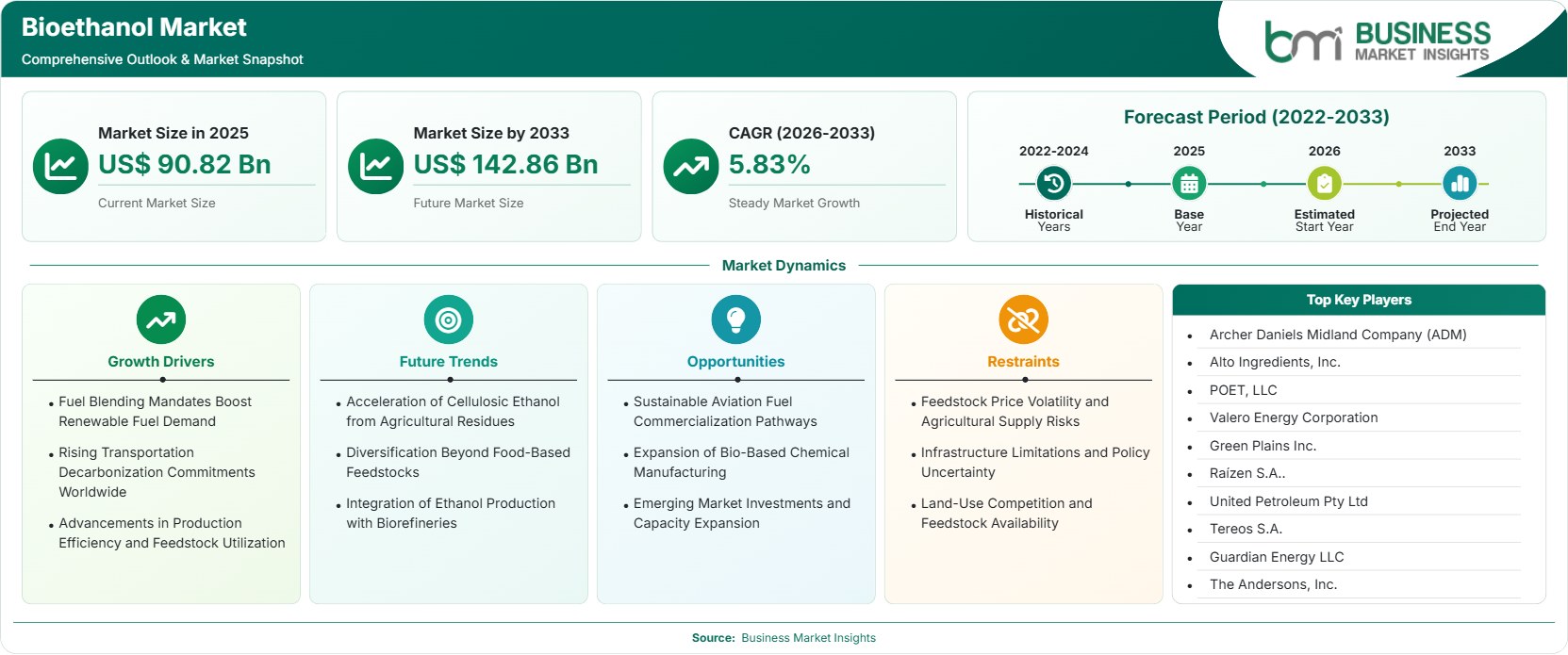
North America accounted for approximately 36%–39% of global revenue in 2025 and is forecast to register a CAGR of 5.1%–5.5% through 2033. Established corn-based production infrastructure, supportive renewable fuel policies, and extensive blending programs continue supporting regional competitiveness. The region benefits from advanced logistics networks, integrated agricultural supply chains, and increasing investments in carbon reduction technologies. The Bioethanol Market share remains strongest in North America due to mature production ecosystems and long-standing policy support.
- Renewable Fuel Standard programs continue supporting stable ethanol demand while encouraging investment in production efficiency and carbon reduction technologies across major producing states.
- Carbon capture and sequestration projects are increasingly integrated with ethanol facilities, improving lifecycle emissions profiles and enhancing competitiveness within low-carbon fuel markets.
- Expanding adoption of E15 fuel blends is creating incremental demand opportunities while supporting national transportation decarbonization objectives.
- Strong agricultural productivity and established grain supply chains provide reliable feedstock availability and support large-scale commercial production economics.
- Investments in sustainable aviation fuel pathways are creating new commercialization opportunities for ethanol producers seeking diversified market access.
US Bioethanol Market
The United States represents approximately 82%–86% of North American demand and is expected to expand at a CAGR of 5.2%–5.6% through 2033. Federal renewable fuel policies, extensive corn production capacity, and a mature ethanol distribution network support continued industry development. Growth is further strengthened by investments in low-carbon fuel technologies and evolving transportation decarbonization strategies.
- Iowa, Nebraska, and Illinois continue serving as major production hubs due to abundant feedstock availability and established processing infrastructure.
- Carbon intensity reduction initiatives are encouraging producers to deploy efficiency-enhancing technologies and lower-emission production systems.
- Ethanol producers are exploring aviation fuel opportunities through partnerships aimed at commercializing next-generation renewable fuel pathways.
- Continued investment in rural energy infrastructure supports production expansion and strengthens domestic supply chain resilience.
Europe Bioethanol Market
Europe held approximately 22%–25% share in 2025 and is projected to grow at a CAGR of 5.0%–5.4% through 2033. Regulatory emphasis on renewable energy adoption and greenhouse gas reduction remains a major demand catalyst. France leads regional production capacity, while Eastern European countries are experiencing faster growth supported by renewable energy investments and agricultural resource utilization.
- France remains the largest market, supported by established sugar beet processing industries and favorable renewable fuel policies, with growth estimated at 5.1%–5.5%.
- Poland demonstrates relatively strong expansion of 5.8%–6.3%, supported by agricultural investments and renewable energy diversification initiatives.
- European decarbonization targets continue encouraging higher renewable fuel integration across transportation sectors.
- Bio-based chemical applications are expanding alongside transportation fuel demand, supporting diversification of ethanol utilization.
- Sustainability certification requirements are promoting investment in traceability systems and advanced production technologies.
Asia Pacific Bioethanol Market
Asia Pacific represented approximately 24%–27% of global revenue in 2025 and is expected to record the fastest CAGR of 6.8%–7.4% through 2033. Rising fuel demand, government blending mandates, and energy security priorities continue supporting regional development. China and India remain critical growth engines, while Southeast Asian countries are increasing production investments. The Bioethanol Market growth outlook remains particularly strong across economies seeking to reduce fossil fuel dependence and strengthen domestic renewable energy capabilities.
- India is among the fastest-growing markets, supported by ambitious ethanol blending programs and increasing sugarcane-based production investments, advancing at 7.2%–7.8% CAGR.
- China continues expanding renewable fuel capacity through policy initiatives designed to strengthen energy security and diversify fuel supplies.
- Thailand and Indonesia are investing in agricultural feedstock processing infrastructure to support domestic ethanol production.
- Rising vehicle ownership and transportation energy consumption are increasing long-term demand for renewable fuel alternatives.
- Regional governments continue supporting industry expansion through subsidies, blending mandates, and infrastructure development initiatives.
Rest of World Bioethanol Market
Rest of World accounted for approximately 12%–15% share in 2025 and is projected to expand at a CAGR of 5.7%–6.2% through 2033. South & Central America remains a significant production center due to extensive sugarcane cultivation, while Middle East & Africa markets are increasingly exploring renewable fuel diversification strategies.
Brazil dominates regional activity through integrated sugarcane processing and fuel blending programs. Meanwhile, countries such as South Africa and the United Arab Emirates are evaluating renewable fuel opportunities aligned with broader energy transition objectives and industrial development plans.
- Brazil remains the leading market, supported by established ethanol infrastructure, large-scale sugarcane cultivation, and long-standing fuel blending mandates.
- South Africa is expanding renewable fuel initiatives to strengthen energy diversification and reduce dependence on imported petroleum products.
- The United Arab Emirates is evaluating renewable fuel pathways as part of broader sustainability and decarbonization strategies.
- Agricultural resource availability across Latin America supports continued production growth and export competitiveness.
- International investment partnerships are accelerating development of renewable fuel infrastructure across emerging economies.