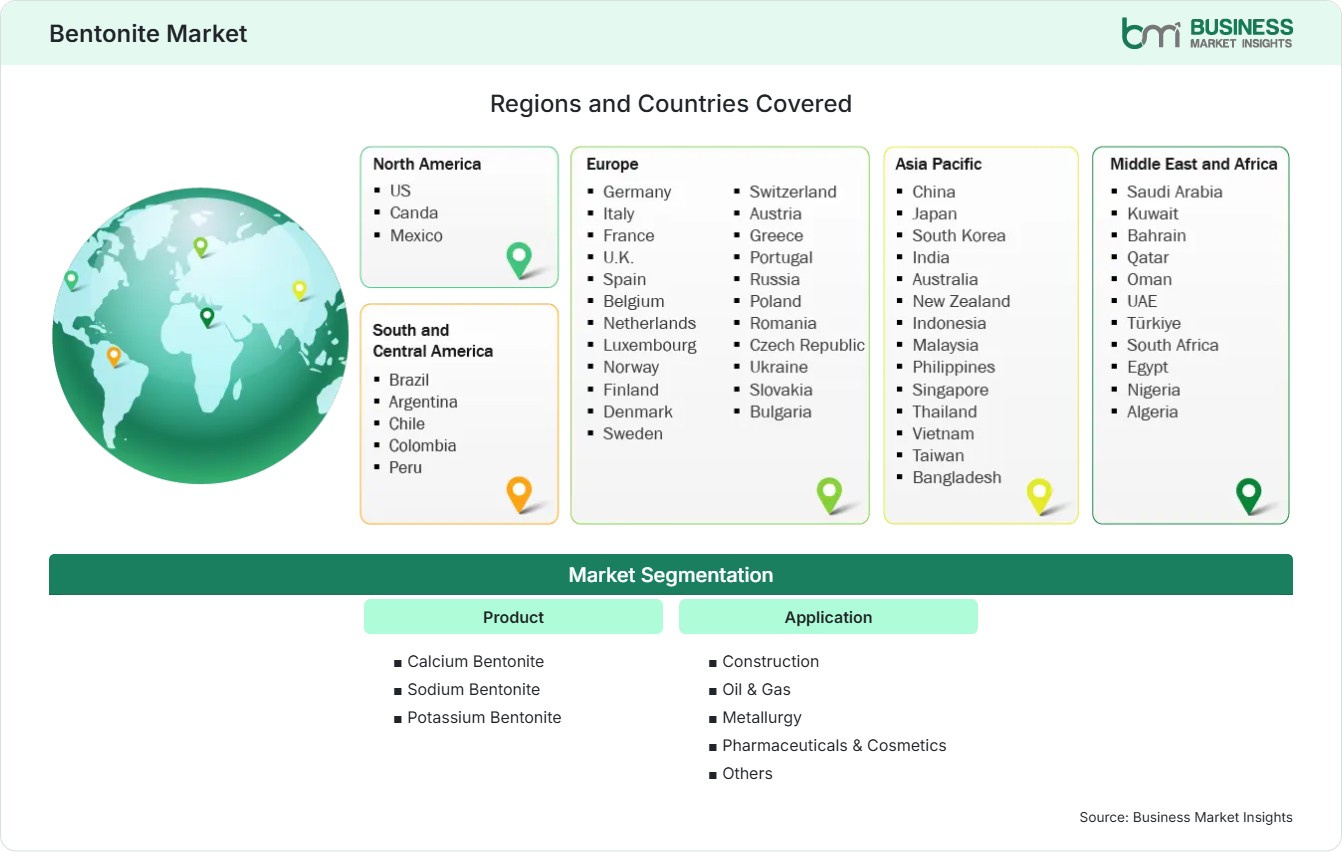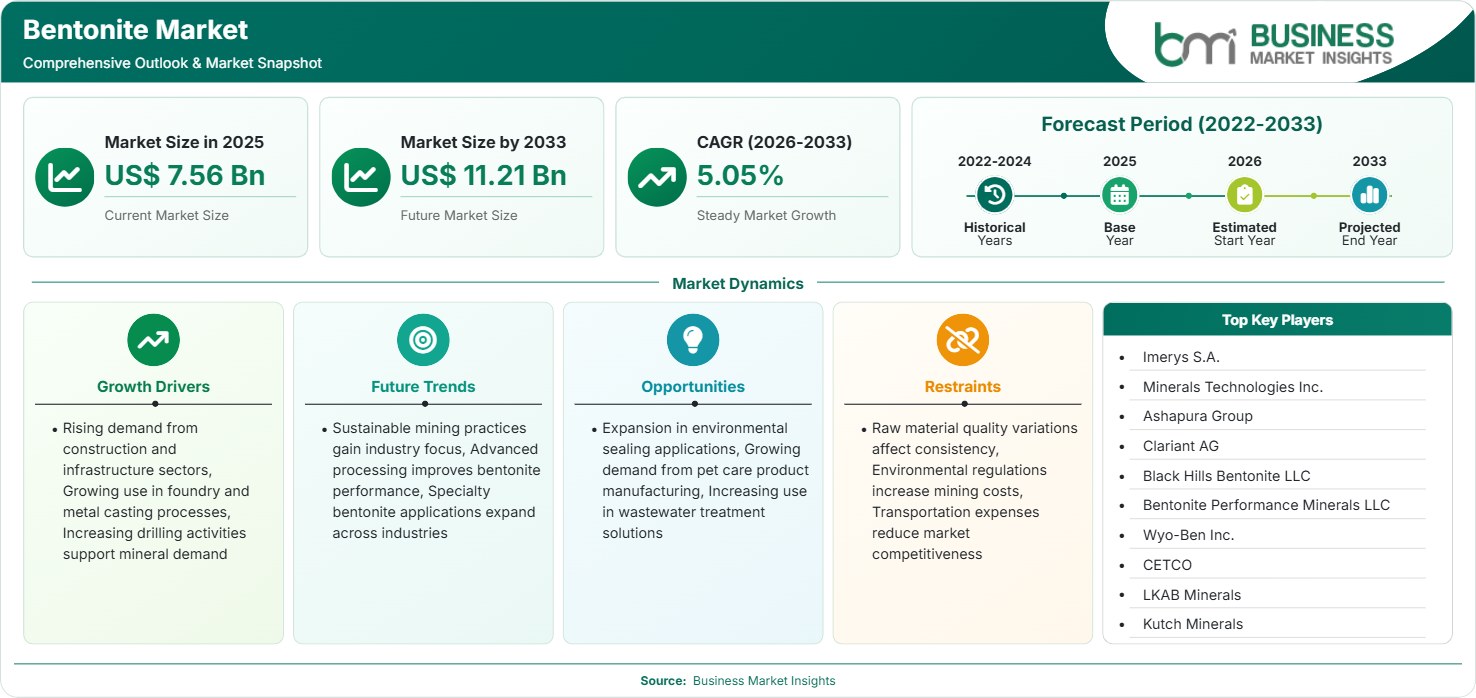
Bentonite Market Regional Highlights
North America Bentonite Market
North America accounts for 32%–35% Bentonite Market share in 2025 and is projected to expand at a CAGR of 4.8%–5.3% during 2026–2033. Strong mining operations, drilling activities, and environmental engineering projects continue supporting regional demand. Investments in infrastructure modernization, landfill construction, and industrial mineral processing are encouraging wider use of high-quality bentonite products across multiple end-use industries.
- Oil and gas drilling continues generating substantial demand for sodium bentonite used in drilling fluid formulations and well construction.
- Infrastructure development supports increasing consumption of bentonite in tunneling, foundation stabilization, and underground sealing projects.
- Environmental regulations encourage greater use of bentonite liners for waste containment and groundwater protection systems.
- Foundry manufacturers continue utilizing bentonite to improve mold stability and casting quality across metal production operations.
US Bentonite Market
The United States contributes 82%–85% of North American revenue and is expected to grow at a CAGR of 4.9%–5.4% through 2026–2033. Abundant mineral reserves, advanced mining operations, and sustained demand from construction and energy sectors continue supporting long-term market expansion.
- Domestic mining companies continue investing in production capacity and mineral processing efficiency.
- Drilling activity supports stable demand for premium-grade sodium bentonite products.
- Infrastructure projects strengthen consumption across civil engineering applications.
- Environmental remediation programs continue expanding mineral demand for containment systems.
Europe Bentonite Market
Europe represents 23%–26% market share in 2025 and is projected to register a CAGR of 4.7%–5.2% during the forecast period. Growing environmental regulations, industrial manufacturing activity, and infrastructure modernization continue driving regional demand. Germany remains the leading market, while Poland records the fastest growth through expanding industrial mineral consumption and construction investments.
- Sustainable infrastructure initiatives increase demand for environmentally compatible sealing materials.
- Metallurgical industries continue utilizing bentonite for high-quality casting applications.
- Waste management regulations encourage wider adoption in landfill and containment systems.
- Investments in underground transportation infrastructure support higher mineral consumption.
Asia Pacific Bentonite Market
Asia Pacific holds 36%–39% market share in 2025 and is expected to record the fastest 5.6%–6.1% CAGR during 2026–2033. Strong industrialization, steel production, infrastructure development, and mining investments continue supporting regional demand. China remains the largest market, while India records the fastest expansion due to growing construction and industrial manufacturing activities.
- Large-scale infrastructure projects continue increasing bentonite consumption across civil engineering applications.
- Steel manufacturing supports sustained demand from foundry and metallurgical industries.
- Urban expansion encourages wider use in foundation engineering and underground construction.
- Industrial growth continues driving investment in domestic mineral processing capacity.
Rest of World Bentonite Market
The Rest of World region accounts for 6%–9% market share in 2025 and is anticipated to expand at a CAGR of 5.0%–5.5% through 2026–2033. Increasing mining activity, infrastructure development, and environmental projects continue supporting demand across Latin America, the Middle East, and Africa.
- Brazil leads regional demand through mining, drilling, and construction sector expansion.
- GCC countries continue investing in infrastructure and groundwater management projects.
- Mining operations increase consumption of bentonite for drilling and mineral processing.
- Wastewater treatment and environmental engineering projects create additional long-term demand.