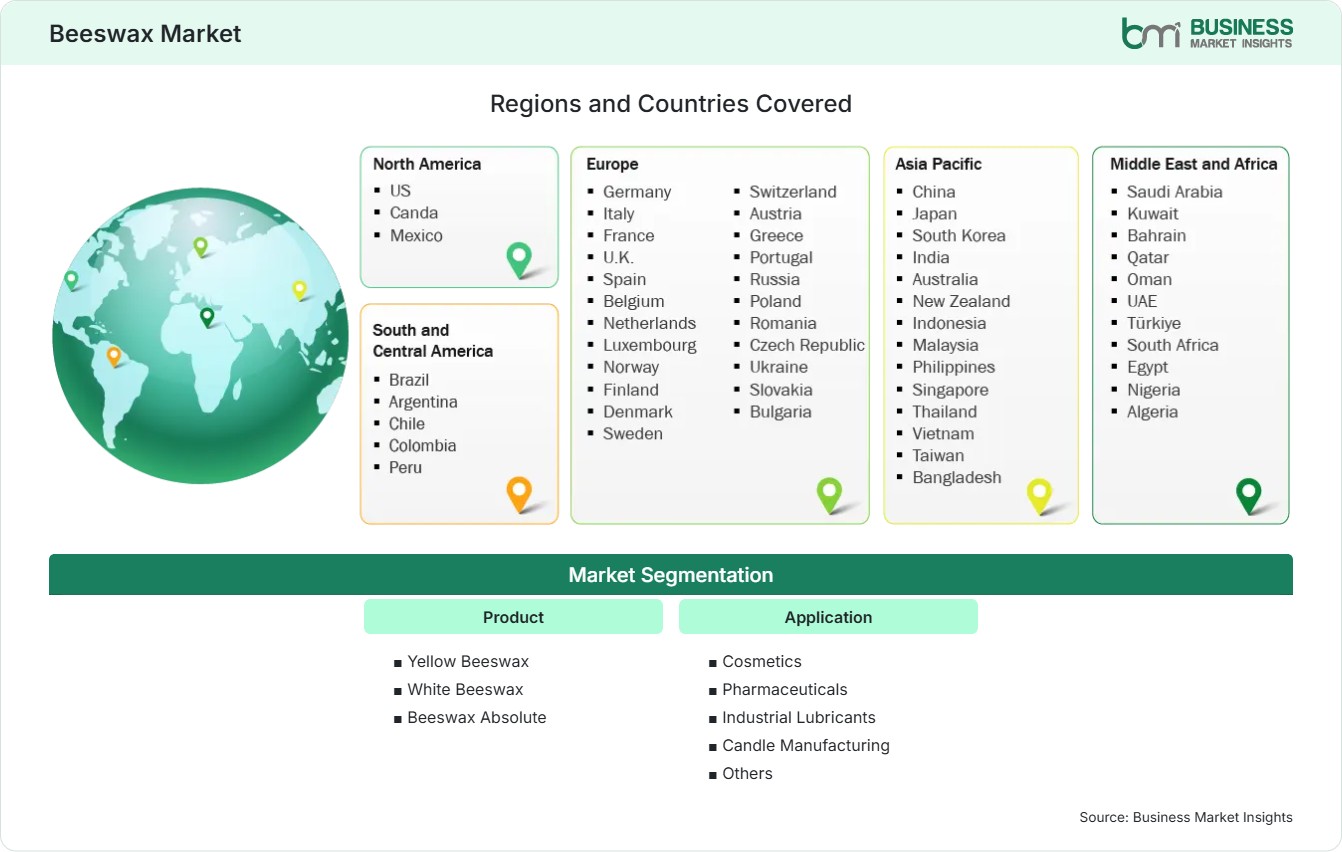
Beeswax Market Regional Highlights
North America Beeswax Market
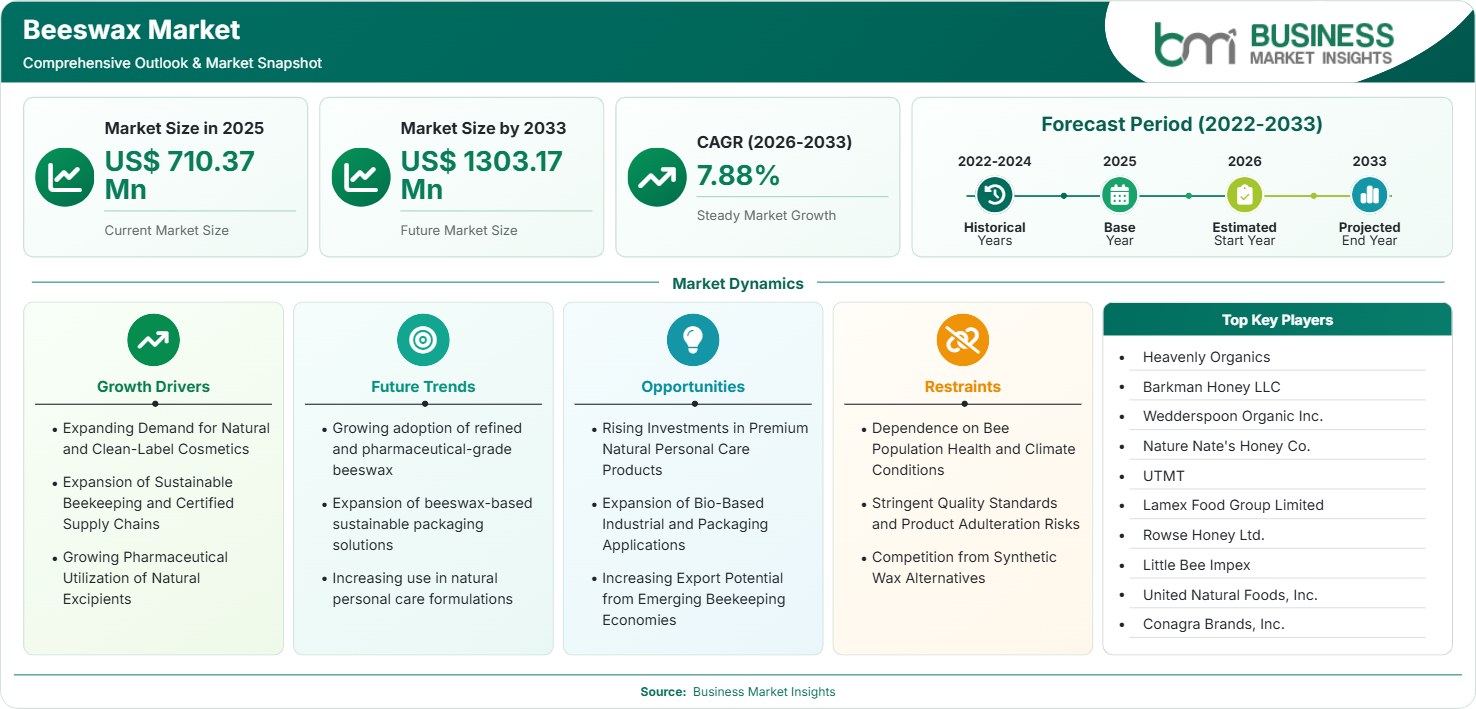
North America accounted for approximately 35%–38% of global demand in 2025 while advancing at a projected CAGR of 7.3%–7.7% through 2026–2033. Strong consumer awareness regarding sustainable ingredients, expanding premium skincare production, and increasing pharmaceutical applications continue supporting regional expansion. The Beeswax Market share remains highest across the region because manufacturers increasingly replace synthetic waxes with naturally derived alternatives.
- Cosmetic manufacturers are expanding clean-label products using natural waxes for improved texture, stability, moisture retention, and sustainability.
- Pharmaceutical companies are adopting waxes in topical formulations and controlled-release products due to biocompatibility and stability.
- Candle manufacturers use renewable waxes to enhance fragrance retention, burn performance, and premium positioning.
- Certified sourcing and traceability systems improve supply reliability and export competitiveness.
- Research into food coatings and biodegradable packaging is creating new market opportunities.
US Beeswax Market
The United States represents approximately 76%–79% of North American consumption and is forecast to expand at a CAGR of 7.4%–7.8% during 2026–2033. Demand is supported by premium skincare manufacturing, natural wellness products, expanding pharmaceutical production, and increasing consumer spending on certified organic ingredients in Beeswax Market.
- Premium skincare brands are adopting natural ingredients in moisturizers, lip care, sunscreens, and specialty products to meet demand for transparency and safety.
- Pharmaceutical manufacturers are expanding topical formulations using purified waxes for stability and dermatological applications.
- Rising demand for candles, wellness products, and sustainable goods is driving specialty manufacturing investments.
- Certifications and digital traceability enhance sourcing transparency and support premium pricing.
Europe Beeswax Market
Europe represented approximately 28%–31% of global consumption in 2025 and is projected to register a CAGR of 7.5%–7.9% through 2026–2033. Strong sustainability regulations, mature cosmetics manufacturing, and expanding demand for certified natural ingredients continue supporting regional Beeswax Market growth. Germany and France remain leading markets because of established cosmetic industries, while Poland records comparatively faster expansion due to growing apiculture investments, increasing processing capacity, and export-oriented ingredient manufacturing supporting international demand.
- European cosmetic regulations continue encouraging manufacturers to replace synthetic ingredients with renewable alternatives while maintaining product quality, safety standards, and environmental responsibility throughout premium product portfolios.
- Pharmaceutical producers increasingly utilize refined natural waxes in topical medications, controlled-release formulations, and protective coatings supporting expanding healthcare manufacturing across major European economies.
- Germany maintains regional leadership through advanced cosmetic production infrastructure, whereas France benefits from premium beauty brands emphasizing botanical ingredients and sustainable sourcing practices.
- Poland records comparatively stronger expansion through growing commercial beekeeping activities, competitive production costs, and increasing exports serving European personal care and pharmaceutical manufacturers.
- Sustainability certifications, carbon reduction initiatives, and biodiversity protection policies continue supporting responsible sourcing while strengthening Europe's global competitiveness within premium natural ingredient industries.
Asia Pacific Beeswax Market
Asia Pacific accounted for approximately 24%–27% of worldwide consumption during 2025 while recording the fastest regional expansion at a CAGR of 8.7%–9.2% through 2026–2033. Rapid cosmetics manufacturing, expanding pharmaceutical production, growing commercial beekeeping, and increasing disposable incomes support regional development. China leads overall consumption, whereas India demonstrates particularly strong Beeswax Market expansion because of increasing organic exports, government support for apiculture, and rising domestic manufacturing across natural personal care and wellness industries.
- China continues leading regional production through extensive manufacturing capabilities, strong export infrastructure, and rapidly expanding demand from cosmetics, pharmaceuticals, and industrial processing industries.
- India records one of the highest regional growth rates as government-supported beekeeping initiatives strengthen rural incomes, improve raw material availability, and expand exports of premium natural ingredients.
- Japan and South Korea emphasize premium skincare innovation, encouraging manufacturers to incorporate highly refined natural waxes into advanced cosmetic formulations targeting domestic and international consumers.
- Regional contract manufacturing organizations increasingly invest in purification technologies and international certifications to improve competitiveness across global pharmaceutical and cosmetic ingredient supply chains.
- Growing investments in sustainable agriculture, biodiversity conservation, and export-oriented processing strengthen long-term production capacity while supporting higher-value specialty ingredient manufacturing.
Rest of World Beeswax Market
Rest of World represented approximately 8%–11% of global demand in 2025 and is expected to expand at a CAGR of 7.8%–8.3% through 2026–2033. South and Central America benefit from favorable climatic conditions supporting commercial beekeeping and agricultural exports. Meanwhile, Middle East and Africa continue witnessing increasing adoption across cosmetics, pharmaceuticals, and specialty manufacturing supported by rising urbanization, expanding premium consumer products, and investments in sustainable agricultural development programs worldwide in Beeswax Market.
- Brazil leads South and Central America through extensive commercial beekeeping activities, expanding exports, and increasing investments in value-added processing for international cosmetic and pharmaceutical manufacturers.
- Mexico strengthens regional competitiveness by improving quality certifications, processing technologies, and sustainable agricultural practices supporting premium natural ingredient exports.
- South Africa remains a leading African market, while the United Arab Emirates demonstrates faster commercial demand because of expanding premium cosmetics, luxury retail, and specialty wellness product manufacturing.
- Government initiatives promoting biodiversity conservation and sustainable agricultural development continue improving pollinator populations while supporting long-term commercial production capabilities across developing economies.
- Rising foreign investment in ingredient processing facilities, export infrastructure, and premium consumer goods manufacturing enhances international competitiveness while creating diversified revenue opportunities across emerging regional markets.