Market Summary
Executive Summary and Global Market Analysis
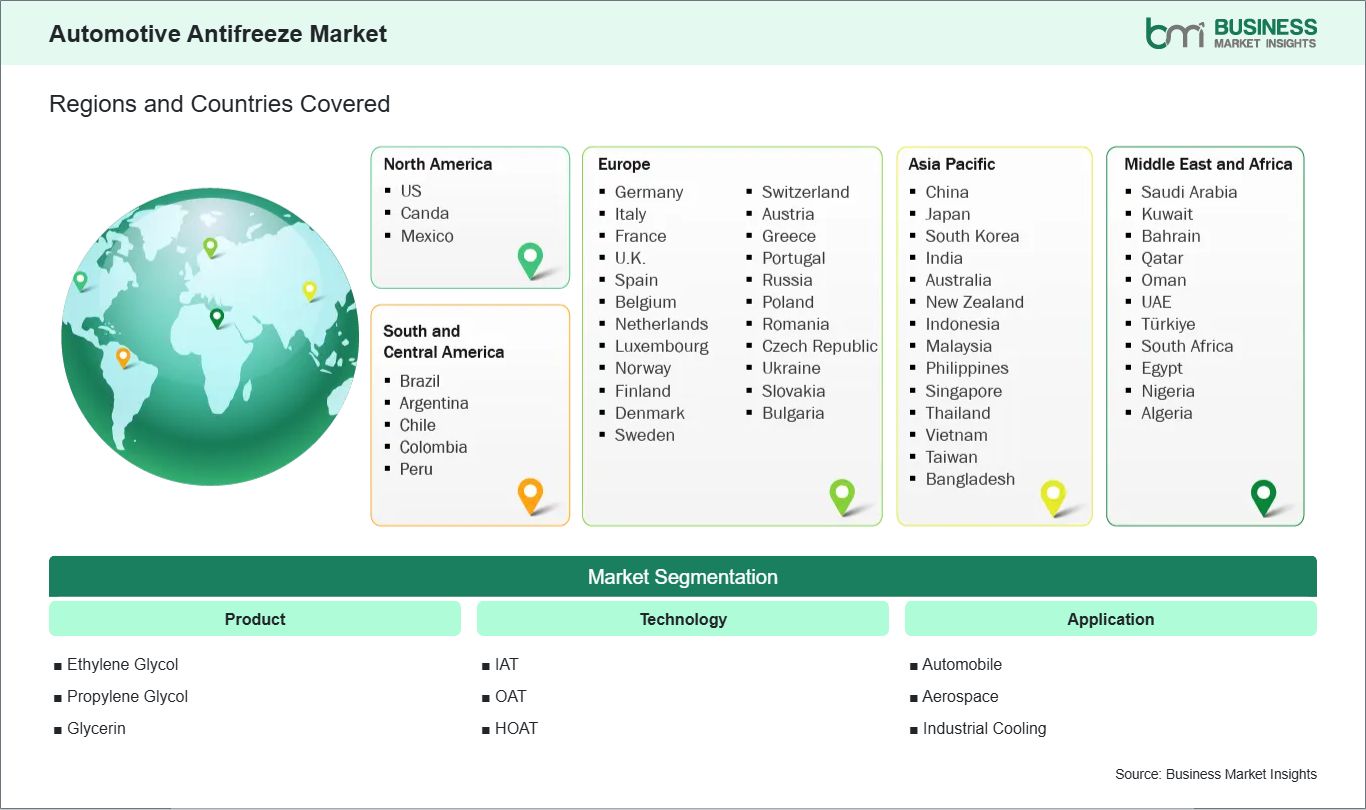
Automotive antifreeze is a coolant fluid used to regulate engine temperature and protect cooling systems from freezing, overheating, and corrosion. It plays a critical role in maintaining vehicle performance and extending engine life under varying environmental conditions. Common antifreeze products are based on ethylene glycol, propylene glycol, and glycerin formulations, while technologies such as Inorganic Acid Technology (IAT), Organic Acid Technology (OAT), and Hybrid Organic Acid Technology (HOAT) provide different levels of protection and service life. The market is growing as vehicle production increases, automotive maintenance awareness improves, and industries place greater emphasis on efficient thermal management systems. Rising demand from automotive, aerospace, and industrial cooling applications is also supporting market expansion.
There are some challenges that could slow market growth. Fluctuations in raw material prices can affect production costs and create pricing pressures for manufacturers. Environmental concerns regarding the disposal and handling of certain glycol-based coolants are encouraging stricter regulations in some regions. The availability of counterfeit or low-quality products in aftermarket channels can also affect consumer confidence and equipment performance. In addition, increasing vehicle complexity requires more advanced coolant formulations, leading to higher research and development costs. These factors can create operational and compliance challenges across the industry.
Even with these challenges, the market is expected to grow as cooling technologies become more advanced and sustainability becomes a greater priority. New opportunities are emerging through the development of environmentally friendly antifreeze formulations and longer-life coolant technologies. Electric vehicles and hybrid vehicles require specialized thermal management solutions, creating additional demand for advanced coolant products. Ongoing innovation in corrosion protection, heat transfer performance, and recyclable coolant technologies is supporting market development. As industries continue to prioritize equipment efficiency, reliability, and environmental responsibility, automotive antifreeze is expected to remain an essential component of modern thermal management systems.
Segment Analysis
Automotive Antifreeze Market Segmentation
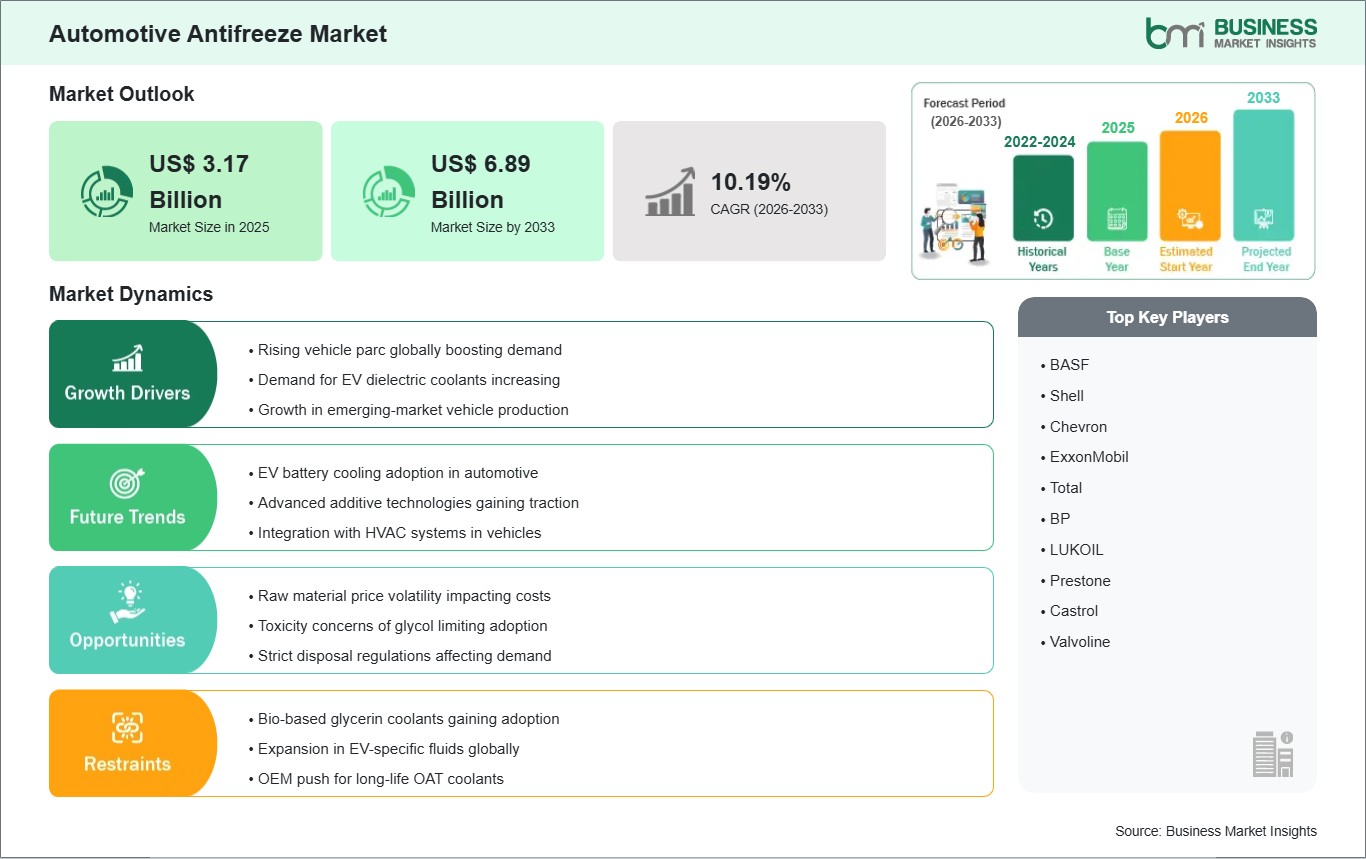
The Automotive Antifreeze market size is expected to reach US$ 6.89 billion by 2033 from US$ 3.17 billion in 2025. The market is estimated to record a CAGR of 10.19% from 2026 to 2033.
By product, ethylene glycol accounts for a significant share due to its widespread use, effective cooling properties, and established presence in automotive cooling systems. Propylene glycol is gaining popularity because of its lower toxicity and environmental benefits, while glycerin-based products are witnessing increasing interest as sustainable alternatives for specialized applications.
By application, the automobile segment dominates the market owing to the large global vehicle fleet and continuous demand for engine cooling and protection solutions. Aerospace applications continue to generate demand for specialized thermal management products, while industrial cooling systems are expanding steadily as manufacturers seek efficient temperature control and equipment protection.
Market Forces
Automotive Antifreeze Market Drivers and Opportunities
Growing Vehicle Production and Thermal Management Requirements
The demand for automotive antifreeze is increasing as global vehicle production continues to expand and engine technologies become more sophisticated. Modern vehicles operate under higher thermal loads and require advanced cooling solutions to maintain efficiency and performance. Antifreeze products help prevent overheating, freezing, corrosion, and scale formation, making them essential for maintaining the reliability of cooling systems.
The automotive industry is also witnessing greater adoption of high-performance engines, hybrid powertrains, and advanced emission control systems, all of which require effective thermal management. Commercial vehicles, passenger cars, and industrial machinery depend on antifreeze products to ensure consistent operation across different climate conditions. Regulatory requirements related to vehicle efficiency and durability further encourage the use of advanced coolant technologies. As vehicle ownership and maintenance activities continue to increase globally, demand for automotive antifreeze products is expected to remain strong across both OEM and aftermarket channels.
Sustainable Coolants and Electric Vehicle Cooling Solutions
The Automotive Antifreeze market is creating new opportunities through the development of environmentally responsible coolant technologies and specialized solutions for electric vehicles. Manufacturers are increasingly investing in low-toxicity and biodegradable coolant formulations that align with environmental regulations and sustainability goals. These products help reduce environmental impact while maintaining effective cooling system performance.
The growing adoption of electric vehicles is generating additional demand for advanced thermal management solutions. Electric powertrains, battery systems, and charging infrastructure require precise temperature control to ensure efficiency, safety, and durability. This is encouraging the development of next-generation antifreeze products with enhanced heat transfer capabilities and extended service life. Innovations in additive technologies and corrosion protection systems are also improving product performance. As industries focus on sustainability, electrification, and operational efficiency, advanced antifreeze solutions are expected to create significant growth opportunities across automotive and industrial applications.
Size and Share Analysis
Automotive Antifreeze Market Size and Share Analysis
The Automotive Antifreeze market size is expected to reach US$ 6.89 billion by 2033 from US$ 3.17 billion in 2025. The market is estimated to record a CAGR of 10.19% from 2026 to 2033.
By product, ethylene glycol accounts for a significant share due to its widespread use, effective cooling properties, and established presence in automotive cooling systems. Propylene glycol is gaining popularity because of its lower toxicity and environmental benefits, while glycerin-based products are witnessing increasing interest as sustainable alternatives for specialized applications.
By application, the automobile segment dominates the market owing to the large global vehicle fleet and continuous demand for engine cooling and protection solutions. Aerospace applications continue to generate demand for specialized thermal management products, while industrial cooling systems are expanding steadily as manufacturers seek efficient temperature control and equipment protection.
Report Coverage
Automotive Antifreeze Market Report Coverage and Deliverables
The "Automotive Antifreeze Market Size and Forecast (2022-2033)" report provides a detailed analysis of the market covering below areas:
- Market size and forecast at global, regional, and country levels for all the key market segments covered under the scope
- Market trends, as well as market dynamics such as drivers, restraints, and key opportunities
- Market analysis covering key market trends, global and regional framework, major players, regulations, and recent market developments
- Industry landscape and competition analysis covering market concentration, heat map analysis, prominent players, and recent developments for the market
- Detailed company profiles, including SWOT analysis
Geographic Insights
Automotive Antifreeze Market Geographic Insights
The Automotive Antifreeze Market shows diverse regional adoption patterns influenced by vehicle production levels, climate conditions, industrial activity, and advancements in cooling technologies.
North America, being a developed region, has a well-established automotive industry and a high rate of adoption of advanced vehicle maintenance products. The region comprises the United States and Canada, where varying climate conditions create strong demand for effective engine cooling and freeze protection solutions. The region focuses on maintaining vehicle reliability, improving thermal management performance, and complying with environmental regulations. Strong automotive manufacturing capabilities and an extensive aftermarket network support the widespread use of automotive antifreeze across passenger vehicles, commercial fleets, and industrial equipment.
Asia Pacific is growing significantly, driven by rising vehicle production, expanding industrial activities, and increasing vehicle ownership. The region comprises countries such as China, India, and Japan, where rapid urbanization and economic development continue to strengthen automotive and manufacturing sectors. The region focuses on improving vehicle efficiency, extending equipment lifespan, and supporting industrial productivity through effective cooling solutions. Growing investments in automotive manufacturing, electric mobility, and industrial infrastructure are contributing to increased demand for advanced antifreeze products across multiple applications.
Both regions are contributing significantly to the growth of the Automotive Antifreeze Market, focusing on vehicle maintenance, industrial development, and the adoption of advanced thermal management technologies.
Industry Activity
Recent Developments
The Automotive Antifreeze Market is analyzed using a mix of primary and secondary research sources, including corporate publications, industry associations, and verified databases. This approach ensures accurate tracking of innovation trends and strategic developments influencing the market.
- In February 2026, Arteco introduced Freecor EV Multi 10, a new coolant specifically developed for electric vehicle thermal management systems. The product is designed to provide improved heat transfer performance, corrosion protection, and long service life for batteries and power electronics. The launch reflects the growing demand for advanced cooling solutions in the electric mobility sector.
- In October 2025, BASF and Zhejiang REEF Technology announced a collaboration to develop advanced coolant and thermal management solutions for new energy vehicles in China. The partnership focuses on improving battery cooling performance and supporting the growing electric vehicle market. The collaboration highlights increasing innovation in next-generation antifreeze technologies.
Trust & Transparency
Research Methodology
The market analysis combines proprietary research with secondary data from government agencies, company disclosures, regulatory filings, industry databases and expert interviews. Market estimates are validated through data triangulation, cross-market benchmarking and analyst
review.
View Full Research Methodology
Key Sources Referred:
World Bank - Global Trade IndicatorsWorld Trade Organization (WTO)International Monetary Fund (IMF)International Trade Administration (ITA)Company WebsitesCompany Annual ReportsCompany Investor Presentations