Market Summary
Executive Summary and Global Market Analysis
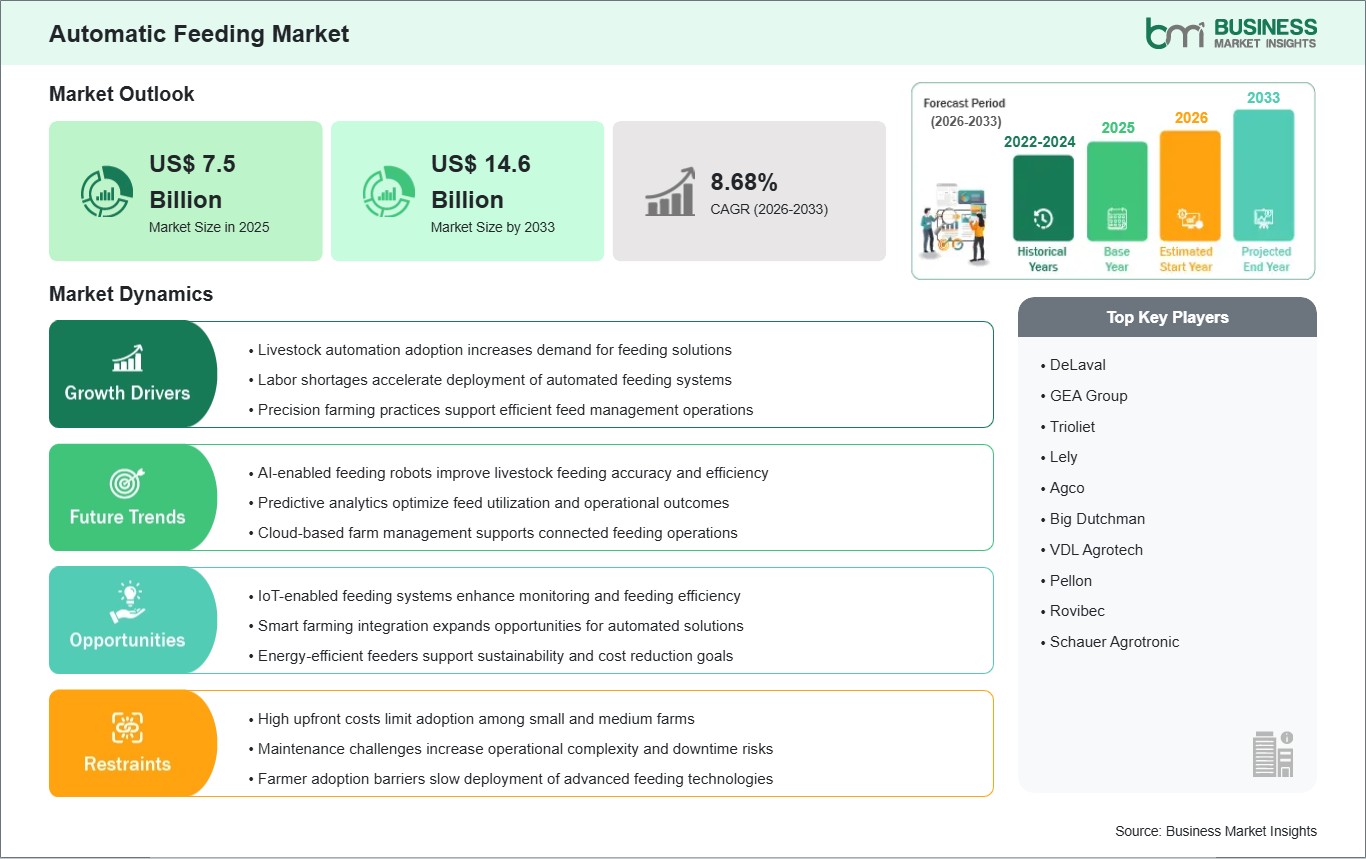
Automatic feeding systems are used to deliver feed to livestock automatically and in controlled quantities to improve feeding efficiency and animal management. These systems include self-feeding solutions, automated feeders, and conveyor feeding equipment that help farmers reduce manual labor and maintain consistent feeding schedules. They are widely used across dairy farms, poultry farms, and swine farms to improve productivity and optimize feed utilization. This market is expanding due to the use of advanced farm equipment by animal owners in order to make their work easier and increase the efficiency and welfare of the animals. High demands for animal protein, increased awareness about precision livestock farming, and the need for the minimization of feed waste are some factors that encourage farmers to embrace automation in feeding.
There are several challenges that may limit market growth. The initial investment required for advanced feeding equipment can be significant, making adoption difficult for smaller farms with limited financial resources. Factors such as the need for maintenance and specialized knowledge can cause additional costs. The availability of reliable connections and infrastructure in certain rural regions can impact the efficiency of automation tools. Farmers might also encounter problems in combining advanced feeders with their current agricultural activities. Finally, issues related to the potential downtime of equipment and subsequent expenses can deter the process of adoption, especially in areas lacking technical assistance.
Despite these challenges, the market is expected to benefit from continued advancements in agricultural automation and smart farming technologies. Opportunities are emerging through the integration of artificial intelligence, real-time monitoring systems, and data-driven feeding management platforms that help optimize feed consumption and livestock performance. The development of smart farm ecosystems is contributing to improved decision-making and effective use of resources. The growing popularity of sustainable agricultural practices is further prompting the use of technologies aimed at minimizing waste and enhancing production. With the continued progress of agriculture towards increased productivity, animal well-being, and efficient operations, automatic feeding systems will likely gain more prominence in the future.
Segment Analysis
Automatic Feeding Market Segmentation
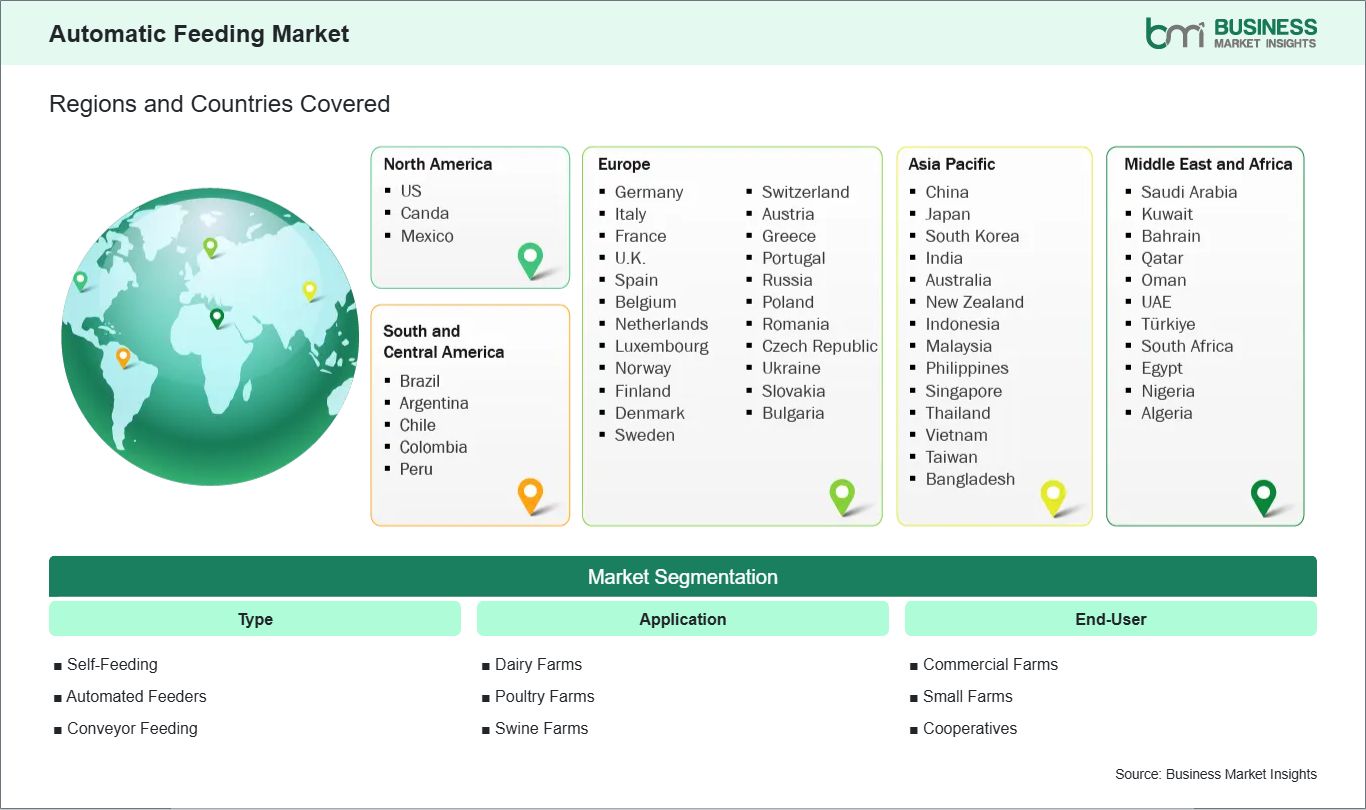
The Automatic Feeding market is segmented based on type, application, and end-user. Each segment contributes to market growth by addressing different livestock feeding requirements and farm management needs.
By Type
- Self-Feeding: Allows animals to access feed independently while helping maintain feeding consistency and reduce labor requirements.
- Automated Feeders: Uses programmed systems to dispense feed at scheduled intervals, improving feeding precision and operational efficiency.
- Conveyor Feeding: Utilizes conveyor-based systems to transport and distribute feed across large livestock facilities efficiently.
By Application
- Dairy Farms: Supports efficient feeding management and helps improve milk production through consistent feed delivery.
- Poultry Farms: Enables controlled feeding schedules that support bird health and productivity.
- Swine Farms: Assists in optimizing feed utilization and maintaining proper nutrition for livestock growth.
By End-User
- Commercial Farms: Represents significant adoption due to large-scale operations and the need for automation.
- Small Farms: Increasingly adopting automatic feeding solutions to improve efficiency and reduce labor dependence.
- Cooperatives: Utilize feeding systems to improve productivity across shared farming operations.
Market Forces
Automatic Feeding Market Drivers and Opportunities
Increasing Adoption of Precision Livestock Farming
The growing adoption of precision livestock farming is a major factor supporting the Automatic Feeding market. Livestock producers are increasingly using technology to improve productivity, reduce waste, and enhance animal welfare. Automatic feeding systems provide accurate feed distribution, helping farmers maintain consistent nutrition schedules while reducing manual intervention. This improves operational efficiency and supports better livestock performance.
The increasing focus on farm automation is encouraging investments in feeding technologies that can monitor consumption patterns and adjust feeding practices accordingly. As labor shortages continue to affect agricultural operations in several regions, farmers are turning to automated solutions to maintain productivity. Programs initiated by the government that promote modernization and digital techniques in agriculture also create conducive environments for implementation. Use of monitoring devices in the feeding system enhances the level of transparency. Such measures increase efficiency in the use of feeds while minimizing wastage. As livestock production becomes more efficient in the modern era, an automatic feeding system has become a key requirement.
Growth Opportunities Through Smart and Connected Feeding Systems
The development of smart and connected feeding technologies presents significant opportunities for the Automatic Feeding market. Modern feeding systems are increasingly being integrated with artificial intelligence, cloud platforms, and real-time monitoring tools. These technological improvements allow farmers to track the feeding processes, detect inefficiencies, and optimize their livestock farming methods. Smart feeding technology allows for predictive maintenance and automated optimization, as well as remote monitoring functionality. These improvements are helpful in minimizing disruptions in operations, increasing production capacity, and optimizing feeding processes. The increased use of smart agricultural methods is expected to boost the demand for such technology.
There are also opportunities for growth from sustainability objectives. There is a need among farmers for technological advances that reduce the wastage of feeds, optimize efficiency, and facilitate eco-friendly practices. With ongoing innovation in agricultural automation, intelligent feeding systems will become more relevant to increasing efficiencies on farms.
Size and Share Analysis
Automatic Feeding Market Size and Share Analysis
The Automatic Feeding Market size is expected to reach US$ 14.6 billion by 2033 from US$ 7.5 billion in 2025. The market is estimated to record a CAGR of 8.68% from 2026 to 2033.
By type, automated feeders account for a significant share of the market due to their ability to provide accurate feed distribution, scheduled feeding, and improved operational efficiency. Conveyor feeding systems are gaining adoption in large-scale farming facilities where efficient feed transportation is required, while self-feeding systems remain important for specific livestock management practices.
By application, dairy farms represent a major share of demand because consistent feeding practices directly influence milk production and animal health. Poultry farms continue to adopt automatic feeding solutions to improve productivity and manage large bird populations efficiently. Swine farms are also contributing to market growth as producers focus on optimizing nutrition management and improving livestock performance through automated feeding technologies.
Report Coverage
Automatic Feeding Market Report Coverage and Deliverables
The "Automatic Feeding Market Size and Forecast (2022-2033)" report provides a detailed analysis of the market covering below areas:
- Market size and forecast at global, regional, and country levels for all the key market segments covered under the scope
- Market trends, as well as market dynamics such as drivers, restraints, and key opportunities
- Market analysis covering key market trends, global and regional framework, major players, regulations, and recent market developments
- Industry landscape and competition analysis covering market concentration, heat map analysis, prominent players, and recent developments for the market
- Detailed company profiles, including SWOT analysis
Geographic Insights
Automatic Feeding Market Geographic Insights
The Automatic Feeding Market shows diverse regional adoption patterns influenced by increasing livestock production, farm automation initiatives, and the growing need for efficient feeding management systems.
North America, being a developed region, has a well-established livestock farming industry and a high level of adoption of agricultural automation technologies. The region comprises the United States and Canada, where farmers are increasingly investing in automated feeding systems to improve operational efficiency and reduce labor dependency. The region is characterized by the application of precision farming techniques, improved livestock management practices, and decision-making through analysis of data. Availability of well-developed agricultural facilities, use of state-of-the-art technology, and the growing concern for animal welfare encourage the use of automatic feed systems in dairying, poultry, and swine farming. The existence of big commercial farms also helps to implement automatic feed systems.
Asia Pacific is growing significantly, driven by expanding livestock production and increasing modernization of agricultural practices. The region comprises countries such as China, India, and Japan, where rising demand for animal protein is encouraging investments in efficient farming technologies. The region focuses on improving farm productivity, optimizing feed utilization, and enhancing livestock health through automation. Growing awareness of precision farming, supportive government initiatives, and ongoing improvements in agricultural infrastructure are supporting market expansion. The increasing transition from traditional farming methods to technology-driven livestock management systems is creating substantial opportunities for automatic feeding solutions across both commercial and cooperative farming operations.
Both regions are contributing significantly to the growth of the Automatic Feeding Market, focusing on livestock productivity, agricultural modernization, and the adoption of advanced technologies that improve feeding efficiency and farm management practices.
Industry Activity
Recent Developments
The Automatic Feeding Market is analyzed using a mix of primary and secondary research sources, including corporate publications, industry associations, and verified databases. This approach ensures accurate tracking of innovation trends and strategic developments influencing the market.
- In June 2026, Shandong Jucheng Agricultural and Animal Husbandry Machinery Co. Ltd. introduced a series of smart silo and automated feeder systems integrated with Internet of Things technologies. The upgraded machinery routinely transmits real-time consumption and feed flow data to centralized dashboards, enabling farmers to identify abnormal feeding patterns and feed blockages without direct manual intervention.
- In December 2025, GEA Group launched its advanced DairyRobot R9650 batch milking system, bringing high-capacity automated milking routines to large herds without requiring structural barn re-designs. The machinery incorporates digital herd management technology and group-milking structural predictability. The solution aims to optimize labor resources, minimize facility expenses, and enhance precision livestock management through smooth, resource-efficient daily routines.
Trust & Transparency
Research Methodology
The market analysis combines proprietary research with secondary data from government agencies, company disclosures, regulatory filings, industry databases and expert interviews. Market estimates are validated through data triangulation, cross-market benchmarking and analyst
review.
View Full Research Methodology
Key Sources Referred:
World Bank - Global Trade IndicatorsWorld Trade Organization (WTO)International Monetary Fund (IMF)International Trade Administration (ITA)Company WebsitesCompany Annual ReportsCompany Investor Presentations