
Atrial Fibrillation Market Outlook: Size, Share, Trends, Growth Analysis, Competitive Landscape & Forecast, 2026–2033

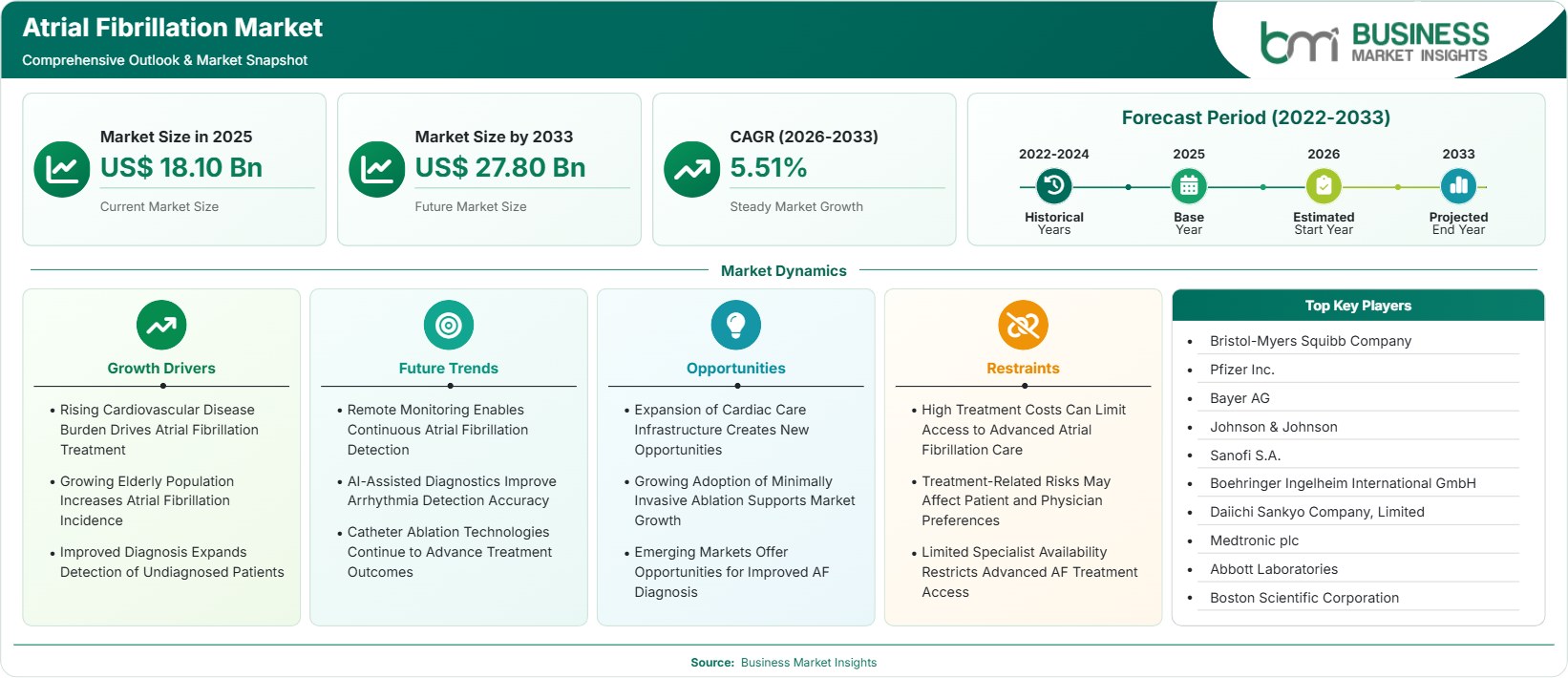
The Atrial Fibrillation Market size was valued at US$ 18.10 Billion in 2025 and is projected to reach US$ 27.80 Billion by 2033, growing at a CAGR of 5.51% during 2026–2033, supported by rising cardiovascular disease burden, population ageing, better diagnosis, expanded anticoagulation, and wider access to rhythm-management care.

Report Coverage
  • Drug Class: Anticoagulants, Antiarrhythmic Drugs
  • Route of Administration: Oral, Intravenous, Others
  • Distribution Channel: Hospital Pharmacies, Online Pharmacies, Retail Pharmacies
US$ 18.10 Bn Market size in 2025
US$ 27.80 Bn Market Size by 2033
5.51% CAGR, 2026 - 2033
2026-2033 Forecast Period

01 AI Overview

Atrial Fibrillation Market Summary

  • North America: holds 34%–38% Atrial Fibrillation Market share in 2025, growing at a CAGR of 5.0%–5.6% during 2026–2033, supported by high diagnosis rates, established cardiac-care infrastructure, and expanding rhythm-management services. The US represents 88%–92% of regional demand and is projected to grow at 5.1%–5.7% CAGR through 2033, supported by diagnosis, and treatment access.
  • Fastest Growing Region: Asia Pacific holds 21%–25% share in 2025, expanding at a CAGR of 6.1%–6.9% during 2026–2033, supported by ageing populations, increasing cardiovascular risk, improving diagnosis, expanding hospital infrastructure, growing pharmaceutical access, and wider availability of rhythm-management treatment.
  • Leading Segment: Anticoagulants hold 48%–52% share in 2025, growing at a CAGR of 5.4%–6.0% during 2026–2033, supported by stroke prevention, guideline-directed therapy, ageing populations, increased diagnosis, broader treatment access, and continued preference for oral anticoagulation.
  • High Growth Segment: Intravenous administration holds 9%–13% share in 2025, growing at a CAGR of 6.0%–6.8% during 2026–2033, supported by acute-care treatment, hospital-based rhythm management, rapid therapeutic action, procedural settings, and increasing cardiac-care capacity.
  • Key Market Opportunity: Earlier detection, broader anticoagulation access, expansion of cardiac-care infrastructure, minimally invasive rhythm management, and improved treatment availability in emerging economies create significant commercial opportunities.
  • Major Market Players: Bristol-Myers Squibb Company; Pfizer Inc., Bayer AG, Johnson & Johnson; Sanofi S.A., Boehringer Ingelheim International GmbH, Daiichi Sankyo Company, Limited, Medtronic plc, Abbott Laboratories, Boston Scientific Corporation.
02 Strategic Insights

Atrial Fibrillation Market: Strategic Insights

Atrial Fibrillation Market Strategic Framework
FREE PDF
Request your free sample
Request free sample
03 Stakeholder View

Key Takeaways

  • The treatment landscape is becoming characterized by the concept of integrated care, including risk factor management, stroke prevention, symptom management, rhythm management, and periodic reassessment.
  • Anticoagulant drugs constitute the largest market category due to the prevention of stroke and systemic embolization being a basic principle of management.
  • Expanded diagnosis is making the treatment pool larger through better monitoring that uncovers rhythm disorders, which could have been unnoticed previously.
  • Asia Pacific presents the strongest regional expansion opportunity as ageing populations, cardiovascular risk, hospital development, and pharmaceutical access converge across large patient populations.
  • Competition increasingly depends on treatment persistence, safety, convenience, clinical evidence, differentiated delivery approaches, and integration with broader cardiovascular-care pathways.
  • Healthcare systems are placing greater emphasis on individualized treatment decisions, creating opportunities for therapies and care models.
04 Geographic Outlook

Atrial Fibrillation Market Regional Highlights

North America Atrial Fibrillation Market

North America Atrial Fibrillation Market holds 34%–38% share in 2025 and is projected to grow at 5.0%–5.6% CAGR through 2033. The US contributes 88% to 92% to the regional demand due to its existing cardiology services, pharmaceuticals, diagnostics, and specialty care. Canada has an impact on the market due to the development of cardiovascular care services and an ageing population.

  • The existence of cardiovascular infrastructure ensures broad access to diagnosis, anticoagulation, rhythm control, specialist consultation, and longitudinal monitoring.
  • An ageing population results in more patients needing regular cardiovascular evaluation, especially in cases where atrial fibrillation is combined with hypertension, heart failure, diabetes, or vascular disease.
  • Advanced diagnostic capabilities improve identification of intermittent arrhythmias and support treatment decisions based on documented rhythm patterns and individual thromboembolic risk.
  • Specialist electrophysiology capacity supports wider use of rhythm-control strategies and minimally invasive interventions for appropriately selected patients.

US Atrial Fibrillation Market

The US Atrial Fibrillation Market represents 88%–92% of North American demand in 2025 and is projected to grow at 5.1%–5.7% CAGR through 2033. The market benefits from a extensive infrastructure in cardiology, established prescribing practices, excellent diagnostics, and a wide array of anticoagulants and antiarrhythmic medications. Modern medicine focuses on individual risk assessment and its re-evaluation.

  • The hospitals and specialists will help with proper diagnosis and treatment initiation, including rhythm management and follow-up.
  • The ability to monitor patients outside of the hospital will allow for better recognition of intermittent diseases and appropriate clinical intervention.
  • The pharmacy network and existing pathways for chronic treatment will allow for the ongoing administration of anticoagulants and rhythm management medications.

Europe Atrial Fibrillation Market

Europe Atrial Fibrillation Market holds 27%–31% share in 2025 and is projected to grow at 4.8%–5.5% CAGR through 2033. Germany, the UK, France, Italy, and Spain are leading markets, while Spain is projected to grow at 5.5%–6.2% CAGR. The region benefits from extensive cardiovascular services and strong clinical guidance.

  • Germany has significant demand due to hospital networks, cardiovascular experts, medications, and increasing focus on comprehensive rhythm management.
  • Spain has relatively higher growth due to ageing population, cardiovascular risk, diagnosis, and access to specialized treatments.
  • France, Italy, and the UK have matured treatment market owing to established cardiovascular treatment programs and disease management programs.
  • The European practice of medicine is focusing more on personalized treatment, patient participation, risk factor management, and treatment evaluation.

Asia Pacific Atrial Fibrillation Market

Asia Pacific holds 21%–25% share in 2025 and is projected to grow at 6.1%–6.9% CAGR through 2033. China, Japan, India, South Korea, and Australia represent leading markets, while India is projected to grow at 7.0%–7.8% CAGR. Population ageing, increasing cardiovascular risk, improving diagnosis, and expanding hospital infrastructure support treatment demand.

  • China has a significant demand from the aging population in the country, growing cardiovascular service capability, rising diagnostic rates, and the availability of pharmaceutical treatment.
  • India provides the best growth opportunity in the region with a CAGR of 7.0% to 7.8% on account of increasing cardiac care facility, diagnostics, pharmaceutical access, and chronic illness management.
  • Japan and South Korea provide for existing demand owing to aging population, development of cardiac care facility, diagnostics, and cardiovascular treatment.
  • Markets in Southeast Asia represent further growth opportunities with urbanization, healthcare development, cardiovascular awareness, and treatment facilities.

Rest of World Atrial Fibrillation Market

South and Central America represent developing treatment markets supported by cardiovascular disease burden, ageing, and improving access to diagnosis and medicines. Brazil and Mexico lead regional demand, while Colombia and Chile provide additional expansion potential. Improving hospital capacity and specialist services can increase diagnosis and treatment initiation. Wider pharmaceutical distribution is also important for long-term anticoagulation and rhythm management.

Middle East and Africa markets remain smaller but provide expansion opportunities through healthcare infrastructure development, chronic disease programs, and improved cardiovascular diagnosis. Rest of World holds 18%–22% share in 2025 and is projected to grow at 5.3%–6.1% CAGR through 2033.

  • Brazil offers diversified demand from its extensive healthcare system, high incidence of heart diseases, increasing diagnostic capabilities, and pharmaceutical distribution channel.
  • Mexico fosters growth through development of cardiac care capabilities, increasing awareness, and accessibility of cardiovascular medications.
  • Gulf states are developing specialized healthcare facilities that help in increasing accessibility to cardiovascular diagnosis and treatment.
  • South Africa creates demand through established private healthcare facilities along with increasing demands for cardiovascular diagnosis and treatment.
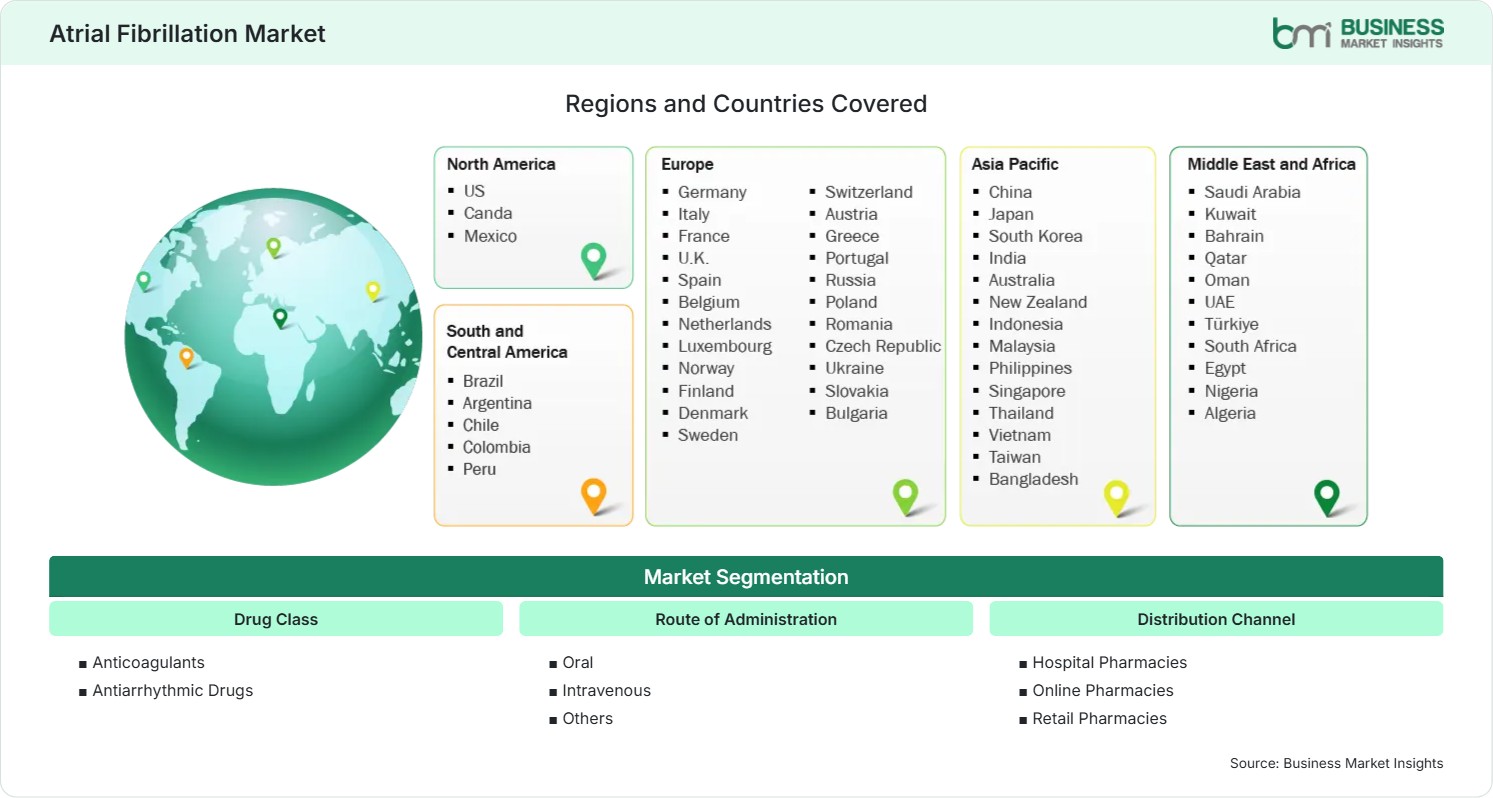
Global Market Geography
FREE PDF
Request your free sample
Request free sample
05 Segment Analysis

Atrial Fibrillation Market Segmentation

Drug Class

Anticoagulants hold 48%–52% share in 2025 and are projected to grow at a CAGR of 5.4%–6.0% through 2033. Their role in reducing thromboembolic risk supports sustained demand. Antiarrhythmic drugs remain important for rhythm control and symptom management. Treatment selection increasingly considers stroke risk, comorbidities, renal function, bleeding risk, symptoms, and long-term treatment objectives.

  • Anticoagulants: Anticoagulants facilitate stroke and systemic embolism prevention with the need driven by risk assessment, aging, diagnosis, duration of treatment, safety surveillance, and increased access.
  • Antiarrhythmic Drugs: Antiarrhythmic medications help with controlling heart rhythm and alleviating symptoms, where the use depends on the specifics of the disease, its treatment, safety factors, and clinical opinion.

Route of Administration

Oral administration holds 72%–76% share in 2025 and remains the dominant route because chronic atrial fibrillation management frequently requires long-term pharmacotherapy. Intravenous administration holds 9%–13% share and is projected to grow at 6.0%–6.8% CAGR through 2033. Other routes represent 13%–17% share, reflecting specialized treatment requirements.

  • Oral: Oral therapy dominates chronic treatment because convenient administration supports long-term anticoagulation and rhythm management outside hospital settings and facilitates routine prescription-based care.
  • Intravenous: Intravenous treatment supports acute and hospital-based management where rapid therapeutic action or controlled administration is clinically appropriate.
  • Others: Other routes address specialized treatment requirements and remain comparatively limited because most chronic pharmacological management relies on established oral or hospital-based delivery pathways.

Distribution Channel

Hospital pharmacies hold 39%–43% share in 2025, supported by treatment initiation, specialist consultation, inpatient care, and complex cardiovascular management. Retail pharmacies hold 42%–46% share, supported by recurring prescriptions and chronic therapy. Online pharmacies hold 12%–16% share and are expanding as digital ordering and home delivery improve access.

  • Hospital Pharmacies: Hospital pharmacies support treatment initiation and inpatient management, particularly where diagnosis, acute stabilization, medication selection, and specialist oversight occur within hospital settings.
  • Online Pharmacies: Online pharmacies improve prescription convenience and home delivery, supporting recurring treatment access as digital healthcare adoption expands.
  • Retail Pharmacies: Retail pharmacies remain important for recurring prescriptions, broad geographic access, medication refills, and long-term outpatient treatment continuity.
06 Market Forces

Atrial Fibrillation Market Dynamics

Key Market Drivers

Rising Cardiovascular Disease Burden Drives Atrial Fibrillation Treatment

Increasing hypertension, obesity, diabetes, heart failure, and vascular disease burdens can expand the population requiring rhythm assessment and thromboembolic risk evaluation. As healthcare systems improve cardiovascular screening, more patients move from undiagnosed disease toward documented diagnosis and treatment. This supports Atrial Fibrillation Market growth through greater demand for anticoagulants, antiarrhythmic drugs, diagnostic services, and longitudinal management. Treatment decisions are increasingly integrated with broader cardiovascular risk reduction.

Growing Elderly Population Increases Atrial Fibrillation Incidence

Age is a major determinant of atrial fibrillation prevalence, making demographic ageing a structural demand driver. Older patients frequently require assessment of stroke risk, bleeding risk, renal function, polypharmacy, and treatment tolerance, creating recurring demand rather than one-time intervention. Ageing also increases healthcare utilization and the likelihood of cardiovascular comorbidities that complicate disease management. The resulting treatment pathway often includes diagnosis, risk stratification, medication selection, monitoring, and reassessment. Atrial Fibrillation Market trends therefore increasingly reflect demographic structure alongside clinical innovation.

Improved Diagnosis Expands Detection of Undiagnosed Patients

Improved diagnosis is widening the treated population by identifying intermittent and previously unrecognized atrial fibrillation. Improved electrocardiography, ambulatory monitoring, wearable-based rhythm assessment, and broader clinical awareness can increase detection beyond patients presenting with persistent symptoms. Earlier identification is commercially relevant because diagnosis creates a pathway toward stroke-risk assessment, and follow-up. Detection also becomes increasingly important as populations age and cardiovascular risk factors become more prevalent. Atrial Fibrillation Market growth consequently depends partly on healthcare systems' ability to identify disease rather than solely on underlying incidence.

Key Market Opportunities

Expansion of Cardiac Care Infrastructure Creates New Opportunities

Expansion of cardiac-care infrastructure can convert previously unmet treatment needs into commercial demand. Hospitals and specialist centers require capabilities spanning electrocardiography, ambulatory monitoring, electrophysiology, medication management, and follow-up. In emerging markets, infrastructure expansion can improve access to diagnosis and treatment simultaneously, allowing more patients to enter formal care pathways. The opportunity is particularly relevant where cardiovascular disease burden is increasing but specialist capacity remains concentrated in major urban centers. Atrial Fibrillation Market Forecasts are therefore influenced by healthcare-capacity development as much as pharmaceutical innovation.

Growing Adoption of Minimally Invasive Ablation Supports Market Growth

Minimally invasive rhythm-management procedures create opportunities by expanding treatment options for patients whose symptoms remain inadequately controlled with medication. Broader procedural adoption can increase demand for electrophysiology infrastructure, mapping, procedural equipment, peri-procedural medicines, and follow-up services. It can also change pharmaceutical treatment patterns because rhythm-control strategies may be combined with medication according to individual thromboembolic and clinical risk. The Market forecast indicates that increasing integration between pharmaceutical management and procedural rhythm control can create a more diversified treatment ecosystem and support higher-value cardiovascular care.

Emerging Markets Offer Opportunities for Improved AF Diagnosis

Emerging markets provide considerable opportunity because diagnosis remains constrained by unequal access to electrocardiography, ambulatory monitoring, specialists, and structured cardiovascular care. Expanding primary-care capabilities can improve identification before complications occur, while referral networks can connect diagnosed patients with specialist services. The opportunity is strengthened by ageing demographics and rising cardiovascular risk. Digital monitoring can help extend diagnostic reach where specialist infrastructure is concentrated in large cities.

Market Restraints and Challenges

High Treatment Costs Can Limit Access to Advanced Atrial Fibrillation Care

Factor: Advanced atrial fibrillation management can involve recurring medication costs, specialist consultations, diagnostic monitoring, hospitalization, procedural treatment, and long-term follow-up. Impact: High cumulative treatment expenditure can restrict access for patients with limited insurance coverage or constrained healthcare budgets. Cost sensitivity is particularly relevant in emerging markets where cardiovascular services and pharmaceutical reimbursement may vary considerably.

Treatment-Related Risks May Affect Patient and Physician Preferences

Factor: Anticoagulant and antiarrhythmic therapies require careful clinical selection because treatment decisions can be influenced by bleeding risk, drug interactions, organ function, adverse effects, and individual patient characteristics. Impact: Concerns about treatment-related complications can affect adherence, prescribing decisions, monitoring requirements, and acceptance of long-term therapy. Risk management can increase healthcare-resource requirements because patients may require periodic evaluation and medication review.

07 Company Analysis

Competitive Landscape

The Atrial Fibrillation Market analysis reflects competition across pharmaceutical manufacturers and cardiovascular technology providers, with differentiation centered on clinical evidence, treatment safety, therapeutic convenience, product portfolios, distribution reach, and integration with evolving cardiovascular-care pathways. The competitive environment includes companies focused on anticoagulation and rhythm-management medicines alongside organizations active in cardiovascular devices and procedural care.

Company Name

Overview

Products and Services relevant to this market

Bristol-Myers Squibb Company

Global biopharmaceutical company with an established cardiovascular medicines portfolio and broad international commercial reach.

Anticoagulation therapies, cardiovascular medicines, clinical research, pharmaceutical development, and patient-support capabilities.

Pfizer Inc.

Global pharmaceutical company with significant cardiovascular and specialty-care capabilities across multiple geographic markets.

Anticoagulation medicines, cardiovascular therapeutics, research, manufacturing, distribution, and healthcare support.

Bayer AG

Diversified healthcare company with substantial pharmaceutical operations and cardiovascular treatment capabilities.

Anticoagulant therapies, cardiovascular medicines, clinical research, manufacturing, and pharmaceutical distribution.

Johnson & Johnson

Healthcare company with pharmaceutical and medical technology activities spanning cardiovascular treatment and intervention.

Cardiovascular medicines, electrophysiology technologies, procedural solutions, research, and healthcare products.

Sanofi S.A.

Global healthcare company with broad pharmaceutical capabilities and established cardiovascular treatment activities.

Cardiovascular medicines, anticoagulation-related therapies, research, manufacturing, and international distribution.

Boehringer Ingelheim International GmbH

Research-driven pharmaceutical company active across cardiovascular and metabolic disease treatment.

Anticoagulant therapy, cardiovascular medicines, clinical research, manufacturing, and patient-care support.

Daiichi Sankyo Company, Limited

Pharmaceutical company with strong cardiovascular focus and international development capabilities.

Anticoagulant therapy, cardiovascular medicines, research, clinical development, manufacturing, and distribution.

Medtronic plc

Medical technology company with cardiovascular and electrophysiology capabilities supporting rhythm management.

Cardiac rhythm technologies, electrophysiology systems, ablation technologies, monitoring, and procedural solutions.

Abbott Laboratories

Diversified healthcare company with pharmaceutical and cardiovascular device capabilities.

Cardiovascular medicines, electrophysiology technologies, rhythm-management systems, diagnostics, and clinical support.

Boston Scientific Corporation

Medical technology company focused on interventional cardiovascular and electrophysiology solutions.

Electrophysiology systems, ablation technologies, mapping, cardiac devices, procedural tools, and monitoring solutions.

10 Trust & Transparency

Research Methodology

The market analysis combines proprietary research with secondary data from government agencies, company disclosures, regulatory filings, industry databases and expert interviews. Market estimates are validated through data triangulation, cross-market benchmarking and analyst review.

View Full Research Methodology

11 Questions Answered

Frequently Asked Questions

How is the Atrial Fibrillation Market Report relevant to healthcare planning?

It provides a structured view of treatment categories, administration routes, distribution channels, and competitive positioning relevant to pharmaceutical and cardiovascular-care planning.

What factors influence atrial fibrillation treatment selection?

Treatment selection depends on thromboembolic risk, symptoms, comorbidities, renal function, bleeding risk, and access to specialist cardiovascular services.

How is atrial fibrillation diagnosis changing?

Diagnosis is increasingly supported by ambulatory monitoring, wearable technologies, opportunistic screening, and improved electrocardiography.

Why is anticoagulation important in atrial fibrillation management?

Atrial fibrillation can increase thromboembolic risk. Anticoagulation is therefore considered according to individual stroke-risk assessment, with treatment decisions balanced against bleeding risk and other clinical factors.

What is the primary treatment objective in atrial fibrillation?

Treatment objectives generally include reducing thromboembolic risk, controlling symptoms, managing heart rate or rhythm where appropriate, and addressing cardiovascular risk factors and comorbidities.

Access the Full Atrial Fibrillation Market Report

Get segment-level forecasts, regional estimates, competitive benchmarking, company profiles and downloadable Excel datasets.

Access the full Atrial Fibrillation Market Report
350 pages PDF & Excel | 2026-08-20