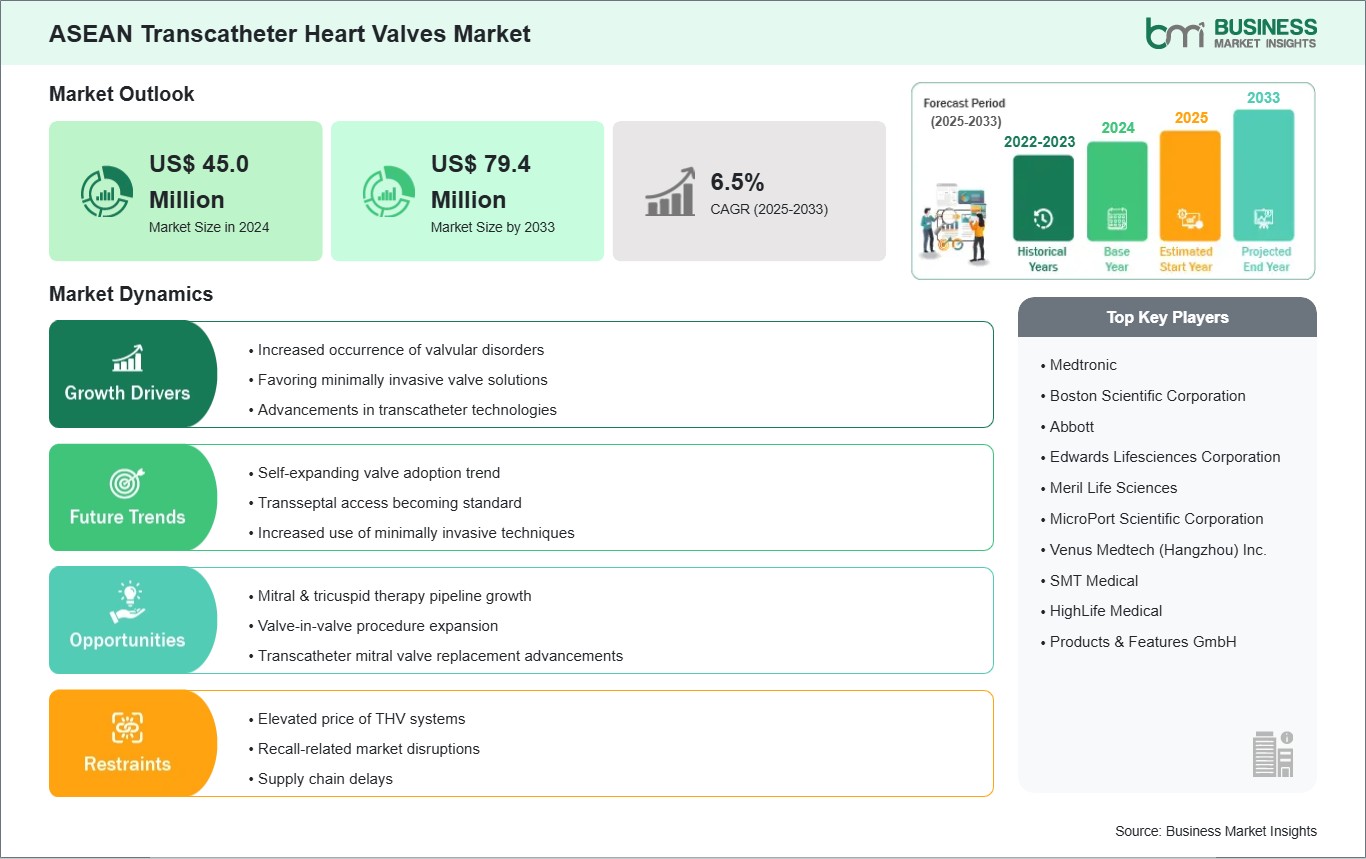
The ASEAN transcatheter heart valves market size is expected to reach US$ 79.4 million by 2033 from US$ 45.0 million in 2024. The market is estimated to record a CAGR of 6.5% from 2025 to 2033.
The ASEAN transcatheter heart valves market is evolving rapidly, driven by rising cardiovascular disease prevalence, increasing healthcare investments, and growing awareness of minimally invasive cardiac procedures. Across the region, aging populations and lifestyle-related risk factors such as hypertension, diabetes, and obesity are contributing to higher incidences of valvular heart disease, creating demand for advanced treatment options such as transcatheter aortic valve replacement (TAVR). Indonesia has emerged as the leading market within ASEAN, supported by its large patient base, expanding healthcare infrastructure, and government initiatives to strengthen tertiary care facilities.
Key growth drivers include the region's improving access to specialized cardiac centers, collaborations with international medical device companies, and the gradual adoption of advanced imaging and diagnostic technologies that enable precise patient selection for valve interventions. However, challenges remain. High procedural costs and limited reimbursement frameworks restrict accessibility for lower-income populations, while shortages of trained interventional cardiologists and uneven distribution of advanced facilities across rural and urban areas hinder widespread adoption. Despite these restraints, ASEAN's market outlook is positive, with Indonesia setting the pace and other countries such as Thailand, Malaysia, and Singapore gradually expanding their adoption of transcatheter valve technologies.

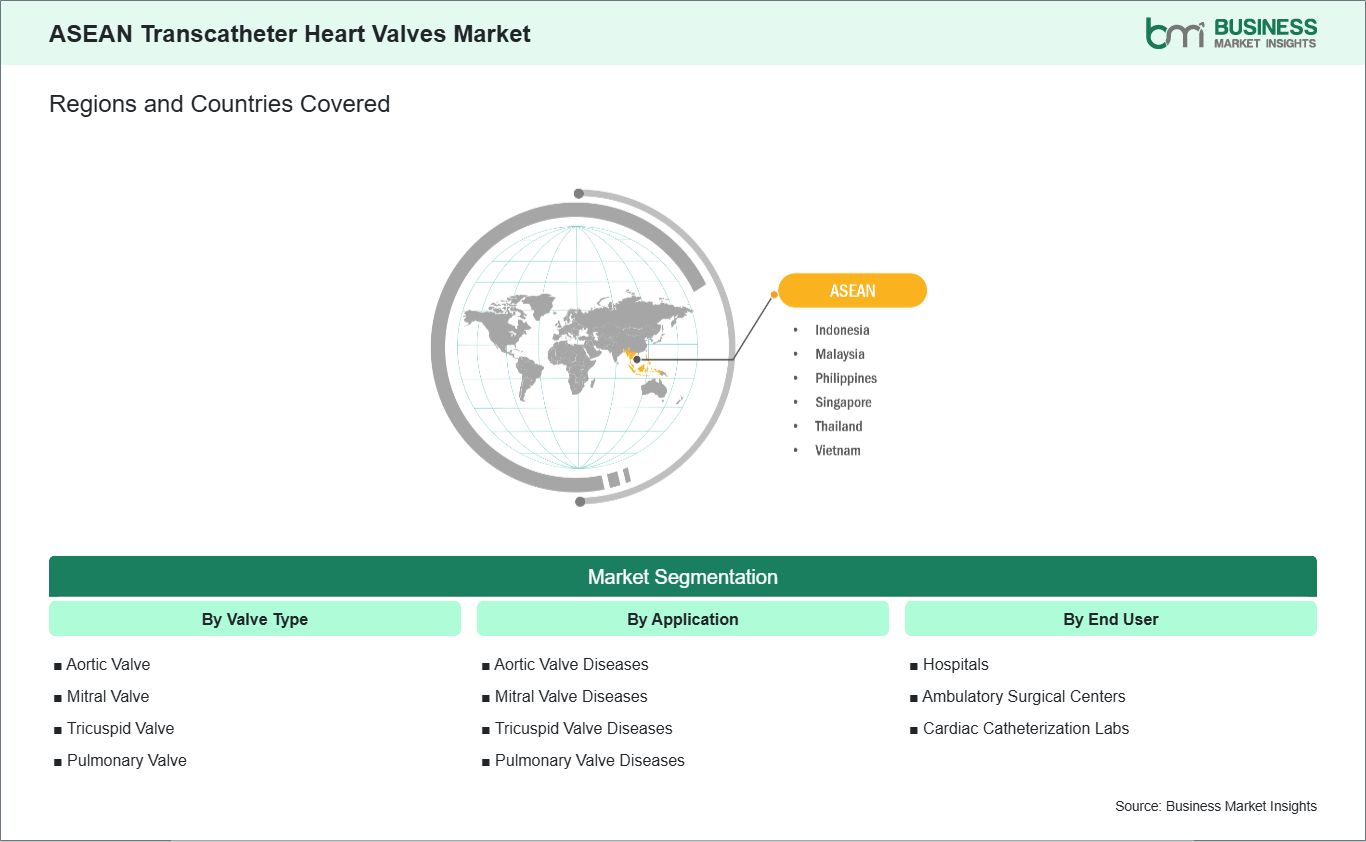
Key segments that contributed to the derivation of the ASEAN transcatheter heart valves market analysis are valve type, application, and end user.
In ASEAN, valvular heart diseases are recognized as a pressing health concern. Rapid urbanization, lifestyle shifts, and aging populations are contributing to more cases of aortic and other valve dysfunctions. Many patients are living longer with chronic conditions, which raises the likelihood of developing issues that require medical intervention. As diagnosis rates improve through better access to clinics and imaging tools, healthcare providers across ASEAN are encountering more patients with moderate to severe valve problems that need advanced treatment options.
Traditional open-heart surgery remains common in the region, but it poses challenges such as lengthy recovery times, higher risk for older adults, and reliance on large tertiary care centers. Many patients in ASEAN countries seek alternatives that reduce hospital stay and procedural risk. This environment makes transcatheter heart valve therapies more attractive, especially for patients who are at greater surgical risk. Cardiologists and cardiac centers in urban hubs such as Singapore, Kuala Lumpur, and Bangkok are reporting a steady increase in referrals for transcatheter procedures, driven by patient demand and clinical evidence of better outcomes for selected cases.
Governments and private healthcare systems are also beginning to prioritize minimally invasive cardiac care. Several ASEAN health ministries are supporting training programs and investing in catheterization labs, which help expand the availability of transcatheter interventions. As physician expertise, diagnostic infrastructure, and patient awareness continue to grow, the rising prevalence of valvular disease serves as a major driver for transcatheter heart valve adoption in the ASEAN market.
In many ASEAN countries, clinical focus in the past has been heavily weighted toward aortic valve disease, but there is a growing interest in treatments for mitral and tricuspid valve disorders. Improvements in cardiac imaging and specialist training are helping physicians identify and understand these conditions more effectively. As a result, doctors in the region are beginning to evaluate patients for transcatheter mitral and tricuspid procedures earlier, creating an opportunity to broaden the scope of valve therapies offered beyond aortic interventions.
Patients with mitral and tricuspid valve dysfunction often face significant symptom burden and limited treatment options, particularly in settings where surgical resources are stretched. Transcatheter therapies provide a less invasive pathway for those who are older or have other health issues that make surgery risky or less desirable. ASEAN cardiac centers are investing in the tools and training needed to perform these procedures. This trend is supported by rising referrals for structural heart disease management and collaborative efforts with global device developers to bring next-generation solutions into the region.
Medical device companies and healthcare leaders can play a role in accelerating this shift by facilitating education, procedural support, and outcome tracking specific to mitral and tricuspid interventions. These build confidence among physicians who may be early in their learning curve. As clinical expertise spreads and more patients become eligible and aware of these treatment options, growth in mitral and tricuspid valve applications stands out as a key opportunity to expand the transcatheter heart valve market across ASEAN.

The ASEAN Transcatheter Heart Valves market demonstrates steady growth, with size and share analysis highlighting evolving trends and competitive dynamics among key players. The report further examines subsegments categorized within valve type, application, and end user, offering insights into their contribution to overall market performance.
By valve type, the aortic valve subsegment dominated the market in 2024. The aortic valve segment dominated due to the high prevalence of aortic stenosis, growing preference for minimally invasive transcatheter aortic valve replacement (TAVR), and technological advancements ensuring improved patient outcomes and procedural safety.
In terms of application, the aortic valve disease subsegment dominated the market in 2024. Aortic valve disease dominated the market as rising cases of calcific aortic stenosis and aging populations increased demand for transcatheter interventions, making it the most treated condition requiring advanced valve replacement solutions.
By end user, the hospitals subsegment dominated the market in 2024. Hospitals serve as primary centers for complex cardiovascular procedures, offering advanced infrastructure, skilled cardiologists, and comprehensive patient care, making them the leading setting for transcatheter heart valve adoption.
| Report Attribute | Details |
|---|---|
| Market size in 2024 | US$ 45.0 Million |
| Market Size by 2033 | US$ 79.4 Million |
| CAGR (2025 - 2033) | 6.5% |
| Historical Data | 2022-2023 |
| Forecast period | 2025-2033 |
| Segments Covered | By By Valve Type
|
| Regions and Countries Covered | ASEAN
|
| Market leaders and key company profiles |
|
The "ASEAN Transcatheter Heart Valves Market Size and Forecast (2022–2033)" report provides a detailed analysis of the market covering below areas:
The geographical scope of the ASEAN transcatheter heart valves market report is divided into: Indonesia, Malaysia, the Philippines, Singapore, Thailand, and Vietnam. Indonesia held the largest share in 2024.
Indonesia dominates the ASEAN transcatheter heart valves market due to its large population, rising burden of cardiovascular diseases, and ongoing investments in healthcare modernization. The country has seen a steady increase in demand for minimally invasive cardiac procedures, particularly in major urban centers such as Jakarta, Surabaya, and Bandung, where tertiary hospitals and specialized cardiac institutes are concentrated. These facilities are performing transcatheter valve replacements, supported by collaborations with global MedTech companies and training programs for local cardiologists.
Indonesia's leadership in this market is reinforced by government-backed initiatives to improve access to advanced healthcare technologies and expand insurance coverage under its national health system. The country's growing middle-class population, coupled with rising awareness of minimally invasive treatment options, has accelerated adoption. However, challenges persist, including disparities in access between urban and rural regions, reliance on imported devices, and limited availability of highly skilled specialists outside major cities. Despite these hurdles, Indonesia continues to set the benchmark for ASEAN, positioning itself as the primary hub for transcatheter heart valve adoption and paving the way for broader regional growth.

The ASEAN Transcatheter Heart Valves market is evaluated by gathering qualitative and quantitative data post primary and secondary research, which includes important corporate publications, association data, and databases. A few of the key developments in the ASEAN transcatheter heart valves market are:
The ASEAN Transcatheter Heart Valves Market is valued at US$ 45.0 Million in 2024, it is projected to reach US$ 79.4 Million by 2033.
As per our report ASEAN Transcatheter Heart Valves Market, the market size is valued at US$ 45.0 Million in 2024, projecting it to reach US$ 79.4 Million by 2033. This translates to a CAGR of approximately 6.5% during the forecast period.
The ASEAN Transcatheter Heart Valves Market report typically cover these key segments-
The historic period, base year, and forecast period can vary slightly depending on the specific market research report. However, for the ASEAN Transcatheter Heart Valves Market report:
The ASEAN Transcatheter Heart Valves Market is populated by several key players, each contributing to its growth and innovation. Some of the major players include:
The ASEAN Transcatheter Heart Valves Market report is valuable for diverse stakeholders, including:
Essentially, anyone involved in or considering involvement in the ASEAN Transcatheter Heart Valves Market value chain can benefit from the information contained in a comprehensive market report.
Please tell us your area of interest
(Market Segments/ Regions and Countries/ Companies)