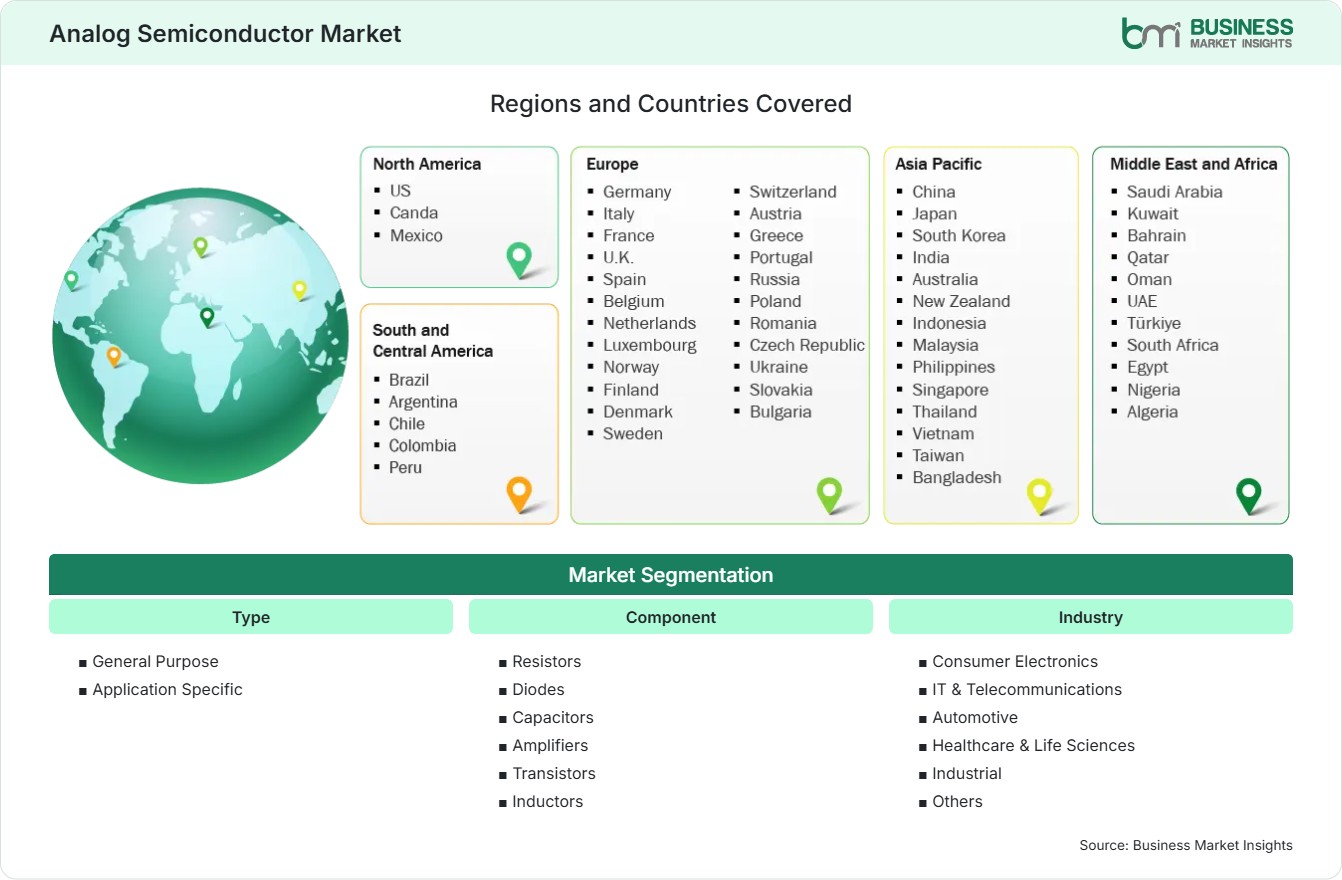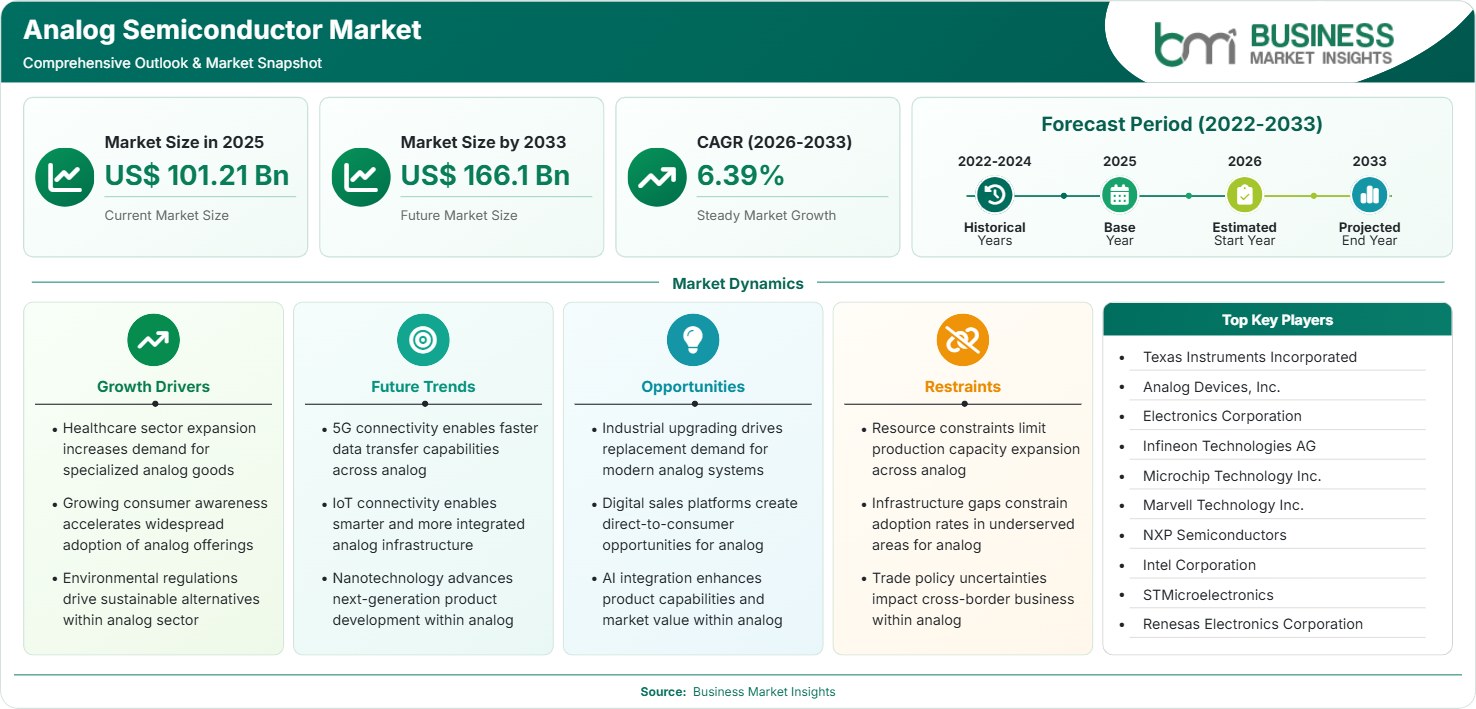
Analog Semiconductor Market Regional Highlights
North America Analog Semiconductor Market
North America remains a major contributor, holding an estimated 32%–35% share in 2025 with a CAGR range of 6.0%–6.5% during 2026–2033. The region benefits from strong semiconductor design capabilities, automotive electronics adoption, defense applications, and industrial automation investments. The Analog Semiconductor Market share reflects continued demand from technology-intensive industries requiring reliable signal processing and power management solutions. The United States maintains leadership through semiconductor innovation, research infrastructure, and government-supported manufacturing initiatives.
- The region benefits from established semiconductor companies, advanced research facilities, and strong demand for analog components across automotive, aerospace, telecommunications, and industrial applications requiring high-performance electronic systems.
- Increasing electric vehicle production and charging infrastructure investments are accelerating adoption of analog power management components, battery monitoring solutions, and sensor technologies across automotive manufacturing ecosystems.
- Government initiatives supporting domestic semiconductor production are strengthening fabrication capacity, supply chain security, and advanced component development capabilities throughout North American technology sectors.
- Industrial automation expansion is increasing demand for precision analog devices supporting robotics, factory monitoring, smart manufacturing, and energy-efficient operational systems.
US Analog Semiconductor Market
The United States represents the largest contributor within North America, accounting for approximately 26%–29% Analog Semiconductor Market share in 2025 and expanding at a CAGR range of 6.2%–6.7% between 2026–2033. Strong semiconductor research capabilities, defense electronics demand, and investments in domestic manufacturing are supporting industry expansion. The country’s ecosystem combines leading chip designers, technology providers, and manufacturing partners focused on improving semiconductor resilience.
- Automotive electrification trends are increasing demand for analog integrated circuits used in battery systems, power conversion, driver assistance technologies, and vehicle connectivity platforms.
- Data center expansion and artificial intelligence infrastructure investments are creating opportunities for advanced power management and signal processing components supporting high-performance computing environments.
- Federal semiconductor initiatives are encouraging domestic manufacturing investments, research partnerships, and technology development programs aimed at reducing dependence on international supply chains.
- Healthcare technology innovation is supporting demand for precision analog components used in diagnostic equipment, wearable devices, and medical monitoring systems requiring accurate signal conversion.
Europe Analog Semiconductor Market
Europe holds an estimated 22%–25% share in 2025 and is projected to expand at a CAGR range of 5.8%–6.3% during 2026–2033. The region’s semiconductor ecosystem is supported by automotive manufacturing, industrial automation, renewable energy systems, and smart infrastructure development. Germany, France, the Netherlands, and Italy represent important contributors due to strong engineering capabilities and electronics manufacturing networks. The Analog Semiconductor Market share in Europe is influenced by increasing demand for energy-efficient components, vehicle electrification, and industrial digitalization initiatives.
- Germany is strengthening analog semiconductor demand through automotive innovation, electric vehicle production, industrial automation, and advanced manufacturing systems requiring reliable electronic control components.
- The Netherlands and France are supporting semiconductor development through research collaborations, technology infrastructure, and investments in advanced semiconductor manufacturing capabilities.
- European automotive manufacturers are increasing adoption of analog components for battery management, power conversion, safety systems, and connected vehicle platforms.
- Renewable energy expansion across European countries is driving demand for analog power devices used in solar systems, energy storage solutions, and grid management applications.
- Regulatory emphasis on semiconductor supply chain resilience is encouraging regional production partnerships and investment in localized semiconductor capabilities.
Asia Pacific Analog Semiconductor Market
Asia Pacific represents the fastest expanding regional ecosystem, accounting for approximately 35%–38% share in 2025 with a CAGR range of 7.0%–7.5% during 2026–2033. The region benefits from semiconductor manufacturing concentration, electronics production capacity, automotive growth, and increasing investments in digital infrastructure. China, Taiwan, Japan, South Korea, and India are key contributors supporting component innovation and manufacturing expansion. The Analog Semiconductor Market growth across Asia Pacific is strengthened by rising demand for consumer electronics, industrial systems, and electric mobility solutions.
- China continues expanding semiconductor capabilities through domestic manufacturing investments, electronics production networks, and increasing adoption of analog components across multiple industrial applications.
- Taiwan maintains a strategic position through semiconductor manufacturing expertise, advanced fabrication infrastructure, and strong integration with global electronics supply chains.
- Japan and South Korea are advancing analog semiconductor innovation through automotive electronics, industrial equipment development, and high-quality component manufacturing capabilities.
- India is emerging as a growing electronics manufacturing hub, supported by semiconductor policy initiatives, digital transformation programs, and increasing domestic technology production.
- Southeast Asian countries are attracting semiconductor investments through electronics assembly capabilities, improving infrastructure, and expanding technology manufacturing ecosystems.
Rest of World Analog Semiconductor Market
South and Central America together represent an estimated 4%–6% share in 2025, expanding at a CAGR range of 5.0%–5.5% through 2026–2033. Brazil and Mexico are emerging as important electronics and automotive manufacturing locations, supported by industrial modernization and technology adoption.
The Middle East and Africa account for approximately 3%–5% share in 2025 with a CAGR range of 5.2%–5.8%. Digital infrastructure development, renewable energy projects, and industrial automation investments are creating new opportunities for analog component adoption. Regional Analog Semiconductor Market share remains smaller but demonstrates potential through technology diversification and infrastructure modernization.
- Brazil is supporting semiconductor demand through industrial automation, automotive manufacturing, and modernization of electronic systems across commercial sectors.
- Mexico benefits from nearshoring trends, expanding automotive production, and increasing electronics manufacturing activities requiring reliable semiconductor components.
- Middle Eastern countries are adopting advanced digital infrastructure, smart city technologies, and energy management systems requiring analog electronic solutions.
- African markets are gradually increasing semiconductor consumption through telecommunications expansion, renewable energy deployment, and technology-driven infrastructure projects.
- Regional technology investments are creating opportunities for suppliers offering efficient, durable, and application-specific analog semiconductor solutions.