
Allergic Conjunctivitis Market Outlook: Size, Share, Trends, Growth Analysis, Competitive Landscape & Forecast, 2026-2033

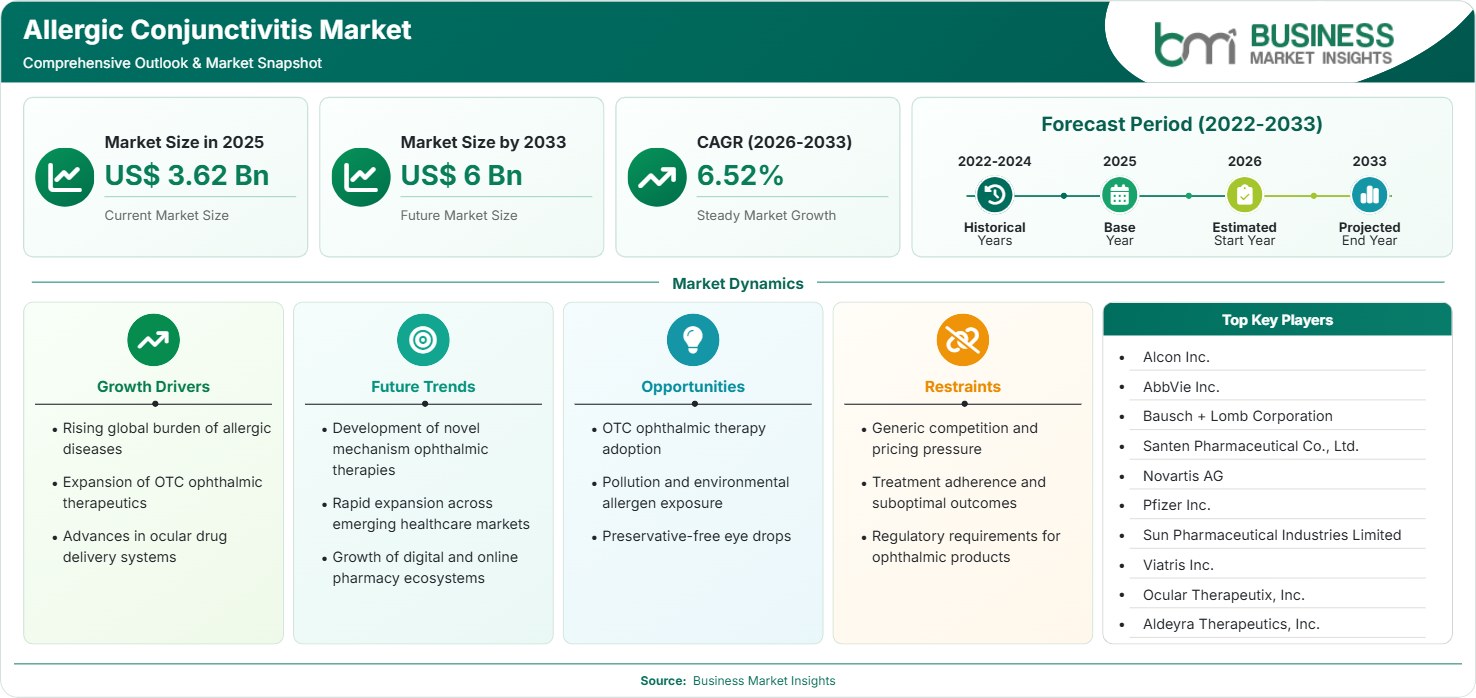
The Allergic Conjunctivitis Market size was valued at US$ 3.62 Billion in 2025 and is projected to reach US$ 6 Billion by 2033, growing at a CAGR of 6.52% during 2026–2033. Rising allergy prevalence, expanding OTC ophthalmic therapies, increasing pollution exposure, improving diagnosis rates, and innovation in preservative-free eye drops create sustained demand and commercialization opportunities.

Report Coverage
  • Drug Class: Antihistamines & Mast Cell Stabilizers, Corticosteroids
  • Disease Type: Mild Allergic Conjunctivitis, Severe Allergic Conjunctivitis
US$ 3.62 Bn Market size in 2025
US$ 6 Bn Market Size by 2033
6.52% CAGR, 2026 - 2033
2026-2033 Forecast Period

AI Overview

Allergic Conjunctivitis Market Summary

  • North America Region: North America holds market share of 38%–41% in 2025, growing with a CAGR of 5.8%–6.2% during 2026–2033. High allergy incidence, strong ophthalmic drug penetration, reimbursement access, and expanding OTC product availability support demand, while digital care pathways improve treatment adherence and patient outcomes. Brief U.S. market analysis: The U.S. dominates regional revenue through advanced ophthalmology networks, growing at 5.9%–6.3% CAGR through 2033.
  • Fastest Growing Region: Asia Pacific holds market share of 24%–27% in 2025, growing with a CAGR of 7.6%–8.2% during 2026–2033. Urban pollution, expanding healthcare access, stronger allergy awareness, rising disposable incomes, and broader pharmacy networks accelerate treatment adoption across emerging economies and metropolitan population centers.
  • Leading Segment: Antihistamines & Mast Cell Stabilizers hold market share of 52%–56% in 2025, growing with a CAGR of 6.3%–6.8% during 2026–2033. Strong physician preference, favorable safety profiles, repeated seasonal use, OTC accessibility, and rapid symptom relief sustain leadership across mild and recurrent cases.
  • High Growth Segment: Online Pharmacies hold market share of 14%–18% in 2025, growing with a CAGR of 8.1%–8.7% during 2026–2033. Home delivery, prescription digitization, expanding e-commerce penetration, improved medication accessibility, competitive pricing, and chronic allergy management models support accelerated channel expansion globally.
  • Key Market Opportunity: Development of novel anti-inflammatory ocular therapies, combination formulations, and preservative-free products offers manufacturers opportunities to address treatment persistence, improve comfort, and expand premium product penetration across high-growth patient populations.
  • Major Market Players: Alcon Inc., AbbVie Inc., Bausch + Lomb Corporation, Santen Pharmaceutical Co., Ltd., Novartis AG, Pfizer Inc., Sun Pharmaceutical Industries Limited, Viatris Inc., Ocular Therapeutix, Inc., Aldeyra Therapeutics, Inc.
Strategic Insights

Allergic Conjunctivitis Market: Strategic Insights

Allergic Conjunctivitis Market Strategic Framework
FREE PDF
Request your free sample
Request free sample
Stakeholder View

Key Takeaways

  • The value chain is increasingly integrated across pharmaceutical manufacturers, API suppliers, ophthalmology clinics, retail pharmacies, online platforms, and healthcare providers, improving treatment accessibility and prescription conversion rates.
  • Mild disease management represents the largest commercial opportunity due to high prevalence, recurring seasonal episodes, and broad consumer adoption of antihistamine-based therapies.
  • Innovation is shifting toward combination drugs, preservative-free formulations, sustained-release delivery approaches, and targeted anti-inflammatory therapies that improve patient comfort and adherence.
  • Asia-Pacific offers a compelling investment case due to expanding healthcare infrastructure, rising pollution-linked allergies, and growing middle-class healthcare spending.
  • Licensing agreements, ophthalmic portfolio expansion, and specialty eye-care acquisitions continue shaping competition as companies pursue scale and differentiated ocular therapeutics.
  • Digital pharmacies are becoming strategic distribution assets, enabling recurring therapy fulfillment, patient engagement, and data-driven treatment management.
Geographic Outlook

Allergic Conjunctivitis Market Regional Highlights

North America Allergic Conjunctivitis Market

North America accounted for 38%–41% Allergic Conjunctivitis Market share in 2025 and is projected to expand at 5.8%–6.2% CAGR through 2033. Robust healthcare spending, high awareness, strong prescription coverage, and widespread OTC product penetration support demand. Seasonal allergies affect a significant portion of the population, generating recurring treatment requirements. Innovation adoption remains strong across hospitals, ophthalmology clinics, and retail pharmacies.

  • Growing pollen exposure and climate-related allergen season extension are increasing annual treatment demand across patient groups.
  • Leading manufacturers maintain extensive commercialization networks supporting product availability and physician engagement.
  • Retail pharmacy chains continue expanding OTC allergy-eye treatment sales and patient education programs.
  • Digital health adoption improves consultation accessibility and prescription management across chronic allergy populations.

US Allergic Conjunctivitis Market

The United States represented 79%–83% of regional Allergic Conjunctivitis Market revenue in 2025 and is forecast to expand at 5.9%–6.3% CAGR. Strong ophthalmic care infrastructure, high diagnosis rates, and extensive product availability maintain leadership. Rising environmental allergens and consumer preference for rapid-relief therapies support consistent demand across prescription and OTC categories.

  • Advanced ophthalmology networks facilitate rapid clinical intervention and product adoption.
  • Consumer spending on eye health remains strong across both insured and self-pay populations.
  • Pharmacy benefit programs increase treatment accessibility and adherence.
  • Product innovation continues enhancing symptom management and patient convenience.

Europe Allergic Conjunctivitis Market

Europe held 27%–30% Allergic Conjunctivitis Market share in 2025 and is projected to grow at 5.9%–6.4% CAGR. Germany leads regional revenues while Spain demonstrates faster growth driven by allergy prevalence and healthcare access improvements. Strong regulatory oversight, established healthcare systems, and increasing awareness programs support treatment uptake across key markets.

  • Germany remains the largest national market with steady ophthalmic prescription demand.
  • Spain records among the highest regional expansion rates due to rising allergic disease burden.
  • Preservative-free formulations receive increasing acceptance among clinicians.
  • Community pharmacies play a central role in patient education and therapy access.

Asia Pacific Allergic Conjunctivitis Market

Asia Pacific captured 24%–27% share in 2025 and is expected to register 7.6%–8.2% CAGR, the fastest globally. China leads regional revenue generation, while India presents the strongest growth trajectory. Urbanization, pollution exposure, greater healthcare access, and increasing diagnosis rates contribute to market expansion.

  • China benefits from large patient populations and expanding ophthalmology services.
  • India demonstrates strong growth driven by healthcare expansion and awareness initiatives.
  • E-commerce pharmacy platforms accelerate medication accessibility across urban centers.
  • Rising disposable income supports adoption of branded ocular therapies.
  • Local manufacturing strengthens regional supply-chain resilience.

Rest of World Allergic Conjunctivitis Market

Rest of World accounted for 7%–10% share in 2025 and is anticipated to grow at 6.5%–7.1% CAGR. Brazil leads South and Central America, while Saudi Arabia shows strong Middle East growth. Expanding specialist care access and improving healthcare investments support therapeutic uptake.

  • Brazil benefits from growing ophthalmology services and increasing allergy diagnosis rates.
  • Saudi Arabia invests significantly in healthcare modernization and specialty treatment access.
  • Distribution network expansion improves product reach beyond major metropolitan areas.
  • Healthcare awareness initiatives encourage earlier symptom management.
  • International manufacturers continue strengthening regional partnerships and distribution agreements.
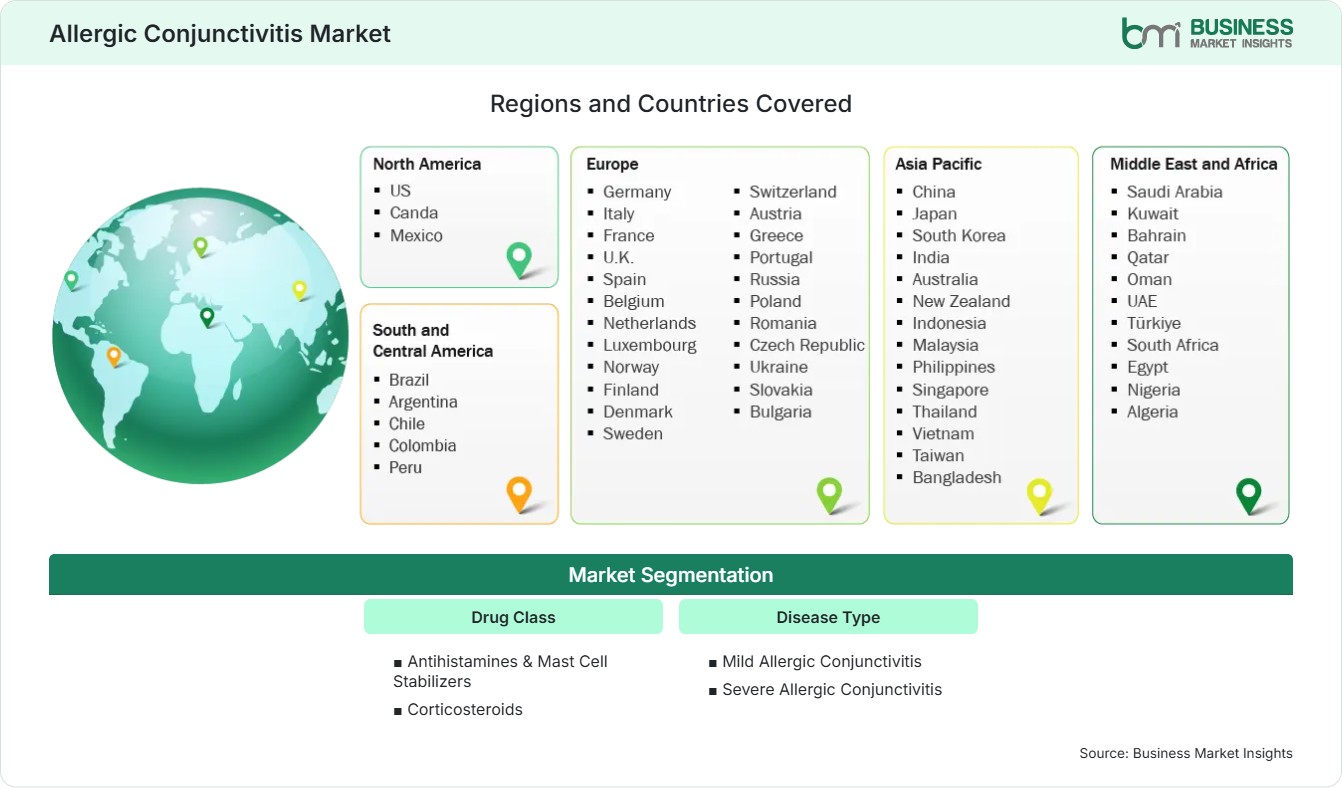
Global Market Geography
FREE PDF
Request your free sample
Request free sample
Segment Analysis

Allergic Conjunctivitis Market Segmentation

Drug Class

This segment accounted for a substantial 52%–56% share in 2025 and is expected to grow at 6.3%–6.8% CAGR. The Allergic Conjunctivitis Market scope within drug classes is expanding through combination therapies, stronger physician preference for dual-action agents, and increasing consumer demand for effective long-duration symptom control.

  • Antihistamines & Mast Cell Stabilizers: Widely adopted for seasonal and perennial symptom management due to rapid relief, favorable tolerability, and availability across prescription and OTC channels.
  • Corticosteroids: Utilized primarily for severe inflammatory episodes requiring stronger symptom control under medical supervision and short-duration treatment approaches.

Disease Type

Disease-type segmentation reflects diverse treatment intensity requirements. Mild conditions represented 63%–67% share in 2025, supported by widespread prevalence. Growth remains steady as awareness, early diagnosis, and accessible therapies reduce symptom burden and improve long-term management outcomes.

  • Mild Allergic Conjunctivitis: Represents the dominant patient population, driving recurring demand for OTC and prescription antihistamine-based therapies.
  • Severe Allergic Conjunctivitis: Requires specialist intervention and advanced therapeutic management due to prolonged inflammation and higher complication risks.

Distribution Channel

Distribution channels are evolving with digital transformation. Hospital and retail channels remain essential; however, online adoption is accelerating. Allergic Conjunctivitis Market trends indicate stronger integration of digital prescriptions, home delivery, and e-commerce-based medication fulfillment.

  • Hospital Pharmacies: Critical for prescription therapies prescribed within specialist ophthalmology and institutional healthcare settings.
  • Drug Stores & Retail Pharmacies: Continue serving as primary access points for OTC products and routine prescription refills.
  • Online Pharmacies: Expanding rapidly through convenience, competitive pricing, broad product selection, and digital healthcare integration.
Market Forces

Allergic Conjunctivitis Market Dynamics

Key Market Drivers

Rising Global Burden of Allergic Diseases

The World Allergy Organization and related public-health studies indicate increasing allergy prevalence worldwide, creating a larger patient pool requiring ocular symptom management. Increased exposure to pollen, air pollution, and other environmental pollutants increases the frequency of attacks requiring pharmaceutical treatment. Allergies have become more common among urbanites in areas where airborne particle levels remain high. Increased diagnoses, along with awareness campaigns, ensure that patients use their medications. Doctors are stressing the need for early treatment to avoid symptom exacerbation and a decline in quality of life. This ensures continued growth in sales and market expansion.

Expansion of OTC Ophthalmic Therapeutics

The expanding availability of over-the-counter (OTC) ophthalmic therapeutics has significantly improved access to eye allergy treatment. There is a growing consumer preference for products that can treat symptoms quickly and conveniently, without the need to visit specialists. This is prompting significant investments by manufacturers to increase awareness, innovate products, and make them available across all channels. With the proliferation of chain pharmacies, online portals, and direct-to-consumer marketing, the availability of these products continues to expand. Moreover, enhanced formulations provide increased comfort, longer-lasting effects, and a superior experience to patients. All of these contribute to self-care trends, larger consumer reach, and revenues.

Advances in Ocular Drug Delivery Systems

Pharmaceutical companies are making significant advances in ocular drug delivery systems through the development of preservative-free formulations, dual-action therapies, and sustained-release technologies. Such developments lead to improved efficacy without increasing the number of doses administered. New methods of administering drugs ensure high adherence rates and sustained use of the therapy. Current research focuses on targeted reduction of inflammation, improved ocular surface tolerance, and safety profiles. These advances result in differentiation, high-end positioning of the products in the market, physician favorability and increased growth prospects for manufacturers in the sector.

Key Market Opportunities

Development of Novel Mechanism Ophthalmic Therapies

New therapeutic approaches focused on inflammatory pathways offer significant opportunities for drug companies. There are still unmet medical needs in patients suffering from symptoms, even with the available treatment options. Innovation in mechanisms of action can facilitate improved efficacy and more room for pricing. Innovations at the clinical stage can help treat diseases that have few treatment options. Collaborations between pharma companies and biotech firms are anticipated. Allergic Conjunctivitis Market Forecasts increasingly reflect value creation from innovation-led products capable of expanding treatment standards and improving long-term patient outcomes.

Rapid Expansion Across Emerging Healthcare Markets

Investments in healthcare infrastructure in Asia-Pacific, Latin America, and certain Middle Eastern nations have drastically improved access to diagnosis, treatment, and preventative services. The increase in disposable income levels is causing patients to look for branded medicines and specialist medical care. Meanwhile, governments are promoting the modernization of healthcare systems by investing in digital healthcare solutions and more healthcare infrastructure. The rising population, urbanization, and environmental allergies have increased the size of patient populations. Pharmaceutical companies that foster robust local relationships, efficient distribution channels, and proper marketing strategies can reap significant gains from these underserved markets.

Growth of Digital and Online Pharmacy Ecosystems

Online healthcare ecosystems are transforming prescription fulfillment and patient engagement by offering greater accessibility, convenience, and personalized healthcare services. With increasing use of smartphones, improvement in internet facilities, and increased availability of digital payments, consumers are increasingly buying ophthalmic drugs using online channels. Subscription refill services, teleconsultations, and deliveries help in improving compliance and consumer satisfaction. Moreover, the company can leverage the power of analytics and AI-based recommendation systems for retaining customers and targeted marketing. With changing regulations, digital pharmacies are expected to play an important role in the distribution channel strategy.

Market Restraints and Challenges

Generic Competition and Pricing Pressure

Factor: Generic treatments for the eyes pose a significant threat to branded drugs because there is extensive availability of low-priced products in well-developed drug categories. Physicians tend to use generic drugs if they offer satisfactory results clinically, while other outlets, such as retail stores, might actively market competitive products. The increasing availability of these types of products might prove to be a hindrance for branded products to rely solely on their brand name.

Impact: Generic competition is a key driver of pricing pressures and margin erosion in the branded ophthalmic products market. The availability of more affordable options might hinder the implementation of premium-priced products and make it harder for companies to get the desired return from the treatment. Nowadays, firms need to promote their products through advanced modes of delivery, better formulations, and clinical trials. This will force companies to invest more money in marketing and educating physicians and patients about the new products.

Treatment Adherence and Suboptimal Outcomes

Factor: Non-adherence on the part of the patient continues to be an issue within the realm of ocular drug management, especially where there is a need for multiple doses on a daily basis. Patients’ changing symptoms may also affect their perception of whether there is a need for the medication, thus resulting in the discontinuation of the treatment when the symptoms subside.

Impact: Ineffective adherence to medication may undermine the prescribed treatment, leading to side effects and symptom recurrence. Inadequate adherence to taking medication may lead to decreased prescription continuity and demand. The problem is currently being addressed by healthcare providers and pharmaceutical companies through educating patients, simplification of taking medicines, reminding patients about their necessity, and providing user-friendly medication. Nonetheless, problems with adherence have an impact on clinical outcomes and the performance of products on the market in various categories of eye treatments.

Company Analysis

Competitive Landscape

The competitive environment reflects strong specialty ophthalmology capabilities, differentiated product portfolios, and ongoing innovation. Current Allergic Conjunctivitis Market analysis highlights emphasis on OTC expansion, advanced ocular formulations, and strategic commercialization partnerships.

Company Name

Overview

Products and Services relevant to this market

Alcon Inc.

Global ophthalmic leader with extensive eye-care portfolio and strong retail presence.

Pataday allergy eye drops, ocular health products, ophthalmic therapeutics.

AbbVie Inc.

Major biopharmaceutical company with established ophthalmology offerings.

Lastacaft and related ocular allergy treatment solutions.

Bausch + Lomb Corporation

Global eye-health specialist serving therapeutic and consumer markets.

Prescription and OTC ophthalmic allergy and eye-care products.

Santen Pharmaceutical Co., Ltd.

Specialty ophthalmology company with strong Asia-Pacific presence.

Alesion brand and ocular allergy treatment portfolio.

Novartis AG

Diversified pharmaceutical innovator with ophthalmic expertise.

Eye-care research, specialty ophthalmic therapeutic development.

Pfizer Inc.

Global pharmaceutical company with extensive commercial infrastructure.

Allergy-related medicines and healthcare distribution capabilities.

Sun Pharmaceutical Industries Limited

Major generic and specialty pharmaceutical manufacturer.

Ophthalmic formulations and allergy treatment products.

Viatris Inc.

Global generic and branded medicine supplier.

Ophthalmic generics and allergy-related therapeutic products.

Ocular Therapeutix, Inc.

Ophthalmology-focused biotechnology innovator.

Sustained-release ocular drug delivery technologies.

Aldeyra Therapeutics, Inc.

Clinical-stage biotechnology company focused on immune-mediated diseases.

Investigational therapies targeting allergic eye conditions.

Trust & Transparency

Research Methodology

The market analysis combines proprietary research with secondary data from government agencies, company disclosures, regulatory filings, industry databases and expert interviews. Market estimates are validated through data triangulation, cross-market benchmarking and analyst review.

View Full Research Methodology

Questions Answered

Frequently Asked Questions

What does this Allergic Conjunctivitis Market Report indicate about innovation?

The report highlights growing investment in preservative-free formulations, dual-action therapies, targeted anti-inflammatory treatments, and advanced ocular drug delivery technologies.

How are online pharmacies influencing competition?

Online platforms improve pricing transparency, convenience, refill management, and patient access, enabling broader distribution and stronger consumer engagement.

Which region offers the strongest future expansion potential?

Asia Pacific presents the strongest growth outlook due to healthcare infrastructure development, expanding middle-class populations, and increasing allergen exposure.

Which drug category generates the highest revenue?

Antihistamines & mast cell stabilizers lead revenue generation because of broad use, favorable safety profiles, repeat purchases, and strong OTC accessibility.

What factors are increasing disease prevalence globally?

Environmental pollution, longer pollen seasons, urbanization, and rising allergy susceptibility are increasing ocular allergic reactions across both developed and emerging economies.

Access the Full Allergic Conjunctivitis Market Report

Get segment-level forecasts, regional estimates, competitive benchmarking, company profiles and downloadable Excel datasets.

Access the full Allergic Conjunctivitis Market Report
350 pages PDF & Excel | 2026-09-02