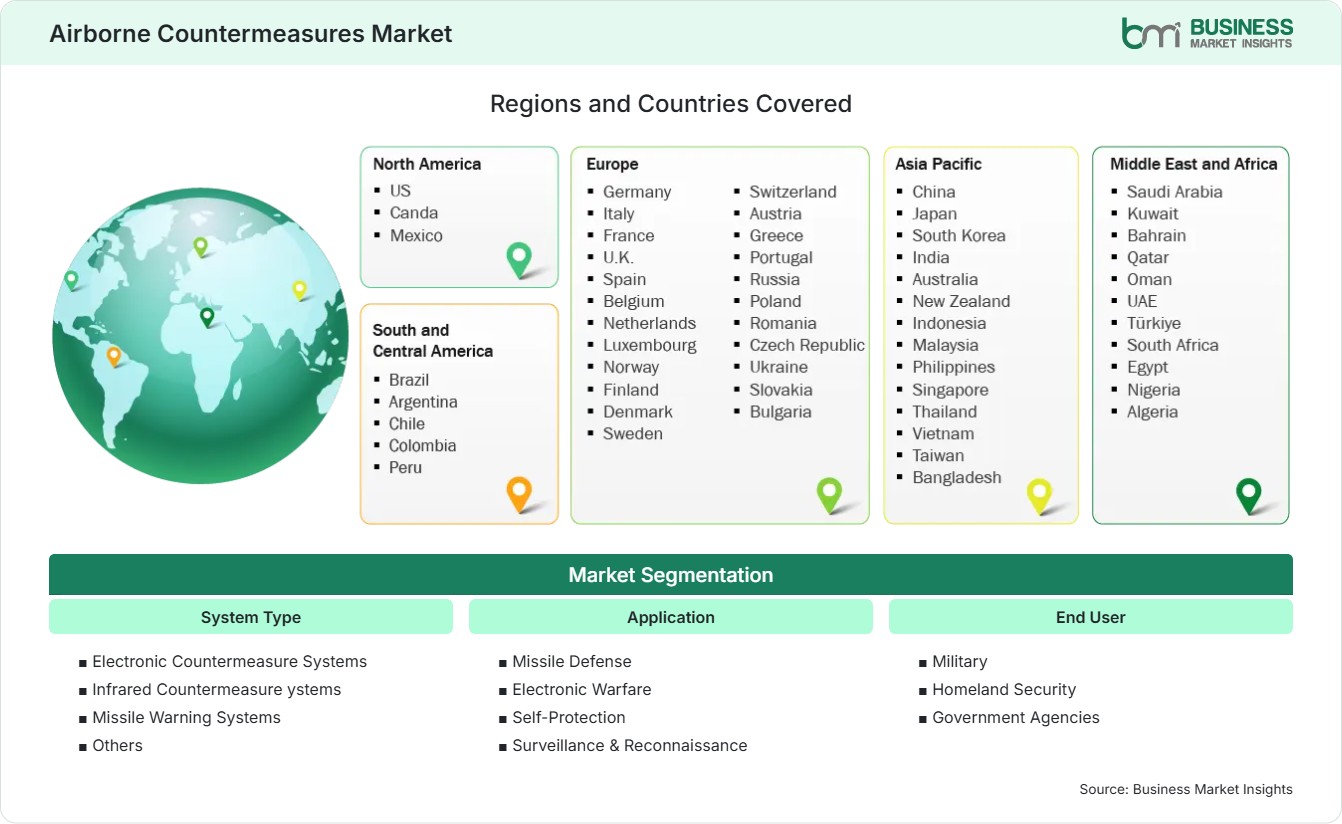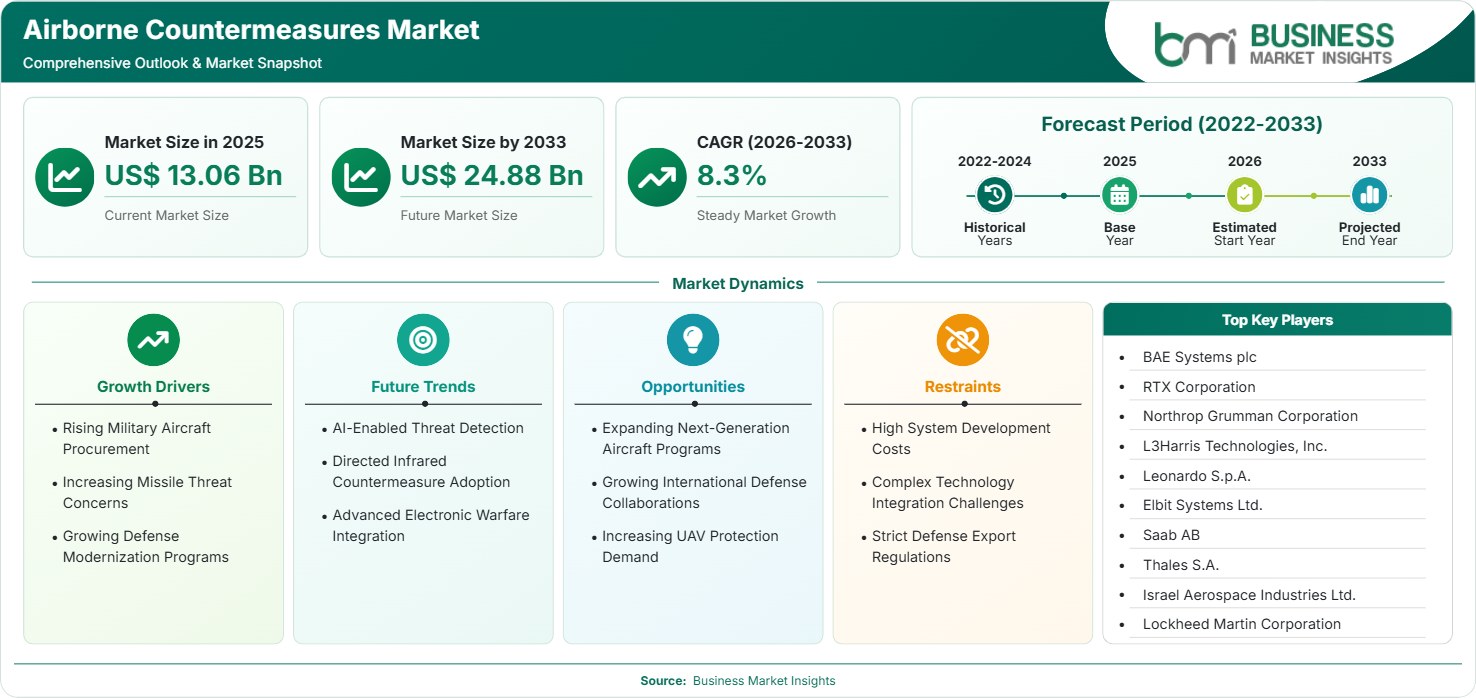
Airborne Countermeasures Market Regional Highlights
North America Airborne Countermeasures Market
North America accounted for 38%–41% share in 2025 and is projected to grow at a CAGR of 7.8%–8.4% from 2026–2033. The region maintains leadership due to extensive military aircraft fleets, advanced defense technology infrastructure, and continuous investment in electronic warfare capabilities. The United States represents the dominant contributor through fighter modernization programs, advanced aircraft procurement, and defense technology development initiatives.
- The US defense sector is investing in advanced airborne protection systems to enhance aircraft survivability against evolving missile and radar threats.
- Military aircraft modernization programs are increasing demand for integrated electronic warfare and infrared countermeasure solutions.
- Defense contractors are developing AI-enabled systems to improve threat identification, response speed, and operational effectiveness.
- Government defense budgets continue supporting research and procurement of advanced airborne protection technologies.
US Airborne Countermeasures Market
The US Airborne Countermeasures Market represented 34%–37% share in 2025 and is expected to expand at a CAGR of 8.0%–8.6% from 2026–2033. Growth is supported by extensive fighter aircraft programs, helicopter protection requirements, electronic warfare investments, and modernization initiatives across military platforms. The country remains a key innovation hub due to strong defense industrial capabilities and continuous investment in advanced aerospace technologies.
- Fighter aircraft programs are increasing demand for sophisticated electronic countermeasure systems and integrated defensive solutions.
- Helicopter and transport aircraft operators are adopting infrared protection systems to improve mission survivability.
- Defense agencies are supporting advanced research programs focused on adaptive electronic warfare and threat response technologies.
- UAV protection requirements are creating additional opportunities for airborne countermeasure technology providers.
Europe Airborne Countermeasures Market
Europe accounted for 23%–26% share in 2025 and is projected to grow at a CAGR of 7.5%–8.2% from 2026–2033. The region benefits from increasing defense investments, multinational aircraft programs, and modernization of airborne protection capabilities. The United Kingdom, France, Germany, and Italy represent major contributors due to advanced aerospace industries, NATO commitments, and rising demand for electronic warfare technologies.
- The United Kingdom is strengthening airborne defense capabilities through investments in electronic warfare systems and next-generation aircraft protection technologies.
- France is supporting market growth through indigenous aerospace development, fighter aircraft modernization, and advanced defense electronics programs.
- Germany is increasing investments in military aviation upgrades and integrated protection systems for enhanced aircraft survivability.
- Italy is contributing through aerospace manufacturing capabilities and participation in multinational defense aircraft programs.
- European defense collaborations are encouraging joint development of advanced countermeasure technologies and interoperable military systems.
Asia Pacific Airborne Countermeasures Market
Asia Pacific accounted for 24%–27% of the market in 2025, and the airborne countermeasures market in APAC is forecast to register a CAGR of 9.0%–9.8% from 2026–2033, making it the fastest-growing region. Growth is supported by expanding defense budgets, aircraft fleet modernization, regional security challenges, and development of indigenous aerospace capabilities. China, India, Japan, South Korea, and Australia are key markets investing in airborne survivability solutions.
- China is advancing electronic warfare capabilities through military aviation modernization and development of advanced airborne defense technologies.
- India is increasing demand through fighter aircraft upgrades, indigenous aerospace programs, and investments in defense electronics manufacturing.
- Japan is strengthening aircraft protection capabilities through defense modernization initiatives and advanced surveillance requirements.
- South Korea is expanding airborne defense technology development through domestic aerospace programs and military aircraft enhancement projects.
- Australia is increasing defense investments focused on aircraft survivability, interoperability, and regional security requirements.
Rest of World Airborne Countermeasures Market
Rest of World accounted for an 8%–11% share in 2025 and is expected to grow at a CAGR of 8.1%–8.8% from 2026–2033. The region includes Latin America, Middle East, and Africa markets where military modernization, security concerns, and aircraft fleet upgrades are influencing demand. Middle Eastern countries represent significant opportunities due to defense procurement activities and investments in advanced aerospace systems.
Latin American markets are gradually expanding airborne defense capabilities through fleet modernization and selective military investments. Middle Eastern countries continue strengthening aircraft protection requirements through procurement of advanced fighter aircraft, helicopters, and electronic warfare solutions.
- Saudi Arabia is increasing defense technology investments through aircraft procurement programs and advanced military capability development.
- United Arab Emirates is strengthening aerospace capabilities through defense modernization and acquisition of advanced airborne systems.
- Brazil is supporting regional demand through aircraft modernization programs and domestic aerospace industry development.
- African defense organizations are gradually improving airborne capabilities through fleet upgrades and security-focused procurement initiatives.
- Regional partnerships are creating opportunities for international defense companies to provide advanced countermeasure solutions.