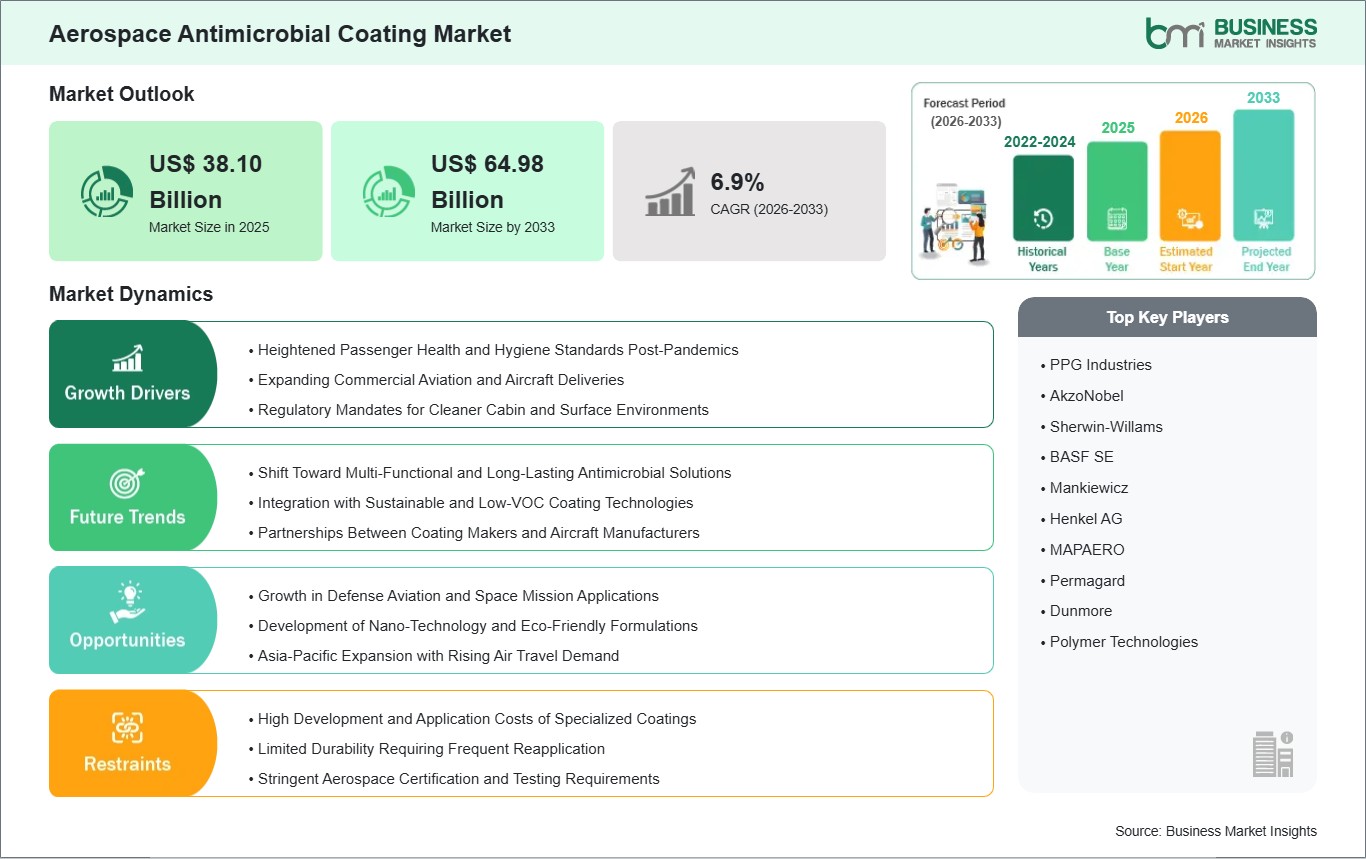
The Aerospace Antimicrobial Coating market size is expected to reach US$ 64.98 million by 2033 from US$ 38.10 million in 2025. The market is estimated to record a CAGR of 6.9% from 2025 to 2033.
Aerospace antimicrobial coatings are designed to protect aircraft surfaces from microbial growth. They maintain performance, safety, and durability in extreme operating conditions. This category includes coatings for aircraft interiors, cabins, cockpits, cargo holds, lavatories, galleys, air filtration systems, and a few exterior components. These coatings are important for maintaining hygiene, preventing the spread of bacteria and fungi, reducing odors, and extending the service life of materials in both commercial and military aviation. These coatings are commonly used in passenger aircraft, business jets, helicopters, military aircraft, and unmanned aerial vehicles. The demand is rising in both emerging and established aviation markets due to an increase in air travel, greater health awareness, and stricter hygiene standards. This growth is also supported by a stronger focus on passenger safety, infection control, and cleaner cabins, especially after recent global health concerns.
The need for durable, lightweight, and compliant surface protection is driving market growth. Aerospace manufacturers and airlines are using antimicrobial coatings that provide long-lasting resistance to microbes, compatibility with lightweight materials, resistance to abrasion and chemicals, and stability under pressure and temperature changes. This has led to more frequent use of antimicrobial coatings in aircraft interiors, seating, tray tables, touch surfaces, air circulation components, and key maintenance areas. At the same time, increased investment in material science has led to new developments like silver-ion technologies, non-toxic additives, low-VOC formulations, and multifunctional coatings that combine antimicrobial properties with corrosion resistance and fire retardancy. These advancements have improved the effectiveness, safety, and versatility of coatings. The growing focus on hygiene, passenger comfort, and sustainability is speeding up the adoption of antimicrobial coatings in next-generation aircraft, retrofitting programs, and aerospace maintenance. Furthermore, global efforts to reduce environmental impact, limit hazardous chemicals, and meet aviation safety standards are increasing demand for coatings that support eco-friendly formulations and responsible manufacturing.
Regulations regarding environmental safety, chemical emissions, material performance, and aviation certification are pushing manufacturers to create cleaner, safer, and more efficient antimicrobial coating solutions. Despite these positive trends, the market faces challenges like high development costs, strict certification processes, and the need for specialized application technologies. However, ongoing advancements in coating chemistry, increased aircraft production, greater awareness of hygiene in aviation, and expanding aerospace applications are expected to drive consistent market growth. The global aerospace antimicrobial coating market is projected to grow steadily, backed by innovation, rising demand for hygienic and durable surface protection, and a strong shift toward sustainable, high-performance aerospace materials.

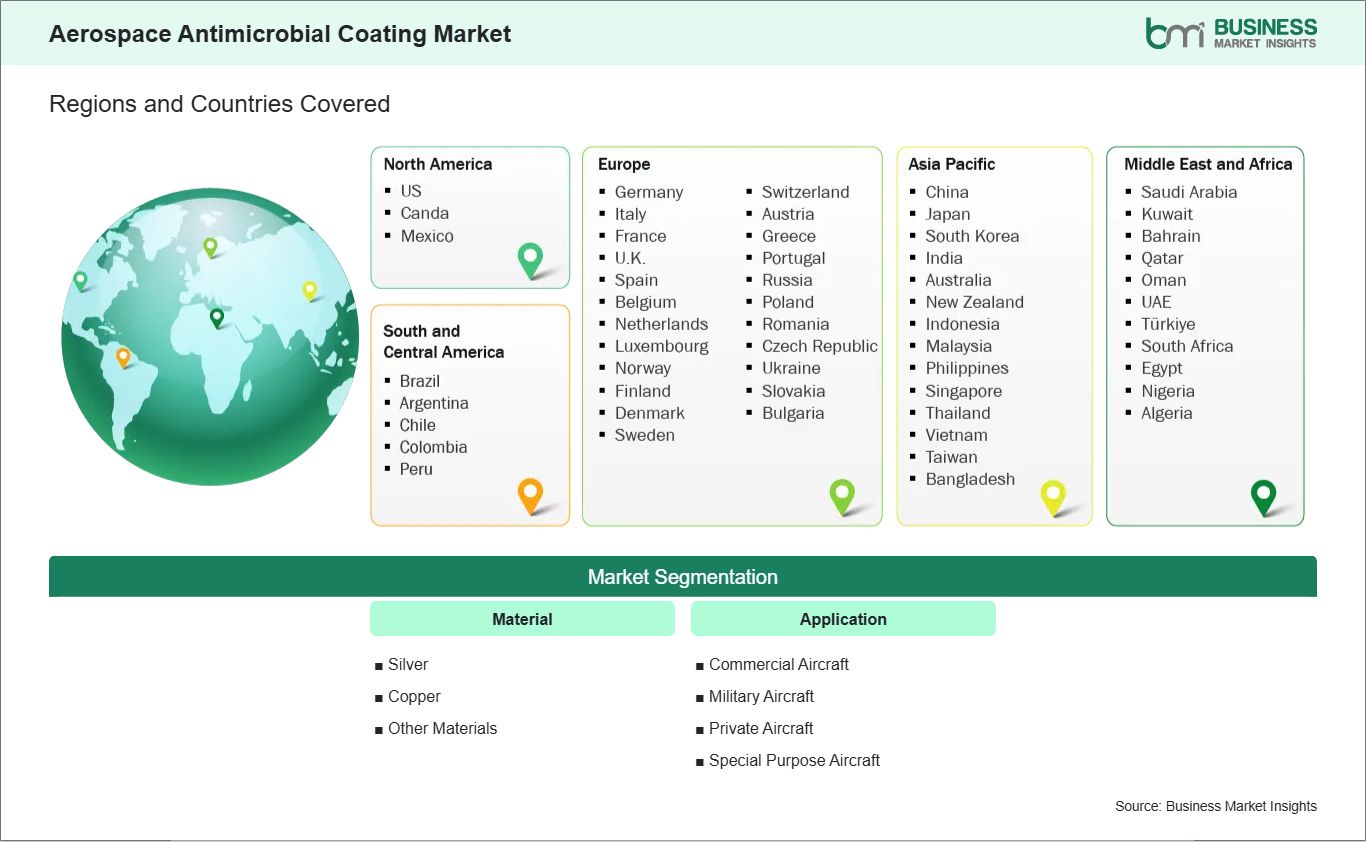
Key segments that contributed to the derivation of the Aerospace Antimicrobial Coating market analysis are material and application.
More passenger traffic, fleet upgrades, and increased investments in airport and aviation infrastructure are boosting the demand for effective surface protection solutions. Aerospace antimicrobial coatings are more frequently used in aircraft interiors, such as cabins, cockpits, lavatories, galleys, seating, tray tables, air ducts, and high-touch surfaces. The heightened focus on passenger health, infection prevention, and cabin cleanliness, particularly after the pandemic, has created strong demand for coatings that offer long-lasting antimicrobial protection, durability, and resistance to wear, chemicals, and extreme conditions. Airlines, aircraft manufacturers, and maintenance providers are focusing on coatings that improve hygiene while supporting lightweight design, regulatory compliance, and longer service life.
Aerospace antimicrobial coatings offer better surface protection, lower microbial contamination, reduce odors, and maintain interior attractiveness, all while supporting operational efficiency. In both commercial and defense aviation, there is a significant rise in the demand for high-performance, lightweight, and specific-use antimicrobial coatings. This trend, along with growing investments in retrofitting, maintenance, repair, and overhaul activities, is speeding up market acceptance around the world. Strong growth in emerging aviation markets, paired with steady demand from established regions, continues to drive market expansion. The increasing use of antimicrobial coatings in commercial aircraft, business jets, helicopters, and military platforms supports steady growth, fueled by rising air travel, fleet expansion, and changing hygiene standards in the global aerospace industry.
The growing focus on innovation, sustainability, and regulatory compliance is significantly influencing the aerospace antimicrobial coating market. Manufacturers are creating new coating chemistries using silver-ion technologies, safe additives, low-VOC formulations, and multifunctional materials to improve antimicrobial effectiveness, durability, and compatibility with aerospace materials. There is more emphasis on lightweight, environmentally friendly coatings that meet strict aviation safety standards while resisting abrasion, corrosion, temperature changes, and chemical exposure. These advancements aim to lessen environmental impact, prolong coating life, improve aircraft hygiene, and boost overall performance in demanding aerospace environments.
In areas such as aircraft interiors, air circulation systems, cargo compartments, and crucial maintenance components, where safety, cleanliness, and regulatory compliance are vital, high-performance antimicrobial coatings are becoming more widely accepted. Furthermore, the global movement toward sustainable aviation, lower chemical emissions, and responsible material use has increased demand for coatings that support eco-friendly manufacturing and long-term environmental goals. As regulations regarding chemical safety, emissions, and aviation material standards become stricter, and as airlines prioritize passenger confidence, safety, and sustainability, the demand for durable and environmentally responsible aerospace antimicrobial coatings is expected to grow steadily worldwide.

The aerospace antimicrobial coating market demonstrates steady growth, with size and share analysis revealing evolving trends and competitive positioning among key players. The report further examines subsegments categorized within material and application, offering insights into their contribution to overall market performance. By material, the silver segment dominates the market because silver-based antimicrobial coatings provide broad protection against bacteria, fungi, and other microorganisms. This makes them highly effective for aerospace applications. Their proven performance, thermal stability, and compatibility with aerospace-grade materials allow for use on high-touch and high-hygiene surfaces in aircraft. Moreover, silver coatings meet strict aviation safety and regulatory standards, which promotes their widespread use.
In terms of application, the commercial aircraft subsegment holds the largest share of the market owing to the rapid growth in global air passenger traffic, and the expanding fleets of commercial aircraft have increased the need for effective hygiene and surface protection solutions. Airlines focus on antimicrobial coatings to improve passenger safety, minimize infection risks, and keep cabin areas clean. Ongoing fleet upgrades, retrofitting, and maintenance activities also strengthen demand from the commercial aviation sector.
| Report Attribute | Details |
|---|---|
| Market size in 2025 | US$ 38.10 Billion |
| Market Size by 2033 | US$ 64.98 Billion |
| Global CAGR (2026 - 2033) | 6.9% |
| Historical Data | 2022-2024 |
| Forecast period | 2026-2033 |
| Segments Covered | By Material
|
|
Regions and Countries Covered
| |
| North America | US, Canada, Mexico |
| Europe | Belgium, Austria, Finland, Denmark, Greece, Poland, Romania, Russia, Ukraine, Czech Republic, Slovakia, Bulgaria, Italy, Luxembourg, Germany, Switzerland, France, Netherlands, Norway, Portugal, Spain, Sweden, United Kingdom |
| Asia-Pacific | Australia, China, India, Japan, South Korea, Indonesia, Malaysia, Philippines, Singapore, Thailand, Vietnam, Bangladesh, New Zealand, Taiwan |
| South and Central America | Brazil, Argentina, Peru, Chile, Colombia |
| Middle East and Africa | Bahrain, Kuwait, Oman, Qatar, Saudi Arabia, United Arab Emirates, Turkiye, South Africa, Egypt, Algeria, Nigeria |
| Market leaders and key company profiles |
|
The "Aerospace Antimicrobial Coating Market Size and Forecast (2022–2033)" report provides a detailed analysis of the market covering below areas:
The geographical scope of the Aerospace Antimicrobial Coating market report is divided into five regions: North America, Asia Pacific, Europe, Middle East & Africa, and South & Central America. The Aerospace Antimicrobial Coating market in the Asia Pacific is expected to grow significantly during the forecast period.
The Asia Pacific Aerospace Antimicrobial Coating market is segmented into China, Japan, South Korea, India, Australia, New Zealand, Indonesia, Malaysia, the Philippines, Singapore, Thailand, Vietnam, Taiwan, Bangladesh, and the Rest of the Asia Pacific.
The aerospace antimicrobial coatings market in the Asia Pacific is steadily growing, driven by rapid growth in aviation activities, rising air passenger traffic, increasing aircraft production, and ongoing economic development in the region. Key contributors to this market include China, Japan, South Korea, and India. These countries are investing heavily in commercial aviation, defense aircraft programs, airport infrastructure, and aerospace manufacturing capabilities. The rising demand from sectors like commercial airlines, military aviation, business jets, and maintenance, repair, and overhaul (MRO) services is accelerating the use of antimicrobial coatings across the region. Population growth, expanding air travel networks, and increased awareness of hygiene, safety, and passenger comfort all contribute to the use of antimicrobial coatings on aircraft interiors. This includes cabins, seating, tray tables, lavatories, galleys, air ducts, and other high-touch surfaces. Another key trend is the development of antimicrobial coating technologies and the growth of local production capabilities. Manufacturers are working to improve coating formulations. They are focusing on better adhesion and durability while integrating effective antimicrobial agents to offer long-lasting protection in tough aerospace conditions. Lightweight coating systems, low-VOC chemistries, and formulations resistant to abrasion and corrosion are becoming more common. These improvements enhance performance while lowering the environmental impact.
The establishment of local coating production facilities and stronger collaboration with aircraft manufacturers are reducing dependence on imports. This ensures a steady supply of certified aerospace materials. Additionally, growing investments in sustainable coating solutions, eco-friendly additives, and energy-efficient manufacturing processes, along with increasing demand for high-performance and compliant antimicrobial coatings, are making the Asia Pacific an important center for production, innovation, and application in the global aerospace antimicrobial coating market.
Supportive government initiatives, favorable aerospace and defense policies, and continued growth in aviation, defense, and MRO sectors are further strengthening the region's long-term market outlook.

The Aerospace Antimicrobial Coating market is evaluated by gathering qualitative and quantitative data post primary and secondary research, which includes important corporate publications, association data, and databases. A few of the key developments in the Aerospace Antimicrobial Coating market are:
The Aerospace Antimicrobial Coating Market is valued at US$ 38.10 Billion in 2025, it is projected to reach US$ 64.98 Billion by 2033.
As per our report Aerospace Antimicrobial Coating Market, the market size is valued at US$ 38.10 Billion in 2025, projecting it to reach US$ 64.98 Billion by 2033. This translates to a CAGR of approximately 6.9% during the forecast period.
The Aerospace Antimicrobial Coating Market report typically cover these key segments-
The historic period, base year, and forecast period can vary slightly depending on the specific market research report. However, for the Aerospace Antimicrobial Coating Market report:
The Aerospace Antimicrobial Coating Market is populated by several key players, each contributing to its growth and innovation. Some of the major players include:
The Aerospace Antimicrobial Coating Market report is valuable for diverse stakeholders, including:
Essentially, anyone involved in or considering involvement in the Aerospace Antimicrobial Coating Market value chain can benefit from the information contained in a comprehensive market report.
Please tell us your area of interest
(Market Segments/ Regions and Countries/ Companies)