
Activin Signaling Inhibitors Market Outlook: Size, Share, Trends, Growth Analysis, Competitive Landscape & Forecast, 2026-2033

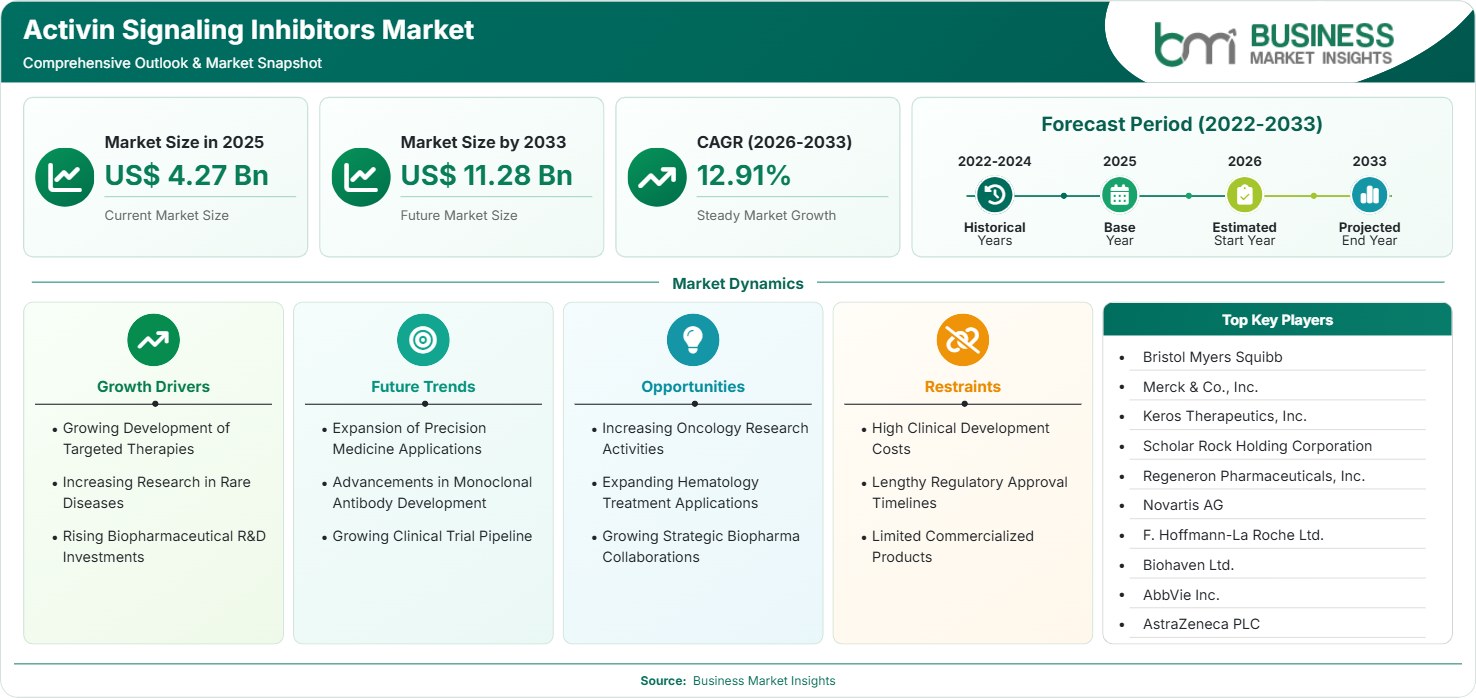
The Activin Signaling Inhibitors Market size was valued at US$ 4.27 Billion in 2025 and is projected to reach US$ 11.28 Billion by 2033, growing at a CAGR of 12.91% during 2026–2033, driven by rising targeted therapy development, expanding hematology applications, increasing rare disease research, and strategic biopharma collaborations.

Report Coverage
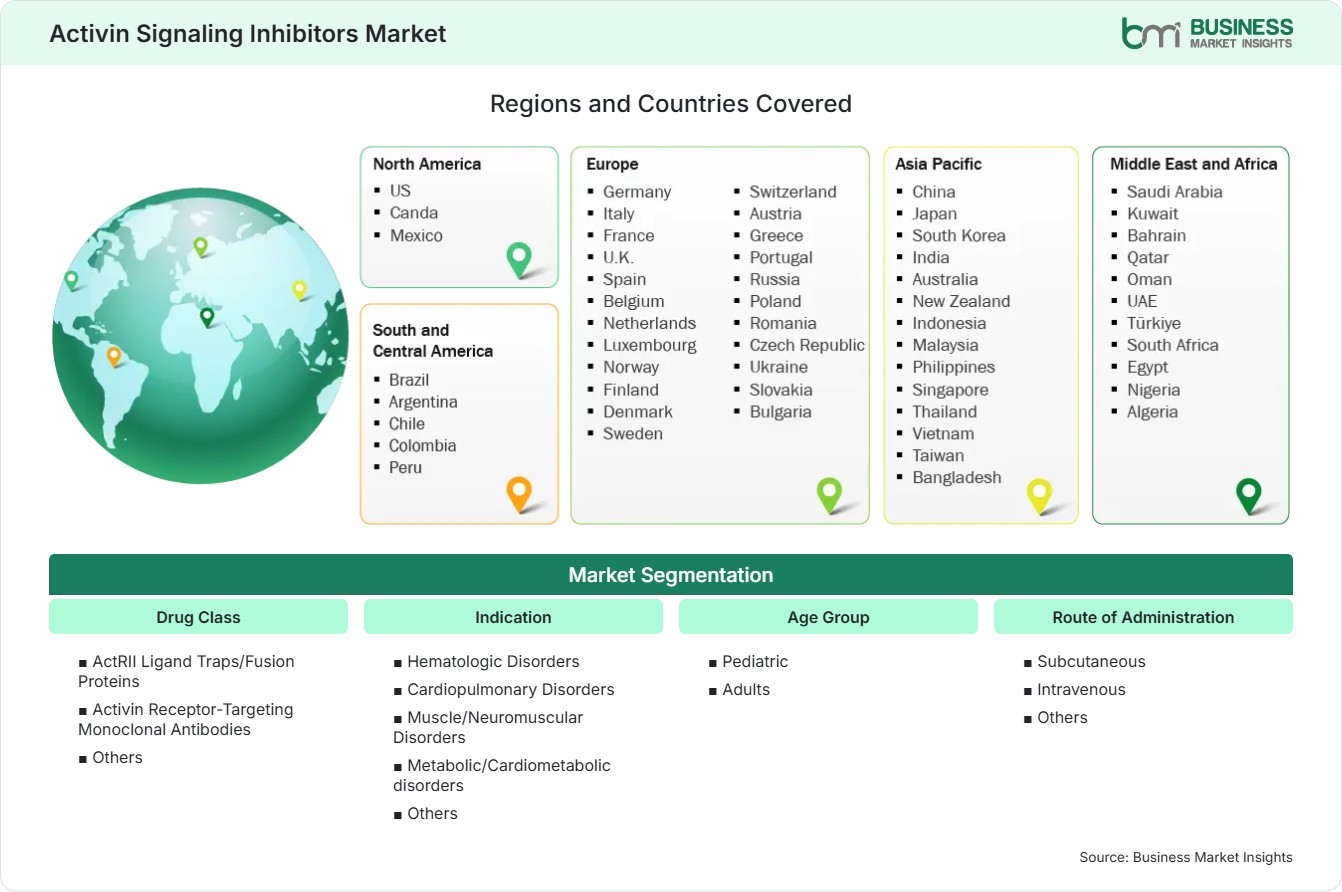
  • Drug Class: ActRII Ligand Traps/Fusion Proteins, Activin Receptor-Targeting Monoclonal Antibodies, Others
  • Indication: Hematologic Disorders, Cardiopulmonary Disorders, Muscle/Neuromuscular Disorders, Metabolic/Cardiometabolic disorders, Others
  • Age Group: Pediatric, Adults
  • Route of Administration: Subcutaneous, Intravenous, Others
  • Distribution Channel: Hospital Pharmacies, Specialty Pharmacies, Drug Stores & Retail Pharmacies, Others
US$ 4.27 Bn Market size in 2025
US$ 11.28 Bn Market Size by 2033
12.91% CAGR, 2026 - 2033
2026-2033 Forecast Period

AI Overview

Activin Signaling Inhibitors Market Summary

  • North America Region: North America holds a 38%–42% share in 2025, expanding at a CAGR of 11.5%–13.5% through 2026–2033, supported by advanced biologics infrastructure, clinical trial activity, precision medicine adoption, and strong pharmaceutical investments. The U.S. market demonstrates robust adoption due to biotechnology innovation, with growth supported by increasing clinical pipelines and specialized therapeutic development at a CAGR of 11.8%–13.8% during 2026–2033.
  • Fastest Growing Region: Asia Pacific represents a 22%–26% share in 2025 and is advancing at a CAGR of 14.0%–16.0% through 2026–2033, driven by expanding biotechnology capabilities, rising healthcare expenditure, growing patient access, and increasing clinical research activities across emerging economies.
  • Leading Segment: ActRII Ligand Traps/Fusion Proteins account for a 45%–49% share in 2025, growing at a CAGR of 12.5%–14.5% during 2026–2033, supported by clinical validation, broad disease applications, and strong pharmaceutical investment in engineered biologics.
  • High Growth Segment: Activin Receptor-Targeting Monoclonal Antibodies represent a 25%–29% share in 2025, expanding at a CAGR of 14.5%–16.5% during 2026–2033 due to antibody engineering advancements, targeted mechanism development, and increasing therapeutic precision.
  • Key Market Opportunity: Increasing exploration of activin pathway modulation across oncology, hematology, metabolic disorders, and muscle-related diseases creates opportunities for differentiated biologics, combination therapies, and expanded clinical indications.
  • Major Market Players: Bristol Myers Squibb, Merck & Co., Inc., Keros Therapeutics, Inc., Scholar Rock Holding Corporation, Regeneron Pharmaceuticals, Inc., Novartis AG, F. Hoffmann-La Roche Ltd., Biohaven Ltd., AbbVie Inc., AstraZeneca PLC.
Strategic Insights

Activin Signaling Inhibitors Market: Strategic Insights

Activin Signaling Inhibitors Market Strategic Framework
FREE PDF
Request your free sample
Request free sample
Stakeholder View

Key Takeaways

  • The ecosystem is evolving from early-stage pathway research toward commercially focused biologic development, with value creation occurring across discovery platforms, clinical development partnerships, manufacturing capabilities, and specialty distribution networks.
  • Hematologic disorders and muscle-related conditions represent important application areas as companies investigate activin pathway regulation for improving disease outcomes, expanding patient eligibility, and creating differentiated treatment approaches.
  • Innovation is centered on next-generation fusion proteins, receptor-targeting antibodies, and improved biologic designs that enhance specificity, therapeutic durability, and clinical performance across complex disease mechanisms.
  • North America remains a strategic investment destination due to strong biotechnology infrastructure, extensive clinical research capabilities, and established pharmaceutical ecosystems supporting advanced therapeutic development.
  • The market is witnessing increased strategic collaborations, licensing agreements, and pipeline consolidation as large pharmaceutical companies seek access to specialized activin pathway technologies and promising clinical candidates.
Geographic Outlook

Activin Signaling Inhibitors Market Regional Highlights

North America Activin Signaling Inhibitors Market

North America accounted for a 38%–42% share in 2025 and is projected to expand at a CAGR of 11.5%–13.5% during 2026–2033. The region benefits from biotechnology innovation, strong pharmaceutical research infrastructure, and high clinical trial concentration. The Activin Signaling Inhibitors Market share remains supported by advanced healthcare systems and regulatory expertise. The U.S. and Canada contribute substantially through biologics development, rare disease research, and precision medicine adoption, strengthening regional commercialization opportunities.

  • Increasing investment in biotechnology platforms is accelerating activin pathway research through collaborations between pharmaceutical companies, academic institutions, and specialized research organizations.
  • The U.S. dominates regional development due to strong clinical trial networks, regulatory support, and extensive investment in biologic therapeutic discovery and commercialization.
  • Growing demand for targeted therapies in hematology and neuromuscular disorders is encouraging pharmaceutical companies to expand clinical development programs across North America.
  • Advanced manufacturing capabilities and established specialty pharmacy networks support efficient distribution and patient access for innovative biologic therapies.

US Activin Signaling Inhibitors Market

The U.S. represented a 34%–38% share in 2025 within North America and is expected to grow at a CAGR of 11.8%–13.8% from 2026–2033. Strong pharmaceutical investment, advanced clinical research infrastructure, and high adoption of innovative biologics support market expansion. The Activin Signaling Inhibitors Market share in the country is strengthened by biotechnology hubs, regulatory efficiency, and increasing interest in mechanism-based therapies targeting complex diseases.

  • The U.S. benefits from a concentrated biotechnology ecosystem involving leading pharmaceutical companies, venture-backed firms, and academic research centers exploring activin pathway applications.
  • Increasing clinical trials for rare and hematologic conditions are creating opportunities for accelerated development and commercialization of activin-targeted therapeutic candidates.
  • Regulatory pathways supporting breakthrough therapies are encouraging investment in novel biologic platforms and specialized treatment approaches for underserved patient populations.
  • Strong healthcare spending and access to specialty treatment centers continue to improve adoption potential for advanced therapeutic products.

Europe Activin Signaling Inhibitors Market

Europe held a 27%–31% share in 2025 and is projected to grow at a CAGR of 12.0%–14.0% between 2026–2033. The region benefits from established biomedical research networks, supportive innovation programs, and increasing investment in rare disease therapies. Germany, the U.K., France, and Switzerland represent leading markets, while Germany and Switzerland are expected to demonstrate strong growth due to pharmaceutical capabilities and clinical research expertise.

  • Germany supports market development through strong biotechnology infrastructure, pharmaceutical manufacturing capabilities, and increasing investment in advanced therapeutic research programs.
  • The U.K. contributes through academic collaborations, clinical trial expertise, and growing focus on precision medicine and rare disease treatment innovation.
  • Switzerland remains a strategic hub due to multinational pharmaceutical presence, research excellence, and strong biologics development capabilities.
  • European regulatory harmonization initiatives are improving opportunities for clinical development and cross-border commercialization of innovative therapies.

Asia Pacific Activin Signaling Inhibitors Market

Asia Pacific accounted for a 22%–26% share in 2025 and is anticipated to register the highest growth rate with a CAGR of 14.0%–16.0% during 2026–2033. Expanding biotechnology capabilities, rising healthcare expenditure, and increasing research activities support regional advancement. China and South Korea demonstrating strong growth potential due to biotechnology investments and clinical research expansion.

  • China is strengthening its position through increasing pharmaceutical innovation, biotechnology funding, and expanding clinical trial capabilities for advanced therapies.
  • Japan contributes through established healthcare infrastructure, aging population-related therapeutic demand, and strong research capabilities in molecular medicine.
  • South Korea is emerging as a biotechnology hub with increasing biologics manufacturing capacity and strategic pharmaceutical partnerships.
  • India provides growth opportunities through improving clinical research infrastructure, cost-efficient development capabilities, and expanding healthcare access.

Rest of World Activin Signaling Inhibitors Market

Rest of World accounted for a 6%–10% share in 2025 and is estimated to expand at a CAGR of 10.5%–12.5% from 2026–2033. South and Central America are gradually adopting advanced biologic therapies through healthcare modernization, while Middle East and Africa markets are supported by improving specialized care infrastructure. Brazil, Mexico, Saudi Arabia, and the UAE represent important emerging markets with increasing investment potential.

  • Brazil is improving access to innovative therapies through healthcare system development and increasing interest in advanced treatment approaches for complex diseases.
  • Mexico provides opportunities through expanding pharmaceutical distribution networks and growing participation in international clinical research programs.
  • Saudi Arabia and UAE are investing in healthcare modernization, supporting adoption of advanced biologic therapies and specialized medical services.
  • Regional growth remains influenced by improving healthcare infrastructure, regulatory development, and increasing awareness of precision treatment options.
  • Partnerships with global pharmaceutical companies are expected to support technology transfer and expanded availability of specialized therapies.
Global Market Geography
FREE PDF
Request your free sample
Request free sample
Segment Analysis

Activin Signaling Inhibitors Market Segmentation

Drug Class

Drug Class segmentation represents the core technology foundation of the Activin Signaling Inhibitors Market, with ActRII Ligand Traps/Fusion Proteins leading adoption. The segment accounted for a 45%–49% share in 2025 and is projected to grow at a CAGR of 12.5%–14.5% during 2026–2033 due to clinical advancement, broad therapeutic applications, and strong biologic development activity.

  • ActRII Ligand Traps/Fusion Proteins: These therapies capture major adoption due to their ability to regulate activin signaling pathways, supporting applications in hematology, muscle disorders, and related conditions.
  • Activin Receptor-Targeting Monoclonal Antibodies: Antibody-based approaches are advancing through improved specificity, targeted pathway inhibition, and increasing research interest in precision therapeutic applications.
  • Others: Additional inhibitor approaches contribute through exploratory research, combination strategies, and emerging technologies designed to enhance pathway modulation effectiveness.

Indication

Indication segmentation demonstrates diverse therapeutic applications across multiple disease areas. Hematologic disorders represent a major segment with significant clinical attention, while muscle and cardiopulmonary conditions provide expanding opportunities. The segment structure highlights the Activin Signaling Inhibitors Market scope through applications targeting disease mechanisms, improving patient outcomes, and supporting broader therapeutic development.

  • Hematologic Disorders: Activin pathway modulation is being investigated for blood-related conditions, supporting development of therapies focused on improving cellular regulation and disease management.
  • Cardiopulmonary Disorders: Research activities are exploring pathway inhibition approaches for cardiovascular and respiratory-related conditions requiring targeted biological interventions.
  • Muscle/Neuromuscular Disorders: Applications focus on muscle growth regulation, functional improvement, and treatment development for disorders involving muscle degradation mechanisms.
  • Metabolic/Cardiometabolic disorders: Emerging studies are evaluating activin signaling involvement in metabolic regulation and cardiometabolic disease progression.
  • Others: Additional indications include exploratory applications where pathway modulation may provide future therapeutic benefits.

Age Group

Age Group segmentation highlights the applicability of activin pathway inhibitors across different patient populations. Adult patients represent the dominant adoption base due to higher prevalence of targeted disorders and greater clinical trial availability. The segment supports continued expansion as therapeutic developers evaluate broader age-specific applications and improve treatment accessibility. Pediatric research is gradually increasing through specialized clinical programs targeting rare and inherited conditions.

  • Pediatric: Pediatric applications are emerging through rare disease research, with developers evaluating safety, dosing strategies, and therapeutic potential for younger patient populations requiring specialized interventions.
  • Adults: Adult patients represent the primary treatment population due to higher disease incidence, established clinical evidence, and increasing adoption of advanced biologic therapies.

Route of Administration

Route of Administration segmentation reflects evolving preferences for effective delivery methods that balance therapeutic performance, patient convenience, and healthcare resource requirements. Subcutaneous administration maintains strong adoption potential due to outpatient suitability and improved patient experience. Intravenous delivery remains important for therapies requiring controlled administration and clinical monitoring, supporting diverse treatment strategies across healthcare settings.

  • Subcutaneous: Subcutaneous delivery is gaining attention due to convenience advantages, reduced hospital dependency, and suitability for long-term administration of biologic therapies.
  • Intravenous: Intravenous administration remains relevant for controlled dosing requirements, hospital-based treatment protocols, and therapies requiring professional healthcare supervision.
  • Others: Alternative administration approaches contribute through ongoing research focused on improving treatment flexibility, patient compliance, and therapeutic delivery efficiency.

Distribution Channel

Distribution Channel segmentation demonstrates the importance of specialized healthcare networks for biologic therapies. Hospital pharmacies remain significant due to complex administration requirements and clinical supervision needs. The Activin Signaling Inhibitors Market trends indicate increasing emphasis on integrated distribution models supporting advanced therapies.

  • Hospital Pharmacies: Hospital-based distribution supports therapies requiring physician oversight, infusion services, and specialized monitoring during treatment administration.
  • Specialty Pharmacies: Specialty pharmacies facilitate patient assistance programs, therapy coordination, adherence management, and access support for complex biologic treatments.
  • Drug Stores & Retail Pharmacies: Retail channels provide future expansion opportunities as selected therapies become suitable for broader outpatient access.
Market Forces

Activin Signaling Inhibitors Market Dynamics

Key Market Drivers

Growing Development of Targeted Therapies

The advancement in targeted therapy research and development will be an important driver for the Activin Signaling Inhibitors Market growth as researchers are moving more towards biological targets for the particular disease. The activin signaling controls many processes that play a vital role in the growth of tissues, inflammation, and cell differentiation. Trends in the market indicate that there is an increasing trend towards using mechanism based therapies, especially in hematological and neuromuscular disorders. Recombinant protein technology and antibody development are advancing the drug development process.

Increasing Research in Rare Diseases

Rare disease research is rapidly increasing the number of activin pathway modulation investments due to the scarcity of treatment options and the high unmet medical need. Activin pathways have come into the limelight owing to the role they play in the management of complex diseases that require specific treatment strategies. The increased genomics research and better understanding of diseases, along with regulatory benefits, have encouraged companies to develop specific treatments for diseases. The networking of patients and clinical trials, as well as the support of patient advocacy groups, has made research easier.

Rising Biopharmaceutical R&D Investments

Rising biopharmaceutical investment is supporting the discovery and commercialization of activin pathway inhibitors through expanded research programs and advanced manufacturing capabilities. Global pharmaceutical companies continue allocating substantial capital toward biologics, precision medicine, and rare disease platforms. Higher investments lead to the production of fusion proteins, monoclonal antibodies, and new generation drug candidates. The Activin Signaling Inhibitors Market trends that one can realize the impact of such an investment into biology and clinical validation on the creation of new commercial prospects.

Key Market Opportunities

Increasing Oncology Research Activities

Oncology research represents a developing opportunity area as scientists investigate activin pathway involvement in tumor biology, immune regulation, and disease progression. Increased funding for cancer biology research has been a stimulus for the development of pathway-specific therapies and combination therapy approaches. Pharmaceuticals have explored the prospects of combining activin inhibitors with current oncology approaches. The Activin Signaling Inhibitors Market Forecasts indicate the future scope lies in widening the scope of indications and partnering in the development of cancer drugs. Increasing interest in personalized oncology solutions may prompt more funding towards activin platforms.

Expanding Hematology Treatment Applications

Hematology applications provide substantial opportunities as activin signaling modulation demonstrates potential in regulating blood cell development and related biological processes. The expansion of research on anemia, myelodysplastic syndromes, and other such diseases is creating new business opportunities. The increasing investments by the healthcare sector in specialty medicines are driving the demand for novel biological drugs. Awareness among physicians and better diagnostic tools could aid in this regard. Clinical development that shows proof of efficacy and safety would be essential for the success of activin inhibitors.

Growing Strategic Biopharma Collaborations

Strategic collaborations between biotechnology companies, pharmaceutical manufacturers, and research institutions are creating opportunities for accelerated activin inhibitor development. Partnerships enable access to specialized technologies, clinical expertise, and commercialization resources. Large pharmaceutical companies are increasingly seeking innovative biologic platforms through licensing agreements and collaborative research models. Collaborative ecosystems involving academic researchers and industry participants are expected to enhance discovery capabilities and support broader therapeutic applications for activin signaling inhibitors.

Market Restraints and Challenges

High Clinical Development Costs

Factor: High clinical development costs represent a significant challenge due to expensive biologic research, lengthy trials, and complex manufacturing requirements. Impact: These costs can limit participation from smaller biotechnology companies and increase financial pressure during therapeutic development. Activin pathway inhibitors often require extensive safety evaluations, biomarker validation, and long-term clinical assessment before commercialization. Investment requirements for advanced biologics can delay pipeline progression and affect commercialization timelines.

Lengthy Regulatory Approval Timelines

Factor: Lengthy regulatory approval timelines create challenges because biologic therapies require extensive clinical evidence demonstrating safety, efficacy, and manufacturing consistency. Impact: Delayed approvals can increase development expenses and postpone market availability for innovative treatments. Regulatory authorities require comprehensive documentation, long-term safety monitoring, and detailed manufacturing controls for novel biologics. Efficient engagement with regulatory agencies will be critical for reducing uncertainty and improving successful product launches.

Company Analysis

Competitive Landscape

The Activin Signaling Inhibitors Market analysis highlights a competitive environment shaped by biotechnology innovators, global pharmaceutical companies, and specialized therapeutic developers. Competitive differentiation is increasingly based on mechanism specificity, clinical evidence generation, manufacturing capabilities, and the ability to expand activin pathway applications across hematology, muscle disorders, metabolic diseases, and other therapeutic areas.

Company Name

Overview

Products and Services relevant to this market

Bristol Myers Squibb

Global biopharmaceutical company focused on innovative medicines across oncology, hematology, immunology, and cardiovascular therapeutic areas.

Develops advanced biologics and targeted therapies, including research programs associated with signaling pathways and disease-modifying treatment approaches.

Merck & Co., Inc.

Major pharmaceutical company with extensive research capabilities in oncology, immunology, and precision medicine development.

Provides innovative biologic platforms and clinical development expertise supporting targeted therapeutic discovery and commercialization.

Keros Therapeutics, Inc.

Biotechnology company specializing in novel therapeutics targeting the transforming growth factor beta superfamily pathways.

Develops activin receptor pathway modulators, including investigational ligand trap therapies for hematologic and cardiovascular conditions.

Scholar Rock Holding Corporation

Clinical-stage biotechnology company focused on precision therapies targeting growth factor activation mechanisms.

Develops monoclonal antibody approaches targeting growth factor pathways, including therapies related to muscle and neuromuscular disorders.

Regeneron Pharmaceuticals, Inc.

Biotechnology leader known for antibody technologies and development of innovative biologic medicines.

Utilizes antibody discovery platforms and therapeutic engineering capabilities for targeted disease pathway modulation.

Novartis AG

Global healthcare company developing innovative medicines across oncology, immunology, and specialty therapeutic segments.

Supports biologics research, precision medicine platforms, and clinical development initiatives related to advanced therapies.

F. Hoffmann-La Roche Ltd.

Pharmaceutical and diagnostics company with strong expertise in oncology, immunology, and personalized healthcare.

Develops antibody-based medicines, biologic platforms, and targeted treatment solutions applicable to complex diseases.

Biohaven Ltd.

Biotechnology company developing therapies across neurological, immunological, and rare disease areas.

Provides drug discovery and clinical development capabilities for innovative therapeutic candidates and biological mechanisms.

AbbVie Inc.

Research-driven pharmaceutical company with expertise in immunology, oncology, neuroscience, and specialty medicines.

Develops advanced biologics and targeted therapies supported by global clinical research and commercialization infrastructure.

AstraZeneca PLC

Global biopharmaceutical company focused on oncology, rare diseases, cardiovascular, and metabolic medicine.

Invests in biologic innovation, precision therapeutics, and research programs targeting complex disease pathways.

Trust & Transparency

Research Methodology

The market analysis combines proprietary research with secondary data from government agencies, company disclosures, regulatory filings, industry databases and expert interviews. Market estimates are validated through data triangulation, cross-market benchmarking and analyst review.

View Full Research Methodology

Questions Answered

Frequently Asked Questions

Where can investors find detailed market information on this industry?

The Activin Signaling Inhibitors Market Report provides structured insights into market dynamics, competitive strategies, segmentation, regional opportunities, and future therapeutic development trends.

How does regulatory approval affect activin inhibitor commercialization?

Regulatory approval requires extensive clinical evidence, safety validation, and manufacturing consistency. Successful approvals depend on demonstrating meaningful patient benefits and maintaining robust development standards.

Which drug class currently dominates activin signaling inhibitor market development?

ActRII Ligand Traps/Fusion Proteins currently represent the leading development category due to clinical progress, pathway understanding, and broad applicability across several disease indications.

Why are pharmaceutical companies investing in activin pathway research?

Companies are investing because activin signaling influences multiple disease processes, creating opportunities for precision therapies with potential applications across rare diseases, oncology, blood disorders, and regenerative medicine.

What are activin signaling inhibitors used for?

Activin signaling inhibitors are being investigated for conditions involving abnormal activin pathway activity, including hematologic disorders, muscle-related diseases, metabolic conditions, and other complex therapeutic areas requiring targeted biological intervention.

Access the Full Activin Signaling Inhibitors Market Report

Get segment-level forecasts, regional estimates, competitive benchmarking, company profiles and downloadable Excel datasets.

Access the full Activin Signaling Inhibitors Market Report
350 pages PDF & Excel | 2026-08-25
Similar Research

Related Market Reports