
Weight Management Products Market Outlook: Size, Share, Trends, Growth Analysis, Competitive Landscape & Forecast, 2026-2033

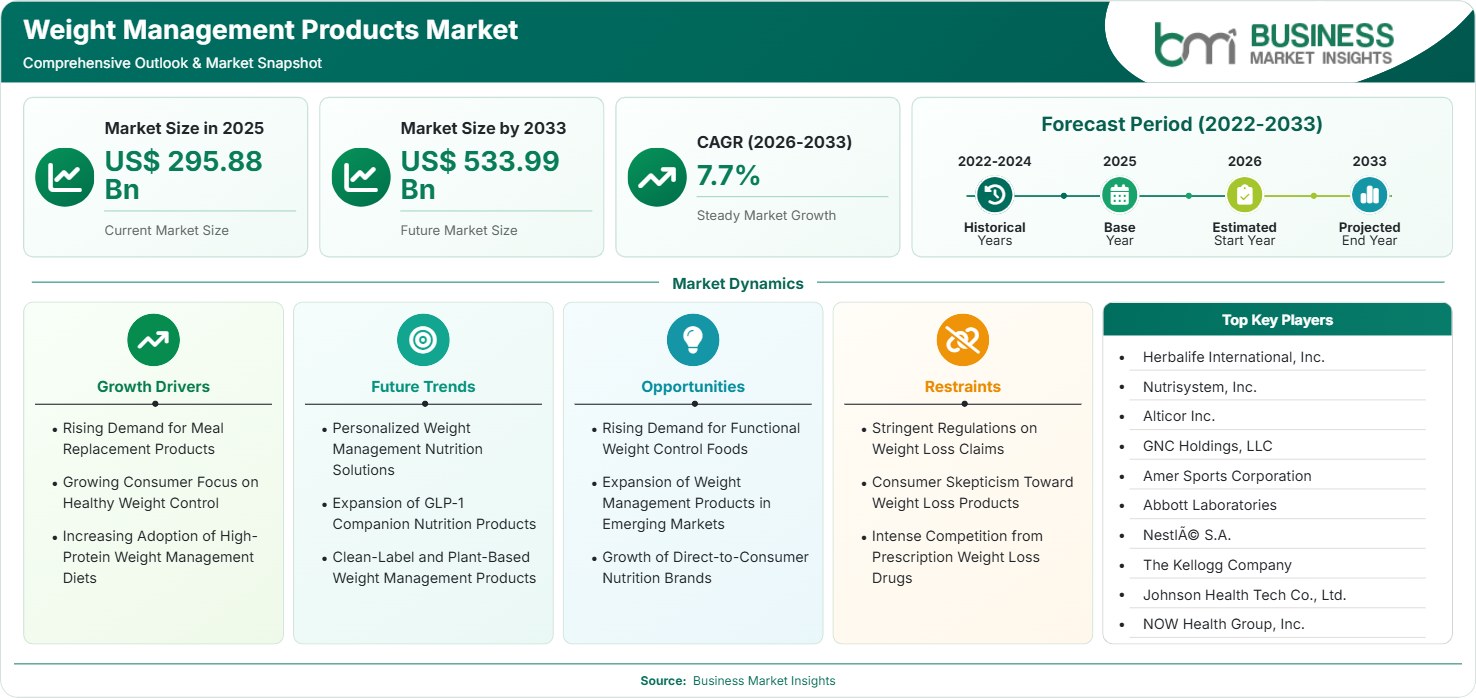
The Weight Management Products Market size was valued at US$ 295.88 Billion in 2025 and is projected to reach US$ 533.99 Billion by 2033, growing at a CAGR of 7.7% during 2026–2033. Growth is driven by increasing obesity prevalence, rising health awareness among consumers, growing demand for preventive healthcare solutions, expansion of fitness and wellness programs, and increasing adoption of personalized nutrition and weight management products.

Report Coverage
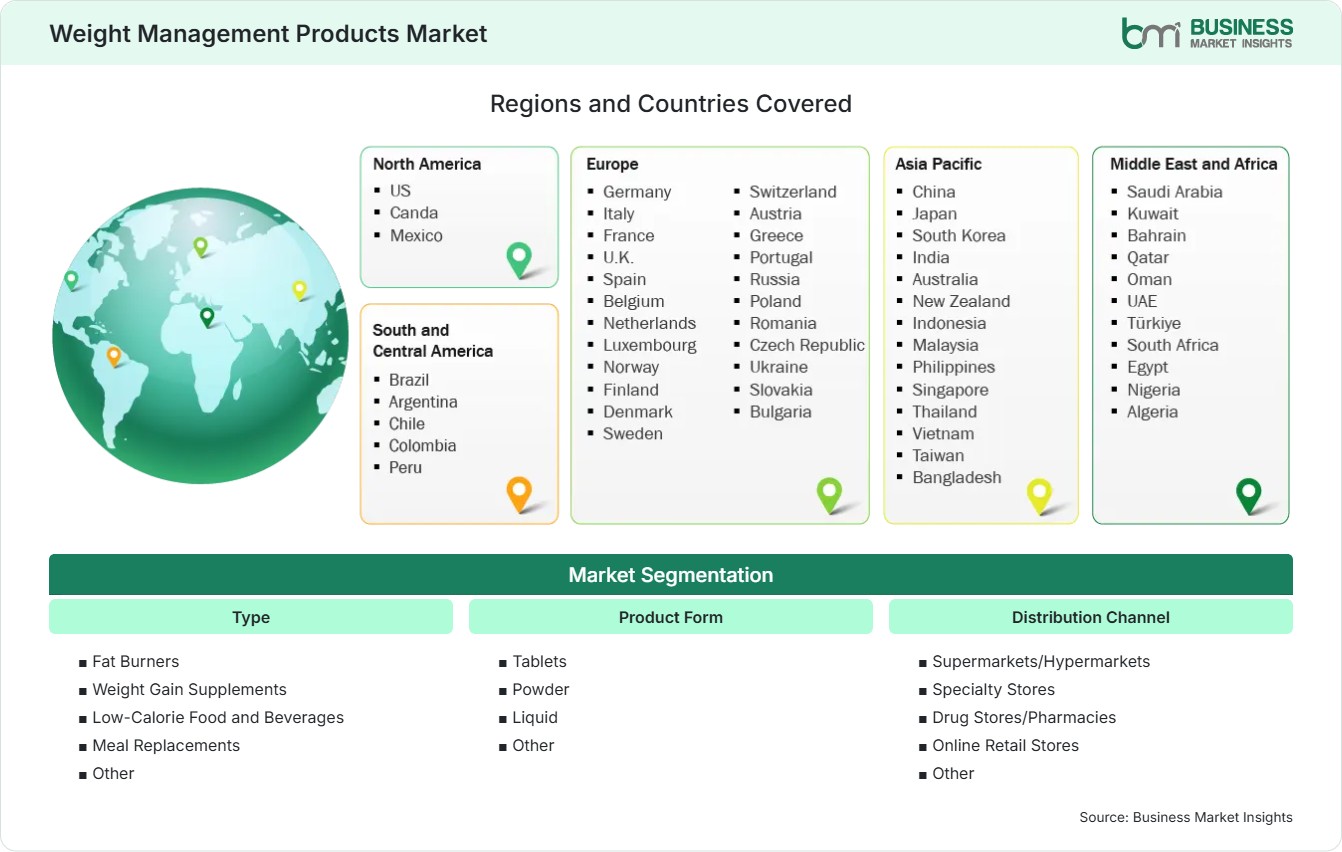
  • Type: Fat Burners, Weight Gain Supplements, Low-Calorie Food and Beverages, Meal Replacements, Other
  • Product Form: Tablets, Powder, Liquid, Other
  • Distribution Channel: Supermarkets/Hypermarkets, Specialty Stores, Drug Stores/Pharmacies, Online Retail Stores, Other
US$ 295.88 Bn Market size in 2025
US$ 533.99 Bn Market Size by 2033
7.7% CAGR, 2026 - 2033
2026-2033 Forecast Period

AI Overview

Weight Management Products Market Summary

  • North America Region: North America holds a market share of 34%–37% in 2025, growing at a CAGR of 7.1%–7.7% during 2026–2033. Demand is supported by high consumer awareness regarding obesity management, strong spending on wellness products, and widespread adoption of nutritional supplements. The U.S. remains the dominant market, advancing at a CAGR of 7.2%–7.8%.
  • Fastest Growing Region: Asia Pacific accounts for 25%–28% of revenue in 2025 and is projected to register a CAGR of 8.5%–9.2% through 2033. Rising disposable incomes, growing health consciousness, and increasing adoption of fitness-oriented lifestyles continue supporting market development.
  • Leading Segment: Low-Calorie Food and Beverages hold a market share of 38%–42% in 2025 and are expected to grow at a CAGR of 7.8%–8.4%. Demand is driven by increasing preference for healthier dietary alternatives and calorie-controlled nutrition plans.
  • High Growth Segment: Online Retail Stores account for 24%–28% of market revenue in 2025 and are projected to register a CAGR of 8.8%–9.5% during the forecast period. Growing e-commerce penetration, convenience, and wider product accessibility continue supporting expansion.
  • Key Market Opportunity: Rising demand for personalized weight management solutions, digital wellness platforms, and science-backed nutrition products is creating significant opportunities for manufacturers and wellness brands.
  • Major Market Players: Herbalife International, Inc., Nutrisystem, Inc., Alticor Inc., GNC Holdings, LLC, Amer Sports Corporation, Abbott Laboratories, Nestlé S.A., The Kellogg Company, Johnson Health Tech Co., Ltd., and NOW Health Group, Inc.
Strategic Insights

Weight Management Products Market: Strategic Insights

Weight Management Products Market Strategic Framework
FREE PDF
Request your free sample
Request free sample
Stakeholder View

Key Takeaways

  • The market ecosystem includes supplement manufacturers, food and beverage companies, wellness brands, fitness organizations, retailers, healthcare providers, and e-commerce platforms.
  • Low-calorie food and beverages remain among the most attractive opportunities due to increasing consumer preference for healthier dietary alternatives and calorie-conscious lifestyles.
  • Product innovation increasingly focuses on plant-based nutrition, clean-label ingredients, personalized wellness solutions, and scientifically supported weight management formulations.
  • Asia Pacific provides the strongest growth potential supported by increasing health awareness, urbanization, and rising expenditure on wellness products.
  • Digital commerce channels continue transforming market dynamics by improving product accessibility and enabling direct-to-consumer engagement.
  • Functional nutrition products, meal replacements, and personalized dietary solutions are increasingly becoming key revenue generators across global markets.
  • A key weight management products market trend is the rising demand for personalized, science-backed weight management products, incorporating plant-based ingredients, gut health support, digital wellness integration, and clinically validated formulations for sustainable weight control.
Geographic Outlook

Weight Management Products Market Regional Highlights

North America Weight Management Products Market

North America accounted for 34%–37% of global revenue in 2025 and is projected to expand at a CAGR of 7.1%–7.7% through 2033. Growth is supported by rising obesity awareness, strong spending on preventive healthcare, and increasing adoption of structured nutrition programs. The Weight Management Products Market share in the region continues benefiting from growing demand for meal replacements, dietary supplements, and low-calorie food products.

  • Consumers increasingly seek science-backed nutrition products that support healthy weight management and long-term wellness goals.
  • Meal replacement products and low-calorie foods continue witnessing strong demand across multiple consumer demographics.
  • Fitness culture and growing participation in wellness programs support product consumption.
  • Healthcare professionals increasingly recommend nutritional interventions alongside lifestyle modifications.
  • Digital health platforms and subscription-based wellness services continue improving product accessibility.

US Weight Management Products Market

The United States represented 29%–32% of global revenue in 2025 and is anticipated to register a CAGR of 7.2%–7.8% during the forecast period. Demand is driven by growing health consciousness, increasing obesity management initiatives, and rising consumer spending on fitness and nutrition products. Continued growth of personalized nutrition programs supports weight management products industry growth.

  • Consumers are increasingly adopting calorie-controlled diets and structured weight management plans.
  • Functional food and beverage products continue gaining popularity among health-conscious populations.
  • Online wellness platforms are supporting broader accessibility to weight management solutions.
  • Premium nutritional supplement categories remain important contributors to market growth.

Europe Weight Management Products Market

Europe held 28%–31% of global revenue in 2025 and is projected to grow at a CAGR of 7.3%–7.9% through 2033. The weight management products market forecast indicates that the increasing awareness regarding healthy lifestyles, growing adoption of balanced nutrition plans, and rising focus on preventive healthcare will continue supporting market expansion. Germany remains the leading market with a CAGR of 7.4%–8.0%, while Poland is the fastest-growing country, expanding at a CAGR of 8.0%–8.6%.

  • Consumers increasingly prioritize nutritional quality and healthier eating habits.
  • Demand for low-calorie foods and meal replacement products continues strengthening across the region.
  • Germany maintains leadership through strong wellness spending and a mature health products industry.
  • Poland is witnessing accelerated growth due to increasing health awareness and rising disposable incomes.
  • Retailers continue expanding shelf space for wellness and nutrition-focused product categories.

Asia Pacific Weight Management Products Market

Asia Pacific accounted for 25%–28% of global revenue in 2025 and is expected to remain the fastest-growing region, registering a CAGR of 8.5%–9.2% through 2033. Urbanization, increasing health consciousness, and rising disposable incomes continue driving market growth. China remains the largest regional market with a CAGR of 8.4%–9.0%, while India records the highest growth at 9.0%–9.7%.

  • Growing middle-class populations are increasing spending on wellness and health-focused products.
  • China benefits from strong digital commerce penetration and expanding nutrition product availability.
  • India is witnessing increasing adoption of fitness-oriented lifestyles and weight management programs.
  • Social media influence continues shaping consumer purchasing behavior in wellness categories.
  • Expansion of online retail platforms is improving product access across urban and semi-urban regions.

Rest of World Weight Management Products Market

The Rest of World region accounted for 7%–10% of global revenue in 2025 and is expected to register a CAGR of 7.1%–7.7% through 2033. Market growth is supported by increasing awareness regarding obesity prevention, expanding wellness industries, and rising adoption of healthier lifestyles. Demand remains particularly strong for nutritional supplements and low-calorie food products.

Brazil is the leading market in South & Central America and is forecast to grow at a CAGR of 7.3%–7.9%. In the Middle East & Africa, the United Arab Emirates is expected to be the fastest-growing country with a CAGR of 7.6%–8.2%.

  • Brazil continues benefiting from growing interest in fitness, wellness, and preventive healthcare.
  • The United Arab Emirates is witnessing rising demand for premium health and nutrition products.
  • Increasing retail penetration is improving consumer access to weight management solutions.
  • Lifestyle-related health concerns continue supporting demand for wellness-focused products.
  • Growth in digital health and nutrition platforms is encouraging product adoption across emerging markets.
Global Market Geography
FREE PDF
Request your free sample
Request free sample
Segment Analysis

Weight Management Products Market Segmentation

Type

Type-based product diversification continues playing a critical role in addressing varying consumer weight management goals and nutritional preferences. Low-Calorie Food and Beverages lead the segment with 38%–42% share in 2025 and are projected to grow at a CAGR of 7.8%–8.4% through 2033. The market scope continues expanding as consumers increasingly seek convenient, healthier alternatives that support calorie control without compromising nutritional value.

  • Fat Burners: Demand is supported by increasing consumer interest in fitness, metabolic support products, and active lifestyle management.
  • Weight Gain Supplements: Utilized by consumers seeking healthy weight gain, muscle development, and sports nutrition benefits.
  • Low-Calorie Food and Beverages: Dominates demand due to growing preference for calorie-controlled diets, healthier eating habits, and weight management programs.
  • Meal Replacements: Increasingly adopted because of convenience, portion control benefits, and structured nutrition support.
  • Other: Includes specialty nutrition products designed to support specific weight management and wellness objectives.

Product Form

Product form influences convenience, portability, and consumer adherence to weight management programs. Powdered formulations remain widely utilized due to versatility and ease of incorporation into daily nutrition plans. Weight Management Products Market trends indicate growing demand for ready-to-consume formats that support busy lifestyles and personalized nutrition requirements.

  • Tablets: Preferred for convenience, dosage accuracy, portability, and supplement-based weight management programs.
  • Powder: Widely utilized in meal replacements, protein formulations, and nutritional beverages due to flexibility and customization options.
  • Liquid: Benefits from convenience, quick consumption, and increasing demand for ready-to-drink wellness products.
  • Other: Includes bars, gummies, and specialty product formats developed for targeted consumer preferences.

Distribution Channel

Distribution channels continue evolving as digital commerce transforms how consumers access wellness and nutrition products. Online Retail Stores account for 24%–28% market share in 2025 and are projected to register the fastest growth at a CAGR of 8.8%–9.5% through 2033. Weight Management Products Market share gains are increasingly supported by subscription services, direct-to-consumer platforms, and personalized online product recommendations.

  • Supermarkets/Hypermarkets: Remain important retail destinations due to wide product availability and strong consumer accessibility.
  • Specialty Stores: Attract health-conscious consumers seeking expert recommendations and premium nutrition products.
  • Drug Stores/Pharmacies: Continue serving as trusted channels for clinically positioned weight management solutions and dietary supplements.
  • Online Retail Stores: Expanding rapidly through convenience, broad product selection, home delivery services, and digital wellness ecosystems.
  • Other: Includes fitness centers, wellness clinics, and independent retailers serving diverse consumer requirements.
Market Forces

Weight Management Products Market Dynamics

Key Market Drivers

Rising Demand for Meal Replacement Products

Meal replacement products are witnessing increasing adoption among consumers seeking convenient and structured approaches to weight management. Busy lifestyles, growing workforce participation, and rising interest in portion-controlled nutrition are encouraging greater consumption of meal replacement shakes, bars, and ready-to-drink formulations. These products provide nutritional balance while helping consumers maintain calorie targets more effectively. Manufacturers continue innovating with enhanced protein content, functional ingredients, and improved taste profiles. As consumers increasingly prioritize convenience and nutrition, meal replacements are expected to remain a significant contributor to weight management products market growth.

Growing Consumer Focus on Healthy Weight Control

Awareness regarding the health risks associated with obesity and excess weight continues driving demand for effective weight management solutions. Consumers are increasingly adopting healthier lifestyles that incorporate balanced diets, physical activity, and nutritional supplementation. Preventive healthcare trends are encouraging individuals to invest in products that support long-term wellness goals rather than short-term weight loss approaches. Growing access to nutrition education and wellness information further strengthens consumer engagement with weight management programs. This shift toward sustainable health management continues supporting market expansion globally.

Increasing Adoption of High-Protein Weight Management Diets

High-protein diets have gained significant popularity due to their perceived benefits related to satiety, muscle maintenance, and weight control. Consumers seeking effective nutritional strategies are increasingly incorporating protein-enriched foods, beverages, and supplements into daily routines. Manufacturers are responding with innovative product offerings that combine protein fortification with functional health benefits. Demand is particularly strong among fitness enthusiasts, active consumers, and individuals participating in structured weight management programs. Continued interest in protein-centric nutrition is expected to create sustained demand across multiple product categories.

Key Market Opportunities

Rising Demand for Functional Weight Control Foods

Consumers are increasingly seeking foods that offer benefits beyond basic nutrition, creating strong opportunities for functional weight management products. Ingredients supporting satiety, digestive health, metabolic wellness, and appetite management are becoming important differentiators within the market. Manufacturers are investing in scientifically backed formulations designed to improve overall wellness while supporting healthy weight control objectives. Growing interest in preventive health and personalized nutrition continues to create favorable conditions for product innovation and premiumization.

Expansion of Weight Management Products in Emerging Markets

Emerging economies are experiencing rising health awareness, urbanization, and changing dietary patterns that are contributing to increased demand for weight management solutions. Expanding middle-class populations and greater access to wellness products are creating substantial opportunities for manufacturers. Companies are introducing localized product offerings and strengthening retail presence to address evolving consumer preferences. As health and nutrition awareness continue to increase across these regions, market participants are expected to benefit from long-term growth opportunities and broader customer reach.

Growth of Direct-to-Consumer Nutrition Brands

Direct-to-consumer business models are transforming the weight management industry by providing personalized product recommendations, subscription services, and digital engagement tools. The use of the internet and commerce has helped many companies strengthen customer relations, making products more accessible to customers. Consumers get the advantages of convenience and customization in their purchases, along with a greater variety of products than was possible through conventional means. Digital health and wellness ecosystems have helped to foster customer engagement and nutritional guidance for consumers.

Market Restraints and Challenges

Stringent Regulations on Weight Loss Claims

Factor: Regulatory authorities impose strict requirements governing marketing claims, product efficacy statements, ingredient disclosures, and health-related communications for weight management products.

Impact: Compliance obligations can increase product development costs, extend commercialization timelines, and limit promotional flexibility. Manufacturers must invest significantly in scientific validation, quality assurance, and regulatory expertise to support market entry and ongoing compliance. These challenges may affect innovation speed and increase operational complexity across the industry.

Consumer Skepticism Toward Weight Loss Products

Factor: Historical concerns regarding exaggerated product claims, inconsistent outcomes, and varying levels of scientific support have contributed to consumer skepticism in parts of the weight management products market.

Impact: Trust-related concerns can influence purchasing decisions and create challenges for brands seeking to establish credibility. Companies must invest in transparent communication, clinical validation, and evidence-based product positioning to strengthen consumer confidence. Failure to address trust issues may limit product adoption and affect long-term market growth potential.

Company Analysis

Competitive Landscape

The market remains highly competitive with the presence of global nutrition companies, dietary supplement manufacturers, wellness brands, fitness-focused product providers, and food & beverage companies. Companies are focusing on personalized nutrition, functional ingredients, meal replacement innovation, clean-label formulations, and direct-to-consumer business models. Growing consumer emphasis on wellness and preventive healthcare continues shaping Weight Management Products Market analysis and competitive strategies across the global nutrition value chain.

Company Name

Overview

Products and Services Relevant to this Market

Herbalife International, Inc.

Global nutrition company focused on weight management and wellness products.

Meal replacements, protein shakes, weight management supplements, nutrition products.

Nutrisystem, Inc.

Provider of structured weight management programs and nutrition solutions.

Meal plans, portion-controlled foods, weight loss products, nutrition programs.

Alticor Inc.

Diversified company with wellness and nutritional supplement offerings.

Dietary supplements, health products, weight management nutrition solutions.

GNC Holdings, LLC

Retailer and manufacturer of nutrition and wellness products.

Weight management supplements, protein products, wellness nutrition solutions.

Amer Sports Corporation

Sports and wellness company supporting active lifestyle products.

Fitness-related nutrition products and wellness solutions.

Abbott Laboratories

Healthcare company with extensive nutrition science capabilities.

Meal replacements, nutritional beverages, weight management nutrition products.

Nestlé S.A.

Global food and nutrition company with broad wellness product portfolio.

Low-calorie foods, nutritional products, functional beverages, meal solutions.

The Kellogg Company

Food manufacturer with health-focused and nutrition-oriented product offerings.

Low-calorie food products, meal options, wellness-focused food products.

Johnson Health Tech Co., Ltd.

Fitness and wellness company supporting health management initiatives.

Wellness products, fitness-related solutions, weight management programs.

NOW Health Group, Inc.

Natural products company specializing in dietary supplements and wellness products.

Weight management supplements, functional nutrition, health products.

Industry Activity

Recent Developments

July 2026

AstraZeneca plc announced that elecoglipron, its oral, small-molecule GLP-1 receptor agonist, is progressing into a comprehensive Phase III clinical trial programme focused on weight management and obesity treatment.

July 2026

Novo Nordisk A/S announced that the Singapore health authority updated the label for Wegovy® (semaglutide) to incorporate a higher 7.2 mg dose. The regulatory update is supported by clinical evidence from the STEP-UP phase 3 trial, which demonstrated a mean weight loss of 21% in adults living with obesity without diabetes.

February 2026

Biocon Limited announced that it has received approval from the U.S. FDA, for its complex formulation Liraglutide Injection, 18 mg/3 mL (6 mg/mL) single-patient-use prefilled pens (gSaxenda). Liraglutide is a drug-device combination formulation used in the treatment of chronic weight management, indicated as an adjunct to a reduced-calorie diet and increased physical activity.

January 2026

AstraZeneca announced a strategic collaboration with CSPC Pharmaceuticals to develop multiple next-generation therapies for obesity and type 2 diabetes, gaining rights to a once-monthly injectable weight management portfolio and access to CSPC’s AI-driven peptide discovery and dosing technologies.

Trust & Transparency

Research Methodology

The market analysis combines proprietary research with secondary data from government agencies, company disclosures, regulatory filings, industry databases and expert interviews. Market estimates are validated through data triangulation, cross-market benchmarking and analyst review.

View Full Research Methodology

Questions Answered

Frequently Asked Questions

What challenge has the greatest long-term impact on the industry?

Consumer skepticism toward weight loss products remains a significant challenge because it influences purchasing behavior and requires brands to emphasize transparency and scientific validation.

How are online retail stores influencing the Weight Management Products Market growth?

Online channels improve product accessibility, enable subscription-based services, support personalized product recommendations, and expand direct-to-consumer sales opportunities.

Why is Asia Pacific the fastest-growing region?

The region benefits from rising health awareness, growing disposable incomes, urbanization, and increasing spending on wellness and nutrition products.

Which type segment leads the market?

Low-Calorie Food and Beverages lead the market due to increasing consumer preference for calorie-controlled diets and healthier nutritional alternatives.

What is driving growth in the weight management products market report?

Increasing obesity awareness, growing consumer focus on healthy lifestyles, rising demand for meal replacement products, and expanding adoption of functional nutrition solutions are the primary growth drivers.

Access the Full Weight Management Products Market Report

Get segment-level forecasts, regional estimates, competitive benchmarking, company profiles and downloadable Excel datasets.

Access the full Weight Management Products Market Report
350 pages PDF & Excel | 2026-07-31
Similar Research

Related Market Reports