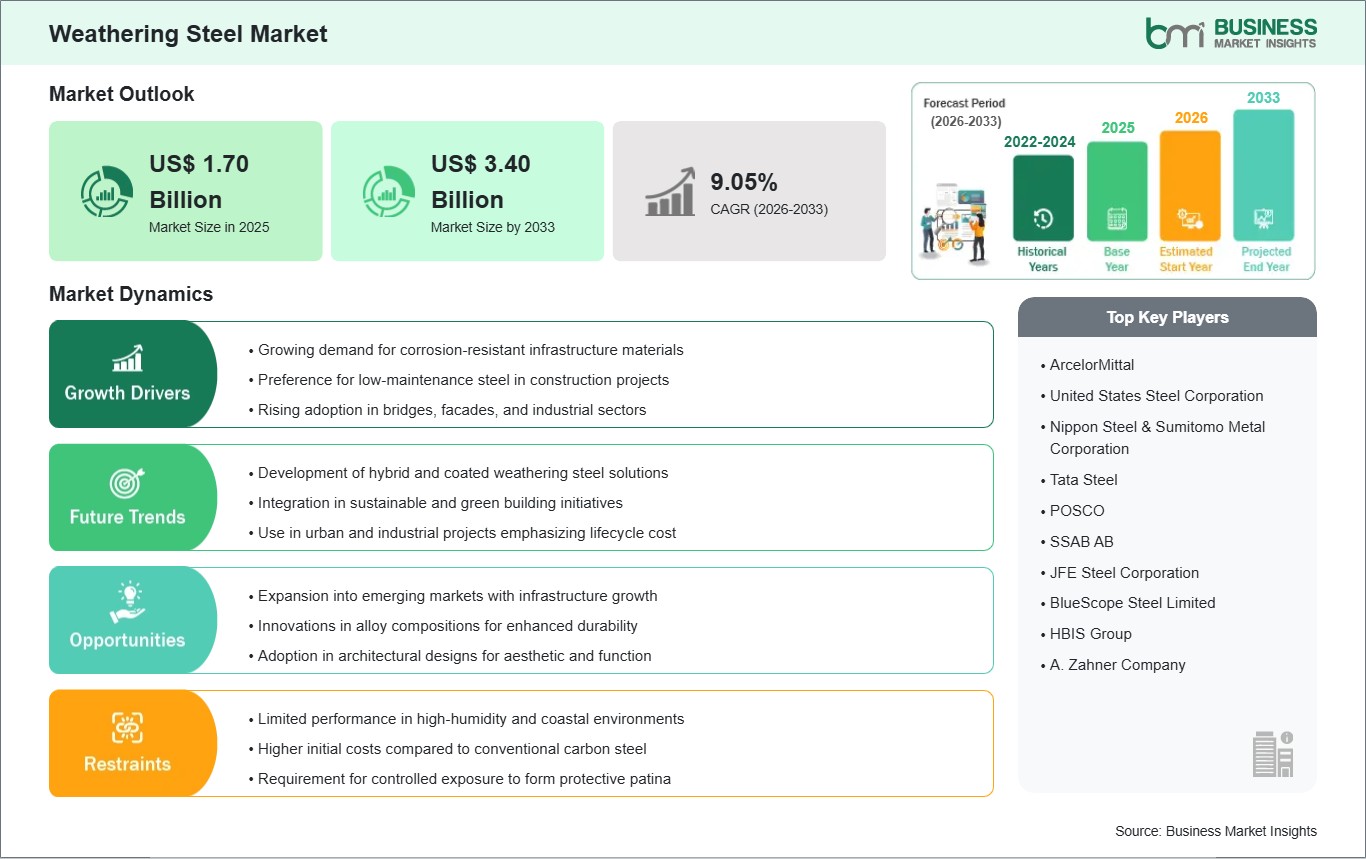
The Weathering Steel Market size is expected to reach US$ 3.4 billion by 2033 from US$ 1.7 billion in 2025. The market is estimated to record a CAGR of 9.05% from 2026 to 2033.
The worldwide weathering steel market depends on the need for corrosion-resistant materials, which structural applications require to build permanent infrastructure, transportation systems and industrial facilities. Weathering steel, also known as COR-TEN® steel, develops a protective rust-like layer that protects the steel from further corrosion while decreasing the frequency of required repainting and coating maintenance. The material's fundamental strength enables its use in bridges, building facades, shipping containers and industrial machinery, which require prolonged operational periods at decreased maintenance expenses. Weathering steel has emerged as the preferred material for construction projects because municipalities and private developers throughout the world invest in resilient infrastructure systems, which help regions reduce maintenance costs while extending the lifespan of their assets. Sustainable infrastructure development drives market growth.
Weathering steel supports green building principles by reducing the environmental burden associated with recurrent painting, material replacement, and coating waste. The material provides an attractive surface finish, which architects and designers prefer to use in urban development projects that require industrial textures for their modern architectural designs. The demand for durable materials that maintain performance across various climate conditions is increasing in emerging economies because urbanization is progressing and public spending is shifting towards these materials. The first part of the sentence today will be explained because it contains three distinct elements that need to be examined separately. Weathering steel's existing performance depends on weather conditions because systems with high salt and constant wetness conditions will prevent the creation of protective patina, which protects steel from marine environments and tropical climates unless additional safety equipment is installed. The first material costs of a project show higher expenses than standard structural steel. Still, this situation stops contractors from using the material because they want to stick within their limited budgets, while the material provides long-term savings through reduced maintenance expenses.
The construction industry, together with the transportation sector and industrial sectors are driving market growth for weathering steel because these sectors value material durability, lifecycle value and sustainable material options.

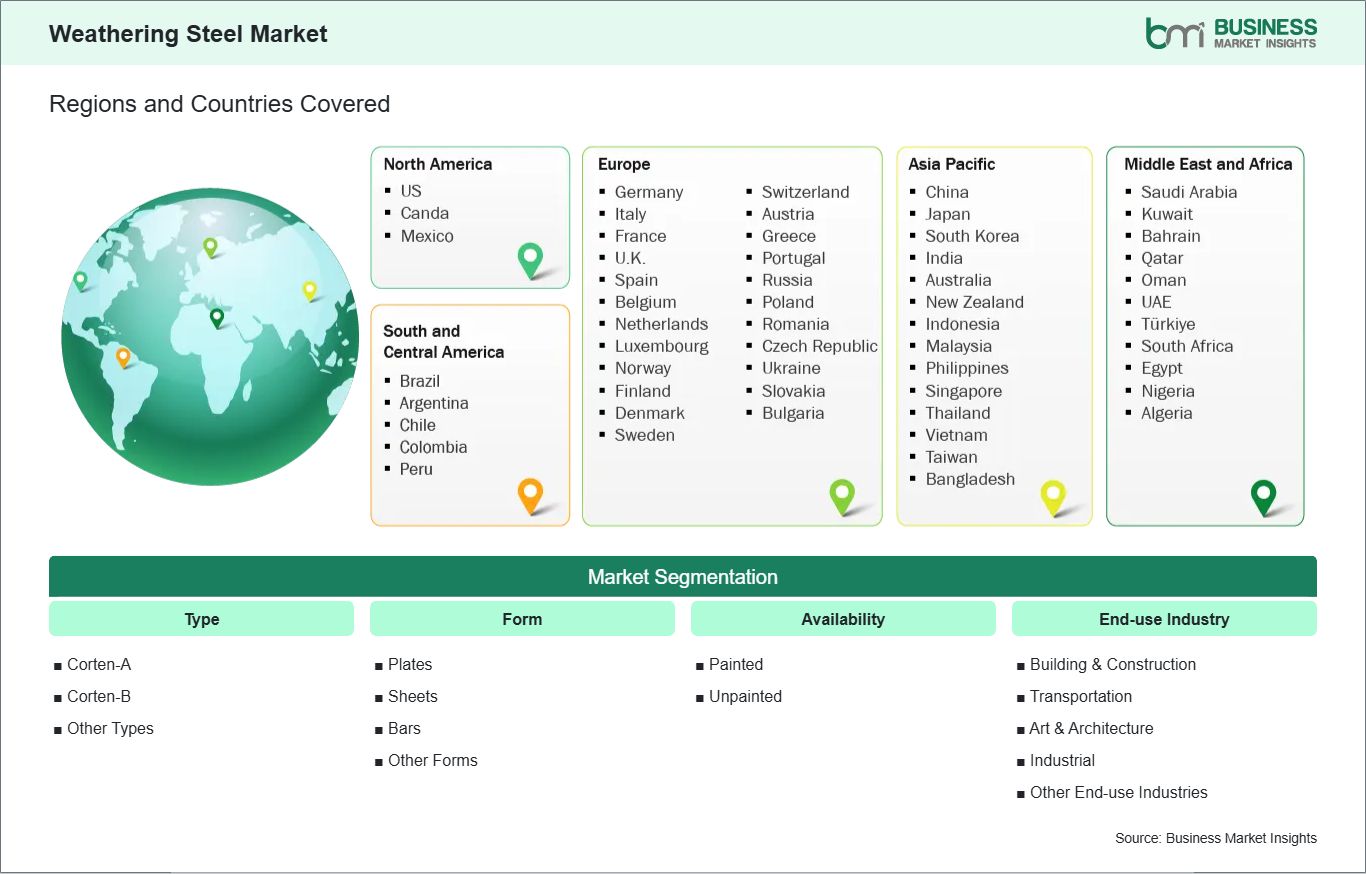
Key segments that contributed to the derivation of the weathering steel market analysis are type, form, availability, and end‑use industry.
The global weathering steel market is significantly boosted by increasing demand for corrosion-resistant infrastructure materials, which governments and private developers use to develop durable construction assets that last throughout their entire lifecycle. Weathering steel protects its structure through its natural ability to build a secure oxide shield, which protects the metal when exposed to air. This feature makes the material ideal for bridge construction. North American state transportation departments use weathering steel for their major bridge rehabilitation projects because it helps them achieve lower lifecycle costs and longer service life. Architectural firms use the material in civic buildings because it provides them with both strength and visual appeal. Europe shows the same preference patterns for aging infrastructure because environmental regulations force Western and Northern European regions to use low-maintenance materials, which help them reach their sustainability goals.
Weathering steel consumption in Asia Pacific countries experiences accelerated growth because urbanization and infrastructure development drive national economies in China, Japan and India. The markets in this region focus on developing corrosion-resistant materials that protect rail networks, industrial facilities and coastal urban developments from weather conditions that speed up the deterioration of traditional steel. Weathering steel maintains its structural integrity when exposed to various environmental stresses, which enables its use in building resilient infrastructure systems throughout developing megacities.
Expansion into emerging markets with infrastructure growth represents a compelling opportunity for the global weathering steel market, as developing economies accelerate public works, transportation networks, and industrial capacities. In regions such as Southeast Asia, Latin America, and parts of Africa, governments are allocating resources to road networks, bridges, ports, and urban transit facilities to support population growth and economic development. These projects require materials that offer reliable structural performance with minimal maintenance, positioning weathering steel as a pragmatic choice for durable frameworks that can withstand variable climatic conditions while reducing long‑term ownership costs. Countries like Brazil and Mexico are incorporating weathering steel in highway overpasses and commercial developments, driven by a broader shift toward sustainable and cost‑efficient infrastructure materials.
In the Middle East & Africa, investments in energy and industrial infrastructure present notable openings for weathering steel products. Facilities such as petrochemical plants, logistics hubs, and airport expansions demand materials that can endure harsh environmental exposures with limited maintenance cycles. Weathering steel’s natural patina formation and corrosion resistance offer advantages in these contexts, especially where traditional protective coatings may require frequent renewal.
Emerging Asian markets also illustrate potential for growth. India’s infrastructure ambitions, including expressway expansion and smart city initiatives, create demand for high‑performance structural materials. Weathering steel’s combination of durability, aesthetic potential, and reduced maintenance aligns with these objectives, supporting robust adoption across project portfolios. As developing economies scale up infrastructure assets, the opportunity for weathering steel to contribute to resilient, cost‑effective construction solutions is poised to expand significantly across global emerging markets.
The weathering steel market demonstrates steady growth, with size and share analysis highlighting evolving trends and competitive dynamics among key players. The report examines subsegments categorized within type, form, availability, and end‑use industry, offering insights into their contribution to overall market performance.
By type, the Corten‑B subsegment dominated the market in 2025, driven by its superior tensile strength, toughness, and suitability for wide structural applications.
Based on form, the plates subsegment dominated the market in 2025, driven by high demand in construction and structural applications due to their strength and durability.
In terms of availability, the unpainted subsegment dominated the market in 2025, driven by the natural formation of a protective patina, reducing maintenance and making it ideal for outdoor use.
In terms of end‑use industry, the building & construction subsegment dominated the market in 2025, driven by extensive infrastructure development and the need for corrosion-resistant, durable, and aesthetically appealing structures.
| Report Attribute | Details |
|---|---|
| Market size in 2025 | US$ 1.70 Billion |
| Market Size by 2033 | US$ 3.40 Billion |
| Global CAGR (2026 - 2033) | 9.05% |
| Historical Data | 2022-2024 |
| Forecast period | 2026-2033 |
| Segments Covered | By Type
|
|
Regions and Countries Covered
| |
| North America | US, Canada, Mexico |
| Europe | Belgium, Austria, Finland, Denmark, Greece, Poland, Romania, Russia, Ukraine, Czech Republic, Slovakia, Bulgaria, Italy, Luxembourg, Germany, Switzerland, France, Netherlands, Norway, Portugal, Spain, Sweden, United Kingdom |
| Asia-Pacific | Australia, China, India, Japan, South Korea, Indonesia, Malaysia, Philippines, Singapore, Thailand, Vietnam, Bangladesh, New Zealand, Taiwan |
| South and Central America | Brazil, Argentina, Peru, Chile, Colombia |
| Middle East and Africa | Bahrain, Kuwait, Oman, Qatar, Saudi Arabia, United Arab Emirates, Turkiye, South Africa, Egypt, Algeria, Nigeria |
| Market leaders and key company profiles |
|
The "Weathering Steel Market Size and Forecast (2022 - 2033)" report provides a detailed analysis of the market covering below areas:
The geographical scope of the Weathering Steel Market report is divided into North America, Asia Pacific, Europe, Middle East & Africa, and South & Central America. North America held the largest share in 2025.
The weathering steel market in North America stands as the leading global market because the region possesses an established industrial system and wide-ranging infrastructure, and initial implementation of corrosion-resistant materials in its construction and transportation industries.
The United States and Canada utilize weathering steel for various applications, including highway bridges and overpasses, building facades and industrial storage tanks, because these structures offer long service life and reduced maintenance needs. The region maintains a strong steel industry because it has established steel manufacturers and fabricators, who work with material scientists, architects and government agencies to create alloy compositions that function dependably in different climate conditions.
The European Union follows North America as its second-largest market because sustainability targets and infrastructure development work together with architectural needs. Weathering steel becomes a required material for bridges, railways and urban design projects in Germany, France and the U.K. because these projects need both aesthetic appeal and lifecycle cost reduction.
The Asia Pacific region experiences increasing weathering steel demand as urbanization progresses, industrial growth expands, and transportation and energy infrastructure investments rise. The markets in China, Japan, India and South Korea use weathering steel for bridges, high-rise buildings and industrial facilities because it reduces maintenance needs and increases durability, while understanding the right environmental conditions for patina formation remains crucial.
The region of the Middle East and Africa shows increasing interest in permanent construction materials, which they use for industrial facilities, oil and gas operations and their major public works projects. The introduction of weathering steel for construction projects exists as a result of two factors, which include current climate patterns and ongoing development projects in urban areas. The demand for products in different areas depends on how environmental factors, regulatory requirements, urban development, industrial expansion, and architectural design patterns interact with each other. Weathering steel has established itself as a modern infrastructure and industrial solution, which provides durability, low maintenance requirements and attractive design to global markets because North America leads the market through its early adoption practices, regulatory backing and technical knowledge.

The Weathering Steel Market is evaluated by gathering qualitative and quantitative data post primary and secondary research, which includes important corporate publications, association data, and databases. A few of the key developments in the weathering steel market are:
The Weathering Steel Market is valued at US$ 1.70 Billion in 2025, it is projected to reach US$ 3.40 Billion by 2033.
As per our report Weathering Steel Market, the market size is valued at US$ 1.70 Billion in 2025, projecting it to reach US$ 3.40 Billion by 2033. This translates to a CAGR of approximately 9.05% during the forecast period.
The Weathering Steel Market report typically cover these key segments-
The historic period, base year, and forecast period can vary slightly depending on the specific market research report. However, for the Weathering Steel Market report:
The Weathering Steel Market is populated by several key players, each contributing to its growth and innovation. Some of the major players include:
The Weathering Steel Market report is valuable for diverse stakeholders, including:
Essentially, anyone involved in or considering involvement in the Weathering Steel Market value chain can benefit from the information contained in a comprehensive market report.
Please tell us your area of interest
(Market Segments/ Regions and Countries/ Companies)