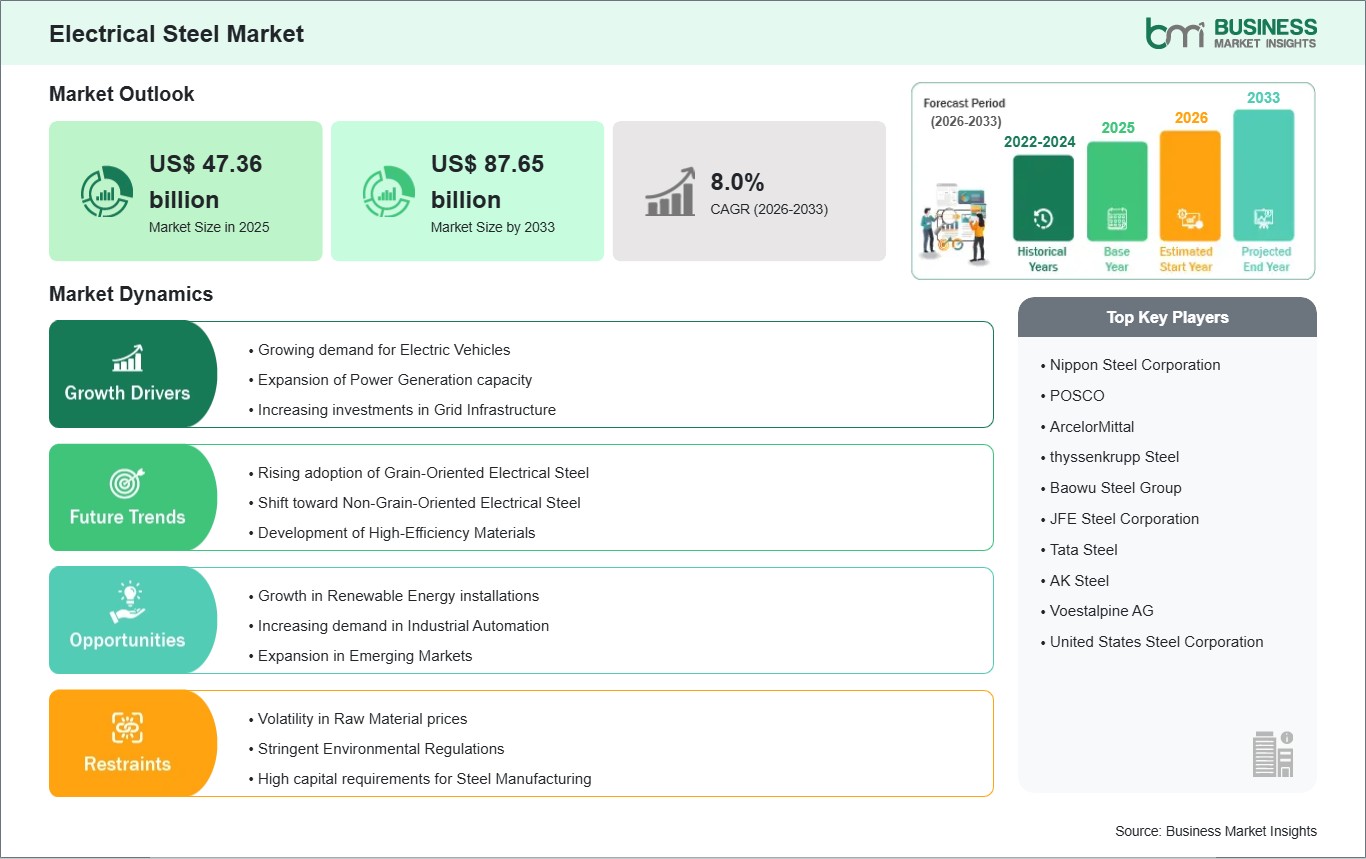
Electrical Steel market size is expected to reach US$ 87.65 billion by 2033 from US$ 47.36 billion in 2025. The market is estimated to record a CAGR of 8.0% from 2026 to 2033.
The global electrical steel market is an important part of the larger metals and energy infrastructure industry. It helps improve energy efficiency, supports power generation, and fosters electrification across various sectors. Electrical steel, also called silicon steel, is a specialized material that shows high magnetic permeability and low core loss. This makes it crucial for use in transformers, electric motors, and generators. These qualities reduce energy losses during transmission and conversion, which makes electrical steel vital for modern power systems. Industries like automotive, energy, manufacturing, and renewable power increasingly depend on electrical steel to improve performance, efficiency, and sustainability. Common types of electrical steel include grain-oriented and non-grain-oriented variants, each designed for specific applications like power transformers or rotating machinery. Producing electrical steel involves complex metallurgical processes, such as controlled rolling, annealing, and coating techniques to enhance magnetic properties and surface insulation. Manufacturers also use precision alloying and domain refinement techniques to further cut energy losses and boost efficiency. Recent innovations focus on high-grade materials that support electric vehicles, renewable energy systems, and smart grid infrastructure. There is also a rising emphasis on creating thinner gauges and environmentally friendly production methods to lessen environmental impact and meet changing regulations. These advancements improve product performance while supporting global energy efficiency goals. Electrical steel is crucial for effective energy transmission and electrification. In the automotive sector, it's commonly used in electric vehicle motors to enhance power density and lower energy consumption. In power infrastructure, it serves as the core of transformers and generators, ensuring reliable electricity distribution. Industrial machinery also relies on electrical steel to maintain efficiency and cut energy losses. Its durability, magnetic performance, and reliability make it a key material across various applications. Market growth is driven by the rising demand for electricity, the rapid growth of renewable energy, and the increasing use of electric vehicles. Government regulations that promote energy efficiency and decarbonization further support market growth. However, challenges like fluctuating raw material prices, high manufacturing costs, and supply chain issues could affect growth. Even with these challenges, ongoing technological progress and increased investments in energy infrastructure are likely to maintain long-term development. Overall, the electrical steel market is well-positioned to support global electrification, energy efficiency, and sustainable industrial growth.

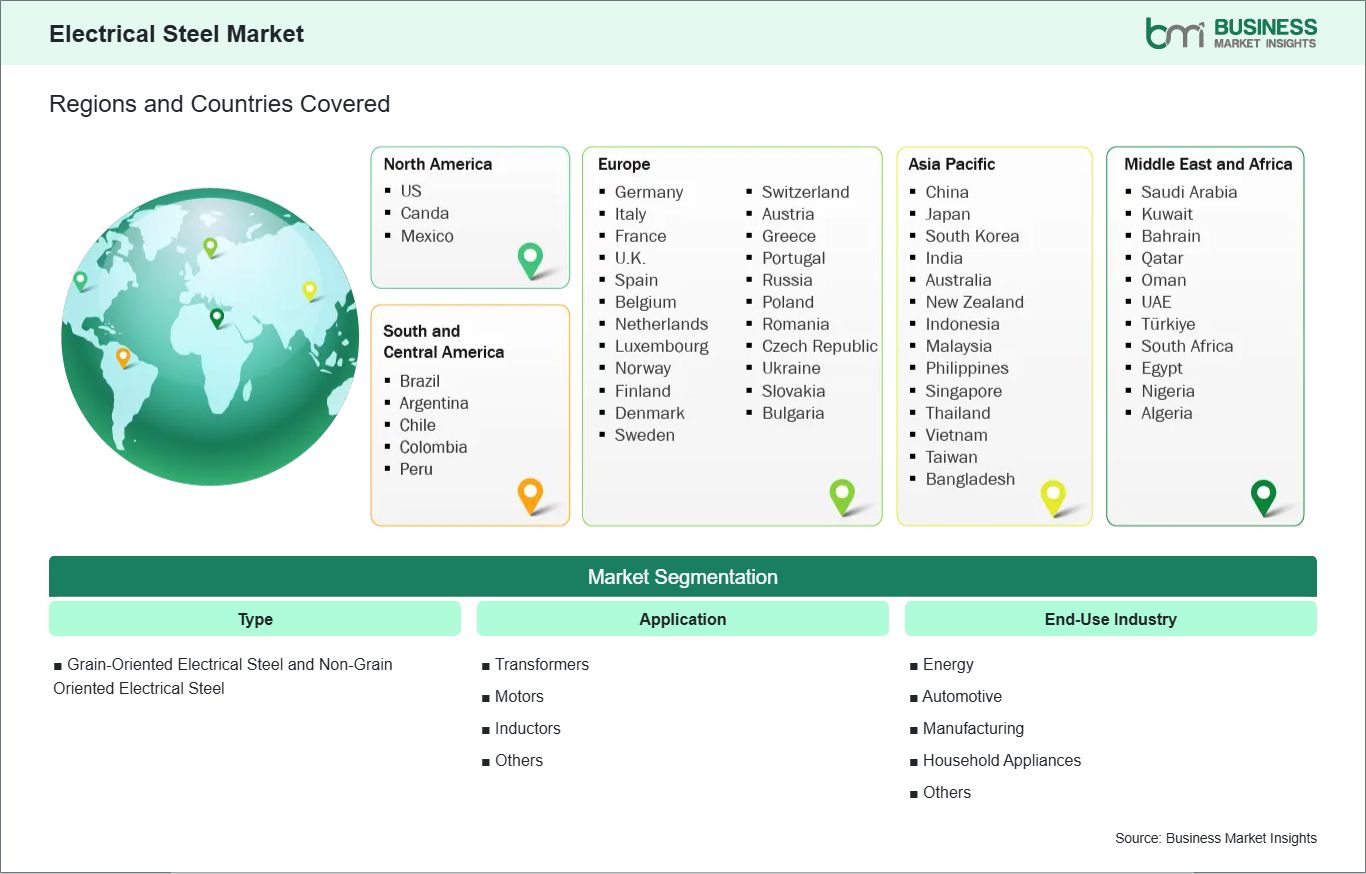
Key segments that contributed to the derivation of the Electrical Steel market analysis are type, application, and end use.
The global electrical steel market is steadily growing, mainly due to rising demand in key sectors like energy infrastructure, automotive, industrial equipment, and renewable power generation. Rapid urbanization and industrialization have increased global electricity consumption. This growth has created a strong need for efficient power transmission and distribution systems. As a result, there`s a higher demand for transformers and generators that use electrical steel to reduce energy losses. The shift toward electric vehicles is another major driver. Electrical steel is essential in electric motors, helping improve efficiency, power density, and vehicle performance. In industrial settings, machinery and equipment rely on electrical steel to improve operational efficiency and lower energy use. Additionally, the expansion of renewable energy projects, such as wind and solar power, is increasing the demand for electrical steel in generators and grid systems. Government investments in smart grids and electrification projects, along with rising disposable incomes and infrastructure development, are further boosting market growth. As global energy demand increases and sustainability becomes more important, the need for high-performance electrical steel is likely to rise in both developed and emerging markets.
Technological innovation is key to shaping the global electrical steel market. Continuous advancements focus on improving magnetic performance, reducing core losses, and increasing material efficiency. Progress in metallurgical processes, such as rolling techniques, precision annealing, and domain refinement, allows manufacturers to create electrical steel with better properties. These improvements let the material perform well in high-frequency and high-temperature applications, including electric vehicles and renewable energy systems. At the same time, there is a growing shift toward sustainable and energy-efficient solutions, driven by strict environmental regulations and global goals for reducing carbon emissions. Manufacturers are increasingly adopting eco-friendly production methods, optimizing raw material use, and cutting emissions during manufacturing. The creation of thinner gauges and high-grade electrical steel is also improving energy efficiency while lowering material consumption. Modern manufacturing technologies, including automation and digital process control, enhance product quality, cut waste, and improve consistency. Ongoing research aims to extend product lifespan, boost recyclability, and meet changing industry standards. As industries focus on efficiency, sustainability, and performance, continued innovation in electrical steel is expected to drive long-term market growth.
In 2025, grain-oriented electrical steel led the market. Its success comes from excellent magnetic properties that lower energy losses in power transformers. Increased investments in power transmission infrastructure and grid modernization projects have raised global demand.
Transformers are crucial for electricity transmission and distribution networks. Growing global electricity demand and the expansion of renewable energy systems have heightened the need for efficient, high-performance transformers.
The manufacturing segment leads the market by end use because electrical steel is widely used in industrial machinery and equipment, improving efficiency and reducing energy consumption. Ongoing industrialization and automation in emerging economies continue to boost growth in this segment.
| Report Attribute | Details |
|---|---|
| Market size in 2025 | US$ 47.36 billion |
| Market Size by 2033 | US$ 87.65 billion |
| Global CAGR (2026 - 2033) | 8.0% |
| Historical Data | 2022-2024 |
| Forecast period | 2026-2033 |
| Segments Covered | By Type
|
|
Regions and Countries Covered
| |
| North America | US, Canada, Mexico |
| Europe | Belgium, Austria, Finland, Denmark, Greece, Poland, Romania, Russia, Ukraine, Czech Republic, Slovakia, Bulgaria, Italy, Luxembourg, Germany, Switzerland, France, Netherlands, Norway, Portugal, Spain, Sweden, United Kingdom |
| Asia-Pacific | Australia, China, India, Japan, South Korea, Indonesia, Malaysia, Philippines, Singapore, Thailand, Vietnam, Bangladesh, New Zealand, Taiwan |
| South and Central America | Brazil, Argentina, Peru, Chile, Colombia |
| Middle East and Africa | Bahrain, Kuwait, Oman, Qatar, Saudi Arabia, United Arab Emirates, Turkiye, South Africa, Egypt, Algeria, Nigeria |
| Market leaders and key company profiles |
|
The "Electrical Steel Market Size and Forecast (2022 - 2033)" report provides a detailed analysis of the market covering below areas:
The geographical scope of the Electrical Steel market report is divided into five regions: North America, Asia Pacific, Europe, Middle East & Africa, and South & Central America. The Electrical Steel market in the Asia Pacific is expected to grow significantly during the forecast period.
The Asia-Pacific Electrical Steel market is segmented into China, Japan, South Korea, India, Australia, New Zealand, Indonesia, Malaysia, the Philippines, Singapore, Thailand, Vietnam, Taiwan, Bangladesh, and the Rest of Asia.
The Asia-Pacific region is becoming the fastest-growing market for electrical steel. This growth is fueled by rapid industrialization, expanding energy infrastructure, and rising electricity demand. Countries like China, India, Japan, and South Korea are experiencing significant growth in power generation, automotive production, and manufacturing activities, which all depend on electrical steel. The increasing use of electric vehicles in the region is driving demand for non-grain-oriented electrical steel used in motor cores to improve efficiency and performance. Large investments in power transmission and distribution networks are also raising the need for grain-oriented electrical steel in transformers. Growing urban populations, rising disposable incomes, and ongoing infrastructure projects are further pushing up electricity consumption, supporting market growth. Additionally, the quick expansion of renewable energy projects, including wind and solar power, is increasing the demand for efficient electrical steel solutions in generators and grid systems. The region's strong manufacturing base and established steel industry allow for cost-effective, large-scale production of electrical steel for both local use and export. Governments throughout Asia-Pacific are putting policies in place that focus on energy efficiency, electrification, and carbon reduction, which encourage the use of high-performance electrical steel. Environmental regulations are prompting manufacturers to adopt cleaner production methods and cut emissions during steel processing. Technological improvements, such as better rolling techniques, domain refinement, and thinner, high-grade materials, are boosting product efficiency and lowering energy losses. The availability of skilled labor, access to raw materials, and integrated supply chains further enhance the region's competitive edge in the global market. Moreover, increasing investments in research and development are encouraging innovation in electrical steel grades tailored for electric vehicles, renewable energy systems, and smart grid applications. With ongoing industrial growth, supportive government policies, and a strong emphasis on efficiency and sustainability, Asia-Pacific is expected to stay a key center for production, innovation, and demand in the global electrical steel market.

The Electrical Steel market is evaluated by gathering qualitative and quantitative data post primary and secondary research, which includes important corporate publications, association data, and databases. A few of the key developments in the Electrical Steel market are:
The Electrical Steel Market is valued at US$ 47.36 billion in 2025, it is projected to reach US$ 87.65 billion by 2033.
As per our report Electrical Steel Market, the market size is valued at US$ 47.36 billion in 2025, projecting it to reach US$ 87.65 billion by 2033. This translates to a CAGR of approximately 8.0% during the forecast period.
The Electrical Steel Market report typically cover these key segments-
The historic period, base year, and forecast period can vary slightly depending on the specific market research report. However, for the Electrical Steel Market report:
The Electrical Steel Market is populated by several key players, each contributing to its growth and innovation. Some of the major players include:
The Electrical Steel Market report is valuable for diverse stakeholders, including:
Essentially, anyone involved in or considering involvement in the Electrical Steel Market value chain can benefit from the information contained in a comprehensive market report.
Please tell us your area of interest
(Market Segments/ Regions and Countries/ Companies)