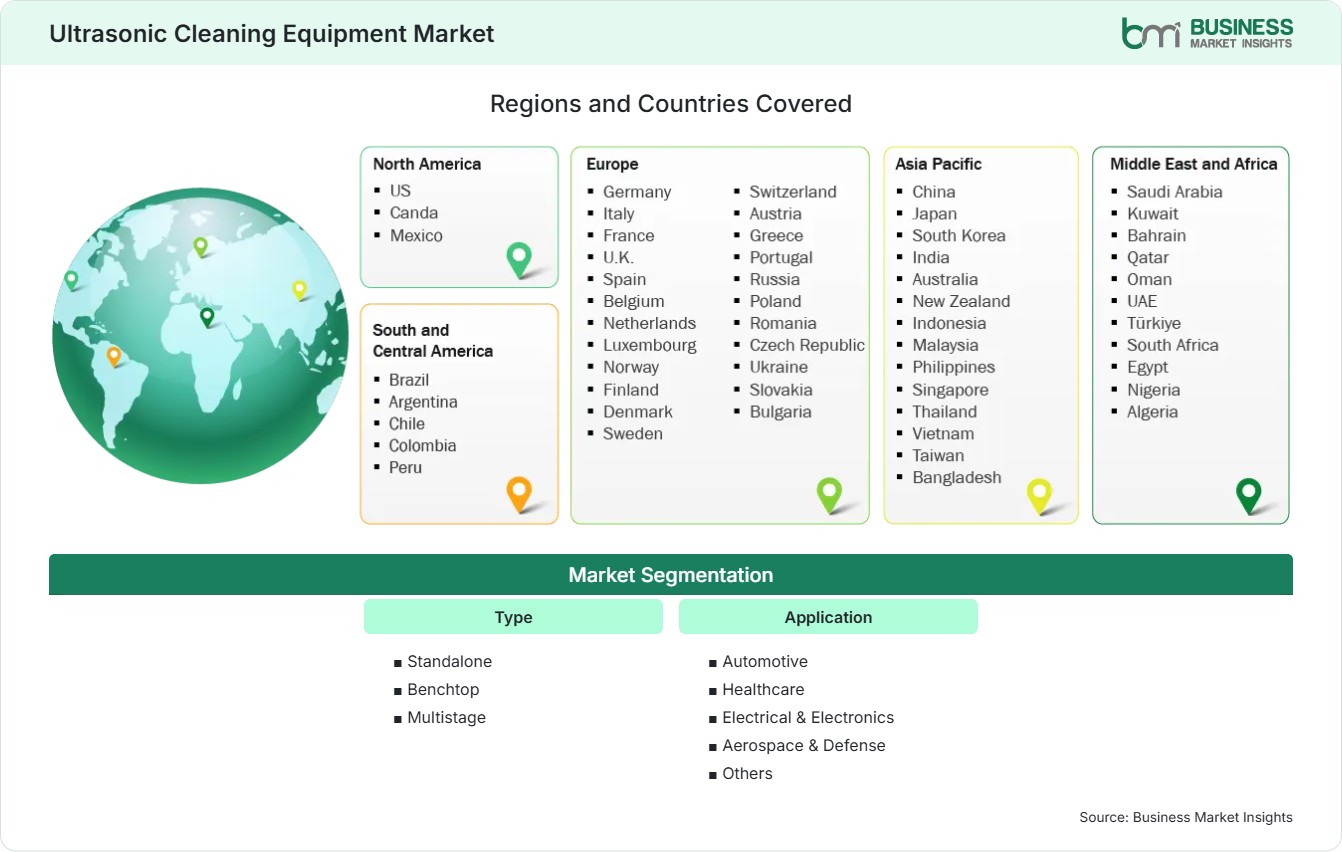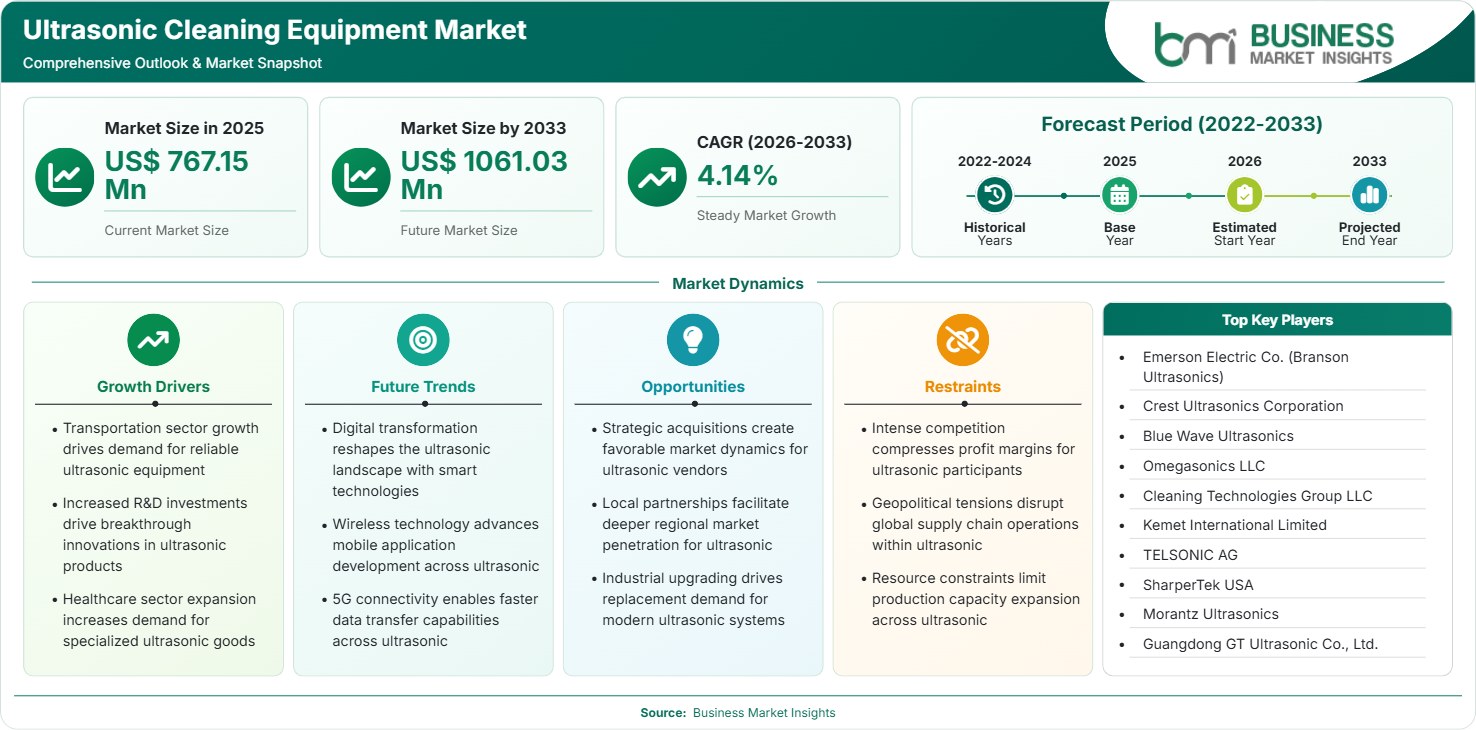
Ultrasonic Cleaning Equipment Market Regional Highlights
North America Ultrasonic Cleaning Equipment Market
North America accounted for 34%-37% of total revenues in 2025 and is expected to grow at a CAGR of 3.7%-4.0% through 2033. This is due to advanced aerospace, healthcare, and electronics industries that need a high level of cleanliness in the region. The Ultrasonic Cleaning Equipment market share is healthy, driven by increased demand for replacements as part of modernization efforts. Manufacturing medical devices and aircraft maintenance also drive adoption. Buyers look for automated equipment to improve process efficiency, reduce costs, and enhance compliance.
- Healthcare facilities increasingly invest in automated instrument reprocessing systems that deliver repeatable cleaning validation and support stringent infection-control protocols across surgical and diagnostic environments.
- Aerospace maintenance providers use advanced systems for turbine, hydraulic, and precision component cleaning to improve reliability, extend service life, and reduce maintenance turnaround times.
- Manufacturers emphasize digital controls, data logging, and remote monitoring capabilities to align cleaning operations with broader smart-factory productivity initiatives.
- Sustainability programs encourage migration from solvent-intensive methods toward aqueous-based cleaning processes, improving environmental compliance and workplace safety.
US Ultrasonic Cleaning Equipment Market
The United States Ultrasonic Cleaning Equipment Market accounted for 76%–79% of the regional consumption in 2025 and is projected to register a CAGR of 3.8%–4.1% from 2023 to 2033. The presence of strong medical device manufacturing, semiconductor manufacturing investment, and military manufacturing drives demand for equipment. Government-led programs encouraging local manufacturing and logistics contribute to capital expenditure. Users are looking for reliability, traceability, and automation in systems. Higher consistency in cleaning processes is required by advanced manufacturing industries.
- Semiconductor fabrication investments increase demand for precision cleaning technologies capable of removing microscopic contaminants from sensitive production components.
- Defense manufacturing programs stimulate procurement of advanced maintenance and cleaning equipment for mission-critical assemblies and precision-engineered parts.
- Healthcare system modernization supports replacement of legacy cleaning equipment with digitally controlled platforms providing greater documentation and process repeatability.
- Contract manufacturing organizations increasingly integrate automated cleaning workflows to enhance throughput, quality assurance, and compliance performance.
Europe Ultrasonic Cleaning Equipment Market
Europe accounted for 26% - 29% of the Ultrasonic Cleaning Equipment Market share in 2025 and is projected to register a CAGR of 3.9% - 4.3% through 2033. Germany continues to lead due to its highly developed industrial manufacturing base, while Poland and the Czech Republic show higher growth rates as part of their regional supply chains. Environmental policies and requirements aimed at increasing energy efficiency motivate manufacturers to update their equipment. The automotive industry, which is going electric, medical technologies, and aerospace engineering need constant cleaning.
- Germany leads regional demand, supported by automotive engineering, industrial machinery production, and strict manufacturing quality requirements.
- Poland exhibits high growth, supported by expanding manufacturing capacity, foreign investment, and strengthening industrial export activities.
- Medical technology producers increasingly deploy automated cleaning systems to align with regulatory standards and validated production workflows.
- European sustainability policies encourage adoption of water-efficient and energy-conscious cleaning equipment throughout industrial facilities.
- Aerospace suppliers require precision cleaning solutions capable of supporting stringent certification and operational performance requirements.
Asia Pacific Ultrasonic Cleaning Equipment Market
The Asia Pacific region accounted for 28%–31% of the market’s share in 2025, and is forecast to exhibit the highest CAGR of 5.3%–5.8% over 2033. China leads the market, while India has the highest growth rate. Developments in electronics, batteries, and industrial automation manufacturing drive market growth. Industrialization increases the need for reliable component cleaning solutions. The export of precision-engineered goods leads to increased use of these solutions.
- China maintains leadership through extensive electronics manufacturing, semiconductor investments, and broad industrial production capabilities.
- India demonstrates strong momentum from medical device manufacturing growth, industrial modernization, and expanding automotive production.
- Regional electronics exporters rely on contamination-control processes to maintain product performance and meet global customer requirements.
- Automation investments across factories encourage deployment of integrated cleaning systems with monitoring and process control features.
- Expanding electric vehicle supply chains generate demand for precision cleaning of batteries, motors, and associated components.
Rest of World Ultrasonic Cleaning Equipment Market
The Rest of the World generated 9%-12% of total global revenue in 2025 and is expected to register a CAGR of 4.4%-4.8% through 2033. South and Central America are driven by investments in automotive production and industrial maintenance needs. Growth in the Middle East and Africa is driven by developments in the healthcare sector, the aviation industry, and industrial diversification efforts. Procurement is becoming more concerned with equipment longevity and service support capabilities. Adoption is still limited to precision cleaning applications.
- Brazil leads South and Central America through automotive production, machinery maintenance needs, and growing industrial modernization efforts.
- Mexico benefits from export-oriented manufacturing activities and integration with North American production networks.
- Saudi Arabia demonstrates strong growth through healthcare investments and industrial diversification initiatives.
- United Arab Emirates supports demand through aviation maintenance, medical infrastructure development, and advanced service-sector requirements.
- Regional purchasers increasingly favor systems offering energy efficiency, process consistency, and lower long-term operating costs.