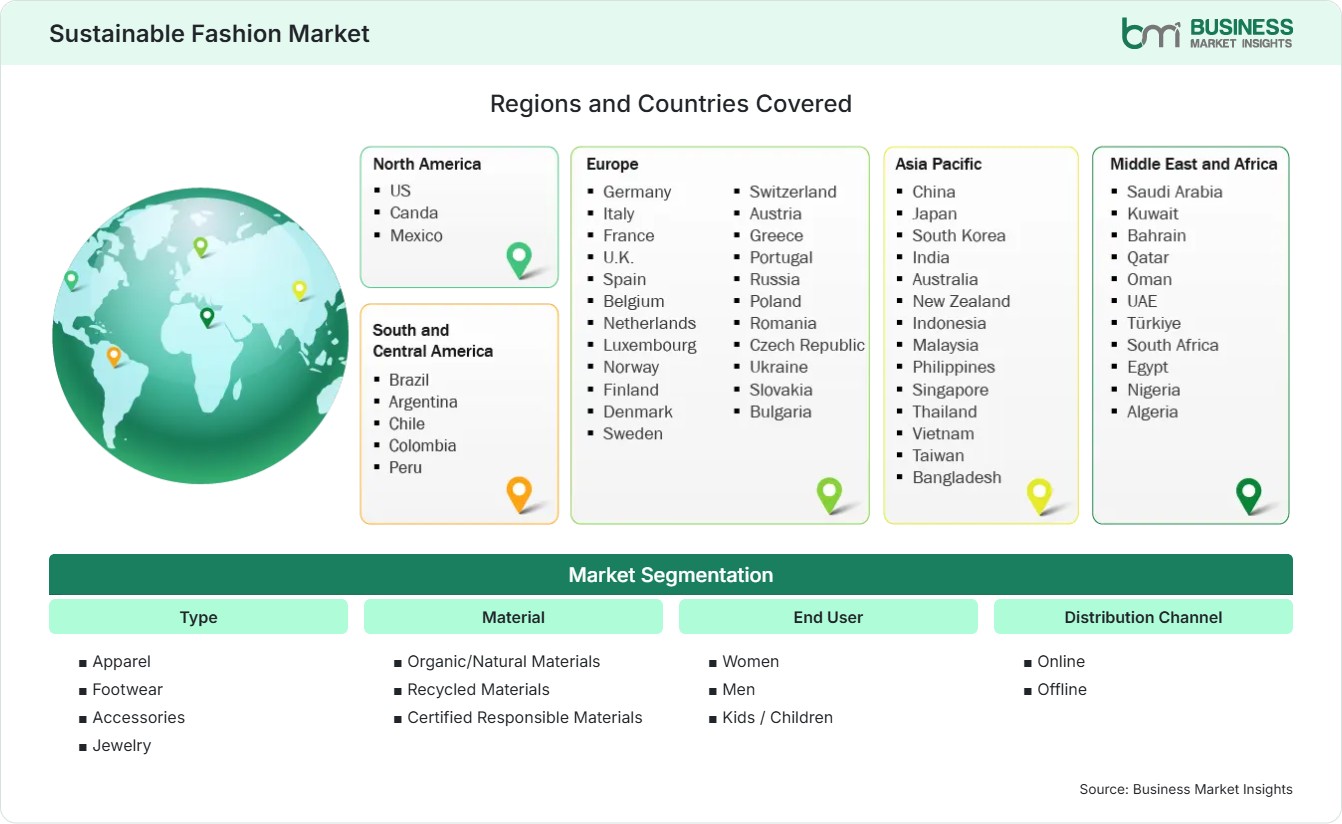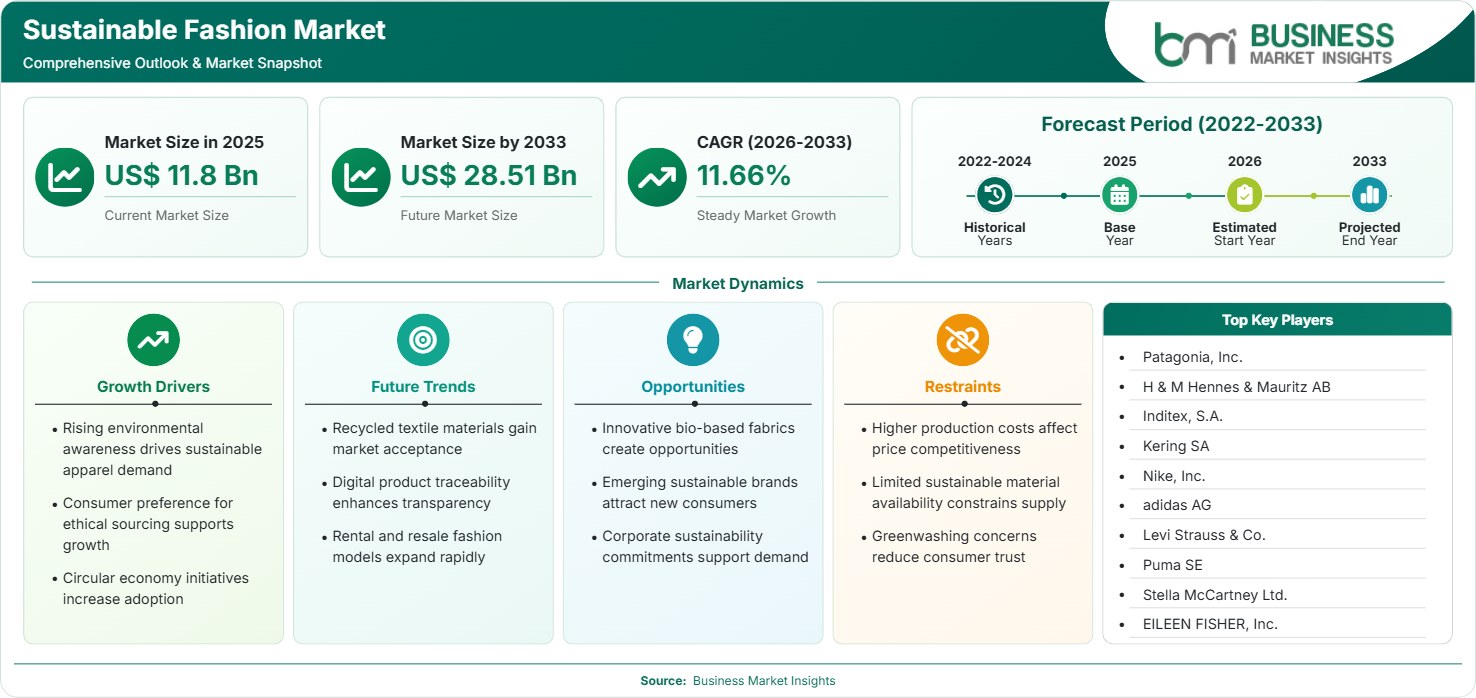
Sustainable Fashion Market Regional Highlights
North America Sustainable Fashion Market
The North American share of the sustainable fashion market is estimated at 32%-35% in 2025, and this segment is expected to grow at a 10.2%-10.8% CAGR until 2033. This is driven by an advanced retail ecosystem, the highest resale market penetration, an ESG-conscious consumer base, and the need for sustainability disclosures. Companies are investing in traceability systems and recycling programs. The difference between brands now depends on tangible sustainability outcomes, which support premium product positioning and encourage long-term industry participation.
- Resale and recommerce platforms continue attracting younger consumers while extending product lifecycles and lowering textile waste generation.
- Retailers increasingly integrate recycled fibers and transparency tools across portfolios to strengthen consumer trust.
- Sustainability reporting requirements are encouraging more detailed supply chain verification programs.
- Corporate climate commitments continue supporting demand for certified and responsibly sourced products.
US Sustainable Fashion Market
The United States contributes to 72%-76% of the region’s revenue and has a CAGR of 10.4%-11.0%. Consumer demand is shifting towards durable goods, resale participation, and sustainable credentials. Big box retailers and direct-to-consumer brands have been investing in circular practices. Investment in textile recycling and traceability is transforming the industry.
- Recommerce participation remains among the highest globally, supporting circular consumption.
- Major brands continue expanding recycled-material product portfolios.
- ESG-focused investors increasingly evaluate measurable sustainability performance.
- Advanced logistics networks support nationwide distribution of sustainable products.
Europe Sustainable Fashion Market
Europe accounts for 28%-31% market share in 2025 with 10.8%-11.5% CAGR. The region is favored by stringent environmental laws, heightened consumer awareness of the environment, and state-of-the-art facilities for recycling products. Germany leads the region, while Spain and Nordic markets demonstrate robust adoption. Regulatory frameworks increasingly influence sourcing strategies and product design decisions.
- EU textile policies accelerate circular economy investments and eco-design implementation.
- Germany leads regional demand, while Spain records comparatively faster market expansion.
- Certification programs strengthen consumer confidence and purchasing decisions.
- Luxury brands increasingly adopt regenerative and recycled material strategies.
Asia Pacific Sustainable Fashion Market
Asia-Pacific accounts for 24%-27% of the market and has the highest CAGR of 13.5%-14.2%. The growth in this region can be attributed to advancements in manufacturing, sustainable exports, and increased middle-class purchasing power. China is the leading revenue generator for this region, whereas India is the fastest-growing market. Digital commerce significantly expands access to eco-conscious products.
- Investments in green manufacturing support export competitiveness.
- India benefits from sustainable textile production capabilities and rising awareness.
- E-commerce platforms accelerate product accessibility across urban markets.
- Regional brands increasingly emphasize traceability and ethical sourcing.
- Government sustainability initiatives encourage production efficiency improvements.
Rest of World Sustainable Fashion Market
The rest of world accounts for 10%-13% of the market share and demonstrates a CAGR of 11.4%-12.1%. The South & Central American region has an advantage due to sustainable cotton and fiber manufacturing. There is increasing investment in sustainable manufacturing and retail in the Middle East & Africa. Brazil becomes a source of income generation, whereas the UAE represents growth potential.
- Brazil leverages agricultural resources for sustainable material development.
- Gulf countries are expanding premium responsible-fashion retail formats.
- International brands increase market presence through digital channels.
- Sustainability-focused sourcing partnerships continue expanding across developing markets.