
Fast Fashion Market Outlook: Size, Share, Trends, Growth Analysis, Competitive Landscape & Forecast, 2026-2033

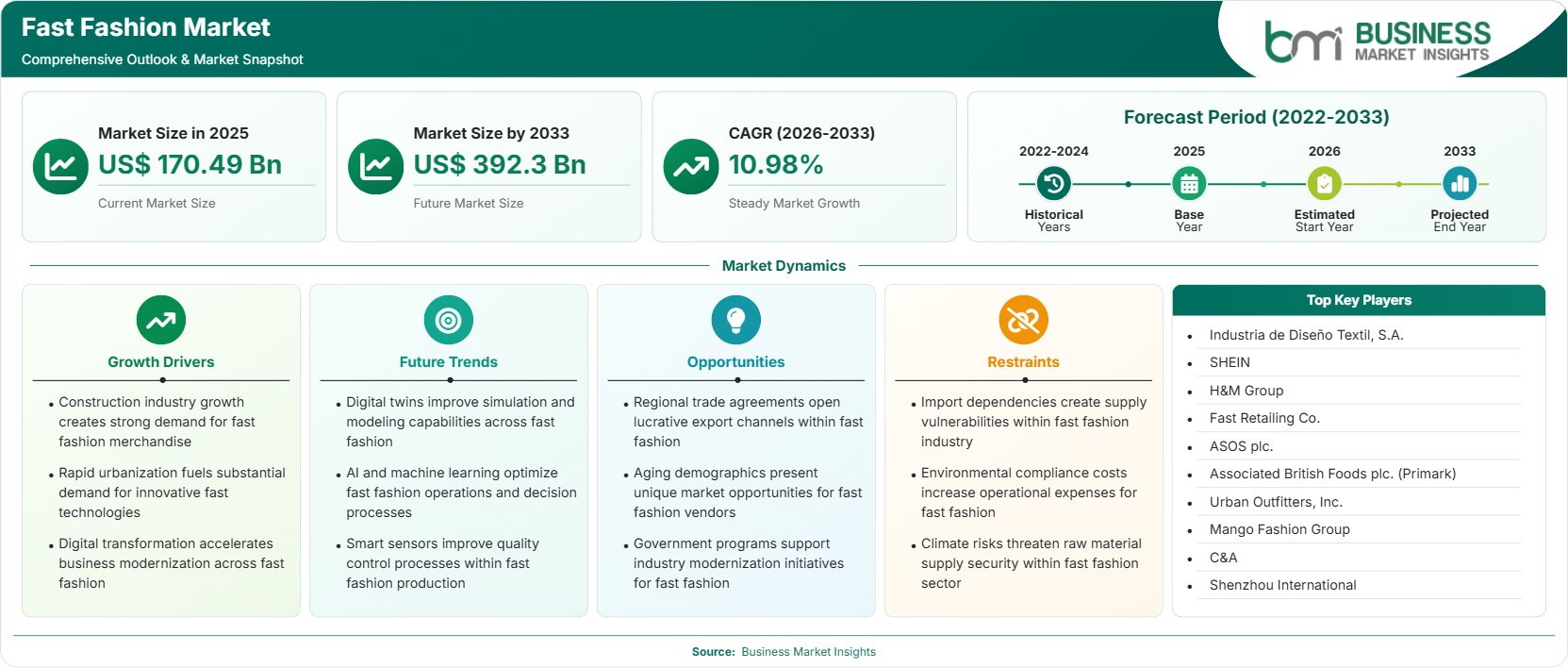
The Fast Fashion Market size was valued at US$ 170.49 Billion in 2025 and is projected to reach US$ 392.3 Billion by 2033, growing at a CAGR of 10.98% during 2026–2033, driven by rapid apparel cycles, digital retail expansion, affordable fashion demand, and opportunities from sustainable production innovation.

Report Coverage
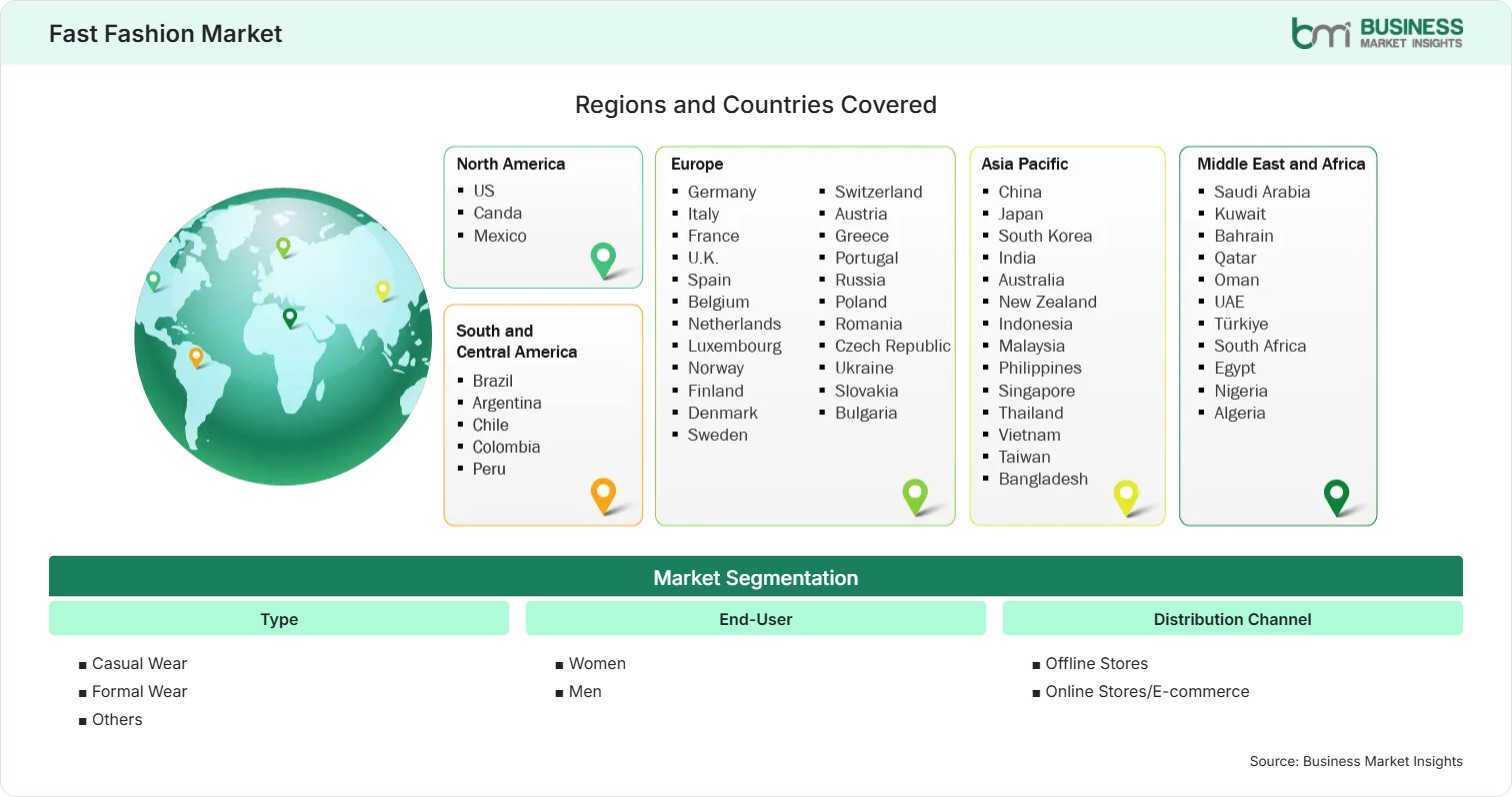
  • Type: Casual Wear, Formal Wear, Others
  • End-User: Women, Men
  • Distribution Channel: Offline Stores, Online Stores/E-commerce
US$ 170.49 Bn Market size in 2025
US$ 392.3 Bn Market Size by 2033
10.98% CAGR, 2026 - 2033
2026-2033 Forecast Period

01 AI Overview

Fast Fashion Market Summary

  • North America Region: North America holds market share of 25%–28% in 2025, growing with a CAGR of 9.5%–10.5% influenced by digital commerce expansion, brand collaborations, personalized apparel platforms, and circular fashion opportunities. The US market demonstrates strong consumer adoption through online channels, supported by e-commerce penetration, influencer-led purchasing behaviour, and retail innovation, achieving a CAGR of 9.8%–10.8% during 2026–2033.
  • Fastest Growing Region: Asia Pacific holds market share of 38%–41% in 2025, growing with a CAGR of 12.0%–13.5% influenced by rising disposable incomes, expanding urban populations, manufacturing capabilities, and accelerated online fashion adoption across emerging economies.
  • Leading Segment: Casual Wear holds market share of 55%–58% in 2025, growing with a CAGR of 10.5%–11.5% influenced by everyday clothing demand, workplace flexibility, lifestyle changes, and high-volume production models supporting frequent consumer purchases.
  • High Growth Segment: Online Stores/E-commerce holds market share of 42%–45% in 2025, growing with a CAGR of 13.0%–14.0% influenced by mobile shopping, social commerce, digital payments, and direct-to-consumer fashion business models.
  • Key Market Opportunity: Sustainable materials, AI-enabled demand forecasting, and regionalized production networks create opportunities by reducing inventory waste, improving responsiveness, and enabling environmentally conscious fashion consumption across global markets.
  • Major Market Players: CFM International SA, Honeywell International Inc., GE Aviation, Rolls-Royce Holdings plc, Safran SA, International Aero Engines AG, MTU Aero Engines AG, Textron Inc., Pratt & Whitney, Zara, H&M Group, and Uniqlo.
02 Strategic Insights

Fast Fashion Market: Strategic Insights

Fast Fashion Market Strategic Framework
FREE PDF
Request your free sample
Request free sample
03 Stakeholder View

Key Takeaways

  • The market ecosystem is evolving from traditional apparel manufacturing toward interconnected supply chains integrating designers, manufacturers, logistics providers, digital platforms, and consumer analytics systems.
  • Growth opportunities are concentrated in casual clothing, online retail channels, and emerging markets where younger consumers increasingly prioritize affordability, convenience, and rapid access to new fashion collections.
  • Innovation is shifting toward artificial intelligence-based forecasting, automated inventory management, digital sampling, and sustainable fabric development to improve efficiency and reduce excess production.
  • Asia Pacific presents a strong investment opportunity due to manufacturing advantages, expanding domestic consumption, rising internet penetration, and increasing fashion expenditure among urban populations.
  • Investment activity is moving toward retail technology integration, sustainable fashion initiatives, and strategic partnerships that strengthen digital capabilities and improve operational resilience.
04 Geographic Outlook

Fast Fashion Market Regional Highlights

North America Fast Fashion Market

North America accounted for a 25%–28% share in 2025, with a CAGR of 9.5%–10.5% during 2026–2033. The region benefits from mature retail infrastructure, strong online shopping adoption, and increasing demand for affordable apparel. Fast Fashion Market share growth is supported by digital-first brands and sustainability-focused consumer preferences.

  • Online platforms are expanding rapidly as consumers seek convenience, personalized recommendations, and frequent apparel updates through mobile shopping experiences.
  • US retailers are investing in automated fulfilment systems, enabling faster delivery cycles and improved inventory optimization across fashion categories.
  • Sustainability regulations and consumer awareness are encouraging brands to introduce recycled materials and transparent sourcing strategies.
  • Brand collaborations with influencers and digital creators continue shaping purchasing decisions among younger demographics.

US Fast Fashion Market

The US represented a 70%–73% share of North America in 2025, with a CAGR of 9.8%–10.8% during 2026–2033. The country remains a major retail innovation hub due to advanced e-commerce infrastructure, strong consumer spending, and widespread adoption of digital fashion platforms. Fast Fashion Market trends are shaped by social commerce and rapid product discovery.

  • E-commerce penetration continues influencing apparel purchases through mobile applications, personalized advertising, and integrated payment solutions.
  • Retailers are improving supply chain visibility through analytics platforms supporting faster response to consumer demand fluctuations.
  • Sustainable apparel initiatives are increasing as consumers evaluate environmental impact alongside price and design.

Europe Fast Fashion Market

Europe accounted for a 22%–25% share in 2025, achieving a CAGR of 9.0%–10.0% through 2026–2033. The region is influenced by strong fashion culture, sustainability regulations, and demand for responsible production. Leading countries include Germany, France, and the United Kingdom, while emerging opportunities are developing in Eastern European markets.

  • European consumers increasingly prefer brands offering ethical sourcing, recycled fabrics, and improved product transparency.
  • Regulatory initiatives targeting textile waste are encouraging companies to redesign production and recycling strategies.
  • Germany is advancing through digital retail adoption and sustainable apparel innovation.
  • France and the United Kingdom remain influential due to strong fashion ecosystems and premium consumer engagement.

Asia Pacific Fast Fashion Market

Asia Pacific represented a 38%–41% share in 2025, with a CAGR of 12.0%–13.5% during 2026–2033. The region leads global production capacity while experiencing strong consumer market expansion. Countries including China, India, and Japan contribute significantly, with India and Southeast Asia showing accelerated growth potential.

  • China maintains strong manufacturing capabilities supported by extensive textile infrastructure and digital commerce platforms.
  • India benefits from rising disposable incomes, younger demographics, and increasing online fashion adoption.
  • Southeast Asian countries are attracting production investments through competitive manufacturing environments.
  • Japan demonstrates demand for technology-enabled retail experiences and efficient apparel distribution networks.

Rest of World Fast Fashion Market

Rest of World accounted for a 8%–10% share in 2025, with a CAGR of 10.0%–11.5% during 2026–2033. South and Central America are developing through urbanization and digital retail growth, while Middle East and Africa markets benefit from expanding youth populations and increasing fashion awareness.

  • Brazil and Mexico are supporting regional growth through rising online apparel purchases and expanding retail networks.
  • Middle Eastern countries are adopting international fashion brands through modern shopping destinations and digital marketplaces.
  • African markets are developing through mobile commerce adoption and increasing access to affordable clothing.
  • Regional brands are forming partnerships with global retailers to improve product availability and distribution efficiency.
  • Investment in logistics infrastructure is strengthening fashion supply chains across emerging economies.
Global Market Geography
FREE PDF
Request your free sample
Request free sample
05 Segment Analysis

Fast Fashion Market Segmentation

Type

The Type segment remains a core classification area, with Casual Wear leading adoption due to lifestyle changes, flexible workplace environments, and consumer preference for comfortable clothing. Type segmentation accounted for approximately 70%–72% combined share in 2025, with a CAGR of 10.5%–11.5% during 2026–2034. Fast Fashion Market scope continues expanding as brands optimize production cycles and introduce trend-responsive collections.

  • Casual Wear: Casual wear dominates demand due to everyday usability, affordability, and broad consumer acceptance across age groups. Brands focus on frequent collection launches, seasonal designs, and comfortable fabrics to maintain engagement among digitally connected shoppers.
  • Formal Wear: Formal wear demand is supported by professional clothing requirements, corporate environments, and event-based purchasing. Brands are adapting designs through affordable premium collections, improved customization options, and shorter production timelines.

By End-User

The By End-User segment demonstrates strong consumer differentiation, with women representing the largest purchasing group due to extensive product variety and higher fashion engagement. The segment accounted for approximately 65%–68% share in 2025, with a CAGR of 10.0%–11.0% during 2026–2034. Fast Fashion Market trends reflect evolving preferences among diverse consumer groups.

  • Women: Women’s apparel remains the leading consumer category, supported by frequent purchasing patterns, broad style preferences, and strong engagement with social media fashion trends. Retailers continue expanding collections across casual, seasonal, and occasion-based categories.
  • Men: Men’s apparel demand is increasing through wider acceptance of trend-based clothing, online shopping adoption, and expanded product portfolios. Brands are investing in casual, streetwear, and lifestyle-focused collections targeting younger consumers.

By Distribution Channel

The By Distribution Channel segment is undergoing rapid transformation as digital platforms reshape apparel purchasing behavior. Online Stores/E-commerce accounted for strong expansion in 2025, supported by mobile shopping, social commerce, and direct-to-consumer models. The segment recorded approximately 42%–45% share in 2025, with a CAGR of 13.0%–14.0% during 2026–2034. Fast Fashion Market share growth increasingly depends on digital accessibility.

  • Offline Stores: Offline retail continues supporting consumer engagement through physical experiences, immediate product availability, and brand visibility. Stores remain important in emerging economies where shoppers prefer direct evaluation of apparel quality and fit.
  • Online Stores/E-commerce: E-commerce channels are expanding through mobile applications, influencer marketing, personalized recommendations, and faster delivery systems. Brands are leveraging digital analytics to optimize inventory, pricing, and consumer engagement strategies.
06 Market Forces

Fast Fashion Market Dynamics

Key Market Drivers

Rising Digital Fashion Consumption

Digital transformation is one of the strongest contributors to shaping the Fast Fashion Market growth as consumers increasingly discover and purchase apparel through online platforms. Global internet adoption, expanding smartphone usage, and social commerce integration are enabling brands to reach wider audiences with shorter purchasing cycles. Based on the reports from the International Telecommunication Union, there are billions of people who use the internet all over the world, enabling the growth of digital retail operations. Many brands have been focusing on their investments in artificial intelligence-driven recommendation systems, automated inventory planning, and customized marketing campaigns. All of these help improve demand forecasting and increase operational efficiency, along with the introduction of products to the market at a faster pace.

Expansion of Affordable Apparel Demand

Affordable clothing demand continues driving industry expansion as consumers seek fashionable products at accessible prices. Urbanization, increasing disposable incomes, and changing lifestyle patterns are encouraging frequent apparel purchases across developing and developed economies. Fast Fashion Market trends indicate that younger consumers increasingly prioritize variety, convenience, and rapid access to new designs. Manufacturers are improving their efficiency in production by utilizing supply chains globally, improved logistics, and reduced time to market. Scalable production methods have helped enable the fashion industry to produce its fashion collections faster. Economies that are emerging are important in creating demand due to their growing middle classes, and existing economies help in growth through replacement sales and online sales.

Supply Chain Optimization Through Technology

Technology-enabled supply chain improvements are strengthening operational performance across fashion companies. Advanced analytics, automation, and inventory management solutions allow businesses to monitor consumer demand and reduce excess stock. Using predictive technology will contribute to making better production decisions and responding effectively to changes in fashion trends. More companies are incorporating digital logistics systems that help in coordinating suppliers and delivering goods on time with greater transparency. This trend is in line with the sustainable objectives of the world by minimizing waste and avoiding inefficiencies in production. Technology investment and improved operations will enable the emergence of agile business models able to cope with dynamic consumer demands.

Key Market Opportunities

Sustainable Fashion Integration

Sustainability-focused innovation represents a major opportunity as consumers and regulators increasingly demand environmentally responsible apparel production. Companies are investing in recycled materials, low-impact manufacturing processes, and circular economy models to improve brand positioning. Institutions like the Ellen MacArthur Foundation have emphasized the significance of textile circularity and minimization of waste throughout the fashion value chain. Fashion brands that practice sustainable sourcing will help in enhancing brand loyalty while meeting the growing environmental demands. The development of recycling technologies, sustainable fibers, and sustainable supply chains will lead to differentiating opportunities. Such measures will also ensure resilience in the long term due to reduced dependency on energy-intensive manufacturing practices.

Artificial Intelligence-Based Retail Solutions

Artificial intelligence provides many benefits through the ability to forecast demand, recommend products, and automate merchandising systems. The implementation of AI by retailers assists them in analyzing consumer behavior, managing stock levels, and making better product development decisions. This allows businesses to adapt to new consumer preferences quickly and minimize production issues. AI can improve forecast accuracy by using algorithms that consider factors such as consumer buying patterns, seasonality, and geographic factors. In the face of rising digital competition, investment in intelligent systems becomes necessary to keep customers engaged. Businesses that implement AI in their design, logistics, and marketing processes can perform better operationally and provide unique consumer experiences through various distribution channels.

Growth of Emerging Fashion Markets

The Fast Fashion Market Forecast indicates that emerging markets provide substantial opportunities due to expanding consumer populations, improving digital infrastructure, and increasing fashion awareness. There is an increased need for low-cost clothing in countries from the Asia Pacific, Latin America, and Africa. Investments in logistics, production plants, and payment systems have increased access to markets. Foreign brands are looking for collaborations within the region to distribute their products and tailor them to the tastes of the region. The emergence of more urban centers offers significant prospects because the consumers there desire foreign fashion trends at affordable prices. Businesses that have regional approaches, effective logistics operations, and regional collections can benefit further from the situation.

Market Restraints and Challenges

Environmental Impact and Regulatory Pressure

Factor: Increasing environmental concerns related to textile waste, resource consumption, and manufacturing emissions are creating regulatory challenges for fashion companies.

Impact: Businesses face higher compliance costs, operational adjustments, and pressure to redesign production processes. New policies of sustainability are being implemented by governments and industry associations. Such policies demand more traceable materials and sustainable waste disposal methods. Businesses will have to allocate funds towards responsible sourcing, recycling, and sustainable supply chains in order to remain competitive in the market. The implementation of such policies might lead to higher costs in the short term, especially in the case of manufacturing companies with complex production networks.

Inventory Management and Demand Uncertainty

Factor: Rapidly changing consumer preferences and unpredictable fashion cycles create challenges in forecasting demand accurately.

Impact: Excess inventory, markdown pressures, and inefficient production planning can reduce profitability for retailers. Quick trends necessitate organizations striking a fine balance between speed and control in their operations, leading to complexities within manufacturing and distribution processes. Companies need to invest in analytics and adaptable systems in order to reduce the risk of having excess inventory. Small firms will find this more difficult due to the lack of investment capabilities and inadequate supplier ties. Demand management continues to be important as competition grows.

07 Company Analysis

Competitive Landscape

The Fast Fashion Market analysis indicates a highly competitive ecosystem shaped by global apparel brands, technology-enabled retailers, supply chain specialists, and companies investing in rapid production capabilities. Competitive positioning is influenced by product innovation, digital commerce expansion, sustainability initiatives, and operational efficiency. Leading participants focus on strengthening distribution networks, improving consumer engagement, and adopting advanced analytics to optimize fashion cycles.

Company Name

Overview

Products and Services relevant to this market

CFM International SA

CFM International SA is a France-based aerospace joint venture and does not directly operate in apparel markets but represents an industrial technology-focused organization.

The company provides aircraft engines and propulsion technologies, with no direct Fast Fashion Market product portfolio.

Honeywell International Inc.

Honeywell International Inc. is a diversified technology company providing advanced industrial solutions across multiple sectors globally.

The company supplies automation, materials, and digital technologies supporting manufacturing efficiency and industrial operations.

GE Aviation

GE Aviation is a global aviation technology company specializing in aircraft engines, systems, and related services.

The company provides aerospace technologies and does not offer apparel products or fashion retail solutions.

Rolls-Royce Holdings plc

Rolls-Royce Holdings plc develops advanced engineering solutions primarily for aerospace, defense, and power applications.

The company provides propulsion systems and engineering services unrelated to fashion production or retail activities.

Safran SA

Safran SA is a French multinational aerospace company focused on aircraft equipment, propulsion, and defense technologies.

The company provides aviation components and engineering solutions, without direct involvement in apparel manufacturing.

International Aero Engines AG

International Aero Engines AG develops aircraft engine technologies through global aerospace partnerships.

The company provides aviation propulsion systems and technical services rather than fashion-related products.

MTU Aero Engines AG

MTU Aero Engines AG is a German aircraft engine manufacturer supporting commercial and military aviation programs.

The company focuses on aerospace engines, maintenance services, and engineering solutions outside apparel markets.

Textron Inc.

Textron Inc. is a diversified industrial corporation operating across aviation, defense, and specialized manufacturing sectors.

The company provides aircraft, industrial products, and engineering services unrelated to fashion retail.

Pratt & Whitney

Pratt & Whitney develops aircraft engines and aerospace technologies serving commercial and defense aviation markets.

The company manufactures propulsion systems and maintenance solutions with no direct fashion industry offerings.

10 Trust & Transparency

Research Methodology

The market analysis combines proprietary research with secondary data from government agencies, company disclosures, regulatory filings, industry databases and expert interviews. Market estimates are validated through data triangulation, cross-market benchmarking and analyst review.

View Full Research Methodology

11 Questions Answered

Frequently Asked Questions

What technologies will influence future apparel business models?

Digital commerce platforms, automation, artificial intelligence, blockchain-based traceability, and advanced analytics are expected to influence product development and supply chain management.

How are brands reducing inventory challenges?

As highlighted in the Fast Fashion Market Report, Companies are adopting predictive analytics, flexible manufacturing, and demand-based production methods to minimize excess stock and improve operational efficiency.

Why are emerging economies important for fashion expansion?

Emerging economies provide growth opportunities due to younger populations, rising disposable incomes, improving internet access, and increasing adoption of online shopping platforms.

What role does sustainability play in future fashion strategies in the Fast Fashion Market?

Sustainability is becoming central through recycled materials, circular production models, responsible sourcing, and improved supply chain transparency to address environmental expectations.

How is artificial intelligence influencing apparel retail operations?

Artificial intelligence is improving demand forecasting, personalized recommendations, inventory planning, and customer engagement. Retailers use AI tools to analyze purchasing patterns and optimize production decisions.

Access the Full Fast Fashion Market Report

Get segment-level forecasts, regional estimates, competitive benchmarking, company profiles and downloadable Excel datasets.

Access the full Fast Fashion Market Report
350 pages PDF & Excel | 2026-08-17