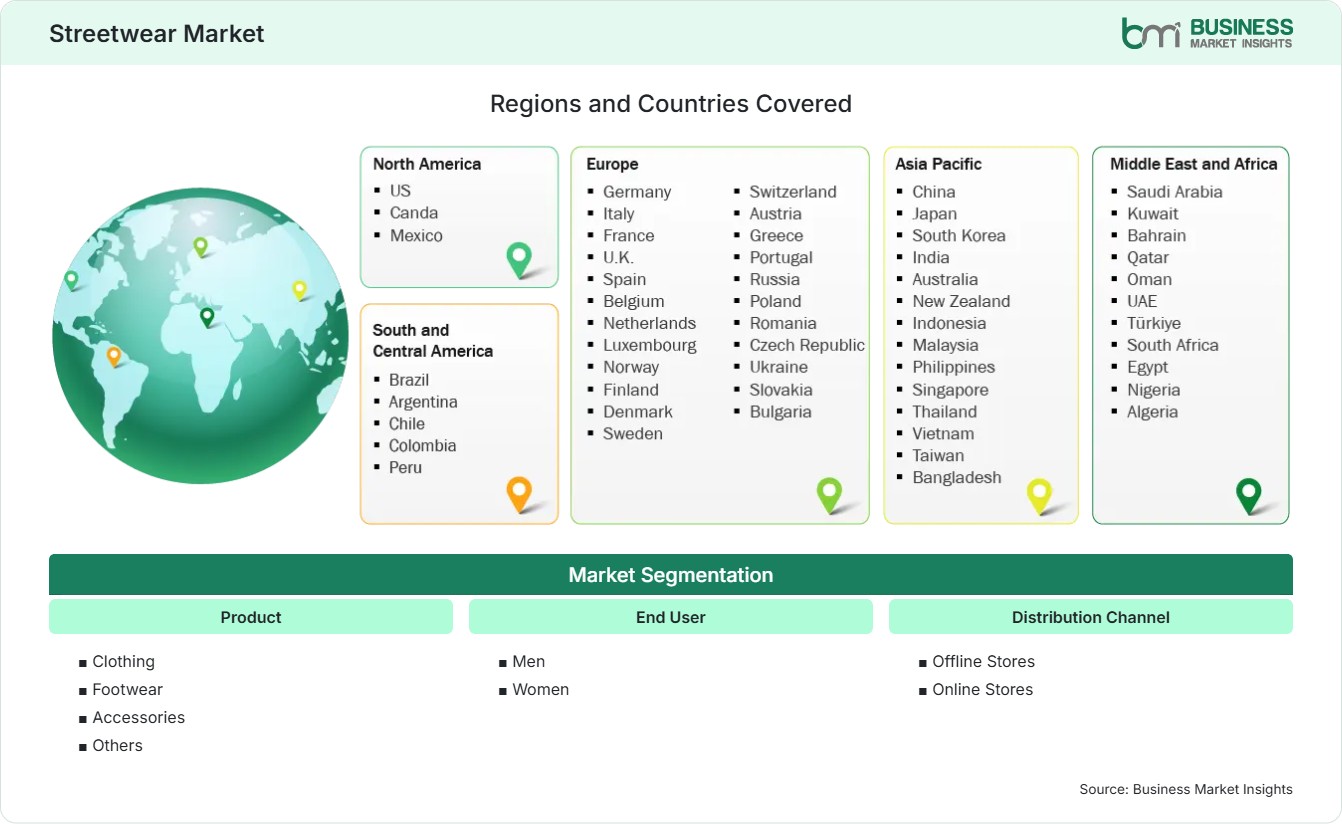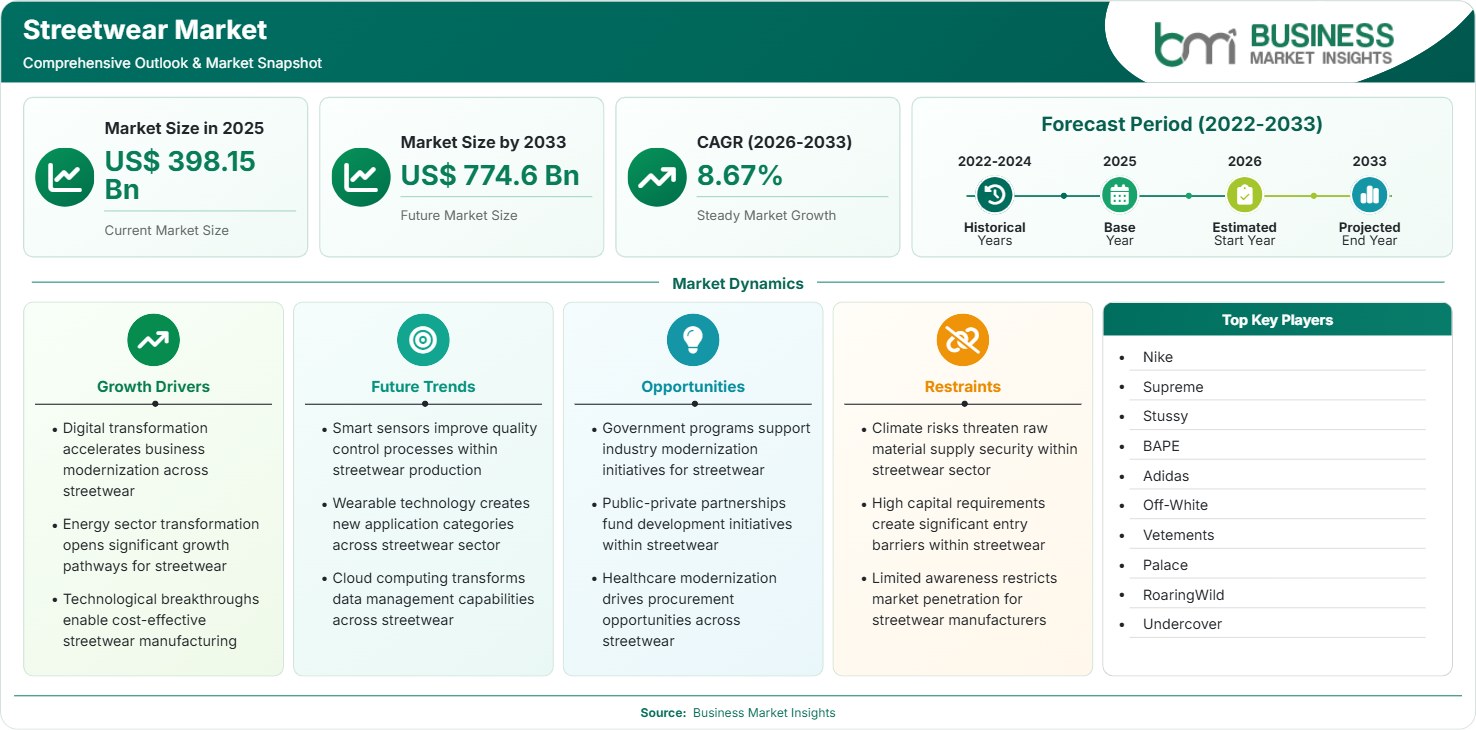
Streetwear Market Regional Highlights
North America Streetwear Market
North America represents a 35%–38% share in 2025 and is projected to expand at a 7.8%–8.5% CAGR through 2033. The region benefits from deep sneaker culture, mature specialty retail, influential entertainment communities, and established collaboration networks. The United States dominates regional demand, while Canada contributes through premium urban retail and digitally engaged consumers. Resale authentication, limited releases, and creator-led collections continue reshaping purchasing behavior. Supply chains increasingly prioritize flexible production, faster replenishment, and direct distribution to preserve brand control while reducing markdown exposure.
- Cultural influence: Hip-hop, basketball, skateboarding, and music continue translating cultural relevance into apparel demand, giving brands opportunities to connect product launches with entertainment and community events.
- Digital commerce: Mobile-first purchasing and exclusive online releases are expanding direct consumer relationships, enabling brands to collect first-party data and manage product scarcity more precisely.
- Resale ecosystem: Authentication services and secondary marketplaces increasingly influence initial purchasing decisions, making product rarity, condition, provenance, and long-term desirability important commercial considerations.
- Premiumization: Consumers increasingly accept higher prices for limited collaborations, technical materials, and designer partnerships when products provide recognizable cultural value and differentiated construction.
US Streetwear Market
The US accounts for 28%–31% of the total sector in 2025 and is expected to grow at a 7.7%–8.4% CAGR through 2033. Its leadership reflects dense urban consumer networks, powerful sports franchises, established sneaker communities, and strong brand recognition. New York, Los Angeles, Chicago, and Miami remain influential cultural centers, while online communities broaden demand beyond traditional fashion capitals. The US also anchors resale, collaboration, and creator ecosystems, creating a sophisticated environment where scarcity, authenticity, and cultural relevance directly influence product velocity.
- Brand ecosystem: Established sportswear companies increasingly compete with independent labels, luxury houses, and digitally native brands, intensifying the need for distinct cultural positioning.
- Consumer engagement: Exclusive drops, membership programs, and community events help brands convert social attention into recurring purchases while reducing reliance on conventional seasonal promotions.
- Retail evolution: Flagship stores increasingly function as cultural venues, integrating product launches, exhibitions, collaborations, and community activities rather than operating solely as transactional outlets.
Europe Streetwear Market
Europe holds a 23%–26% share in 2025 and is projected to register a 7.2%–8.0% CAGR through 2033. The United Kingdom, Germany, France, and Italy lead regional demand, while Spain and the Netherlands provide attractive high-growth opportunities. European consumers combine sportswear, luxury, skate culture, and vintage influences, supporting hybrid product development. Strong fashion institutions and dense urban retail networks provide brands with platforms for experimentation. Sustainability expectations and evolving product regulations are simultaneously increasing pressure on materials, traceability, packaging, and supply-chain transparency.
- United Kingdom: The UK remains a leading cultural hub, with London supporting strong demand for skate-inspired products, football aesthetics, independent labels, and premium collaborations across younger consumers.
- Germany: Germany's 7.0%–7.8% CAGR reflects strong sportswear penetration, digitally active consumers, and growing acceptance of lifestyle products combining performance functionality with contemporary street styling.
- France and Italy: France and Italy benefit from luxury-fashion integration, designer collaborations, and established creative ecosystems, supporting premium streetwear positioning and stronger cross-category experimentation.
- Spain and Netherlands: Spain and the Netherlands offer 8.2%–9.0% CAGR potential, supported by younger urban populations, festival culture, tourism, sneaker communities, and expanding digital-first retail.
Asia Pacific Streetwear Market
Asia Pacific accounts for a 27%–30% Streetwear Market share in 2025 and is forecast to grow at a 10.2%–11.0% CAGR through 2033. China, Japan, and South Korea lead the regional ecosystem, while India and Southeast Asia represent high-growth opportunities. Japanese heritage, Korean entertainment, mobile commerce, and rapidly developing domestic labels are expanding category relevance. The region also demonstrates strong appetite for localized collaborations, limited releases, and digitally mediated product discovery. However, brand relevance increasingly depends on local product creation and culturally specific storytelling.
- China: China remains a major opportunity despite near-term consumer caution. Nike's 2026 distribution strategy illustrates the importance of controlling digital pricing and improving local product relevance amid stronger domestic competition.
- Japan: Japan combines heritage craftsmanship, influential independent designers, and long-established subcultures, making it a leading source of design innovation and premium niche demand.
- South Korea: South Korea is projected to achieve 11.0%–12.0% CAGR, supported by entertainment exports, fashion-conscious youth consumers, social commerce, and strong integration between music, celebrities, and product launches.
- India and Southeast Asia: India and Southeast Asia offer 12.0%–13.0% CAGR potential as mobile commerce, urbanization, creator culture, and rising disposable incomes broaden access to international and local streetwear labels.
Rest of World Streetwear Market
South and Central America represent an emerging Streetwear Market demand pool, supported by football culture, music, urban youth communities, and expanding digital commerce. Brazil and Mexico lead regional activity, while Colombia and Chile provide attractive growth opportunities through digitally connected consumers and local creative scenes. Regional demand is increasingly shaped by accessible premium products, collaborations, and culturally relevant designs rather than purely imported brand recognition.
The Middle East and Africa remain smaller but strategically important, with the United Arab Emirates and Saudi Arabia leading premium retail development. South Africa provides a strong cultural base. Regional growth is supported by tourism, luxury retail investment, younger consumers, and digitally enabled cross-border purchasing.
- Latin America: Brazil and Mexico lead demand, while Colombia and Chile offer 9.0%–10.0% CAGR opportunities as sneaker culture, football, music, and social commerce reinforce local fashion ecosystems.
- Middle East: The UAE and Saudi Arabia benefit from premium retail investment, tourism, experiential shopping, and rising demand for international collaborations among affluent younger consumers.
- Africa: South Africa remains the region's cultural anchor, with local creative communities and sneaker culture supporting demand for differentiated products and collaborations.
- Cross-border commerce: International shipping platforms and localized payment solutions are expanding access to brands that previously lacked physical distribution, improving product discovery across underserved urban markets.