Key Market Drivers
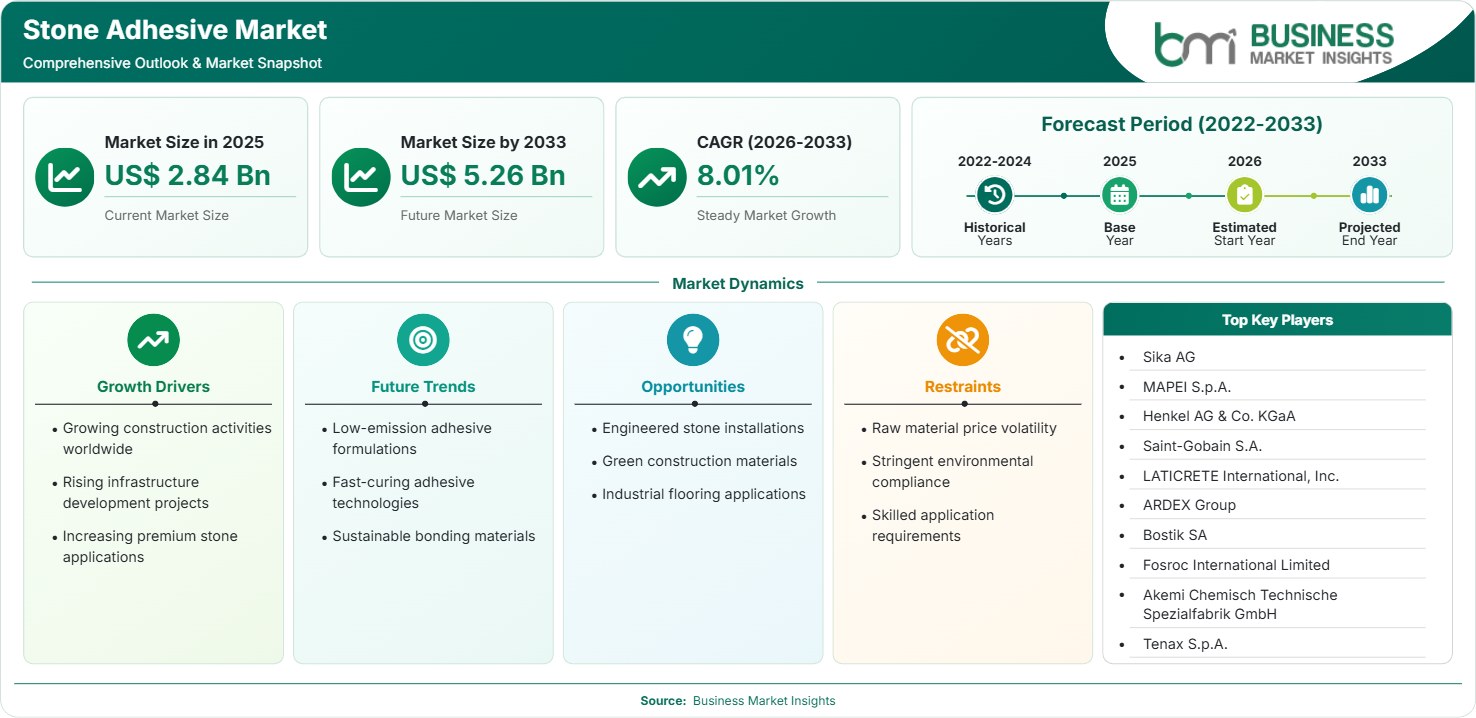
Growing construction activities worldwide
The rapid expansion of residential, commercial, and mixed-use construction projects remains one of the strongest growth drivers for the Stone Adhesive Market. Population growth, urbanization, and increasing disposable incomes are encouraging investments in modern housing and premium commercial buildings where natural and engineered stone materials are widely used. Stone adhesives play a critical role in ensuring durable bonding for flooring, countertops, wall cladding, facades, and decorative installations. The growing popularity of luxury interiors, coupled with renovation and remodeling activities across developed economies, is further increasing product demand. In addition, contractors are increasingly selecting advanced adhesive formulations that offer higher bond strength, moisture resistance, and faster curing, enabling shorter construction timelines and improved installation quality.
Rising infrastructure development projects
Governments across developed and emerging economies continue investing significantly in transportation infrastructure, airports, railway stations, public buildings, healthcare facilities, educational institutions, and smart city developments. These projects require durable stone installation systems capable of maintaining structural integrity over extended operational lifecycles. High-performance stone adhesives are increasingly replacing conventional mechanical fastening techniques because they provide superior load distribution, enhanced durability, and reduced maintenance requirements. Growing investments in commercial real estate, hospitality projects, metro rail networks, and public infrastructure are creating sustained demand for advanced adhesive technologies. Continuous modernization of urban infrastructure is expected to generate long-term opportunities for manufacturers offering reliable and environmentally compliant stone bonding solutions.
Increasing premium stone applications
Consumer preference for aesthetically appealing interiors and high-end architectural finishes continues driving the adoption of premium stone materials including marble, granite, quartz, limestone, and engineered stone. Luxury residential developments, premium office buildings, hotels, retail centers, and healthcare facilities increasingly incorporate these materials to improve durability and visual appeal. This trend has significantly increased the need for adhesives capable of delivering strong, invisible, and long-lasting bonds across different substrates. Manufacturers are responding by developing epoxy, polyurethane, and hybrid adhesive formulations that provide improved flexibility, stain resistance, weather durability, and compatibility with large-format stone panels used in contemporary construction projects.
Key Market Opportunities
Engineered stone installations
The increasing popularity of engineered quartz and composite stone surfaces presents a substantial growth opportunity for adhesive manufacturers. These materials are widely used for kitchen countertops, bathroom vanities, flooring, and commercial interiors because they offer consistent appearance, high durability, and lower maintenance requirements. As installation volumes continue increasing globally, demand is rising for specialized adhesives capable of accommodating thermal movement, reducing installation time, and improving long-term structural performance. Product innovation focused on rapid curing, superior bonding strength, and enhanced compatibility with engineered materials is expected to create new revenue opportunities across residential and commercial construction sectors.
Green construction materials
Growing emphasis on sustainable construction practices is encouraging manufacturers to introduce environmentally friendly stone adhesive formulations with reduced volatile organic compound emissions and improved recyclability. Green building certification programs such as LEED and BREEAM continue influencing material selection across commercial and institutional construction projects. Low-emission adhesives not only improve indoor environmental quality but also support regulatory compliance and corporate sustainability objectives. Increasing awareness among architects, contractors, and developers regarding environmentally responsible construction materials is expected to accelerate adoption of solvent-free and water-based adhesive technologies throughout the forecast period.
Industrial flooring applications
The rapid expansion of manufacturing facilities, logistics centers, pharmaceutical plants, food processing units, warehouses, and healthcare infrastructure is creating significant opportunities reflected in the Stone Adhesive Market forecast. These environments require adhesives capable of withstanding heavy mechanical loads, chemical exposure, moisture, and continuous operational stress without compromising bonding performance. Advanced stone adhesive products offering high compressive strength, abrasion resistance, and thermal stability are becoming increasingly important for industrial flooring installations. Furthermore, growing industrialization across emerging economies and the modernization of manufacturing facilities are expected to create long-term growth opportunities for premium stone adhesive suppliers through increasing demand for high-performance industrial flooring solutions.
Market Restraints and Challenges
Raw material price volatility
Factor: Stone adhesive manufacturing depends heavily on petrochemical derivatives, epoxy resins, polyurethane components, specialty polymers, fillers, and performance additives whose prices fluctuate due to changing crude oil prices, supply chain disruptions, and global economic conditions. Impact: Volatile raw material costs increase manufacturing expenses, compress profit margins, and create pricing uncertainty for both manufacturers and distributors. Frequent price adjustments may also affect purchasing decisions among contractors and construction companies, particularly in highly competitive and cost-sensitive infrastructure and residential projects.
Stringent environmental compliance
Factor: Governments are implementing increasingly stringent regulations regarding VOC emissions, hazardous chemicals, workplace safety, waste management, and sustainable manufacturing practices applicable to construction chemicals and adhesive products. Impact: Manufacturers must invest continuously in research, product reformulation, testing, certification, and regulatory compliance to meet evolving environmental standards. These additional investments increase operational costs and product development timelines while creating barriers for smaller manufacturers with limited financial and technical resources.