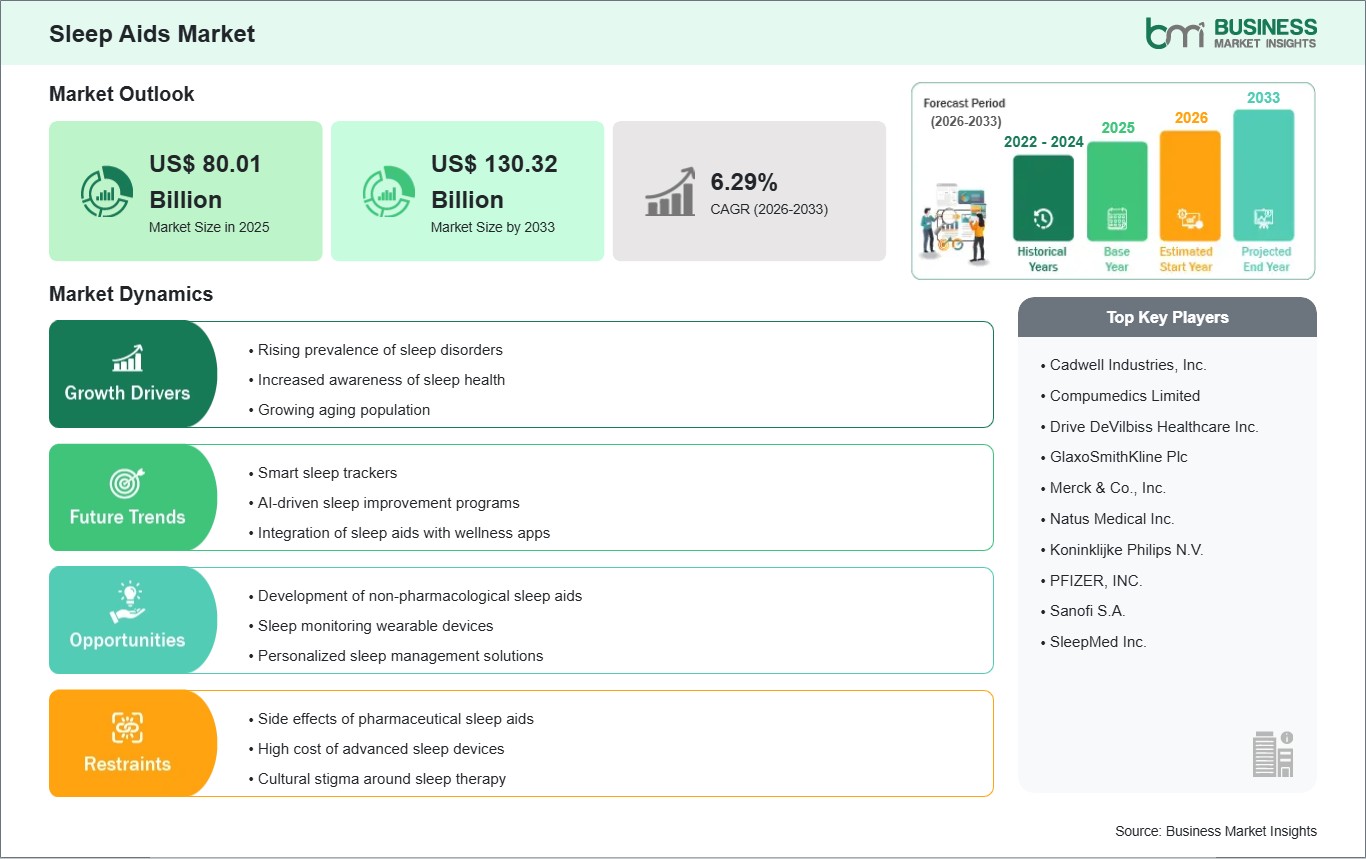
The Sleep Aids market size is expected to reach US$ 130.32 billion by 2033 from US$ 80.01 billion in 2025. The market is estimated to record a CAGR of 6.29% from 2026 to 2033.
Sleep aids are essential for enhancing sleep quality and treating sleep-related disorders worldwide, providing good solutions for people with sleep problems like insomnia, sleep apnea, restless legs syndrome, narcolepsy, etc. Sleep aids have many benefits including better sleep duration, improved sleep quality, less daytime tiredness, and support for people with chronic or acute sleep issues. The global market is driven by rising prevalence of sleep disorders, increasing stress levels, and growing recognition of the importance of sleep. Besides, innovations in wearable sleep monitoring devices, smart mattresses, digital therapeutics, and over-the-counter supplements are making the treatments more effective and convenient.
On the other hand, the market growth could be limited by some factors such as medications’ possible side effects, expensive advanced devices, and different regulatory environments in different countries. Moreover, the market is vulnerable to shifts in consumer tastes and economic downturns that may reduce healthcare spending. However, the market also has a big potential to grow due to the rising telemedicine adoption, expanding home healthcare solutions, and growing research funding for non-pharmacological interventions are some of the factors driving the market. New online sales channels, the growing elderly population, and campaigns educating the public about sleep health are also likely to contribute to the market's growth

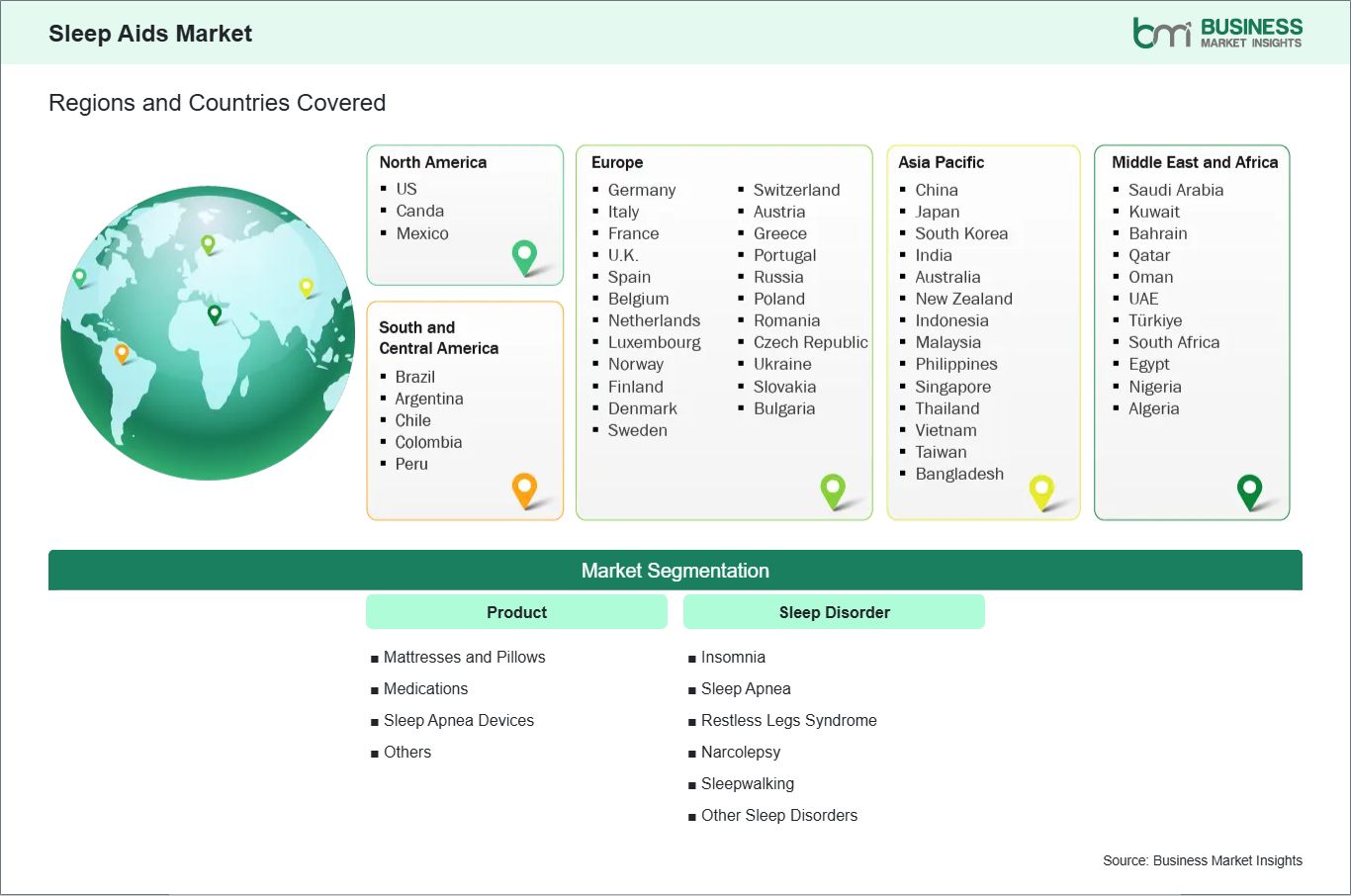
Key segments that contributed to the derivation of the Sleep Aids market analysis are Product, Sleep Disorder.
The Sleep Aids market is expected to grow significantly owing to the increasing occurrence of sleep disorders globally like insomnia, sleep apnea, restless legs syndrome, narcolepsy, and so on. Modern lifestyles bring along high stress, irregular work schedules, and even excessive screen time making it difficult for people living in urban areas to get a good night’s sleep. A recent study on health indicates that a considerable part of the world population is affected by sleep disorders either chronically or temporarily, thus the demand for sleep solutions will be there all the time.
Another major reason that contributes to the growth of the market is the rising health awareness. Consumers are now more aware of the health risks associated with lack of sleep or poor-quality sleep such as heart-related ailments, obesity, diabetes, and low immunity. This public knowledge has propelled the use of sleep aids on both the pharmaceutical and the non-pharmaceutical sides, e.g., prescription drugs, over-the-counter supplements, wearable sleep monitoring devices, and smart sleep technologies, all are being used more along with the usual ones.
The technological progress made in wearable gadgets, smart mattresses, sleep monitoring applications, and digital therapeutics, among others, has increased the market potential by making the sleep management process more personal and convenient. The growing popularity of telehealth and home care services is likewise a contributing factor to greater acceptance of sleep aids since it enables patients to have virtual consultations with healthcare professionals and thereby get customized treatment plans.
In conclusion, the triad of rising incidence of sleep disorders, growing health awareness, and new developments in sleep technology is the driving force behind the global Sleep Aids market, and it thus offers a great deal of opportunities to manufacturers, healthcare service providers, and technology innovators.
The Sleep Aids industry is now at the doorstep of a huge opportunity specifically coming from the escalating demand for home healthcare and remote sleep management solutions. The tough modern life styles, stress, and the rising number of sleep disorders (like insomnia and sleep apnea) have pushed the consumers to look for ways that are both convenient and effective to monitor and improve their sleep at home. This very trend is opening up a huge market for sleep aids that are therapeutic and user-friendly at the same time.The technological advances in wearable devices, smart mattresses, mobile applications, and digital sleep monitoring tools are enlightening the consumers with personalized insights and real-time tracking of their sleeping patterns. The new technologies prompt the users to determine their sleep quality, spot the problems, and take corrective measures without and much hospital or clinic visitation. The implementation of artificial intelligence (AI) and the Internet of Medical Things (IoMT) is another factor that has significantly increased the effectiveness of these solutions by providing predictive analysis and tailored recommendations.
Moreover, the growth of telemedicine and online healthcare platforms is a factor that is making sleep aids more reachable to a wider community since they support remote consultation and prescription-based solutions. The awareness about the health risks linked to poor sleep, like heart problems, obesity, and weaker immunity, is one more factor positively affecting the market of home-based sleep management tools.
In the light of this opportunity, the companies can come up with new ideas and products in the area of digital therapeutics, connected sleep devices, and home healthcare solutions thereby being able to satisfy the changing needs of health-conscious customers while contributing to the growth of the market

By Product, the air cargo services market is segmented into mattresses and pillows, medications, sleep apnea devices, and others. The medications segment dominated the market in 2025. The medications segment dominated the Sleep Aids market in 2025, driven by widespread use of prescription and over-the-counter sleep aids, offering effective solutions for insomnia and other common sleep disorders.
By Sleep Disorder, the market is segmented into insomnia, sleep apnea, restless legs syndrome, narcolepsy, sleepwalking, and other sleep disorders. The insomnia segment held the largest share of the market in 2025. The insomnia segment held the largest share in 2025, reflecting high prevalence worldwide and growing demand for both pharmaceutical and non-pharmaceutical sleep aids to improve sleep quality and overall health
| Report Attribute | Details |
|---|---|
| Market size in 2025 | US$ 80.01 Billion |
| Market Size by 2033 | US$ 130.32 Billion |
| Global CAGR (2026 - 2033) | 6.29% |
| Historical Data | 2022 - 2024 |
| Forecast period | 2026-2033 |
| Segments Covered | By Product
|
|
Regions and Countries Covered
| |
| North America | US, Canada, Mexico |
| Europe | Belgium, Austria, Finland, Denmark, Greece, Poland, Romania, Russia, Ukraine, Czech Republic, Slovakia, Bulgaria, Italy, Luxembourg, Germany, Switzerland, France, Netherlands, Norway, Portugal, Spain, Sweden, United Kingdom |
| Asia-Pacific | Australia, China, India, Japan, South Korea, Indonesia, Malaysia, Philippines, Singapore, Thailand, Vietnam, Bangladesh, New Zealand, Taiwan |
| South and Central America | Brazil, Argentina, Peru, Chile, Colombia |
| Middle East and Africa | Bahrain, Kuwait, Oman, Qatar, Saudi Arabia, United Arab Emirates, Turkiye, South Africa, Egypt, Algeria, Nigeria |
| Market leaders and key company profiles |
|
The "Sleep Aids Market Size and Forecast (2022–2033)" report provides a detailed analysis of the market covering below areas:
The region is also witnessing increased adoption of advanced sleep technologies, including wearable sleep trackers, smart mattresses, mobile sleep apps, and digital therapeutics—particularly relevant for managing insomnia, sleep apnea, and other common sleep disorders. Expansion of telemedicine and home healthcare services, alongside growing access to online retail platforms, is enhancing convenience and adoption. Additionally, the surge in urbanization, work-related stress, and lifestyle-induced sleep issues, coupled with increasing awareness campaigns, is positioning Asia-Pacific as a key hub in the global sleep aids ecosystem. Government initiatives, healthcare investments, and supportive policies across major countries further strengthen the region’s dominant market position

The Sleep Aids market is evaluated by gathering qualitative and quantitative data post primary and secondary research, which includes important corporate publications, association data, and databases. A few of the key developments in the air cargo services market are:
The Sleep Aids Market is valued at US$ 80.01 Billion in 2025, it is projected to reach US$ 130.32 Billion by 2033.
As per our report Sleep Aids Market, the market size is valued at US$ 80.01 Billion in 2025, projecting it to reach US$ 130.32 Billion by 2033. This translates to a CAGR of approximately 6.29% during the forecast period.
The Sleep Aids Market report typically cover these key segments-
The historic period, base year, and forecast period can vary slightly depending on the specific market research report. However, for the Sleep Aids Market report:
The Sleep Aids Market is populated by several key players, each contributing to its growth and innovation. Some of the major players include:
The Sleep Aids Market report is valuable for diverse stakeholders, including:
Essentially, anyone involved in or considering involvement in the Sleep Aids Market value chain can benefit from the information contained in a comprehensive market report.
Please tell us your area of interest
(Market Segments/ Regions and Countries/ Companies)