Scalp Massager Devices Market Regional Highlights
North America Scalp Massager Devices Market
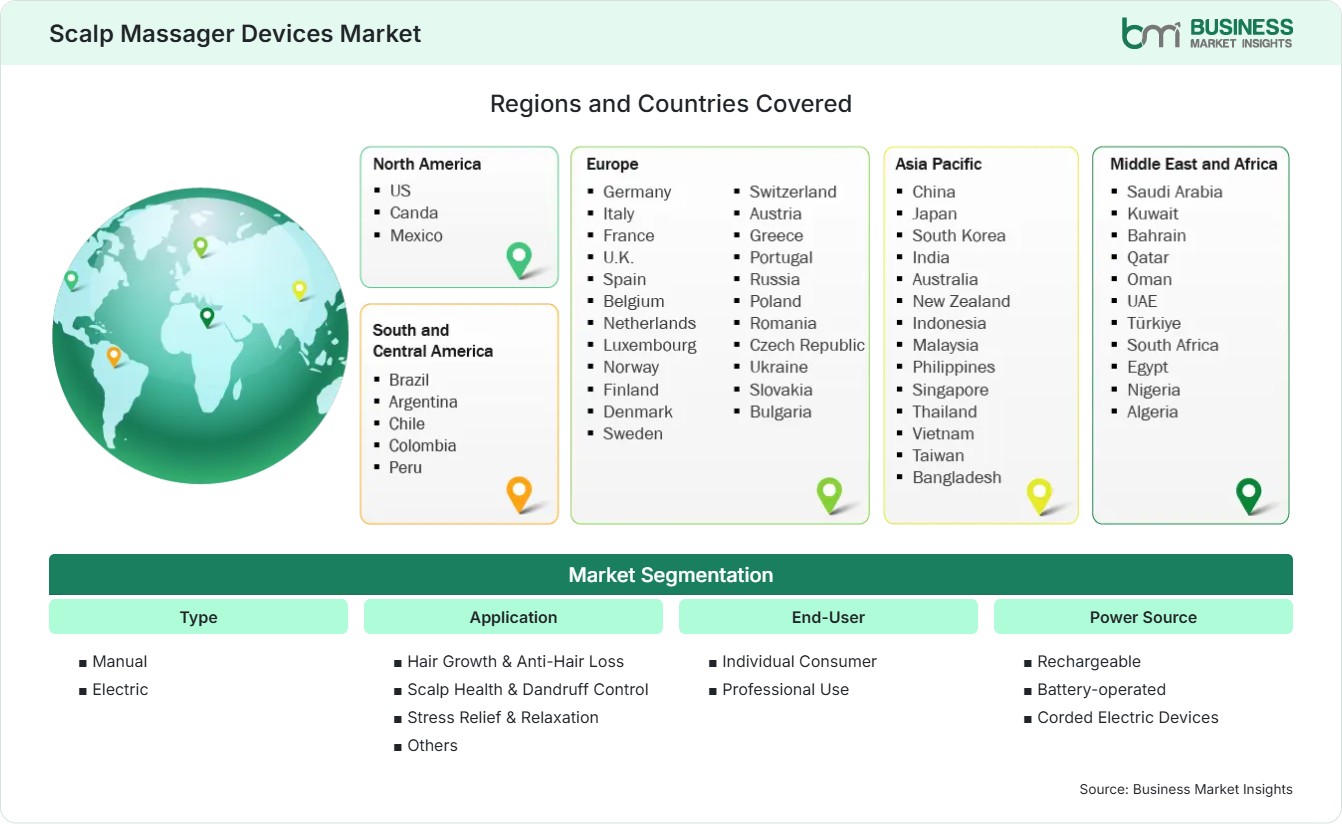
North America accounts for approximately 34%–37% of global demand in 2025 while expanding at a 6.1%–6.5% CAGR through 2033. The Scalp Massager Devices Market share remains supported by premium consumer spending, strong e-commerce penetration, established beauty retailers, increasing stress-management awareness, and growing acceptance of wellness electronics.
- Consumers increasingly purchase premium wellness electronics combining scalp stimulation, relaxation, waterproof functionality, and rechargeable operation, encouraging manufacturers to launch differentiated high-value products with enhanced durability and personalized massage settings.
- Large omnichannel retailers continue expanding premium personal care assortments while subscription-based online platforms strengthen recurring customer engagement through bundled beauty products, accessories, and educational wellness content.
- Growing awareness regarding workplace stress, digital lifestyles, and preventive wellness continues supporting adoption among younger professionals seeking convenient home-based relaxation technologies integrated into daily self-care routines.
US Scalp Massager Devices Market
The United States Scalp Massager Devices Market contributes approximately 78%–81% of North American demand while advancing at a 6.2%–6.6% CAGR during the forecast period. Strong innovation ecosystems, premium household expenditure, growing adoption of connected wellness devices, and increasing awareness regarding hair wellness solutions continue supporting sustained commercial expansion.
- Premium beauty retailers increasingly introduce technologically advanced scalp therapy devices designed for personalized wellness routines, encouraging higher replacement purchases and stronger consumer loyalty through differentiated product experiences.
- Growing partnerships between wellness influencers and consumer electronics companies continue improving product visibility, particularly among younger consumers seeking multifunctional self-care devices with aesthetic appeal.
- Higher disposable incomes and increasing preference for premium home wellness products encourage manufacturers to expand advanced electric product portfolios supported by extended warranties and customer service programs.
Europe Scalp Massager Devices Market
Europe Scalp Massager Devices Market represents approximately 25%–28% global market share in 2025 while growing at a 5.8%–6.2% CAGR through 2033. Germany remains the leading regional market because of strong consumer electronics adoption, while the United Kingdom records comparatively faster expansion with approximately 6.3%–6.7% CAGR. Premium grooming preferences, sustainability initiatives, and expanding wellness awareness continue supporting regional demand.
- European consumers increasingly prioritize sustainable packaging, energy-efficient rechargeable products, and durable materials, encouraging manufacturers to redesign product portfolios around environmental responsibility and premium quality expectations.
- Wellness tourism and premium spa services increasingly integrate advanced scalp massage technologies into treatment offerings, strengthening commercial demand within professional application segments across major metropolitan regions.
- Regulatory emphasis on consumer product safety, electrical compliance, and environmental standards supports higher manufacturing quality while strengthening confidence among premium consumer segments.
Asia Pacific Scalp Massager Devices Market
Asia Pacific captures approximately 27%–30% market share during 2025 while registering the fastest regional expansion at 7.8%–8.3% CAGR through 2033. China leads manufacturing capacity and regional consumption, whereas India demonstrates comparatively stronger expansion with approximately 8.3%–8.7% CAGR. The Scalp Massager Devices Market growth is supported by digital commerce, domestic production capabilities, rising incomes, and beauty technology innovation.
- China continues strengthening its leadership through vertically integrated electronics manufacturing, competitive production costs, strong export capabilities, and expanding domestic premium beauty technology demand.
- India experiences accelerating adoption because of growing disposable income, expanding online retail ecosystems, increasing awareness regarding preventive hair care, and rapidly developing organized beauty retail infrastructure.
- Japanese manufacturers continue emphasizing engineering excellence, ergonomic product design, quiet motor technologies, and premium consumer experiences supporting global competitiveness.
Rest of World Scalp Massager Devices Market
Rest of World contributes approximately 9%–11% of worldwide revenue while expanding at a 6.4%–6.8% CAGR through 2033. South America demonstrates healthy consumer demand led by Brazil, whereas the Middle East records comparatively stronger expansion driven by premium wellness investments, beauty retail modernization, and rising disposable income across urban populations. Brazil benefits from increasing beauty product consumption, expanding e-commerce accessibility, and stronger wellness awareness, while the United Arab Emirates demonstrates faster premium electronics adoption supported by luxury retail growth and international beauty brands.
- Expanding premium shopping malls and digital marketplaces improve accessibility for international wellness electronics brands entering emerging consumer markets with differentiated premium positioning.
- Rising disposable income encourages consumers to purchase advanced personal care devices emphasizing comfort, stress reduction, and preventive scalp wellness within daily routines.
- International manufacturers increasingly establish regional distributor partnerships to improve after-sales support, logistics efficiency, and localized marketing capabilities across developing economies.
- Beauty clinics, premium salons, and wellness centers continue incorporating electric scalp massage technologies into premium service offerings, creating additional commercial opportunities beyond household demand.