
Retail Clinics Market Outlook: Size, Share, Trends, Growth Analysis, Competitive Landscape & Forecast, 2026-2033

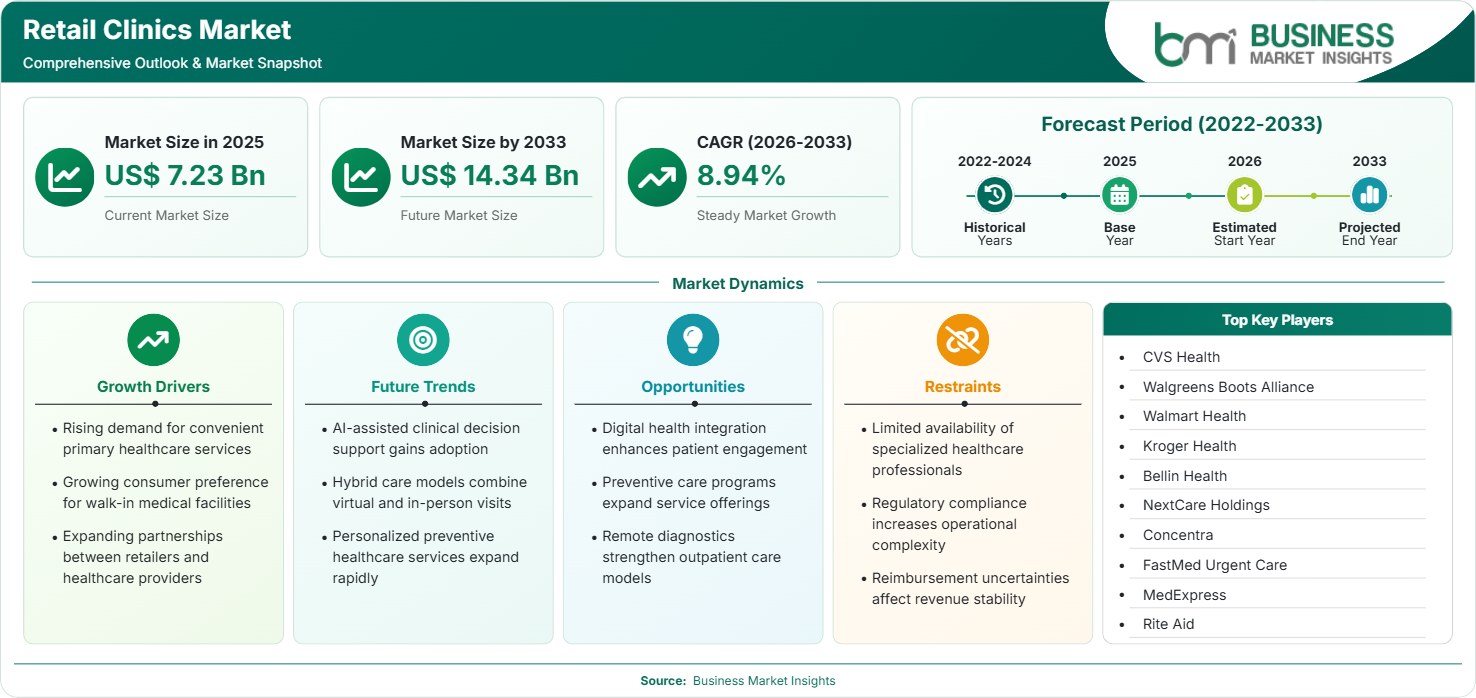
The Retail Clinics Market size was valued at US$ 7.23 billion in 2025 and is projected to reach US$ 14.34 billion by 2033, growing at a CAGR of 8.94% during 2026–2033. Growing demand for accessible primary healthcare, expanding retail-healthcare collaborations, and increasing consumer preference for convenient outpatient services continue supporting long-term market expansion.

Report Coverage
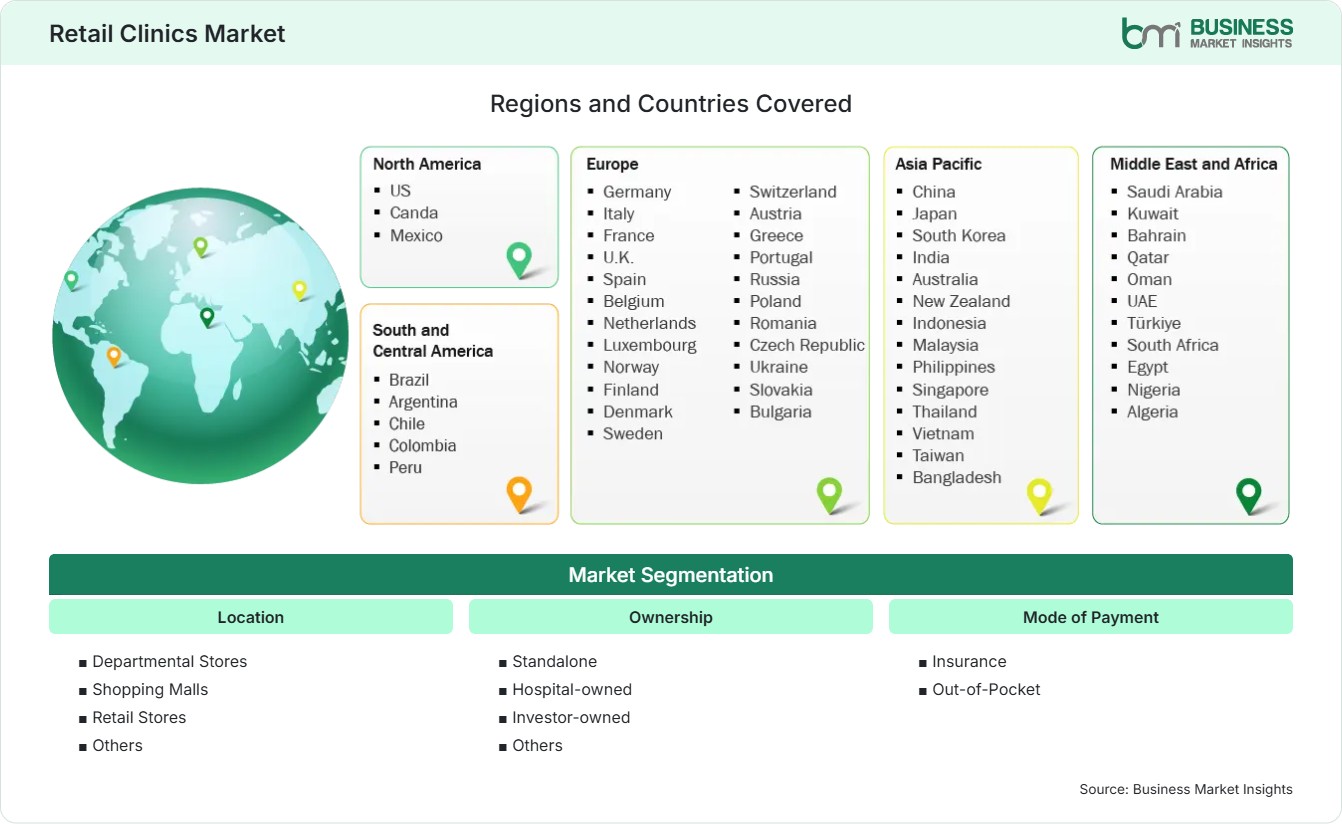
  • Location: Departmental Stores, Shopping Malls, Retail Stores, Others
  • Ownership: Standalone, Hospital-owned, Investor-owned, Others
  • Mode of Payment: Insurance, Out-of-Pocket
US$ 7.23 Bn Market size in 2025
US$ 14.34 Bn Market Size by 2033
8.94% CAGR, 2026 - 2033
2026-2033 Forecast Period

AI Overview

Retail Clinics Market Summary

  • North America Region: North America holds 68%–71% market share in 2025 and is projected to grow at a CAGR of 8.5%–9.0% during 2026–2033. Strong retail healthcare networks, widespread insurance coverage, and increasing adoption of convenient outpatient care continue supporting regional expansion. The U.S. remains the dominant market with a CAGR of 8.6%–9.1%, supported by expanding retail clinic chains, preventive healthcare initiatives, and digital health integration.
  • Fastest Growing Region: Asia Pacific accounts for 11%–14% market share in 2025 and is expected to register a CAGR of 10.2%–10.8%, driven by urbanization, expanding private healthcare infrastructure, increasing healthcare spending, and growing consumer awareness of affordable primary care.
  • Leading Segment: Retail Stores represent 39%–42% market share in 2025 and are projected to grow at a CAGR of 8.8%–9.3%, supported by high customer footfall, easy accessibility, and expanding partnerships between retailers and healthcare providers.
  • High Growth Segment: Insurance captures 61%–64% market share in 2025 and is anticipated to record a CAGR of 9.1%–9.7%, reflecting broader insurance coverage, reduced out-of-pocket expenses, and growing reimbursement support for preventive healthcare services.
  • Key Market Opportunity: Digital healthcare platforms, preventive screening programs, remote diagnostics, and integrated patient engagement technologies continue creating new opportunities for retail healthcare providers to expand accessible and cost-effective outpatient services.
  • Major Market Players: CVS Health Corporation, Walgreens Boots Alliance, Inc., Walmart Health, Kroger Health, Bellin Health, NextCare Holdings, Inc., Concentra, Inc., FastMed Urgent Care, MedExpress, and Rite Aid Corporation.
Strategic Insights

Retail Clinics Market: Strategic Insights

Retail Clinics Market Strategic Framework
FREE PDF
Request your free sample
Request free sample
Stakeholder View

Key Takeaways

  • The provision of integrated care solutions is being reinforced through the incorporation of preventive care, diagnostics, pharmaceuticals, and telehealth solutions through neighborhood outlets.
  • Patient access is continuously being improved by insurance-based financing models that help improve clinic utilization and revenue growth sustainably.
  • Digital transformation, including online scheduling, electronic medical records, and remote consultations, remains a major competitive differentiator across the industry.
  • Asia Pacific offers significant long-term investment potential due to expanding healthcare infrastructure, increasing urban populations, and rising consumer demand for affordable outpatient services.
  • Strategic collaborations between retailers, hospitals, insurers, and technology companies continue accelerating service diversification and geographic expansion.
  • Preventive healthcare, chronic disease management, and vaccination services remain important growth areas as healthcare systems increasingly prioritize early intervention and community-based care.
Geographic Outlook

Retail Clinics Market Regional Highlights

North America Retail Clinics Market

North America accounts for 68%–71% Retail Clinics Market share in 2025 and is projected to grow at a CAGR of 8.5%–9.0% during 2026–2033. Extensive retail healthcare networks, strong insurance penetration, widespread adoption of preventive care, and supportive reimbursement policies continue driving market expansion. Providers are investing in digital healthcare technologies, integrated pharmacy services, and expanded clinical offerings to improve patient accessibility and operational efficiency.

  • Large pharmacy chains continue expanding clinic networks to improve community healthcare accessibility.
  • Preventive care services, vaccinations, and chronic disease management remain primary revenue contributors.
  • Telehealth integration enables seamless patient consultations and follow-up care across retail locations.
  • Investments in digital patient engagement platforms strengthen service efficiency and customer retention.

US Retail Clinics Market

The United States contributes 90%–93% of North American revenue and is expected to register a CAGR of 8.6%–9.1% through 2026–2033. High healthcare spending, mature retail pharmacy networks, and increasing consumer preference for convenient outpatient care continue supporting long-term market expansion.

  • National pharmacy retailers continue increasing clinic accessibility across urban and suburban communities.
  • Growing employer-sponsored healthcare initiatives encourage preventive care utilization.
  • Digital appointment scheduling and electronic health records improve patient experience.
  • Insurance reimbursement expansion supports broader adoption of retail healthcare services.

Europe Retail Clinics Market

Europe represents 13%–16% market share in 2025 and is projected to expand at a CAGR of 8.1%–8.6% during the forecast period. Growing emphasis on primary healthcare accessibility, aging populations, and healthcare system modernization continue supporting market development. The United Kingdom leads regional adoption, while Germany records the fastest growth through expanding outpatient healthcare investments and digital health initiatives.

  • Public-private healthcare collaborations continue improving outpatient care accessibility.
  • Retail pharmacy operators increasingly introduce preventive health consultation services.
  • Aging demographics contribute to sustained demand for convenient community healthcare.
  • Digital healthcare platforms continue improving appointment management and patient engagement.

Asia Pacific Retail Clinics Market

Asia Pacific holds 11%–14% market share in 2025 and is anticipated to record the fastest 10.2%–10.8% CAGR during 2026–2033. Expanding private healthcare infrastructure, rising healthcare expenditure, urbanization, and increasing middle-class populations continue creating favorable conditions for retail clinic expansion. China leads regional revenue generation, while India demonstrates the fastest growth through healthcare infrastructure development and growing investment in organized outpatient care.

  • Rising healthcare awareness encourages greater utilization of neighborhood healthcare facilities.
  • Private healthcare providers continue expanding retail clinic networks across metropolitan cities.
  • Digital health adoption improves access to consultations and preventive care programs.
  • Increasing health insurance coverage supports higher outpatient service utilization.

Rest of World Retail Clinics Market

The Rest of World region accounts for 4%–7% market share in 2025 and is projected to register a CAGR of 8.4%–8.9% through 2026–2033. Improving healthcare accessibility, expanding private healthcare investment, and rising demand for convenient outpatient services continue supporting gradual market development across Latin America, the Middle East, and Africa.

  • Brazil leads regional demand through expanding private outpatient healthcare services.
  • GCC countries continue investing in accessible community healthcare infrastructure.
  • Retail healthcare partnerships improve primary care delivery across developing markets.
  • Preventive healthcare awareness continues encouraging greater patient engagement with walk-in clinics.
Global Market Geography
FREE PDF
Request your free sample
Request free sample
Segment Analysis

Retail Clinics Market Segmentation

Location

Location remains a critical factor influencing patient accessibility, service utilization, and operational efficiency across retail healthcare facilities. This segment accounted for 39%–42% market share in 2025 and is expected to register a CAGR of 8.8%–9.3% during 2026–2033. Convenient placement within high-footfall retail environments continues expanding the Retail Clinics Market scope, enabling providers to improve patient reach while supporting preventive care, vaccinations, and routine medical consultations.

  • Departmental Stores: Healthcare providers are increasingly establishing clinics within department stores to offer convenient primary care, vaccination services, and routine health screenings for shoppers seeking quick medical assistance.
  • Shopping Malls: Shopping mall locations benefit from heavy consumer traffic, extended operating hours, and convenient accessibility, encouraging higher patient visits for preventive care, minor illnesses, and wellness consultations.
  • Retail Stores: This sub-segment holds the leading position owing to widespread pharmacy chains, grocery retailers, and convenience outlets integrating walk-in clinics with pharmacy and healthcare services.

Ownership

Ownership structure significantly influences investment strategies, service expansion, operational flexibility, and healthcare partnerships. The segment represented 46%–49% market share in 2025 and is projected to grow at a CAGR of 9.0%–9.5% during the forecast period. Increasing collaborations between healthcare organizations and retail operators continue strengthening Retail Clinics Market share, improving service quality and expanding access to affordable outpatient healthcare.

  • Standalone: Independent clinics emphasize operational flexibility, localized patient care, and rapid decision-making while serving communities with convenient walk-in medical services and preventive healthcare programs.
  • Hospital-owned: Hospital-operated retail clinics strengthen referral networks, improve continuity of care, and extend healthcare services beyond traditional hospital environments through neighborhood-based outpatient facilities.
  • Investor-owned: Private investment continues supporting network expansion, digital healthcare adoption, standardized operations, and scalable business models focused on improving patient accessibility and operational efficiency.

Mode of Payment

Payment models play an important role in determining healthcare affordability, patient access, and clinic utilization rates. The segment accounted for 61%–64% market share in 2025 and is anticipated to expand at a CAGR of 9.1%–9.7% during 2026–2033. Current Retail Clinics Market trends indicate that broader insurance coverage and digital payment solutions continue improving patient affordability while supporting long-term revenue stability for healthcare providers.

  • Insurance: Insurance-supported visits continue representing the largest payment category, reducing financial barriers for patients while encouraging preventive care, chronic disease management, vaccinations, and routine outpatient consultations.
  • Out-of-Pocket: Direct payment remains important for uninsured individuals and consumers seeking affordable, transparent pricing for minor illnesses, wellness services, diagnostic tests, and preventive healthcare visits.
Market Forces

Retail Clinics Market Dynamics

Key Market Drivers

Rising demand for convenient primary healthcare services

Patients increasingly prefer healthcare facilities that provide quick access to diagnosis, treatment, vaccinations, and preventive services without requiring appointments. Retail clinics located within pharmacies, supermarkets, and shopping centers offer extended operating hours and shorter waiting times compared with traditional healthcare settings. Growing prevalence of minor illnesses and chronic disease monitoring further supports demand for accessible outpatient care. Healthcare providers continue expanding clinic networks to improve community access while reducing pressure on hospitals and emergency departments. These developments continue supporting Retail Clinics Market growth, encouraging sustained investments in convenient, neighborhood-based healthcare delivery models.

Growing consumer preference for walk-in medical facilities

The walk-in clinics have become an integral part of primary healthcare because of their affordable medical consultations, health screening, vaccinations, and management of non-acute health problems. Patients appreciate having healthcare options that offer convenient access without going through extensive appointment procedures, especially for basic medical needs. The hectic lives of patients and their growing interest in healthcare, along with the demand for immediate healthcare, are continuously bolstering their interest in retail clinic services. The healthcare providers are offering expanded range of services by incorporating pharmacological and lab facilities.

Expanding partnerships between retailers and healthcare providers

Strategic alliances among retail chains, hospitals, insurance providers, and doctors' organizations are driving the expansion of retail clinics all over the world at an increasing pace. Retail companies contribute their well-located clinics and client base, whereas healthcare organizations provide their clinical knowledge, personnel, and integrated care facilities. Strategic alliances enable patients to benefit from increased availability of preventive care, treatment of chronic diseases, vaccination services, and diagnosis, as well as better service delivery through operational optimization. Such collaborations remain central to current Retail Clinics Market trends, supporting long-term expansion across community healthcare networks.

Key Market Opportunities

Digital health integration enhances patient engagement

Digital healthcare technologies continue transforming patient interactions by improving appointment scheduling, electronic medical records, mobile health applications, and virtual consultations. Integrated digital platforms enable patients to access healthcare information, receive personalized reminders, and communicate with healthcare professionals more efficiently. Retail clinic operators are investing in connected healthcare ecosystems that improve operational efficiency and patient satisfaction. Retail Clinics Market Forecasts indicate that continued adoption of digital engagement technologies will create significant opportunities for providers seeking to strengthen customer retention, improve care coordination, and expand access to community-based healthcare services.

Preventive care programs expand service offerings

Preventive healthcare continues becoming a strategic priority as governments and healthcare providers seek to reduce long-term treatment costs and improve population health outcomes. Retail clinics are expanding services to include routine health assessments, wellness screenings, immunization programs, chronic disease monitoring, nutritional counseling, and lifestyle management. These additional services increase patient engagement while generating recurring revenue opportunities for clinic operators. Growing awareness of preventive healthcare is expected to encourage broader utilization of retail clinics across multiple age groups and healthcare needs.

Remote diagnostics strengthen outpatient care models

Advancements in remote diagnostics technologies are making healthcare more accessible to patients by enabling health professionals to conduct more effective assessments of their patients through interconnected devices and digital health platforms. The use of remote diagnostics technology has become common among retail clinics by including the integration of remote diagnostics tools, teleconsultation systems, and diagnostic devices that help in making decisions about treatment. This will not only save on trips to the hospital but also make things easier for the patient and the professional.

Market Restraints and Challenges

Limited availability of specialized healthcare professionals

Retail clinics continue facing workforce shortages as demand for qualified physicians, nurse practitioners, physician assistants, and other healthcare professionals increases across the broader healthcare system. Factor: Lack of experienced medical personnel creates difficulties in staff mobility, enlargement of the clinic, and provision of advanced healthcare facilities. Impact: Increased duration of recruitment, higher labor expenses, and limited service capacity may affect efficiency and hamper the expansion into new geographic locations despite the rising demands for primary healthcare facilities.

Regulatory compliance increases operational complexity

Retail clinic operators must comply with evolving healthcare regulations covering licensing requirements, patient privacy, reimbursement policies, clinical quality standards, and electronic health record management. Factor: The need to adhere to various healthcare regulations from several nations and regions necessitates ongoing investment in governance, training, and oversight mechanisms. Impact: Administrative expenses will increase, resulting in higher cost of compliance and extended implementation timeframes, which could impact profits and hinder the company’s growth plans.

Company Analysis

Competitive Landscape

Competition in the retail healthcare sector is driven by geographic expansion, digital healthcare integration, service diversification, and partnerships with hospitals and insurers. Retail Clinics Market analysis shows that leading providers are strengthening their presence by expanding clinic networks, enhancing telehealth capabilities, integrating pharmacy services, and improving patient engagement through technology-enabled healthcare delivery models.

Company Name

Overview

Products and Services Relevant to this Market

CVS Health Corporation

One of the largest retail healthcare providers operating pharmacy-based clinics integrated with insurance and digital healthcare services.

Walk-in primary care, vaccinations, preventive screenings, chronic disease management, telehealth services, and pharmacy-integrated healthcare.

Walgreens Boots Alliance, Inc.

Global pharmacy retailer expanding community healthcare through strategic healthcare partnerships and neighborhood clinic networks.

Primary care services, immunizations, health screenings, pharmacy services, virtual healthcare, and preventive care programs.

Walmart Health

Retail healthcare division providing affordable outpatient medical services through integrated healthcare centers across selected U.S. markets.

Primary care, diagnostics, behavioral health, dental care, telehealth, laboratory testing, and preventive healthcare services.

Kroger Health

Healthcare division of Kroger offering pharmacy, wellness, and community-based clinical services across retail locations.

Vaccinations, health screenings, chronic disease management, pharmacy services, nutrition counseling, and preventive healthcare programs.

Bellin Health

Integrated healthcare organization expanding accessible outpatient and community-based healthcare services.

Primary care, urgent care, preventive medicine, outpatient services, digital healthcare, and patient wellness programs.

NextCare Holdings, Inc.

Operator of urgent care and walk-in medical centers serving patients through convenient outpatient facilities.

Urgent care, occupational medicine, diagnostic testing, vaccinations, primary care, and digital patient registration services.

Concentra, Inc.

Leading provider of occupational healthcare and outpatient medical services across employer and community healthcare networks.

Occupational health, urgent care, physical examinations, diagnostic imaging, injury treatment, and preventive healthcare services.

FastMed Urgent Care

Regional urgent care provider delivering accessible medical treatment for non-emergency conditions and preventive care.

Walk-in medical care, vaccinations, physical examinations, occupational medicine, laboratory testing, and telehealth consultations.

MedExpress

National urgent care network providing comprehensive outpatient healthcare and routine medical treatment services.

Urgent care, diagnostic testing, wellness examinations, vaccinations, laboratory services, and minor illness treatment.

Rite Aid Corporation

Pharmacy retailer integrating healthcare services through retail pharmacy operations and neighborhood wellness initiatives.

Immunizations, health screenings, pharmacy consultations, medication management, preventive healthcare, and wellness services.

Trust & Transparency

Research Methodology

The market analysis combines proprietary research with secondary data from government agencies, company disclosures, regulatory filings, industry databases and expert interviews. Market estimates are validated through data triangulation, cross-market benchmarking and analyst review.

View Full Research Methodology

Questions Answered

Frequently Asked Questions

What does the Retail Clinics Market Report include?

The Market Report provides comprehensive insights into market dynamics, competitive landscape, regional performance, segmentation, technology adoption, investment opportunities, healthcare delivery trends, and long-term strategic growth prospects.

Which region offers the highest growth potential?

Asia Pacific is expected to witness the fastest expansion because of improving healthcare infrastructure, growing urban populations, increasing private healthcare investment, and rising awareness of affordable outpatient medical services.

Why are digital technologies becoming important in retail clinics?

Digital appointment scheduling, telehealth, electronic medical records, remote diagnostics, and patient engagement platforms improve operational efficiency, enhance care coordination, and provide greater convenience for both patients and healthcare providers.

Which ownership model leads the market?

Hospital-owned and investor-owned clinics continue expanding rapidly through integrated healthcare networks, while standalone clinics remain important for delivering localized and convenient outpatient medical services.

What factors are driving the Retail Clinics Market?

The market is expanding due to increasing demand for convenient primary healthcare, growing preference for walk-in medical services, stronger retailer-healthcare partnerships, and broader adoption of preventive healthcare and digital patient engagement solutions.

Access the Full Retail Clinics Market Report

Get segment-level forecasts, regional estimates, competitive benchmarking, company profiles and downloadable Excel datasets.

Access the full Retail Clinics Market Report
350 pages PDF & Excel | 2026-08-25
Similar Research

Related Market Reports