
Radiopharmaceuticals Market Outlook: Size, Share, Trends, Growth Analysis, Competitive Landscape & Forecast, 2026-2033

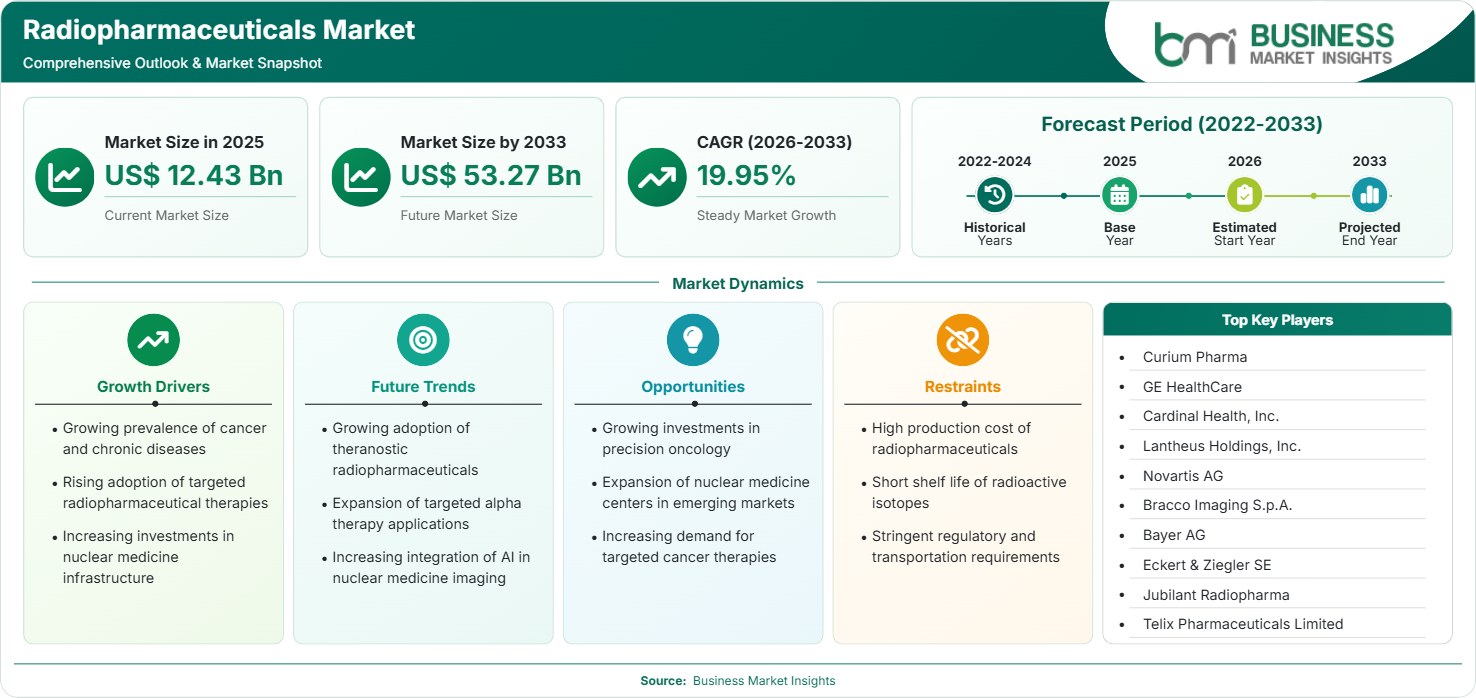
The Radiopharmaceuticals Market size was valued at US$ 12.43 Billion in 2025 and is projected to reach US$ 53.27 Billion by 2033, growing at a CAGR of 19.95% during 2026–2033, supported by cancer care advancements, precision medicine adoption, nuclear imaging expansion, isotope innovation, and healthcare infrastructure development.

Report Coverage
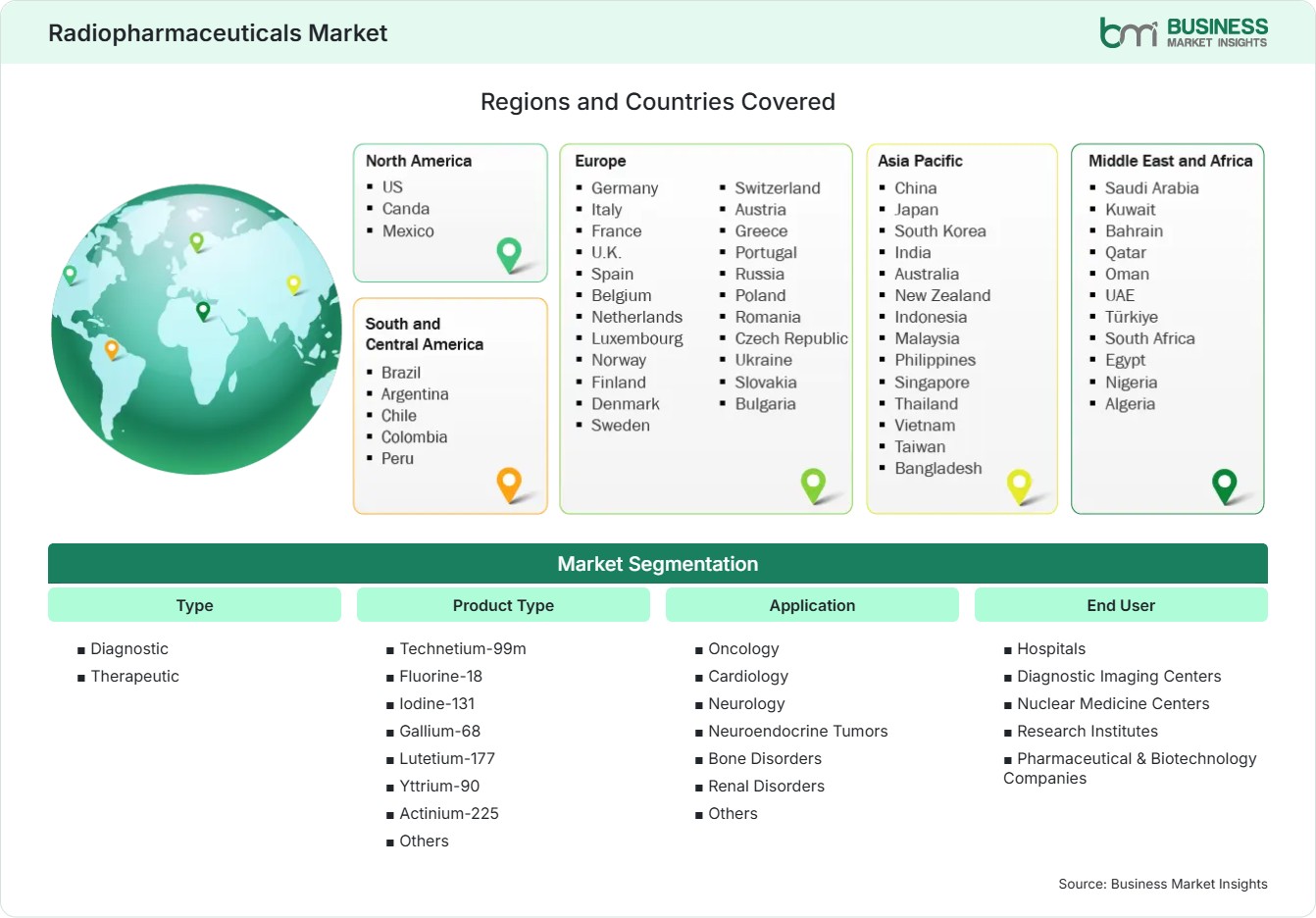
  • Type: Diagnostic, Therapeutic
  • Product Type: Technetium-99m, Fluorine-18, Iodine-131, Gallium-68, Lutetium-177, Yttrium-90, Actinium-225, Others
  • Application: Oncology, Cardiology, Neurology, Neuroendocrine Tumors, Bone Disorders, Renal Disorders, Others
  • End User: Hospitals, Diagnostic Imaging Centers, Nuclear Medicine Centers, Research Institutes, Pharmaceutical & Biotechnology Companies
US$ 12.43 Bn Market size in 2025
US$ 53.27 Bn Market Size by 2033
19.95% CAGR, 2026 - 2033
2026-2033 Forecast Period

AI Overview

Radiopharmaceuticals Market Summary

  • North America Region: North America holds a 42%–46% share in 2025, growing with a CAGR of 19.2%–20.1% during 2026–2033, supported by advanced oncology infrastructure, nuclear medicine adoption, isotope production capabilities, and precision therapy investments. The US market demonstrates strong demand through targeted radionuclide therapies, PET imaging expansion, and research-driven healthcare systems, registering a CAGR of 19.5%–20.3% between 2026 and 2033.
  • Fastest Growing Region: Asia Pacific holds a 18%–22% share in 2025, expanding at a CAGR of 20.5%–21.5% during 2026–2033, driven by increasing cancer burden, healthcare modernization, nuclear medicine center expansion, and growing access to advanced diagnostic and therapeutic technologies.
  • Leading Segment: Therapeutic radiopharmaceuticals hold a 55%–60% share in 2025, growing at a CAGR of 21.0%–21.8% during 2026–2033, supported by targeted cancer therapies, rising radionuclide treatment adoption, and advances in precision oncology applications.
  • High Growth Segment: Lutetium-177 products hold a 15%–19% share in 2025, expanding at a CAGR of 23.0%–24.0% during 2026–2033, driven by neuroendocrine tumor treatments, prostate cancer applications, and increasing clinical acceptance of targeted radionuclide therapies.
  • Key Market Opportunity: Expansion opportunities are emerging through precision oncology investments, advanced isotope production, new nuclear medicine facilities, and wider adoption of targeted therapies across developing healthcare markets.
  • Major Market Players: Curium Pharma, GE HealthCare, Cardinal Health, Inc., Lantheus Holdings, Inc., Novartis AG, Bracco Imaging S.p.A., Bayer AG, Eckert & Ziegler SE, Jubilant Radiopharma, Telix Pharmaceuticals Limited.
Strategic Insights

Radiopharmaceuticals Market: Strategic Insights

Radiopharmaceuticals Market Strategic Framework
FREE PDF
Request your free sample
Request free sample
Stakeholder View

Key Takeaways

  • The market ecosystem is becoming more integrated as isotope producers, pharmaceutical companies, healthcare providers, and imaging technology suppliers collaborate to improve production reliability and treatment accessibility.
  • Therapeutic radiopharmaceuticals represent the strongest growth opportunity as oncology care shifts toward targeted treatments that deliver radiation directly to disease sites while reducing systemic exposure.
  • Innovation is moving toward next-generation alpha and beta emitters, improved isotope manufacturing processes, and personalized treatment approaches based on molecular disease characteristics.
  • Asia Pacific presents a strong investment opportunity due to rising cancer incidence, expanding healthcare infrastructure, and increasing establishment of nuclear medicine centers in countries such as China and India.
  • Strategic partnerships and acquisitions are increasing as companies seek isotope supply security, advanced therapy pipelines, and stronger positions in precision oncology markets.
  • Supply chain resilience remains a critical strategic priority due to the specialized production requirements, regulatory controls, and logistics challenges associated with radioactive materials.
Geographic Outlook

Radiopharmaceuticals Market Regional Highlights

North America Radiopharmaceuticals Market

North America accounted for a 42%–46% share in 2025 and is projected to grow at a CAGR of 19.2%–20.1% during 2026–2033. The region maintains leadership due to advanced healthcare infrastructure, strong oncology research capabilities, established nuclear medicine facilities, and favorable reimbursement environments. The Radiopharmaceuticals Market share is supported by high adoption of PET imaging, radioligand therapies, and precision oncology solutions. The US and Canada remain key contributors, supported by pharmaceutical innovation and isotope production investments.

  • The United States represents the largest regional contributor due to extensive nuclear medicine facilities, strong pharmaceutical research activity, and increasing adoption of targeted cancer therapies.
  • Canada is expanding its radiopharmaceutical capabilities through investments in isotope production, research collaborations, and specialized nuclear medicine treatment centers.
  • Oncology applications continue gaining momentum as healthcare providers adopt radioligand therapies for advanced cancers and personalized treatment approaches.
  • Companies are increasing investments in domestic isotope supply chains to reduce dependency on international radioactive material sources.
  • Growing clinical research activity is supporting the development of novel therapeutic isotopes and next-generation nuclear medicine solutions.

US Radiopharmaceuticals Market

The US accounted for a 36%–40% share of North America in 2025 and is expected to grow at a CAGR of 19.5%–20.3% during 2026–2033. The country remains a global hub for radiopharmaceutical innovation due to advanced oncology infrastructure, strong pharmaceutical pipelines, and widespread availability of PET and SPECT imaging technologies. The Radiopharmaceuticals Market share in the US is strengthened by increasing adoption of targeted radionuclide therapies and expanding clinical applications.

  • Increasing cancer prevalence is encouraging healthcare providers to adopt more precise diagnostic and therapeutic radiopharmaceutical solutions.
  • The expansion of nuclear medicine centers is improving patient access to advanced imaging and targeted treatment procedures.
  • Pharmaceutical companies are investing in clinical development programs focused on novel radioligand and isotope-based therapies.
  • Government and private sector investments are supporting improvements in isotope production capacity and supply chain reliability.

Europe Radiopharmaceuticals Market

Europe represented a 26%–30% share in 2025 and is projected to expand at a CAGR of 18.8%–19.7% during 2026–2033. The region benefits from established nuclear medicine infrastructure, strong regulatory frameworks, and growing demand for precision oncology treatments. Germany, France, the United Kingdom, and Switzerland are leading markets due to advanced healthcare systems and pharmaceutical research capabilities. The Radiopharmaceuticals Market growth in Europe is supported by increasing adoption of therapeutic isotopes and diagnostic imaging technologies.

  • Germany maintains a strong position through advanced nuclear medicine facilities, research capabilities, and increasing use of targeted radiopharmaceutical treatments.
  • The United Kingdom is expanding through clinical research programs, oncology innovation, and adoption of personalized treatment approaches.
  • France is supporting market development through healthcare modernization, isotope research activities, and increasing nuclear medicine applications.
  • Switzerland contributes through pharmaceutical innovation and strong participation in radiopharmaceutical development programs.
  • European healthcare systems are focusing on improving access to advanced cancer diagnostics and targeted therapies.

Asia Pacific Radiopharmaceuticals Market

Asia Pacific accounted for an 18%–22% share in 2025 and is expected to grow at a CAGR of 20.5%–21.5% during 2026–2033. The region represents the fastest-growing market due to rising cancer incidence, healthcare infrastructure expansion, and increasing investments in nuclear medicine capabilities. China, Japan, India, and South Korea are major contributors. The Radiopharmaceuticals Market growth in Asia Pacific is supported by growing demand for oncology imaging, targeted therapies, and improved healthcare accessibility.

  • China is expanding through investments in nuclear medicine facilities, domestic isotope production, and advanced cancer treatment technologies.
  • Japan demonstrates strong adoption due to established healthcare infrastructure, aging population needs, and advanced diagnostic imaging capabilities.
  • India provides significant opportunities through healthcare expansion, rising cancer care requirements, and increasing establishment of specialized treatment centers.
  • South Korea is developing through biotechnology investments, precision medicine adoption, and growing radiopharmaceutical research activities.
  • Regional governments are supporting healthcare modernization programs that improve access to advanced nuclear medicine procedures.

Rest of World Radiopharmaceuticals Market

Latin America and Middle East & Africa accounted for a 7%–11% share in 2025 and are projected to grow at a CAGR of 17.5%–18.5% during 2026–2033. These regions are gradually expanding through healthcare infrastructure improvements, increasing cancer diagnosis requirements, and investments in specialized medical facilities. Brazil, Mexico, Saudi Arabia, and South Africa represent emerging markets with improving access to nuclear medicine technologies. Adoption remains influenced by infrastructure availability, regulatory frameworks, and healthcare investment levels.

  • Brazil is developing through increasing cancer care requirements, expanding diagnostic facilities, and improving access to nuclear medicine services.
  • Mexico is witnessing demand growth through healthcare modernization initiatives and rising awareness of advanced oncology treatment options.
  • Saudi Arabia is investing in specialized healthcare infrastructure and advanced cancer treatment facilities under healthcare development programs.
  • South Africa represents an emerging market through expanding diagnostic capabilities and increasing demand for specialized medical technologies.
  • Regional companies are focusing on partnerships, technology transfer, and infrastructure development to improve radiopharmaceutical accessibility.
Global Market Geography
FREE PDF
Request your free sample
Request free sample
Segment Analysis

Radiopharmaceuticals Market Segmentation

Type

The Type segment is led by Therapeutic radiopharmaceuticals, which accounted for a 55%–60% share in 2025 and is projected to grow at a CAGR of 21.0%–21.8% between 2026–2033. Increasing adoption of targeted radionuclide therapies, rising oncology applications, and advancements in precision medicine are strengthening therapeutic demand. Diagnostic radiopharmaceuticals continue to maintain importance due to established imaging procedures, disease detection capabilities, and broad clinical utilization.

  • Diagnostic: Diagnostic radiopharmaceuticals support disease detection through PET and SPECT imaging technologies, enabling accurate evaluation of oncology, cardiology, and neurological conditions.
  • Therapeutic: Therapeutic radiopharmaceuticals are gaining adoption through targeted cancer treatment approaches, improved isotope availability, and increasing clinical use of personalized therapies.

Product Type

The Product Type segment is influenced by isotope availability, production capabilities, clinical adoption, and expanding medical applications. Technetium-99m represented a 32%–36% share in 2025 due to extensive diagnostic usage, while Lutetium-177 is emerging as a high-growth category with a CAGR of 23.0%–24.0% between 2026–2033. The Radiopharmaceuticals Market trends indicate increasing demand for advanced therapeutic isotopes supporting precision oncology and targeted treatment strategies.

  • Technetium-99m: Technetium-99m maintains strong demand due to widespread diagnostic imaging applications and established nuclear medicine procedures.
  • Fluorine-18: Fluorine-18 supports PET imaging growth through oncology diagnostics, neurological imaging, and improved disease evaluation capabilities.
  • Iodine-131: Iodine-131 remains important for thyroid disease diagnosis and treatment due to established clinical applications.
  • Gallium-68: Gallium-68 adoption is increasing through targeted imaging applications and growing demand for molecular diagnostics.
  • Lutetium-177: Lutetium-177 is expanding through radioligand therapy applications, especially in prostate cancer and neuroendocrine tumor treatment.
  • Yttrium-90: Yttrium-90 supports therapeutic procedures by delivering localized radiation for selected cancer treatment applications.
  • Actinium-225: Actinium-225 represents an emerging alpha-emitting isotope with growing research interest in next-generation cancer therapies.

Application

The Application segment is dominated by Oncology, which accounted for a 48%–53% share in 2025 and is expected to grow at a CAGR of 21.0%–22.0% between 2026–2033. Increasing cancer incidence, expansion of precision oncology programs, and development of targeted radiopharmaceutical treatments are supporting segment growth. The Radiopharmaceuticals Market scope is expanding as healthcare providers integrate molecular imaging and radionuclide therapies into advanced cancer management pathways.

  • Oncology: Oncology applications lead adoption through cancer diagnosis, treatment monitoring, and targeted radionuclide therapies for advanced malignancies.
  • Cardiology: Cardiology applications utilize radiopharmaceutical imaging for evaluating cardiac function and detecting cardiovascular abnormalities.
  • Neurology: Neurology applications are increasing through molecular imaging solutions supporting diagnosis of brain-related disorders.
  • Neuroendocrine Tumors: Neuroendocrine tumor applications are expanding through increased use of targeted radionuclide therapy approaches.
  • Bone Disorders: Bone disorder applications support imaging and treatment procedures for metastatic bone conditions and related diseases.
  • Renal Disorders: Renal applications use radiopharmaceutical techniques for assessing kidney function and evaluating disease progression.

End User

The End User segment is led by Hospitals, which accounted for a 40%–45% share in 2025 and is projected to grow at a CAGR of 19.5%–20.5% between 2026–2033. Hospitals remain the primary users due to integrated nuclear medicine departments, oncology facilities, and access to advanced diagnostic and therapeutic technologies. Expansion of specialized centers and research partnerships is supporting wider adoption across healthcare and pharmaceutical environments.

  • Hospitals: Hospitals represent the largest end-user category due to comprehensive diagnostic imaging and therapeutic nuclear medicine capabilities.
  • Diagnostic Imaging Centers: Diagnostic imaging centers support market demand through PET, SPECT, and molecular imaging services.
  • Nuclear Medicine Centers: Nuclear medicine centers are expanding through specialized treatment facilities and increasing targeted therapy adoption.
  • Research Institutes: Research institutes contribute through isotope research, clinical studies, and development of innovative radiopharmaceutical solutions.
  • Pharmaceutical & Biotechnology Companies: Pharmaceutical and biotechnology companies drive market innovation through isotope development, clinical trials, and commercialization of advanced therapies.
Market Forces

Radiopharmaceuticals Market Dynamics

Growing prevalence of cancer and chronic diseases

The increasing burden of cancer and chronic diseases is strengthening demand for advanced diagnostic and therapeutic radiopharmaceutical solutions. Rising cancer incidence, aging populations, and increasing requirements for precise disease management are encouraging healthcare providers to adopt molecular imaging and targeted treatment approaches. Oncology remains the largest application area due to the need for improved diagnosis, staging, and treatment monitoring. The growing availability of radiopharmaceutical products and expansion of nuclear medicine facilities are supporting broader clinical adoption. These factors are contributing to the Radiopharmaceuticals Market growth by improving treatment accessibility and enabling more personalized healthcare approaches.

Rising adoption of targeted radiopharmaceutical therapies

Targeted radiopharmaceutical therapy is gradually being embraced by healthcare providers as a treatment that directly delivers radiation to diseased areas, sparing adjacent healthy tissue. Growing interest in the use of radioligands in the treatment of prostate and neuroendocrine cancers is pushing pharmaceutical firms into investing in cutting-edge isotope-based treatments. Advancements in molecular targeting techniques, isotope supply, and clinical trials are opening new opportunities for treatment. Pharmaceutical companies are developing new alpha and beta emitters. The Radiopharmaceuticals Market trends indicate a shift toward personalized therapies, with targeted radionuclide treatments becoming an increasingly important component of precision oncology strategies.

Increasing investments in nuclear medicine infrastructure

Expanding infrastructure investments in nuclear medicine have increased the availability of radiopharmaceutical diagnostics and treatments in both mature and emerging healthcare markets. Healthcare providers and governments are expanding specialized facilities, imaging capacity, isotope manufacturing capabilities, and treatment sites to meet rising demand. Infrastructure development is especially critical for ensuring the supply of short-lived isotopes and making procedures available to patients. Healthcare upgrade projects in Asia-Pacific, Latin America, and the Middle East offer greater potential for market growth. These investments are strengthening the Radiopharmaceuticals Market forecasts by supporting the wider adoption of nuclear medicine technologies and improving treatment availability.

Key Market Opportunities

Growing investments in precision oncology

The development of precision oncology is offering new avenues for radiopharmaceutical firms as personalized approaches become more common in the healthcare industry to treat cancer patients. Innovations in molecular imaging, biomarker discovery, and targeted radionuclides are enabling physicians to tailor treatments to individual patient needs. There are pharmaceutical companies exploring new areas of research in alpha- and beta-emitters, radioligands, and combined treatment methods. Higher levels of clinical trials are promoting innovation in the field. A company that has unique isotope platforms as well as scalability in its manufacturing processes will be able to take advantage of the growing trend toward personalized cancer solutions.

Expansion of nuclear medicine centers in emerging markets

Expansion of nuclear medicine facilities in developing economies presents new avenues for access to diagnostic imaging and targeted therapy. Countries in the Asia-Pacific region, Latin America, and the Middle East are investing in infrastructure upgrades to healthcare facilities with oncology departments and nuclear medicine centers. A high incidence of cancer diagnoses and increased healthcare expenditure will prompt countries and private healthcare facilities to establish modern treatment centers. Pharmaceutical companies working with radiopharmaceuticals can gain by collaborating with other organizations in the region or by entering into supply agreements with healthcare facilities. Setting up isotope manufacturing facilities locally can also help overcome supply chain challenges.

Increasing demand for targeted cancer therapies

Increasing demand for targeted cancer therapies is creating opportunities as clinicians seek treatment options that improve effectiveness while reducing damage to healthy tissues. Radiopharmaceutical therapies provide selective radiation delivery by targeting specific biological markers associated with cancer cells. Increasing usage of therapies for prostate cancer, neuroendocrine tumors, and various advanced cancers is driving pharmaceutical investments in novel isotopes used in therapeutics. Firms are increasingly concentrating on treatment access, production capabilities, and clinical data generation. Increased awareness about the advantages of precision treatment is promoting acceptance. Expansion of pipelines for targeted oncology is a major market opportunity for firms engaged in the development of radiopharmaceutical technologies.

Market Restraints and Challenges

High production cost of radiopharmaceuticals

Factor: Radioisotope production requires advanced reactors, cyclotrons, strict safety systems, specialized facilities, and highly controlled logistics processes. Impact: Higher manufacturing expenses can increase treatment costs, limit accessibility in developing regions, and create pricing pressure for healthcare providers. Companies are investing in production optimization, supply chain improvements, and new isotope manufacturing technologies to manage costs. However, maintaining regulatory compliance and ensuring consistent isotope availability continue to require significant capital investment. Cost reduction strategies will remain important for expanding radiopharmaceutical adoption across broader healthcare markets.

Short shelf life of radioactive isotopes

Factor: Many radiopharmaceutical products have limited usable periods due to radioactive decay, requiring precise production scheduling, specialized transportation, and rapid delivery systems. Impact: Shelf-life limitations can restrict market reach, increase supply chain complexity, and create challenges for healthcare facilities located far from production centers. Companies are developing improved logistics networks, regional production facilities, and advanced isotope management systems to address these issues. Strengthening supply chain coordination will remain essential for ensuring consistent availability of radiopharmaceutical products and supporting wider clinical adoption.

Company Analysis

Competitive Landscape

The Radiopharmaceuticals Market analysis highlights a competitive environment shaped by isotope production capabilities, precision oncology advancements, nuclear medicine infrastructure expansion, and pharmaceutical innovation. Companies are strengthening their positions through radiopharmaceutical pipeline development, strategic collaborations, manufacturing capacity expansion, and investments in targeted therapeutic technologies.

Company Name

Overview

Products and Services relevant to this market

Curium Pharma

Global nuclear medicine company specializing in diagnostic and therapeutic radiopharmaceutical solutions.

Provides diagnostic radiopharmaceuticals, molecular imaging products, and nuclear medicine solutions for hospitals and imaging centers.

GE HealthCare

Healthcare technology company providing medical imaging and nuclear medicine solutions worldwide.

Offers PET imaging systems, molecular imaging technologies, radiopharmaceutical solutions, and healthcare workflow technologies.

Cardinal Health, Inc.

Healthcare services company supporting pharmaceutical distribution and nuclear medicine supply chains.

Provides radiopharmaceutical distribution, nuclear pharmacy services, and healthcare logistics solutions.

Lantheus Holdings, Inc.

Diagnostic imaging company focused on molecular imaging and targeted diagnostic solutions.

Develops radiopharmaceutical products for oncology, cardiology, and diagnostic imaging applications.

Novartis AG

Pharmaceutical company developing advanced therapies including targeted radioligand treatments.

Provides radioligand therapies, oncology-focused radiopharmaceutical products, and precision medicine solutions.

Bracco Imaging S.p.A.

Imaging technology company specializing in diagnostic imaging products and contrast solutions.

Offers molecular imaging agents, diagnostic radiopharmaceutical solutions, and imaging technologies.

Bayer AG

Global pharmaceutical company with oncology-focused radiopharmaceutical development programs.

Develops targeted radiopharmaceutical therapies and precision oncology treatment solutions.

Eckert & Ziegler SE

Medical technology company specializing in isotope products and nuclear medicine applications.

Provides radioactive isotopes, radiopharmaceutical components, and nuclear medicine manufacturing solutions.

Jubilant Radiopharma

Nuclear medicine company providing diagnostic and therapeutic radiopharmaceutical services.

Supplies radiopharmaceutical products, nuclear pharmacy services, and imaging support solutions.

Telix Pharmaceuticals Limited

Biotechnology company focused on developing targeted radiopharmaceutical therapies.

Develops molecularly targeted radiopharmaceutical products for oncology diagnosis and treatment.

Trust & Transparency

Research Methodology

The market analysis combines proprietary research with secondary data from government agencies, company disclosures, regulatory filings, industry databases and expert interviews. Market estimates are validated through data triangulation, cross-market benchmarking and analyst review.

View Full Research Methodology

Questions Answered

Frequently Asked Questions

How are companies improving radiopharmaceutical supply chains?

Companies are improving supply chains through regional production facilities, isotope manufacturing investments, logistics optimization, and partnerships aimed at ensuring consistent availability of radioactive materials.

What role do nuclear medicine centers play in Radiopharmaceuticals market development?

Nuclear medicine centers provide specialized diagnostic and therapeutic services, improving patient access to PET imaging, radionuclide treatments, and advanced molecular medicine procedures.

Why is Lutetium-177 gaining attention in nuclear medicine?

Lutetium-177 is gaining attention because of its effectiveness in targeted radionuclide therapies, particularly for prostate cancer and neuroendocrine tumors, supported by expanding clinical adoption.

How does isotope production influence radiopharmaceutical availability?

Isotope production directly affects supply reliability because many radioactive materials require specialized facilities, controlled manufacturing environments, and efficient transportation systems due to limited radioactive half-life.

What factors are supporting the adoption of therapies in Radiopharmaceuticals Market report?

Adoption is increasing due to advances in precision oncology, improved isotope availability, growing clinical evidence, and rising demand for targeted treatments that provide more personalized cancer care approaches.

Access the Full Radiopharmaceuticals Market Report

Get segment-level forecasts, regional estimates, competitive benchmarking, company profiles and downloadable Excel datasets.

Access the full Radiopharmaceuticals Market Report
350 pages PDF & Excel | 2026-08-31
Similar Research

Related Market Reports