Prefilled Syringe Market Regional Highlights
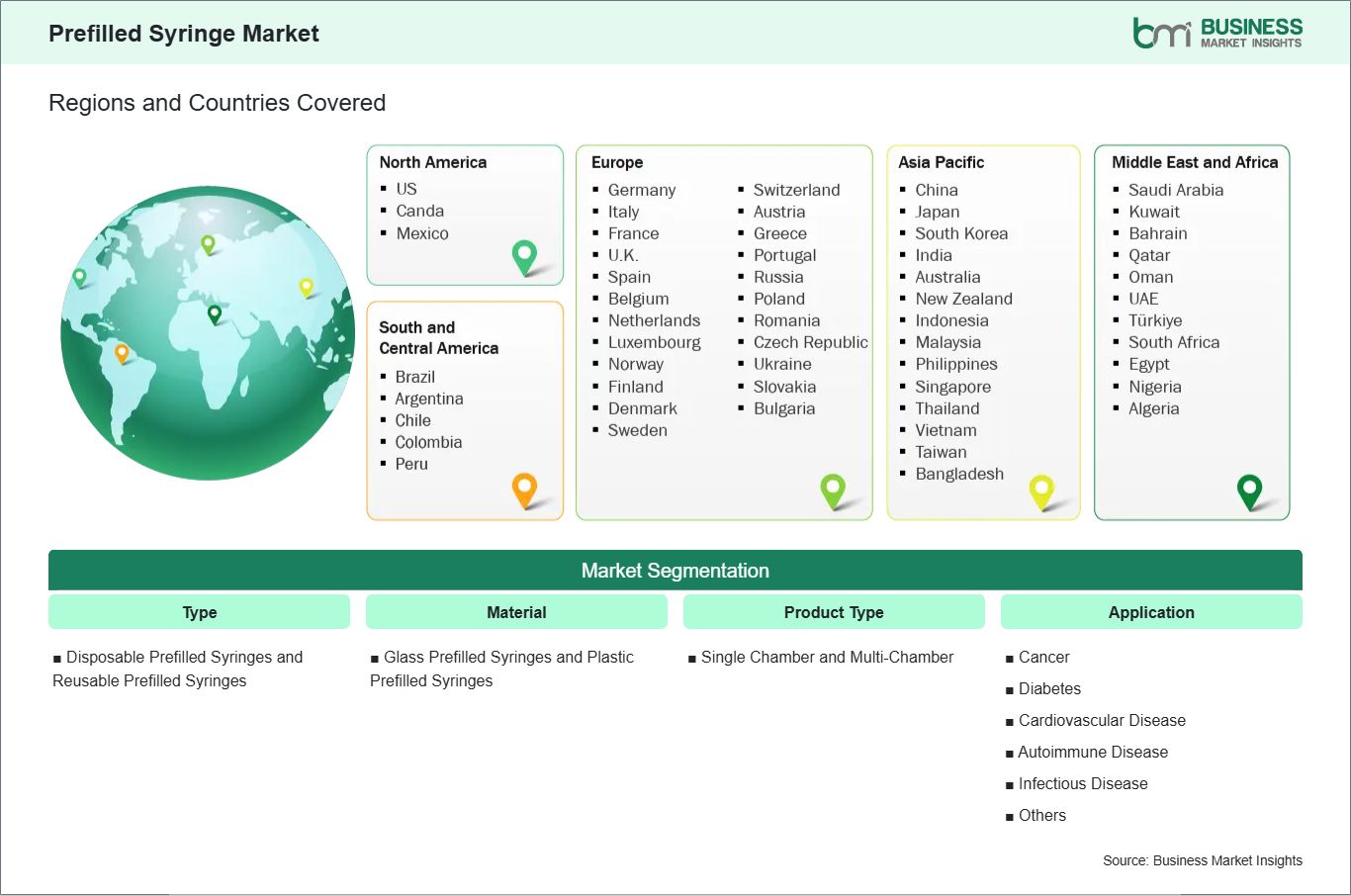
North America Prefilled Syringe Market
North America maintains leadership with 44.3% Prefilled Syringe Market share in 2025 and is expected to expand at 11.3% CAGR through 2033. Strong biologics adoption, high specialty drug utilization, and extensive healthcare spending support demand. Increasing use of GLP-1 therapies, oncology biologics, and self-administered treatments continues strengthening demand conditions while encouraging capacity expansion across containment and delivery-system suppliers.
- Biopharmaceutical innovation continues to drive most of the growth, especially for autoimmune, oncology, and metabolic disorder drugs that require easy administration by injection.
- Health professionals are becoming increasingly receptive to easy-to-administer drugs that cut down the time required to prepare medicines.
- Pharmaceutical manufacturers continue investing in domestic packaging capacity to improve supply resilience and reduce exposure to international logistics disruptions.
- Adoption of integrated drug-device combination products is increasing, supporting demand for premium containment and delivery technologies.
US Prefilled Syringe Market
The United States represents 89.8% share within North America and records a projected 11.7% CAGR. Strong FDA approval activity for biologics, rising obesity treatment uptake, and expanding homecare models support market development. The country hosts major pharmaceutical innovators, advanced contract manufacturing infrastructure, and significant packaging technology investments.
- GLP-1 therapy expansion is increasing utilization of delivery systems compatible with high-volume injectable treatments.
- Hospital networks continue prioritizing prefilled solutions that support medication safety and operational efficiency.
- Domestic manufacturing investments strengthen supply continuity for critical injectable products.
- Combination-device development encourages collaboration among drug developers, packaging companies, and delivery technology providers.
Europe Prefilled Syringe Market
Europe accounts for 26.9% share and is forecast to grow at 9.3% CAGR. Germany remains the leading country, while Ireland and Eastern European markets demonstrate higher growth momentum. Major pharmaceutical packaging manufacturers maintain significant operations across the region, supporting innovation and production scalability in advanced containment technologies.
- Germany leads through strong pharmaceutical manufacturing capacity and advanced injectable therapeutics development.
- Ireland benefits from biologics investment and export-oriented pharmaceutical production expansion.
- The region increasingly focuses on sustainable packaging and efficient manufacturing processes.
- Regulatory emphasis on medication safety supports continued adoption of reliable delivery technologies.
Asia Pacific Prefilled Syringe Market
Asia Pacific holds 21.1% share and demonstrates the strongest growth at 12.2% CAGR. China represents the largest market, while India records the highest expansion rate. Prefilled Syringe Market growth is supported by healthcare modernization, vaccine production growth, contract manufacturing investments, and rising chronic disease incidence. Increasing regional biologics development and governmental support for pharmaceutical self-sufficiency are strengthening demand for advanced packaging technologies and sterile delivery systems.
- China benefits from large-scale pharmaceutical manufacturing and expanding biologics commercialization programs.
- India records rapid growth through biosimilar production, vaccine manufacturing, and healthcare infrastructure development.
- Regional governments continue supporting domestic medical manufacturing capabilities.
- Pharmaceutical outsourcing activities increase demand for ready-to-fill and ready-to-use containment formats.
Rest of World Prefilled Syringe Market
Rest of World contributes 7.7% Prefilled Syringe Market share and expands at 6.6% CAGR. South and Central America recorded 4.7% global share in 2025 and is forecast at 7.5% CAGR through 2033, while Middle East and Africa recorded 3.0% and 5.6% CAGR, respectively. Brazil leads South and Central America, while Saudi Arabia and the UAE show strong momentum in the Middle East and Africa. Growing healthcare investment, vaccination coverage initiatives, and expanding access to specialty therapies support demand. Regional pharmaceutical modernization programs continue encouraging adoption of advanced injectable delivery formats and sterile packaging technologies.
- Brazil remains the largest regional market due to sizeable healthcare infrastructure and pharmaceutical manufacturing activity.
- Gulf countries are investing in healthcare localization and advanced pharmaceutical capabilities.
- Vaccination preparedness programs continue supporting demand for reliable injectable formats.
- Import substitution initiatives create opportunities for packaging and containment suppliers.