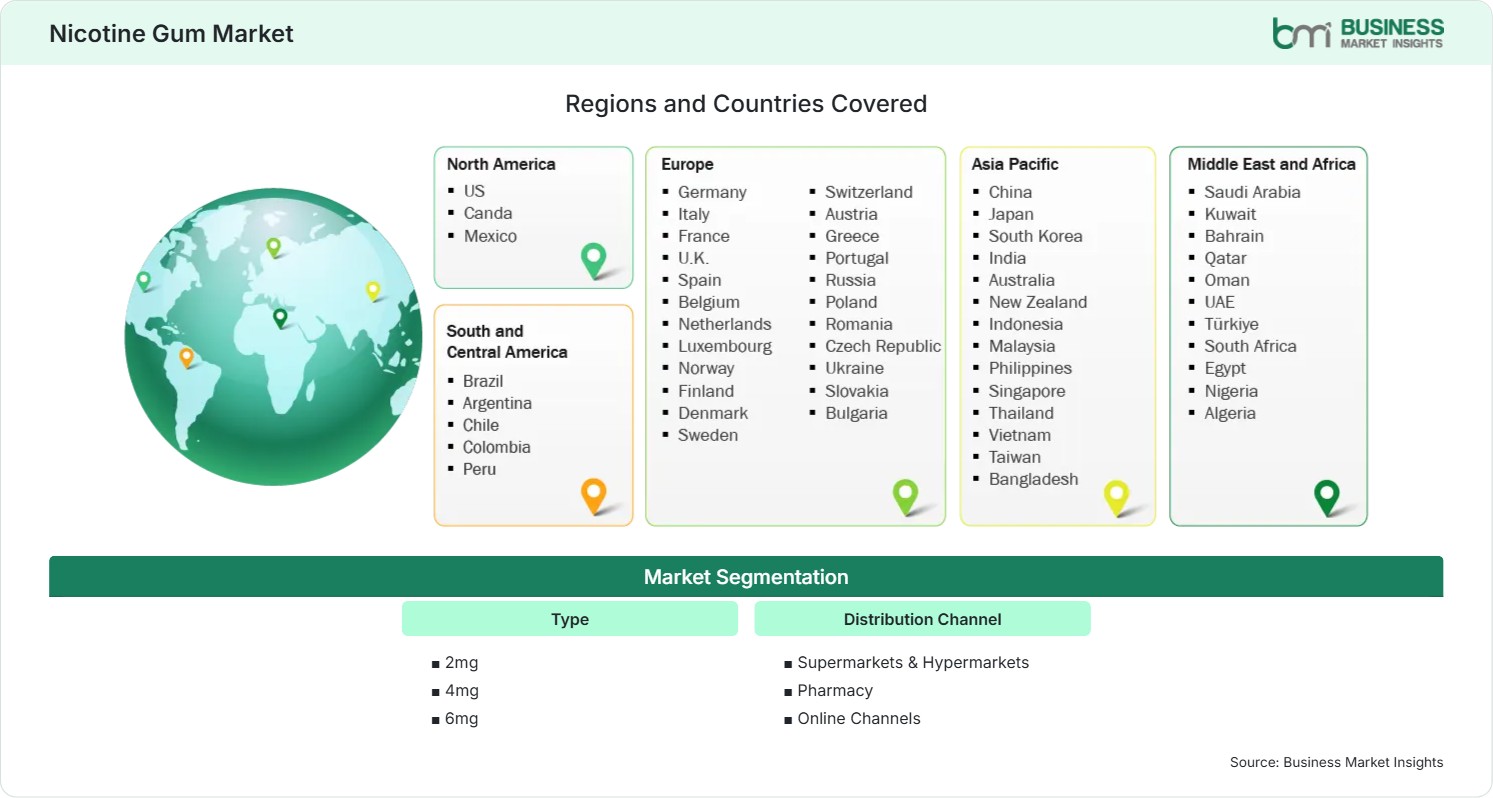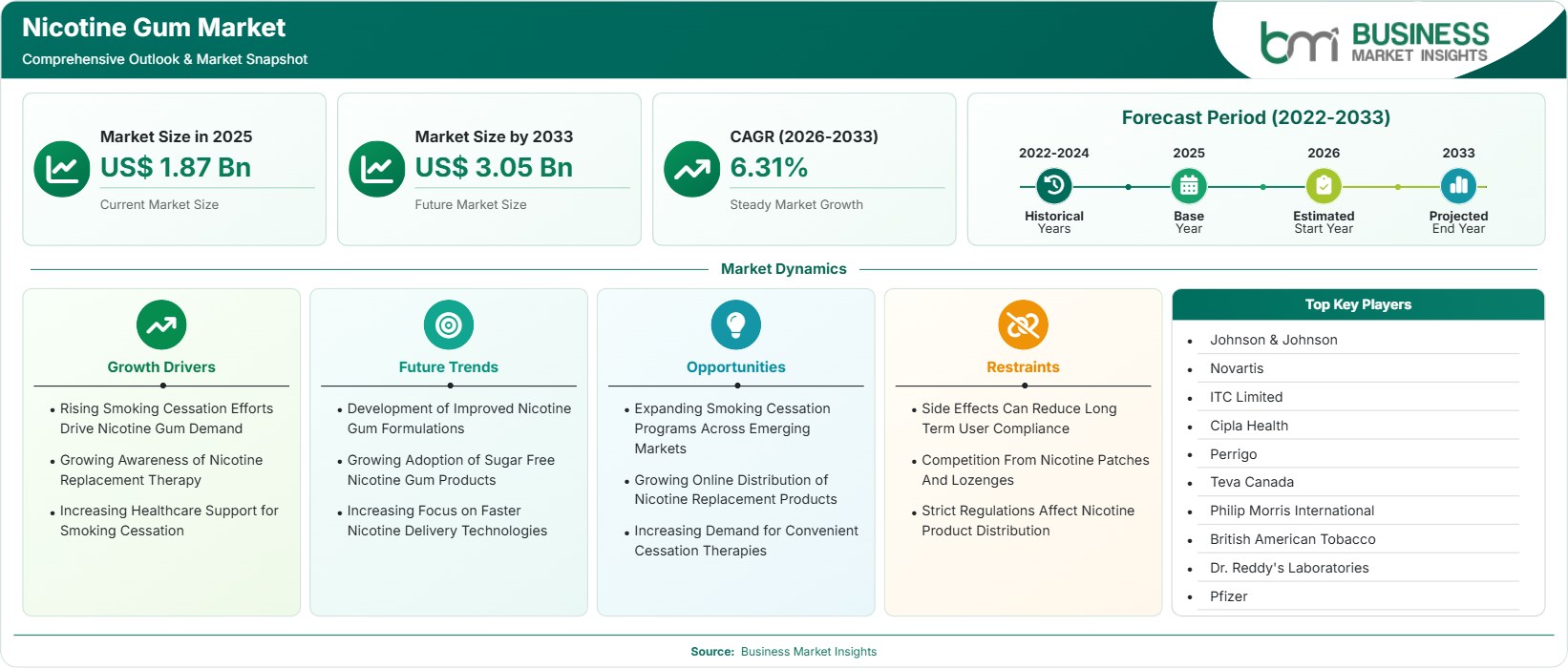
Nicotine Gum Market Regional Highlights
North America Nicotine Gum Market
North America held a 34%–38% share in 2025 and is projected to grow at a 5.8%–6.5% CAGR through 2033. The region benefits from mature pharmacy infrastructure, established cessation awareness, healthcare engagement, and broad familiarity with nicotine replacement therapy products.
- Pharmacy-based access remains important because consumers can combine product purchasing with pharmacist guidance and broader smoking cessation support.
- Consumer familiarity with nicotine replacement therapy supports repeat purchasing, while established retail infrastructure enables broad availability across urban and suburban communities.
- Digital health engagement is creating additional opportunities for cessation education, product discovery, reminders, and convenient replenishment.
US Nicotine Gum Market
The U.S. represents an estimated 31%–35% global share in 2025 and is projected to grow at a 5.6%–6.3% CAGR through 2033. Demand benefits from established cessation programs, pharmacy access, consumer awareness, and widespread availability of nicotine replacement products.
- Pharmacy channels remain influential because consumers can access cessation products alongside counseling and recommendations concerning appropriate use.
- Online purchasing is expanding consumer convenience, particularly for repeat users seeking discreet ordering and home delivery.
- Product competition increasingly centers on convenience, taste, packaging, dosage flexibility, and brand trust.
Europe Nicotine Gum Market
Europe held an estimated 25%–29% Nicotine Gum Market share in 2025 and is projected to grow at a 5.7%–6.4% CAGR through 2033. The United Kingdom, Germany, France, Italy, and Spain represent important markets, supported by tobacco-control policies, pharmacy networks, cessation awareness, and healthcare engagement.
- The United Kingdom provides a mature cessation environment supported by public-health initiatives, pharmacy access, and established awareness of nicotine replacement therapies.
- Germany benefits from extensive pharmacy infrastructure and consumer access to multiple cessation formats.
- France and Italy provide opportunities through healthcare-led cessation efforts, retail availability, and growing consumer awareness.
- Spain offers additional potential as cessation awareness and access to nicotine replacement products develop across consumer and healthcare channels.
Asia Pacific Nicotine Gum Market
Asia Pacific held an estimated 23%–27% share in 2025 and is projected to grow at a 7.5%–8.4% CAGR through 2033. China, India, Japan, South Korea, and Australia represent key Nicotine Gum Markets, while Southeast Asia offers additional expansion potential as cessation awareness improves.
- India offers substantial opportunity through large tobacco-using populations, expanding healthcare access, pharmacy development, and increasing awareness of cessation support.
- Japan provides a mature healthcare environment with established consumer awareness and demand for convenient nicotine replacement formats.
- Australia benefits from established tobacco-control infrastructure and consumer familiarity with cessation products.
- Southeast Asian markets present longer-term opportunities as healthcare systems, public awareness, and access to cessation resources develop.
Rest of World Nicotine Gum Market
Rest of World accounted for an estimated 12%–16% share in 2025 and is projected to grow at a 6.2%–7.2% CAGR through 2033. Latin America benefits from expanding cessation awareness, while the Middle East and Africa offer longer-term opportunities through healthcare development and public-health initiatives.
Brazil is projected at a 7.0%–7.8% CAGR, supported by tobacco-control awareness and expanding access to cessation resources. Selected Middle Eastern markets are developing alongside healthcare modernization.
- Brazil offers opportunities through established tobacco-control efforts, healthcare engagement, and expanding consumer awareness of cessation options.
- Mexico provides potential through pharmacy expansion, urban healthcare access, and increasing awareness of smoking cessation interventions.
- Middle Eastern markets offer opportunities as healthcare infrastructure expands and governments increase attention to tobacco-related health burdens.
- African markets present longer-term potential where improving healthcare access and public-health education can support greater awareness of cessation therapies.