Mini Fridge Market Regional Highlights
North America Mini Fridge Market
North America accounted for 35%–37% of the Mini Fridge Market share in 2025 and is projected to expand at a 9.2%–9.8% CAGR through 2033. Strong consumer purchasing power, widespread adoption of compact appliances, and sustained demand from hotels, offices, dormitories, and recreational vehicles continue supporting regional market leadership. Manufacturers increasingly introduce premium energy-efficient models equipped with smart controls and improved storage functionality.
- Demand from student housing, home offices, hotels, and recreational vehicles continues supporting strong replacement and first-time purchases of compact refrigeration appliances across the region.
- Premium consumers increasingly prefer mini refrigerators featuring inverter compressors, digital temperature controls, low-noise operation, and environmentally friendly refrigerants.
- Retailers continue expanding omnichannel sales strategies by combining physical showrooms with e-commerce platforms to improve product accessibility and customer engagement.
- Energy efficiency regulations encourage manufacturers to introduce advanced cooling technologies capable of reducing electricity consumption while maintaining consistent refrigeration performance.
US Mini Fridge Market
The United States represented 30%–32% of global Mini Fridge Market revenue in 2025 and is expected to grow at a 9.5% CAGR during 2026–2033. Increasing demand from apartments, college dormitories, hospitality establishments, and home entertainment spaces continues supporting market expansion. Growing consumer preference for premium compact appliances further encourages manufacturers to introduce technologically advanced and aesthetically appealing products.
- Apartment living and smaller residential spaces continue increasing consumer demand for compact refrigeration appliances offering greater functionality within limited floor areas.
- Hospitality operators increasingly deploy mini refrigerators across hotel rooms and serviced apartments to enhance guest convenience and improve customer satisfaction.
- Online retail channels continue driving appliance sales through expanded product selection, promotional pricing, and efficient home delivery services.
- Smart home adoption encourages greater consumer interest in connected refrigeration appliances capable of remote monitoring and digital temperature management.
Europe Mini Fridge Market
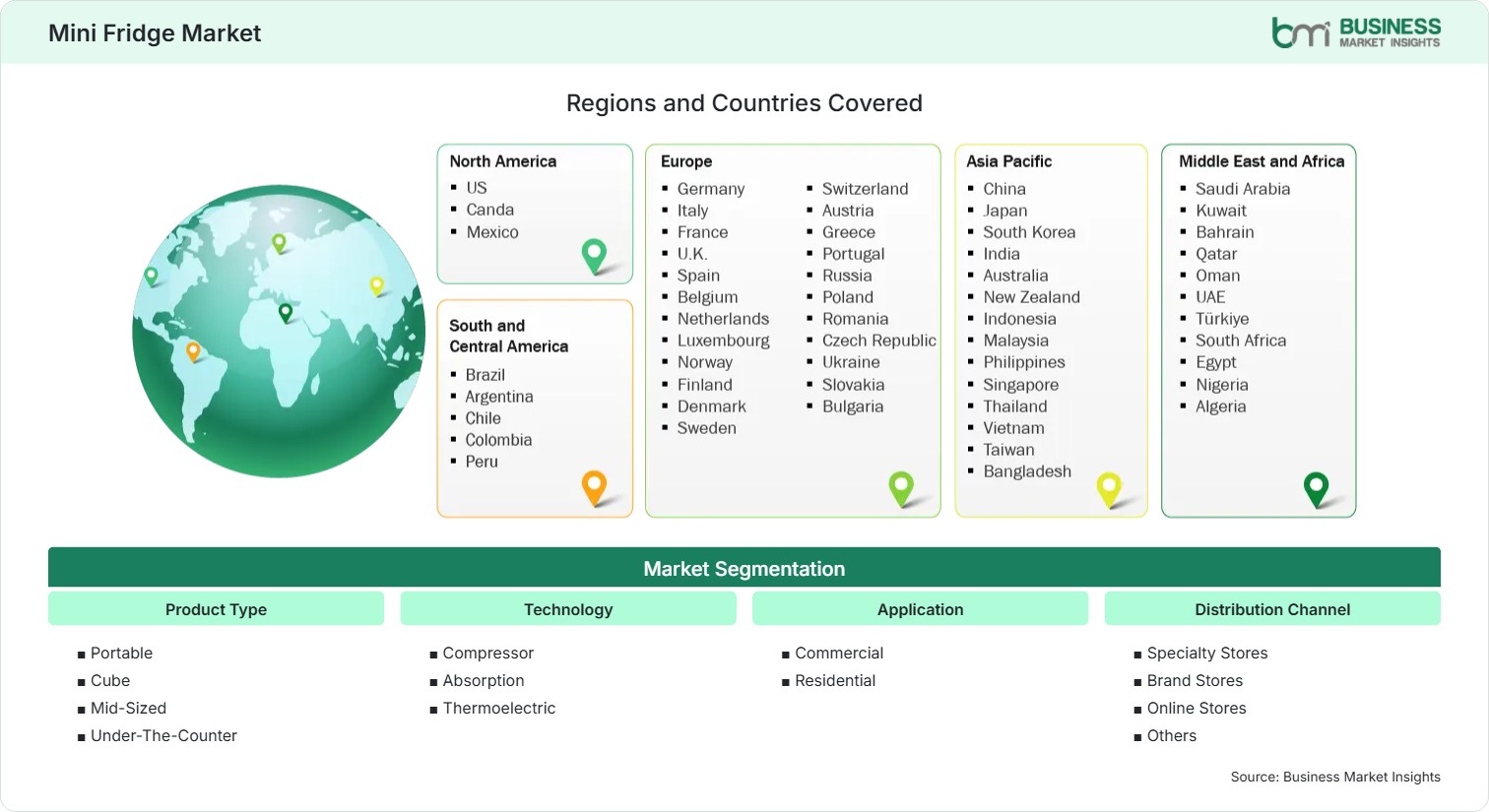
Europe accounted for 24%–26% of global revenue in 2025 and is projected to grow at a 9.6%–10.2% CAGR through 2033. Increasing environmental regulations, rising apartment living, and growing tourism activities continue driving demand for compact refrigeration products. Germany remains the largest regional market, while Poland is anticipated to record the fastest growth with a 10.9% CAGR during the Mini Fridge Market forecasts.
- Strict energy efficiency regulations encourage manufacturers to develop compact refrigerators with reduced power consumption and environmentally sustainable refrigeration technologies.
- Hospitality expansion and increasing short-term rental accommodation continue stimulating commercial demand for space-efficient refrigeration appliances.
- Consumers increasingly prefer premium compact appliances featuring stylish designs, quieter operation, and advanced electronic temperature control systems.
- Regional manufacturers continue investing in sustainable production processes and recyclable materials to strengthen competitiveness within environmentally conscious consumer markets.
Asia Pacific Mini Fridge Market
Asia Pacific represented 28%–30% of global revenue in 2025 and is projected to register the fastest Mini Fridge Market growth at 11.8%–12.5% CAGR through 2033. Rapid urbanization, increasing disposable income, expanding residential construction, and rising consumer electronics manufacturing continue strengthening regional demand. China remains the leading market, while India is projected to register the fastest growth at an estimated 12.9% CAGR through 2033.
- Urban apartment developments continue increasing demand for compact home appliances designed to maximize convenience within limited residential spaces.
- Regional manufacturers expand production capacity while introducing affordable, energy-efficient products targeting rapidly growing middle-income consumer segments.
- E-commerce platforms continue accelerating product availability across metropolitan and secondary cities through competitive pricing and extensive product portfolios.
- Growing hospitality, tourism, and food service industries continue supporting commercial demand for compact refrigeration equipment across hotels, resorts, and serviced accommodations.
Rest of World Mini Fridge Market
The Rest of World region, comprising South & Central America and the Middle East & Africa, accounted for 10%–12% of global revenue in 2025 and is expected to expand at a 10.1%–10.7% CAGR through 2033. Brazil leads the Mini Fridge Market demand across Latin America, while the United Arab Emirates is projected to register the fastest regional growth with a 11.2% CAGR, supported by tourism expansion and premium residential developments.
Across the Middle East and Africa, improving household incomes, expanding hospitality infrastructure, and increasing retail availability of consumer appliances continue supporting market development. Growing urbanization and lifestyle changes further encourage adoption of compact refrigeration solutions across residential and commercial applications.
- Brazil continues recording increasing household appliance sales owing to expanding urban populations and improving consumer purchasing power.
- Gulf countries continue investing in hospitality infrastructure, luxury residential developments, and tourism projects supporting demand for premium mini refrigerators.
- Expanding organized retail and online marketplaces improve product accessibility while increasing consumer awareness regarding energy-efficient compact appliances.
- Manufacturers strengthen regional distribution partnerships to expand market penetration and improve after-sales service capabilities across emerging economies.