
Lactose Free Products Market Outlook: Size, Share, Trends, Growth Analysis, Competitive Landscape & Forecast, 2026–2033

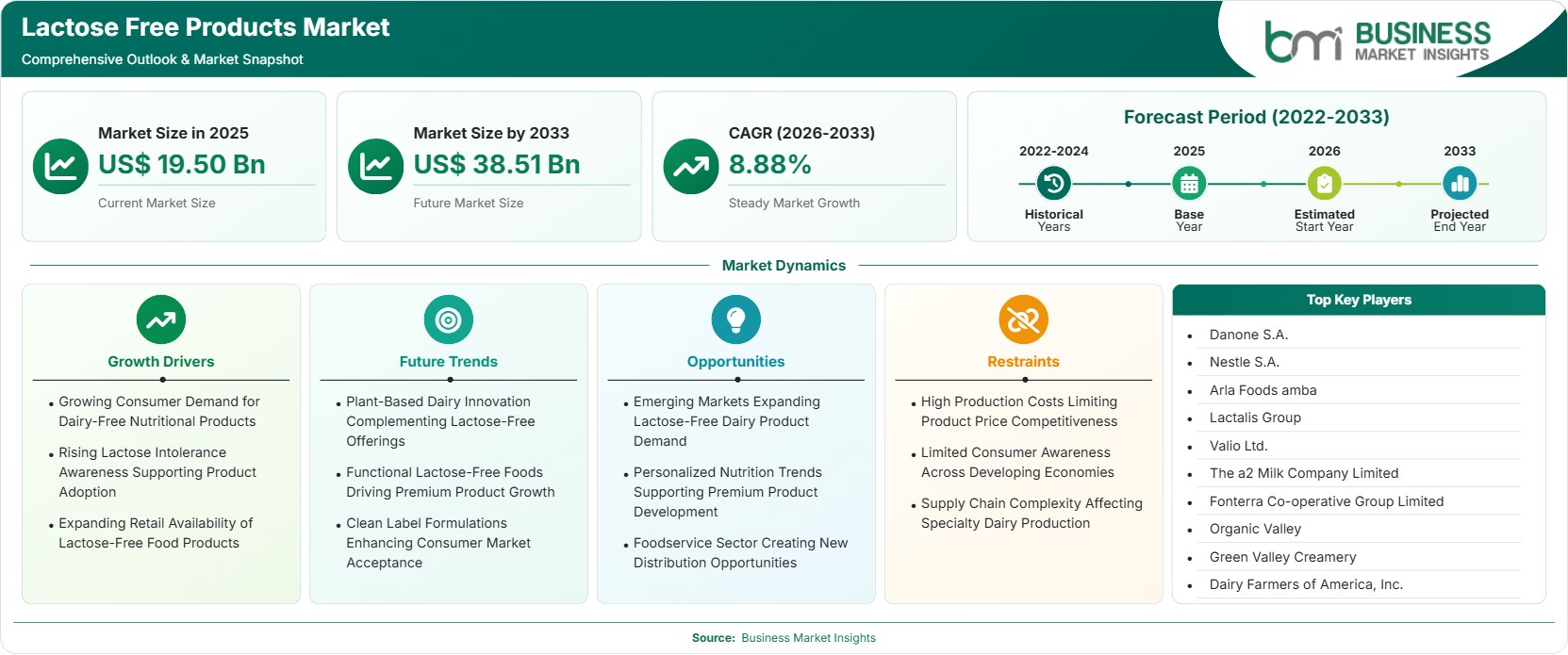
The Lactose Free Products Market size was valued at US$ 19.50 Billion in 2025 and is projected to reach US$ 38.51 Billion by 2033, growing at a CAGR of 8.88% during 2026–2033, driven by rising lactose intolerance awareness, demand for digestive-friendly nutrition, expanding retail availability, and opportunities in personalized dairy innovation.

Report Coverage
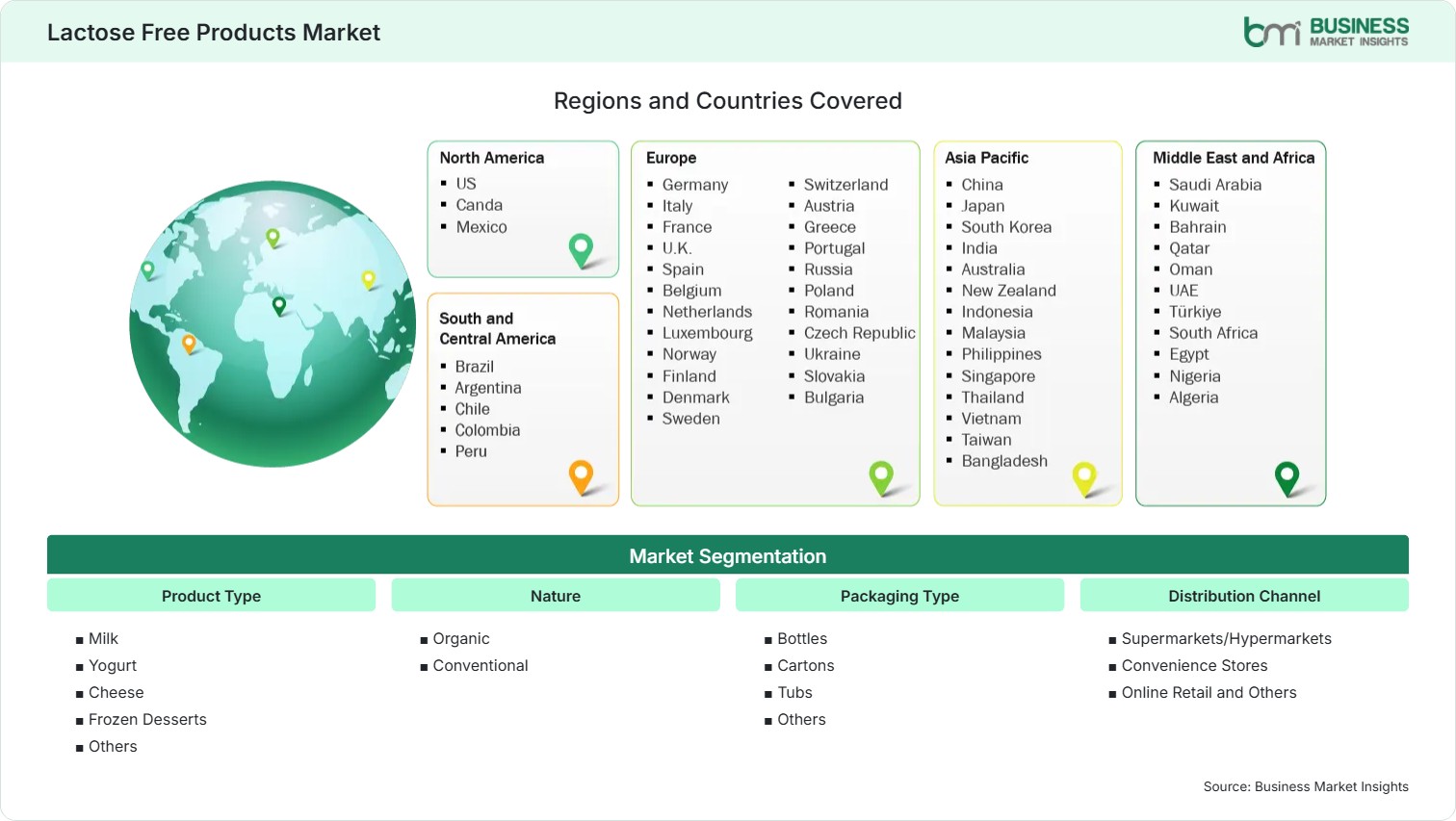
  • Product Type: Milk, Yogurt, Cheese, Frozen Desserts, Others
  • Nature: Organic, Conventional
  • Packaging Type: Bottles, Cartons, Tubs, Others
  • Distribution Channel: Supermarkets/Hypermarkets, Convenience Stores, Online Retail and Others
US$ 19.50 Bn Market size in 2025
US$ 38.51 Bn Market Size by 2033
8.88% CAGR, 2026 - 2033
2026-2033 Forecast Period

AI Overview

Lactose Free Products Market Summary

  • North America Region: North America holds 34%–37% share in 2025, growing with a CAGR of 8.20%–8.60% influenced by rising lactose intolerance awareness, premium dairy consumption, health-focused purchasing behavior, and expanded product availability. The US market shows steady development with a CAGR of 8.30%–8.70% during 2026–2033 due to strong retail penetration.
  • Fastest Growing Region: Asia Pacific accounts for 28%–31% share in 2025, expanding with a CAGR of 9.50%–10.00% supported by increasing digestive health awareness, urbanization, changing dietary preferences, and growing demand for functional dairy products across developing economies.
  • Leading Segment: Milk products represent the leading segment with 45%–48% share in 2025, registering a CAGR of 8.50%–8.90% due to high household consumption, availability across retail channels, nutritional similarity with conventional milk, and strong consumer familiarity.
  • High Growth Segment: Online Retail represents a high-growth distribution channel with a CAGR of 10.00%–10.50% during 2026–2033, supported by increasing digital grocery adoption, convenience-focused shopping behavior, wider product discovery, and direct-to-consumer dairy brands.
  • Key Market Opportunity: Expanding lactose-free product adoption in emerging economies, personalized nutrition solutions, and foodservice applications creates opportunities for manufacturers to introduce innovative formulations and strengthen consumer engagement through diversified distribution networks.
  • Major Market Players: Danone S.A., Nestlé S.A., Arla Foods amba, Lactalis Group, Valio Ltd., The a2 Milk Company Limited, Fonterra Co-operative Group Limited, Organic Valley, Green Valley Creamery, Dairy Farmers of America, Inc.
Strategic Insights

Lactose Free Products Market: Strategic Insights

Lactose Free Products Market Strategic Framework
FREE PDF
Request your free sample
Request free sample
Stakeholder View

Key Takeaways

  • Dairy businesses are redefining their value chain by adding technology processes, enzyme blends, and quality systems to cater to the growing market for lactose-free dairy products.
  • Milk and yogurts are the two categories that have considerable growth prospects because of the high frequency of consumption and the health aspect of these products.
  • Product innovations revolve around taste, nutrition improvement, organic products, and personalizing dairy products.
  • Asia Pacific presents strong investment opportunities due to increasing urbanization, expanding middle-class populations, and rising awareness regarding digestive health benefits.
  • Strategic partnerships, portfolio expansion, and acquisitions are shaping competitive dynamics as established dairy companies strengthen positions in lactose-free and functional nutrition categories.
  • Digital commerce is becoming an important channel for premium lactose-free brands by improving consumer access, education, and product visibility.
Geographic Outlook

Lactose Free Products Market Regional Highlights

North America Lactose Free Products Market

North America accounted for 34%–37% share in 2025 and forecast to grow at a CAGR of 8.20%–8.60% during 2026–2033. The region benefits from strong consumer awareness, established dairy processing infrastructure, and high adoption of digestive health products. The Lactose Free Products Market share remains supported by premium dairy consumption, product innovation, and widespread availability across supermarkets and online platforms.

  • The US represents the largest regional contributor due to high consumer awareness, advanced retail networks, and strong demand for functional dairy products.
  • Canada is experiencing increased adoption through expanding health-focused food categories and growing availability of lactose-free dairy alternatives.
  • Manufacturers are introducing new product formulations with improved taste, nutritional value, and convenience features to attract broader consumer groups.
  • Retail expansion through supermarkets and e-commerce platforms is improving accessibility for lactose-free dairy consumers.

US Lactose Free Products Market

The US represented 28%–31% share in North America during 2025 and U.S. Lactose Free Products Market forecast to register a CAGR of 8.30%–8.70% from 2026–2033. Strong consumer understanding of lactose intolerance, established dairy consumption patterns, and increasing interest in wellness-focused foods support market expansion. The country remains a key innovation hub for lactose-free product development.

  • Dairy companies are expanding lactose-free milk, yogurt, and cheese portfolios to address increasing demand from diverse consumer segments.
  • Online grocery platforms are improving product accessibility by offering wider selections and convenient purchasing options.
  • Food manufacturers are investing in marketing initiatives focused on digestive health benefits and nutritional advantages.

Europe Lactose Free Products Market

Europe accounted for 27%–30% share in 2025 and is expected to expand at a CAGR of 8.00%–8.50% between 2026–2033. The region benefits from strong dairy consumption traditions, advanced food processing capabilities, and increasing demand for specialized nutrition products. Germany, the United Kingdom, France, and Scandinavian countries remain important markets, while Eastern European countries demonstrate increasing adoption potential. The Lactose Free Products Market growth is supported by product diversification and health awareness.

  • Germany leads regional demand due to strong dairy consumption, advanced retail infrastructure, and increasing availability of lactose-free alternatives.
  • Nordic countries demonstrate high adoption due to strong consumer interest in functional nutrition and premium dairy products.
  • France and the United Kingdom are expanding product offerings through supermarkets and specialized health food channels.
  • European manufacturers are focusing on clean-label formulations and sustainable dairy processing approaches.

Asia Pacific Lactose Free Products Market

Asia Pacific represented 28%–31% share in 2025 and is projected to achieve a CAGR of 9.50%–10.00% during 2026–2033. Rising awareness regarding lactose intolerance, changing dietary preferences, and expanding urban populations are supporting regional growth. China, India, Japan, Australia, and Southeast Asian economies are contributing to increasing demand. The Lactose Free Products Market growth is strengthened by modern retail expansion and premium dairy adoption.

  • China represents a major growth market due to increasing health awareness, urban lifestyles, and expanding dairy product consumption.
  • India is experiencing rising demand through improved retail access and growing interest in digestive health products.
  • Japan and Australia maintain strong demand due to established functional food markets and consumer preference for premium dairy options.
  • Southeast Asian markets are attracting investments from dairy companies targeting emerging consumer segments.

Rest of World Lactose Free Products Market

Rest of World accounted for 6%–9% Lactose Free Products Market share in 2025 and is projected to grow at a CAGR of 7.50%–8.00% during 2026–2033. South and Central America are experiencing gradual adoption through increasing health awareness and expanding retail channels. Middle East and Africa markets are supported by rising urbanization, imported dairy availability, and growing consumer interest in specialized nutrition products.

  • Brazil and Argentina are developing lactose-free dairy demand through increasing health consciousness and expanding supermarket networks.
  • Middle Eastern countries are adopting premium dairy products due to changing lifestyles and rising disposable incomes.
  • Africa represents an emerging opportunity with improving food distribution systems and increasing nutritional awareness.
  • Manufacturers are exploring regional partnerships to strengthen product availability and consumer education.
Global Market Geography
FREE PDF
Request your free sample
Request free sample
Segment Analysis

Lactose Free Products Market Segmentation

Product Type

Product Type segment accounted for 45%–48% share in 2025 and is projected to grow at a CAGR of 8.50%–8.90% between 2026–2033. Demand is influenced by increasing consumer preference for digestive-friendly dairy nutrition, improved taste profiles, and wider product availability. Manufacturers are expanding lactose-free portfolios across milk, yogurt, cheese, and frozen desserts to address diverse consumption occasions and health-focused purchasing behavior.

  • Milk: Lactose-free milk remains the largest product category due to high consumption frequency, nutritional familiarity, and strong retail availability. Innovation focuses on improved taste, fortified formulations, and premium positioning.
  • Yogurt: Lactose-free yogurt adoption is increasing among consumers seeking probiotic benefits and digestive wellness. Manufacturers are developing diverse flavors and functional formulations to expand consumer appeal.
  • Cheese: Lactose-free cheese demand is supported by growing interest in dairy alternatives and specialty nutrition products. Companies are improving texture, flavor, and processing techniques to enhance acceptance.
  • Frozen Desserts: Lactose-free frozen desserts are gaining popularity through premiumization, indulgence trends, and demand for inclusive dairy options. Brands are introducing innovative flavors and cleaner formulations.

Nature

Nature segment is expanding as consumers increasingly evaluate food products based on production methods, ingredient transparency, and health benefits. The segment is expected to grow at a CAGR of 8.20%–8.70% between 2026–2033, supported by rising demand for organic nutrition products and conventional lactose-free dairy options. Manufacturers are balancing affordability with premium product development to serve different consumer groups.

  • Organic: Organic lactose-free products are gaining traction among consumers prioritizing natural ingredients, sustainable farming practices, and clean-label nutrition. Premium pricing remains supported by perceived quality benefits.
  • Conventional: Conventional lactose-free products maintain strong demand due to broader affordability, extensive availability, and established consumer acceptance across supermarkets, convenience stores, and online channels.

Packaging Type

Packaging Type segment is influenced by convenience requirements, product protection needs, and changing consumer purchasing habits. The segment is projected to register a CAGR of 8.30%–8.80% during 2026–2033 as manufacturers adopt packaging formats supporting longer shelf life, portability, and improved consumer convenience. Sustainable packaging investments are also shaping product differentiation strategies across dairy categories.

  • Bottles: Bottles are widely used for lactose-free milk products due to convenience, portability, and compatibility with refrigerated retail environments. Manufacturers are adopting recyclable materials and improved designs.
  • Cartons: Cartons support lactose-free dairy distribution through efficient storage, extended shelf-life solutions, and lightweight transportation advantages. They are increasingly preferred for sustainable packaging initiatives.
  • Tubs: Tubs are commonly used for yogurt and frozen dessert applications due to easy handling, resealability, and consumer convenience. Brands are improving designs for premium product positioning.

Distribution Channel

Distribution Channel segment continues evolving due to increasing digital commerce adoption, retail expansion, and changing food purchasing behaviors. The segment is expected to grow at a CAGR of 8.40%–8.90% between 2026–2033. Supermarkets remain important for product visibility, while online retail is expanding rapidly through convenience-focused shopping and direct consumer engagement strategies.

  • Supermarkets/Hypermarkets: Supermarkets and hypermarkets remain dominant channels due to broad product availability, consumer trust, and dedicated health-focused dairy sections.
  • Convenience Stores: Convenience stores support impulse purchases and accessibility, particularly for ready-to-consume lactose-free dairy products in urban areas.
  • Online Retail: Online retail is expanding rapidly through subscription models, wider product selection, and increasing consumer preference for convenient grocery purchasing.
Market Forces

Lactose Free Products Market Dynamics

Key Market Drivers

Growing Consumer Demand for Dairy-Free Nutritional Products

The increasing consumer preference for dairy products that promote digestive wellness is fueling demand for lactose-free nutritional solutions. Consumers want products that will provide them with important dairy nutrients like calcium, protein, and vitamins without causing any digestive problems. Heightened awareness of health issues, dietary changes, and a functional nutrition approach are prompting companies to diversify their lactose-free milk, yogurt, cheese, and frozen desserts range. The Lactose Free Products Market trend of inclusive consumption of dairy products by lactose-intolerant consumers and health-conscious consumers is adding strength to product acceptance and category growth.

Rising Lactose Intolerance Awareness Supporting Product Adoption

Growing awareness about lactose intolerance and digestive sensitivities has led to consumers resorting to lactose-free dairy products as viable options in their diets. Conversations in healthcare settings, nutrition campaigns, and increased availability of health information online have contributed to better knowledge among consumers about the difficulties of lactose digestion. Lactose intolerance is now being recognized by more people, and hence the consumer pool is not restricted to those who have been previously diagnosed with the condition.

Expanding Retail Availability of Lactose-Free Food Products

Retail expansion has been facilitating better availability of lactose-free dairy products in both the developed and emerging markets. Supermarket chains, hypermarkets, convenience stores, and online groceries have been allocating more space for their nutrition-specific ranges due to high demand. Retailers are offering more diversified ranges of products including lactose-free ones that have been labeled as private label products to cater to health-conscious consumers. The growing presence of lactose-free products across multiple sales channels continues to support market growth and consumer adoption.

Key Market Opportunities

Emerging Markets Expanding Lactose-Free Dairy Product Demand

Growing emerging economies are providing significant opportunities to lactose-free dairy producers owing to higher disposable income levels, urbanization trends, and digestive health awareness. Various countries within Asia Pacific, Latin America, and the Middle East region are seeing a shift in eating habits as well as a need for nutrition-based food products. Growing infrastructures of modern retail outlets along with availability of international brands of dairy are aiding consumers to avail these benefits. These opportunities are expected to support expansion as awareness and purchasing power continue increasing.

Personalized Nutrition Trends Supporting Premium Product Development

The increasing popularity of customized nutrition is opening up possibilities for high-end lactose-free dairy products. People are looking for food products that can cater to their individual needs and fulfill their requirements. The manufacturers are working on producing different types of dairy products which would offer better nutritional value along with other features. There is scope for dairy products that would offer lactose free content along with proteins and probiotics. This trend is encouraging innovation across product categories and supporting higher-value market opportunities.

Foodservice Sector Creating New Distribution Opportunities

The foodservice sector is creating new growth opportunities as restaurants, cafes, hotels, and institutional food providers expand inclusive menu options. Increasing consumer demand for lactose-free beverages, desserts, and dairy-based meals is encouraging foodservice operators to incorporate specialized dairy ingredients. Cafes and restaurants are introducing lactose-free milk options for beverages, while hospitality providers are expanding offerings to accommodate diverse dietary requirements. Partnerships between dairy manufacturers and foodservice companies can improve product visibility and accelerate consumer trial.

Market Restraints and Challenges

High Production Costs Limiting Product Price Competitiveness

Factor: Lactose-free dairy products are expensive to manufacture because of specialized manufacturing processes, enzyme treatments, quality controls, and production systems involved. Impact: The high production costs often make these products more expensive than normal dairy products. Consumers, particularly those who are price sensitive, find these expensive products unaffordable. Advanced processing machines have to be installed and maintained to ensure efficient production.

Limited Consumer Awareness Across Developing Economies

Factor: Lower awareness regarding lactose intolerance, digestive health benefits, and availability of lactose-free alternatives in developing economies restricts consumer adoption. Impact: Limited understanding reduces demand generation and creates challenges for manufacturers attempting to expand market presence in these regions. Many consumers remain unfamiliar with lactose-free product benefits or continue relying on traditional dairy options due to limited education and product exposure.

Company Analysis

Competitive Landscape

The Lactose Free Products Market analysis highlights increasing competition among global dairy companies, specialized nutrition brands, and regional producers focusing on product innovation, portfolio expansion, and distribution strengthening. Leading companies are investing in advanced processing technologies, premium formulations, and sustainable production practices to capture growing demand for digestive-friendly dairy solutions across retail and foodservice channels.

Company Name

Overview

Products and Services relevant to this market

Danone S.A.

Global food and beverage company focused on health-oriented nutrition products and dairy innovation across international markets.

Offers lactose-free dairy products, plant-based nutrition solutions, functional dairy beverages, and specialized nutritional products.

Nestlé S.A.

Diversified food company with strong presence in dairy, nutrition, and wellness-focused product categories globally.

Provides lactose-free dairy beverages, nutritional products, dairy alternatives, and health-focused consumer food solutions.

Arla Foods amba

European dairy cooperative specializing in milk-based products with strong focus on consumer health trends.

Produces lactose-free milk, yogurt, cream products, and dairy solutions for retail and foodservice markets.

Lactalis Group

Global dairy producer offering extensive product portfolios across multiple dairy categories and regions.

Provides lactose-free milk, cheese, yogurt, and specialty dairy products under various international brands.

Valio Ltd.

Finnish dairy company recognized for innovation in lactose-free dairy processing technologies.

Supplies lactose-free milk, dairy drinks, yogurt, and advanced dairy formulations using specialized processing methods.

The a2 Milk Company Limited

Dairy nutrition company focused on differentiated milk products and consumer wellness positioning.

Offers specialty milk products designed for digestive comfort and premium dairy consumption.

Fonterra Co-operative Group Limited

Global dairy cooperative involved in dairy ingredient production and consumer dairy products.

Provides lactose-free dairy ingredients, milk products, and nutritional solutions for food manufacturers.

Organic Valley

Organic dairy cooperative specializing in natural and organic dairy products.

Offers organic lactose-free milk and dairy products focused on clean-label and sustainable production.

Green Valley Creamery

Specialty dairy brand focused on lactose-free cultured dairy products.

Provides lactose-free yogurt, cream cheese, sour cream, and other cultured dairy products.

Dairy Farmers of America, Inc.

Leading US dairy cooperative supporting milk processing and dairy product distribution.

Supplies lactose-free milk products, dairy ingredients, and customized dairy solutions for retail and foodservice applications.

Trust & Transparency

Research Methodology

The market analysis combines proprietary research with secondary data from government agencies, company disclosures, regulatory filings, industry databases and expert interviews. Market estimates are validated through data triangulation, cross-market benchmarking and analyst review.

View Full Research Methodology

Questions Answered

Frequently Asked Questions

What factors influence investment decisions in the Lactose Free Products Market Report?

Investors evaluate consumer awareness trends, regional demand growth, product innovation capabilities, retail expansion, competitive positioning, and opportunities in emerging nutrition-focused markets.

Which distribution channels offer strong growth potential for lactose-free products?

Online retail and foodservice channels offer strong opportunities due to increasing digital grocery adoption, convenience-focused purchasing, and rising demand for inclusive dietary options.

How are manufacturers improving lactose-free product acceptance?

Manufacturers are investing in improved processing technologies, flavor enhancement, nutritional fortification, and product diversification to deliver taste and quality comparable to conventional dairy products.

What products are driving growth in the Lactose Free Products Market?

Milk remains the leading product category, while yogurt, cheese, and frozen desserts are gaining traction through innovation, improved taste profiles, and expanded availability across retail channels.

Why are consumers increasingly choosing lactose-free dairy products?

Consumers are adopting lactose-free dairy products due to increasing digestive health awareness, lactose intolerance recognition, and demand for nutritious dairy options that provide essential nutrients without discomfort.

Access the Full Lactose Free Products Market Report

Get segment-level forecasts, regional estimates, competitive benchmarking, company profiles and downloadable Excel datasets.

Access the full Lactose Free Products Market Report
350 pages PDF & Excel | 2026-08-20
Similar Research

Related Market Reports