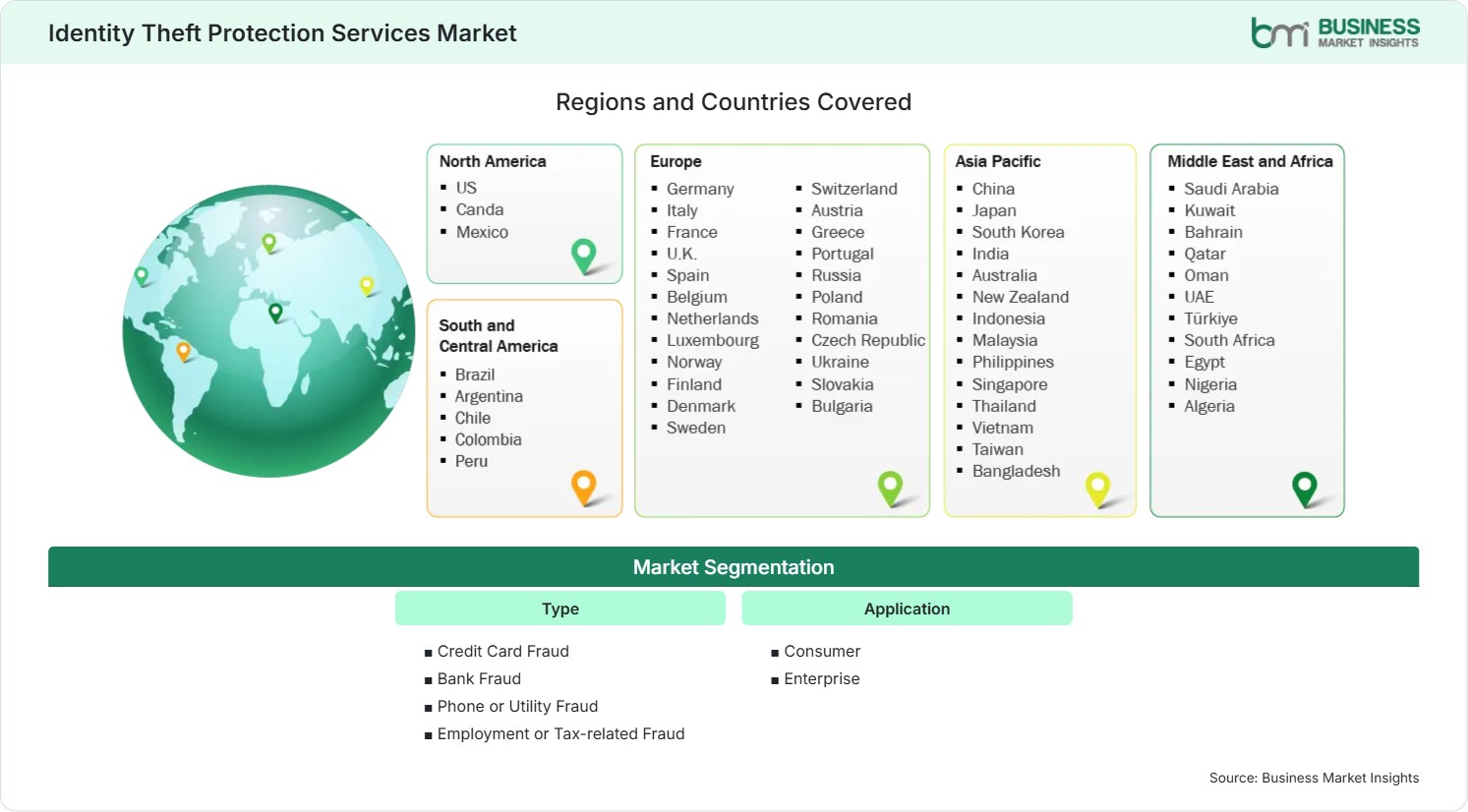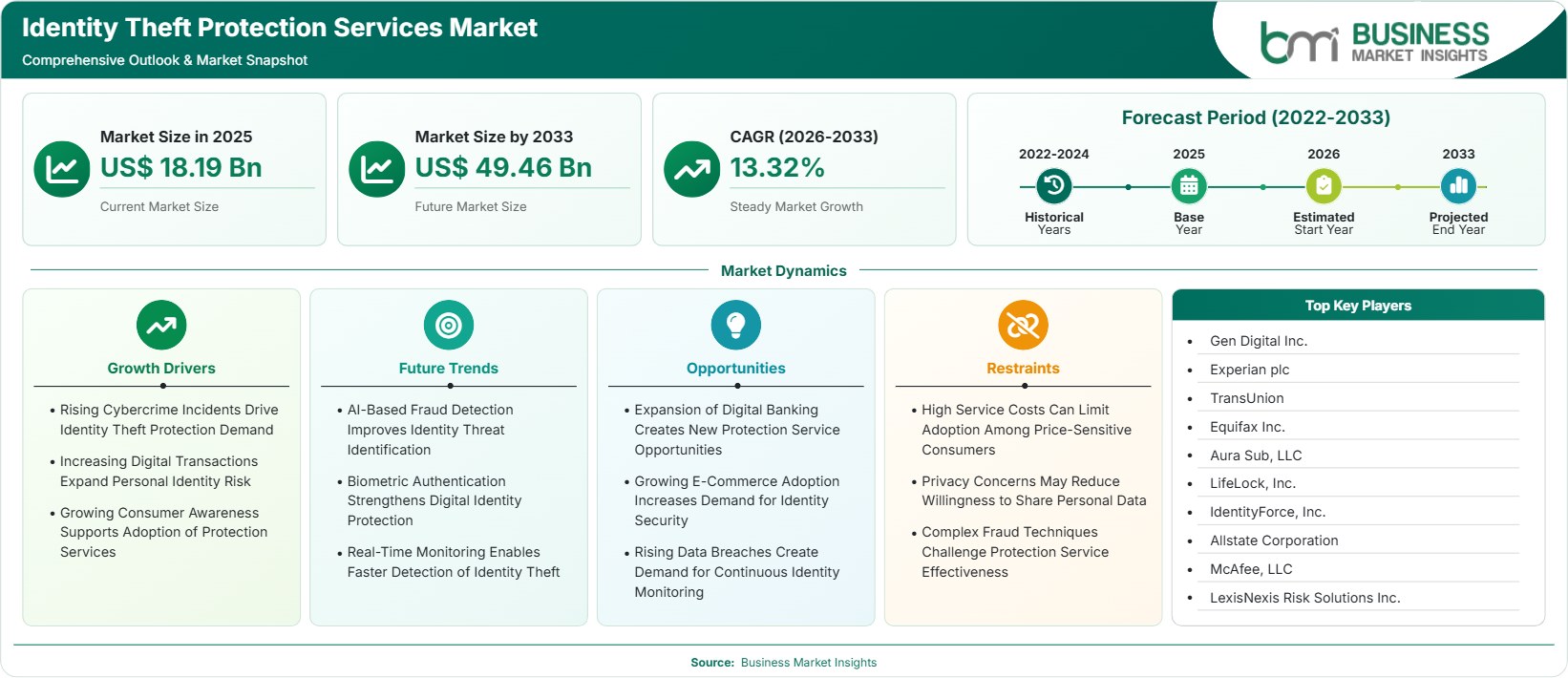
Identity Theft Protection Services Market Regional Highlights
North America Identity Theft Protection Services Market
North America Identity Theft Protection Services Market holds 34%–37% share in 2025 and is projected to grow at 12.2%–12.9% CAGR through 2033. Mature credit systems, extensive digital payments, established consumer protection practices, and high awareness of identity risks support regional demand. The US accounts for 78%–83% of regional demand and remains the largest service market.
- Digital financial activity creates multiple identity exposure points, increasing demand for monitoring services covering credit information, financial accounts, breached credentials, and suspicious activity.
- Consumer awareness is strengthening as fraud losses and identity theft reports remain substantial, encouraging households to seek preventive monitoring rather than relying solely on post-incident recovery.
- Enterprise demand is expanding as organizations strengthen employee and customer identity safeguards, particularly around account takeover, synthetic identity, and data breach risks.
- Service providers are broadening protection portfolios by combining monitoring, alerts, restoration, insurance-related benefits, and financial risk information within recurring subscription structures.
US Identity Theft Protection Services Market
The US Identity Theft Protection Services Market accounts for 78%–83% of North American demand in 2025 and is projected to grow at 12.3%–13.0% CAGR through 2033. The market benefits from extensive credit usage, digital banking, online commerce, established credit-reporting infrastructure, and high consumer awareness. FTC data show more than 1.1 million identity theft reports in 2024, demonstrating continued demand pressure.
- Credit monitoring remains a major service foundation because unauthorized account activity and changes in credit files can provide early indicators of identity misuse.
- Digital account expansion is increasing the need for monitoring beyond credit files, including breached credentials, financial accounts, phone numbers, and other personal information.
- Enterprise adoption is strengthening as organizations seek protection against identity-based fraud affecting employees, customers, transactions, and digital account access.
Europe Identity Theft Protection Services Market
Europe Identity Theft Protection Services Market holds 23%–26% share in 2025 and is projected to grow at 10.8%–11.6% CAGR through 2033. The UK, Germany, France, Italy, and Spain represent leading markets, while Poland offers stronger growth at 12.5%–13.3% CAGR. The UK is projected to grow at 11.1%–11.9% CAGR, supported by digital financial services and consumer awareness. Data protection requirements, electronic transactions, financial fraud prevention, and expanding digital identities support continued service adoption.
- The UK remains a mature market because extensive online financial activity and consumer awareness support demand for identity and credit monitoring services.
- Germany and France provide stable demand through digital banking, e-commerce, financial services, and increasing attention to personal data protection.
- Poland offers stronger expansion potential as digital financial participation, online commerce, and technology adoption broaden the addressable user population.
- European providers increasingly need to demonstrate transparent data practices because consumers remain attentive to privacy, consent, monitoring scope, and personal information handling.
Asia Pacific Identity Theft Protection Services Market
Asia Pacific Identity Theft Protection Services Market holds 25%–29% share in 2025 and is projected to grow at 14.6%–15.4% CAGR through 2033. China, Japan, India, South Korea, Australia, and Southeast Asia represent major demand centers. India is projected to grow at 15.2%–16.0% CAGR as digital payments, banking access, e-commerce, and smartphone adoption expand. China is expected to grow at 14.0%–14.8% CAGR, supported by extensive digital commerce and financial technology adoption.
- India provides substantial upside as digital financial participation expands and consumers increasingly depend on mobile payments, online banking, and digitally delivered financial services.
- China maintains a large addressable user base because extensive digital commerce and financial technology adoption create numerous identity and transaction monitoring requirements.
- Japan and South Korea provide mature demand through advanced digital banking, connected financial services, high internet usage, and established cybersecurity awareness.
- Southeast Asia offers strong expansion potential as mobile commerce, digital wallets, online banking, and financial inclusion bring new users into digital ecosystems.
Rest of World Identity Theft Protection Services Market
South and Central America are developing markets for identity protection as digital banking, mobile payments, online commerce, and financial inclusion expand. Brazil and Mexico represent leading markets, while Colombia and Chile provide additional opportunities. Brazil is supported by its large digital consumer base, while Mexico benefits from financial technology development and expanding online transactions.
Middle East and Africa demand is developing alongside digital banking, mobile financial services, e-commerce, and government digitization. Rest of World holds 12%–15% share in 2025 and is projected to grow at 10.1%–11.0% CAGR through 2033 as digital participation increases.
- Brazil remains an important opportunity because digital financial activity and online commerce create growing requirements for identity monitoring and fraud prevention services.
- Mexico provides expansion potential through financial technology adoption, digital transactions, e-commerce, and broader consumer participation in online financial services.
- Gulf markets offer opportunities as digital banking, online government services, financial technology, and connected consumer platforms increase identity exposure points.
- South Africa supports regional demand through digital financial services, e-commerce adoption, cybersecurity awareness, and increasing attention to identity-related financial risks.