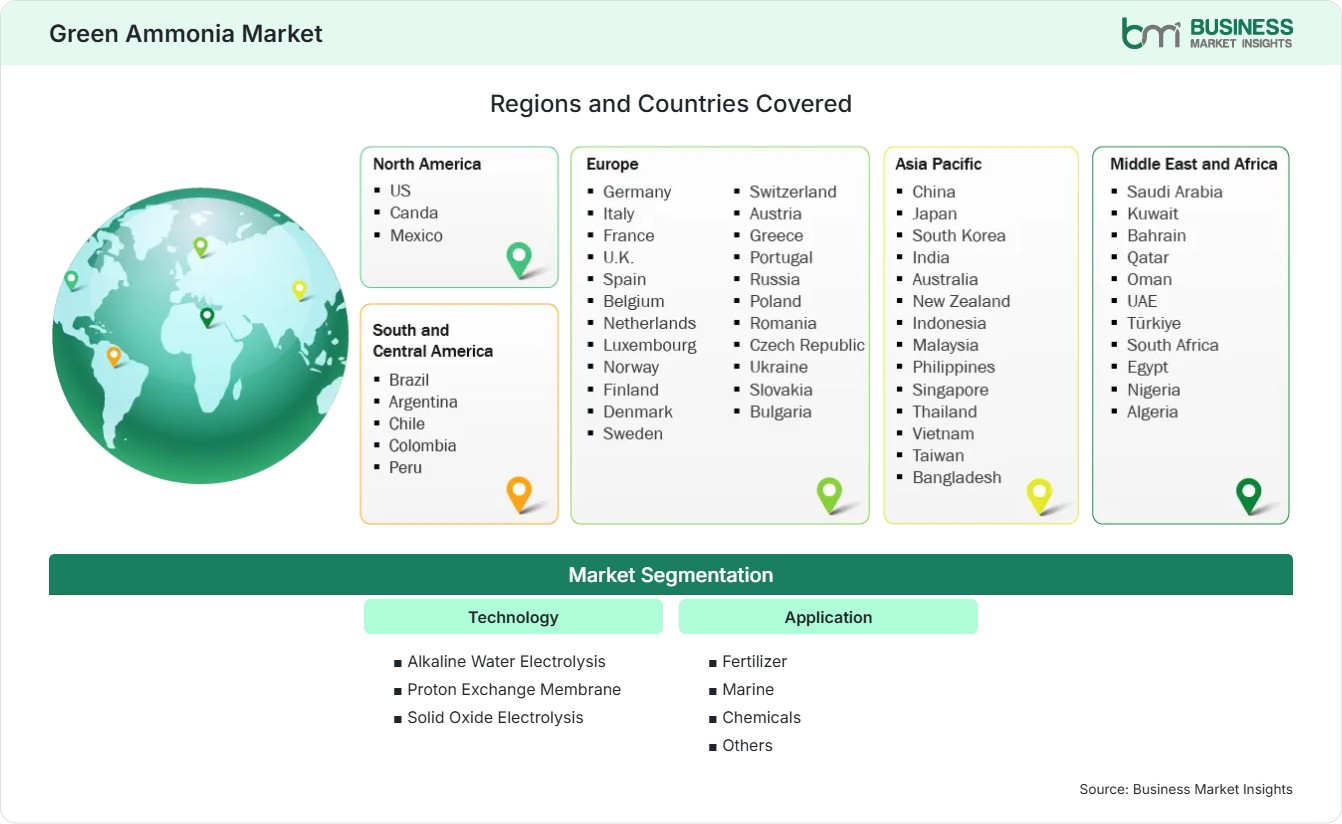
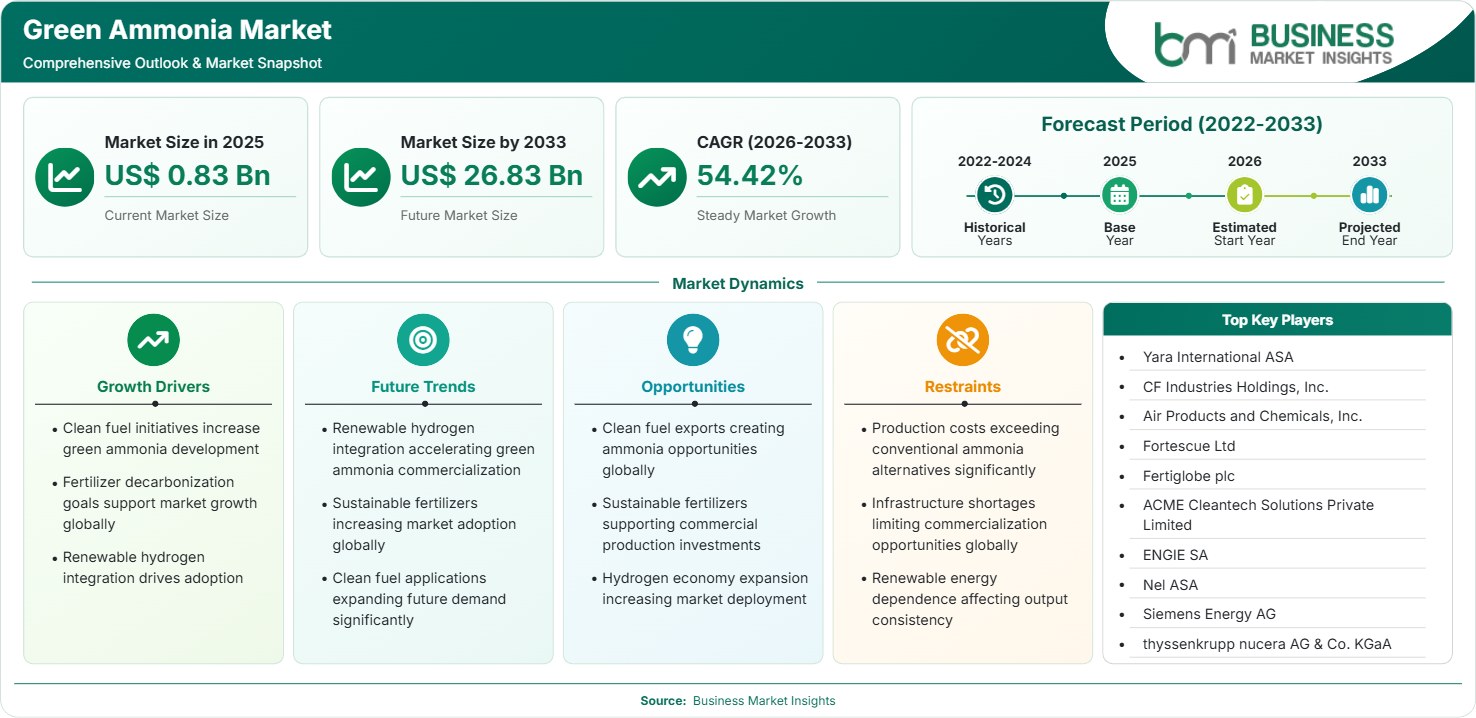
Green Ammonia Market Regional Highlights
North America Green Ammonia Market
North America accounted for approximately 34%–37% of global Green Ammonia Market revenue in 2025 and is expected to expand at a CAGR of 52%–55% through 2033. Strong policy support, hydrogen incentives, and extensive renewable power resources are encouraging large-scale project deployment.
- The ongoing improvement of federal incentives and funding for clean hydrogen is helping to enhance the economic viability of projects, which is in turn prompting developers to increase their production capacity and obtain long-term industrial customers for use in the areas of fertilizers and energy.
- Renewable energy companies are entering into strategic collaborations with industrial organizations, which is speeding up the process of commissioning and thus leading to the development of integrated ecosystems that support investments in production, transportation, storage and export infrastructure.
- There is increasing interest in alternative marine fuels, which is leading to the development of dedicated ammonia handling facilities and thus enhancing your position in the emerging low-carbon shipping networks.
- Increasing the capacity for generating renewable electricity helps to achieve competitive production costs and enhances the operational feasibility of large-scale commercial facilities which are entering the deployment pipelines.
US Green Ammonia Market
The United States represents approximately 72%–76% of North American Green Ammonia Market revenue and is projected to record a CAGR of 53%–56% through 2033. Strong renewable resource availability, federal tax incentives, and industrial decarbonization priorities support project announcements across multiple states.
- Because of the industrial infrastructure that is already in place, the export facilities and their access to competitive renewable energy resources, developments on the Gulf Coast are becoming major centers of production.
- The growing number of corporate commitments to long-term sustainability is increasing demand visibility and is therefore prompting large industrial consumers to take part in renewable ammonia procurement agreements.
- The technology partnerships are still enhancing the abilities associated with deploying electrolyzers, decreasing the risks involved in implementation and thereby improving commercial scalability in a number of different types of projects.
- The frameworks relating to renewable hydrogen policy are still a major factor in boosting investor confidence and in speeding up commercialization efforts across the country.
Europe Green Ammonia Market
Europe represented approximately 28%–31% of global Green Ammonia Market revenue in 2025 and is forecast to grow at a CAGR of 51%–54% through 2033. The region benefits from aggressive decarbonization targets, carbon pricing mechanisms, and strong hydrogen policy frameworks. Industrial users are increasingly evaluating renewable ammonia as a low-carbon feedstock and energy carrier.
- The programs in Europe aimed at decarbonization are increasing industrial demand for hydrogen derivatives from renewable sources, which in turn is leading to large-scale imports of ammonia and promoting the development of domestic production.
- Operators of ports throughout Northern Europe are putting money into ammonia handling facilities with the aim of setting up future networks for the distribution of marine fuel and for industrial use.
- Germany retains its leading position due to the concentration of industrial demand, its existing capacity in chemical manufacturing, and the support given by the government to the expansion of the hydrogen ecosystem.
- Spain is becoming a high-growth destination as a result of its plentiful renewable resources, the favorable project economics, and the growing level of export-oriented investment activity.
- Strategic procurement agreements between producers and industrial consumers are giving developers and infrastructure investors the certainty they need regarding demand.
Asia Pacific Green Ammonia Market
Asia Pacific accounted for approximately 24%–27% of Green Ammonia Market revenue in 2025 and is anticipated to register the fastest growth at a CAGR of 57%–60% through 2033. Rapid industrialization, large clean-fuel import requirements, and ambitious hydrogen strategies support regional expansion.
- Japan is continuing with its initiatives to co-fire ammonia in thermal power generation, thus creating a substantial long-term demand for imports of renewable ammonia.
- South Korea is making greater investments in its hydrogen infrastructure and is promoting the diversification of its low-carbon energy supply chains.
- India is becoming a major center for production, due to the availability of renewable energy, policy incentives, and investment programs which focus on exports.
- Australia continues to act as a strategic supplier by means of long-term supply agreements and having a number of large-scale projects aimed at Asian import markets.
- The aims set by the industry to reduce carbon emissions in various manufacturing sectors are still contributing to the expansion of demand and the advancement of commercial projects.
Rest of World Green Ammonia Market
The Rest of World region accounted for approximately 10%–13% of Green Ammonia Market revenue in 2025 and is projected to expand at a CAGR of 55%–58% through 2033. South and Central America are attracting investments due to favorable renewable energy resources and export opportunities.
- The projects in the Middle East take advantage of the fact that they have cheap renewable resources, a large amount of land, and a strategic position that gives them access to international export markets.
- Saudi Arabia is still presenting itself as a leading hub for production and exports by means of its integrated renewable hydrogen projects.
- Because of the abundance of its renewable resources and its close position to major export destinations, Brazil is drawing in investor interest.
- The development of infrastructure in ports and industrial areas is enhancing the logistics potential for future commercial exports.
- The international partnerships being established between developers and end users are helping to improve the project's economics and are aiding the development of commercialization routes.