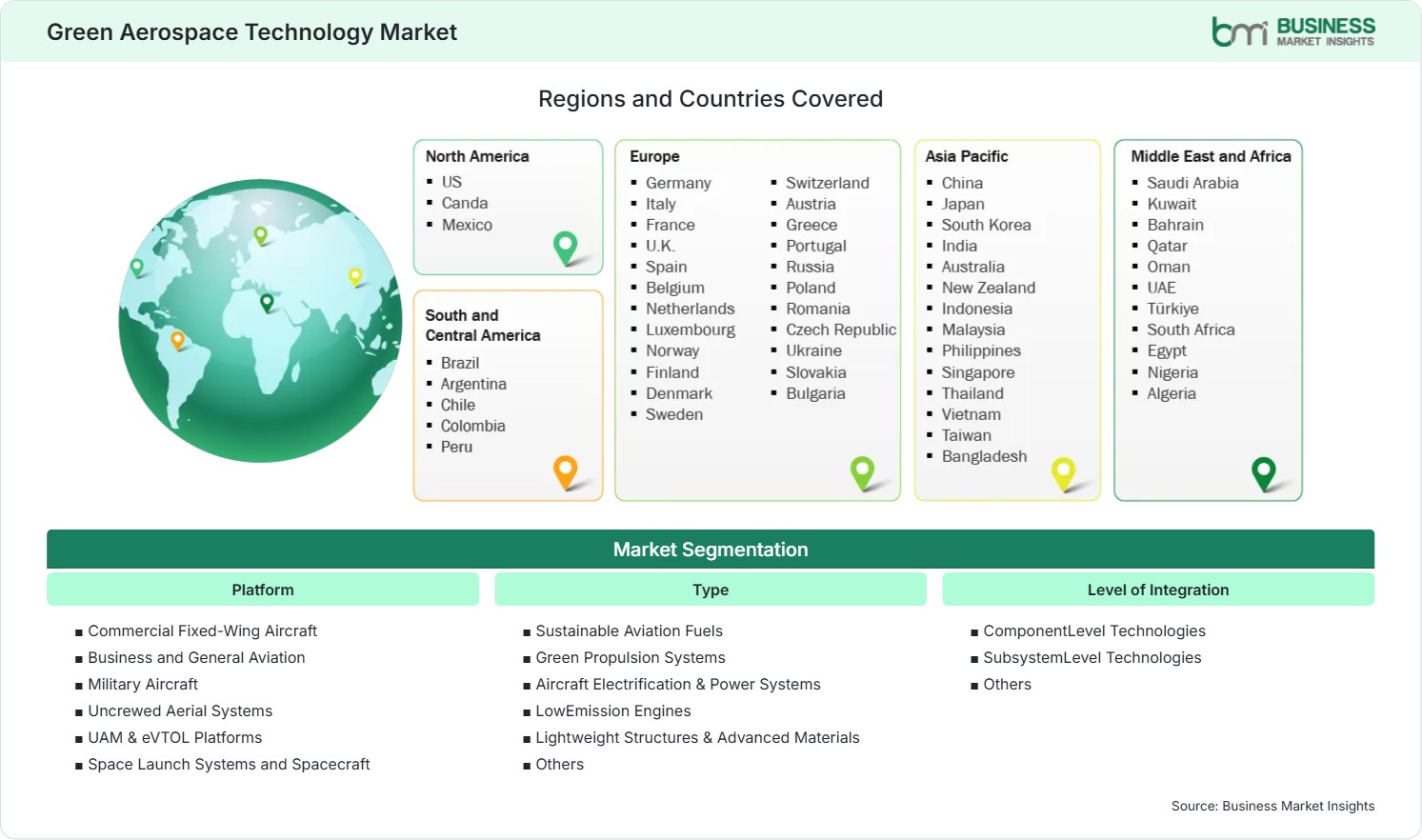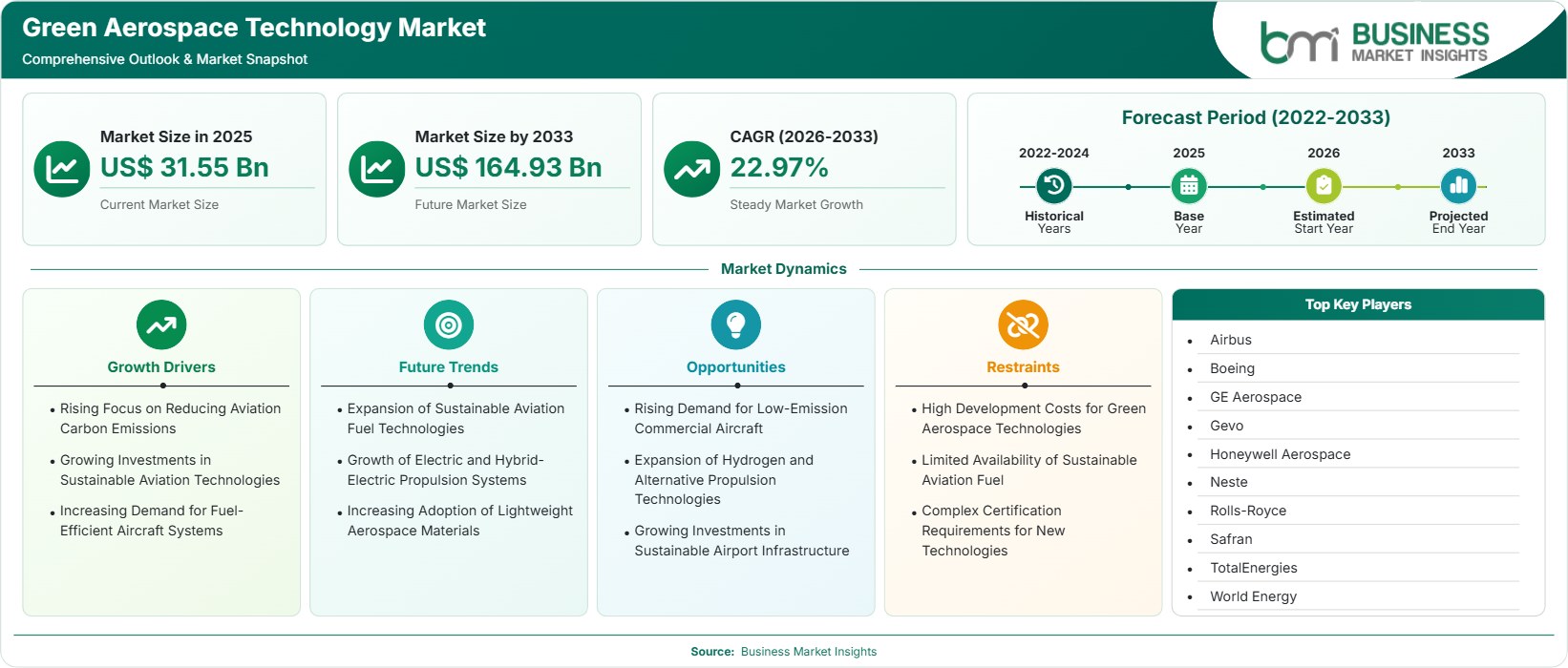
Green Aerospace Technology Market Regional Highlights
North America Green Aerospace Technology Market
North America accounted for 37%–41% of global revenue in 2025 and is projected to grow at a CAGR of 21.5%–22.5% through 2033. The region benefits from a strong aerospace manufacturing base, extensive research and development capabilities, increasing sustainable aviation fuel production, and substantial investments in aircraft electrification programs. The Green Aerospace Technology Market share remains the largest globally due to strong industry participation and favorable government support for aviation decarbonization initiatives.
- Major aerospace manufacturers continue investing in sustainable aircraft technologies, including electric propulsion, hybrid-electric solutions, and advanced aerodynamics aimed at reducing operational emissions.
- Expanding sustainable aviation fuel production facilities are strengthening regional fuel availability and supporting airline commitments toward long-term carbon reduction goals.
- Government-backed sustainability programs and research grants are accelerating innovation across propulsion systems, advanced materials, and next-generation aviation technologies.
- Airlines are increasingly integrating sustainability strategies into fleet modernization programs by adopting fuel-efficient aircraft and supporting green technology demonstrations.
- A strong ecosystem of aerospace companies, research institutions, and technology developers continues driving commercialization of advanced green aviation solutions.
US Green Aerospace Technology Market
The United States represents 83%–87% of North American demand and is projected to grow at a CAGR of 21.8%–22.8% through 2033. Growth is supported by extensive aerospace research activities, strong sustainable aviation fuel investments, and increasing development of advanced propulsion technologies.
- Aerospace companies continue expanding investments in electric aircraft, hydrogen propulsion concepts, and advanced engine technologies to address long-term emission reduction objectives.
- Growing sustainable aviation fuel production capacity is improving fuel accessibility and supporting broader airline adoption across domestic and international routes.
- Federal and state-level sustainability initiatives continue encouraging development and deployment of low-carbon aviation technologies.
- Strong commercialization efforts for urban air mobility and advanced air mobility platforms are creating additional opportunities for green aerospace technologies.
Europe Green Aerospace Technology Market
Europe held 27%–31% of global revenue in 2025 and is expected to register a CAGR of 22.0%–23.0% through 2033. Aggressive climate targets, strong regulatory frameworks, and substantial investments in sustainable aviation technologies continue supporting green aerospace technology market growth. Germany remains the leading market, while France represents a major innovation hub with a CAGR of 23.0%–24.0%. Decarbonization initiatives are accelerating adoption of sustainable aviation solutions across the region.
- Strict environmental regulations are encouraging airlines and aerospace manufacturers to accelerate implementation of low-emission technologies and sustainable operating models.
- Major aircraft and engine manufacturers continue investing in hydrogen aviation, electric propulsion research, and lightweight material innovations.
- Sustainable aviation fuel adoption is increasing as governments and aviation stakeholders pursue ambitious carbon reduction targets.
- Public-private partnerships are supporting development of next-generation aircraft technologies and large-scale green aviation infrastructure projects.
- Increased investment in aerospace sustainability programs continues driving innovation across commercial aviation and defense sectors.
Asia Pacific Green Aerospace Technology Market
Asia Pacific accounted for 24%–28% of global revenue in 2025 and is expected to record the fastest CAGR of 25.0%–26.5% through 2033. Expanding aviation markets, rising aircraft procurement, increasing sustainability commitments, and growing aerospace manufacturing capabilities are supporting regional growth. China and Japan remain major markets, while India is projected to register a CAGR of 26.0%–27.5%. Government support for clean aviation initiatives continues creating favorable green aerospace technology market conditions.
- Rising air passenger traffic is encouraging airlines to invest in fuel-efficient fleets and technologies that support long-term sustainability goals.
- Government-backed clean energy and green transportation programs are promoting adoption of sustainable fuels and low-emission aviation systems.
- Domestic aerospace manufacturing capabilities continue expanding, creating opportunities for advanced materials, propulsion systems, and aircraft electrification technologies.
- Increasing investment in urban air mobility and eVTOL platforms is supporting commercialization of electric aviation technologies.
- Growing participation from regional airlines, energy companies, and aerospace manufacturers is strengthening the green aviation ecosystem.
Rest of World Green Aerospace Technology Market
Rest of World accounted for 6%–10% of global revenue in 2025 and is forecast to grow at a CAGR of 22.3%–23.3% through 2033. Market expansion is being supported by increasing sustainability commitments, aviation infrastructure modernization, and growing investments in sustainable fuels and low-carbon transportation technologies. The Middle East and Latin America are emerging as important markets for green aviation development.
- Airlines are increasingly pursuing sustainability targets through fleet modernization, fuel efficiency improvements, and participation in carbon reduction initiatives.
- Sustainable aviation fuel projects are expanding across key aviation hubs to support long-term decarbonization strategies.
- Infrastructure modernization programs are helping airports and aviation stakeholders prepare for future green aviation technologies.
- Regional governments are introducing policies and incentives aimed at encouraging cleaner transportation and emission reduction efforts.
- Growing collaboration with global aerospace companies is accelerating technology transfer and adoption of sustainable aviation solutions.