
Fruit Infused Water Market Size, Share, Trends & Forecast Report, 2026–2033

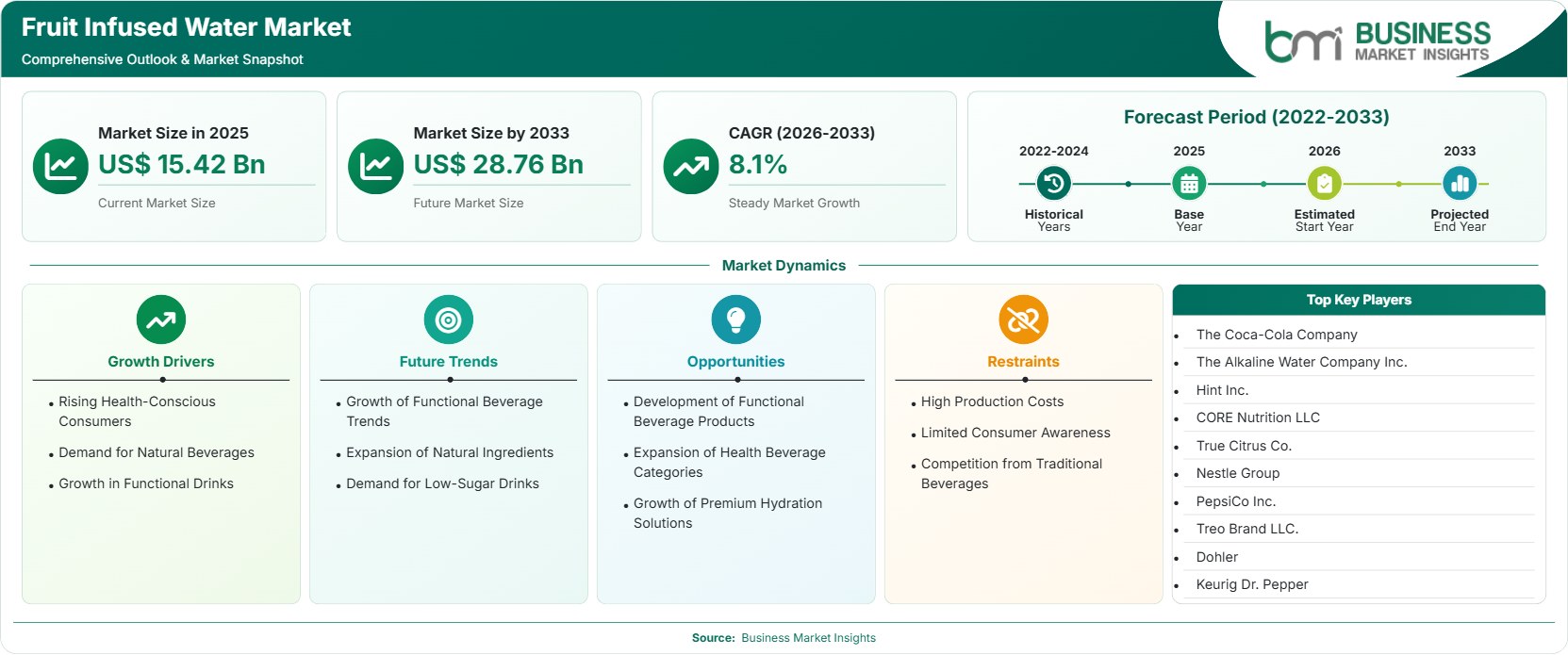
The Fruit Infused Water Market size was valued at US$ 15.42 Billion in 2025 and is projected to reach US$ 28.76 Billion by 2033, growing at a CAGR of US$ 8.1% during 2026–2033, driven by demand for natural hydration, functional beverages, premium wellness products, and clean-label drink innovations.

Report Coverage
  • Nature: Organic, Conventional
  • Flavor: Citrus Flavour, Berry Flavor, Mixed Fruit Flavor, Others
  • Distribution Channel: Supermarkets/Hypermarkets, Specialty Stores, Local Retail Stores, Online Retail Stores, Others
US$ 15.42 Bn Market size in 2025
US$ 28.76 Bn Market Size by 2033
8.1% CAGR, 2026 - 2033
2026-2033 Forecast Period

AI Overview

Fruit Infused Water Market Summary

  • North America Region: North America holds a 34%–37% share in 2025, growing with a CAGR of 7.5%–8.5% influenced by wellness trends, clean-label preferences, and premium beverage innovation. The US market demonstrates strong adoption with a CAGR of 7.8%–8.8% from 2026–2033, supported by functional hydration demand.
  • Fastest Growing Region: Asia Pacific maintains a 26%–29% share in 2025, expanding at a CAGR of 9.5%–10.5% due to urban wellness adoption, beverage diversification, rising disposable incomes, and growing interest in healthier alternatives.
  • Leading Segment: Conventional products account for a 62%–65% share in 2025, progressing at a CAGR of 7.5%–8.5% due to broad availability, competitive pricing, established manufacturing networks, and stronger mainstream consumer acceptance.
  • High Growth Segment: Organic products represent a 35%–38% share in 2025, achieving a CAGR of 9.0%–10.0% due to clean-label demand, sustainable sourcing preferences, and increasing premium beverage consumption.
  • Key Market Opportunity: Functional fruit infused beverages with added vitamins, minerals, antioxidants, and botanical ingredients create opportunities through premium positioning, personalized nutrition, and expansion across online and specialty retail channels.
  • Major Market Players: The Coca-Cola Company, The Alkaline Water Company Inc., Hint Inc., CORE Nutrition LLC, True Citrus Co., Nestle Group, PepsiCo Inc., Treo Brand LLC., Dohler, Keurig Dr. Pepper.
Strategic Insights

Fruit Infused Water Market: Strategic Insights

Fruit Infused Water Market Strategic Framework
FREE PDF
Request your free sample
Request free sample
Stakeholder View

Key Takeaways

  • Beverage manufacturers are restructuring supply chains around natural ingredients, sustainable packaging materials, and efficient flavor infusion technologies to address increasing demand for healthier hydration products.
  • Premium and organic formulations provide strong growth opportunities as consumers increasingly seek beverages offering functional benefits, natural ingredients, and improved nutritional value beyond traditional hydration.
  • Product innovation is shifting toward botanical combinations, antioxidant-rich formulations, personalized nutrition concepts, and advanced preservation technologies that maintain flavor quality while extending shelf life.
  • Asia Pacific presents a compelling investment opportunity due to expanding middle-class populations, growing urban lifestyles, and increasing acceptance of premium wellness beverages across major markets.
  • Strategic investments and partnerships are increasing as beverage companies diversify portfolios through acquisitions, new product launches, and expansion into functional beverage categories.
  • Digital commerce is becoming an important channel for emerging brands by enabling direct consumer engagement, subscription models, and targeted marketing campaigns focused on health-conscious buyers.
Geographic Outlook

Fruit Infused Water Market Regional Highlights

North America Fruit Infused Water Market

North America accounted for a 34%–37% share in 2025 and is projected to expand at a CAGR of 7.5%–8.5% during 2026–2033. The region benefits from established beverage companies, strong wellness culture, and high demand for low-sugar alternatives. The Fruit Infused Water Market share remains supported by premium product adoption in the US and Canada.

  • Rising preference for natural hydration beverages is encouraging brands to introduce innovative fruit combinations and functional formulations targeting wellness-focused consumers.
  • The US remains the largest regional contributor, supported by established retail networks, strong brand presence, and consumer willingness to purchase premium beverages.
  • Manufacturers are investing in sustainable packaging and clean-label certifications to strengthen product differentiation across competitive beverage categories.
  • E-commerce growth is expanding accessibility of niche fruit infused water brands among digitally engaged consumers seeking healthier alternatives.

US Fruit Infused Water Market

The US represented a 31%–34% share in 2025 and is expected to grow at a CAGR of 7.8%–8.8% from 2026–2033. Strong consumer awareness regarding sugar reduction, functional nutrition, and clean ingredients continues to influence purchasing behavior. The Fruit Infused Water Market growth is supported by innovation from established beverage companies and emerging wellness brands.

  • Increasing demand for flavored hydration products is driving product launches featuring natural fruit extracts, vitamins, and botanical ingredients.
  • Premium beverage segments are expanding through specialty retailers, online platforms, and subscription-based purchasing models.
  • Companies are focusing on recyclable packaging and transparent labeling to improve consumer trust and brand loyalty.

Europe Fruit Infused Water Market

Europe accounted for a 24%–27% share in 2025 and is anticipated to grow at a CAGR of 7.0%–8.0% during 2026–2033. The region benefits from strong demand for organic beverages, sustainability-focused consumers, and strict ingredient transparency standards. The Fruit Infused Water Market share is supported by leading markets including Germany, the UK, France, and Italy, with Germany and the UK showing consistent category expansion.

  • Germany demonstrates strong demand for organic and functional beverages, supported by environmentally conscious consumers and advanced retail distribution networks.
  • The UK market is expanding through premium hydration products, online beverage channels, and increasing consumer preference for healthier alternatives.
  • European manufacturers are emphasizing sustainable sourcing, recyclable packaging, and reduced artificial additives to align with consumer expectations.
  • France and Italy are witnessing increased adoption of fruit-based beverages due to interest in natural ingredients and lifestyle-oriented consumption patterns.

Asia Pacific Fruit Infused Water Market

Asia Pacific represented a 26%–29% share in 2025 and is projected to register a CAGR of 9.5%–10.5% through 2026–2033. The region is the fastest-growing market due to rising disposable income, urbanization, expanding retail infrastructure, and increasing awareness of healthier beverage choices. The Fruit Infused Water Market share is strengthened by China, India, Japan, and Southeast Asian economies.

  • China is experiencing increased demand for premium hydration beverages as consumers shift toward functional and wellness-oriented products.
  • India is emerging as a high-growth market due to expanding health awareness, young demographics, and rapid growth of online beverage sales.
  • Japan and South Korea are adopting innovative fruit-based beverages supported by advanced packaging technologies and strong consumer interest in wellness.
  • Southeast Asian markets are gaining traction through modern retail expansion, tourism growth, and increasing availability of international beverage brands.

Rest of World Fruit Infused Water Market

Latin America, Middle East, and Africa collectively accounted for an 8%–10% share in 2025 and are expected to expand at a CAGR of 6.5%–7.5% during 2026–2033. Growth is supported by increasing urban consumption, improving retail networks, and rising awareness of healthier beverage options. The Fruit Infused Water Market share is gradually expanding through Brazil, UAE, and other emerging economies.

  • Brazil is witnessing growing demand for fruit-based beverages due to abundant fruit resources, expanding wellness trends, and evolving consumer preferences.
  • Middle Eastern countries are adopting premium hydration products as consumers seek healthier alternatives within modern retail environments.
  • South African markets are showing increased interest in natural beverages through specialty stores and online channels.
  • Regional beverage companies are exploring localized fruit flavors to improve acceptance among diverse consumer groups.
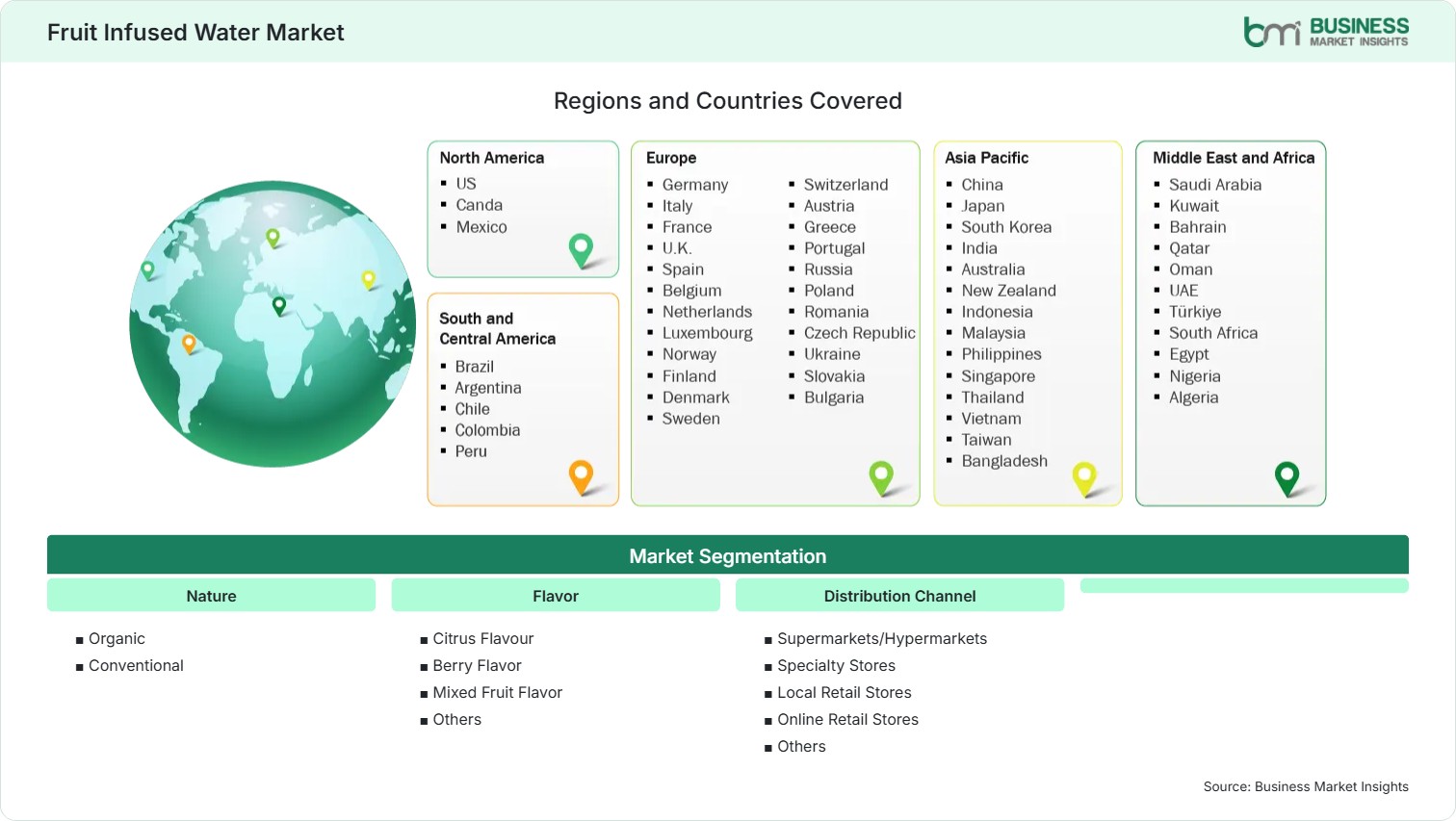
Global Market Geography
FREE PDF
Request your free sample
Request free sample
Segment Analysis

Fruit Infused Water Market Segmentation

Nature

The Nature segment influences purchasing decisions as consumers evaluate ingredient transparency, sourcing practices, and nutritional benefits. Conventional products accounted for a 62%–65% share in 2025, growing at a CAGR of 7.5%–8.5% during 2026–2033, while organic offerings gain momentum through premium positioning. The segment reflects evolving demand for natural hydration and sustainable beverage solutions.

  • Organic: Organic fruit infused water products attract health-focused consumers through certified ingredients, cleaner formulations, sustainable sourcing practices, and premium beverage positioning.
  • Conventional: Conventional products maintain wider adoption due to affordability, extensive availability, established manufacturing capabilities, and strong presence across mainstream retail channels.

Flavor

The Flavor segment remains central to consumer selection, with brands focusing on differentiated taste profiles and natural fruit combinations. The Fruit Infused Water Market scope is expanding through diverse flavor innovations, supported by changing preferences toward refreshing beverages with reduced sugar content. Citrus and berry-based options maintain strong demand due to familiarity and broad consumer acceptance.

  • Citrus Flavour: Citrus flavors remain popular due to refreshing taste profiles, perceived health benefits, and widespread consumer familiarity across multiple beverage categories.
  • Berry Flavor: Berry flavors attract premium beverage consumers through antioxidant associations, vibrant taste profiles, and innovative combinations featuring natural fruit extracts.
  • Mixed Fruit Flavor: Mixed fruit formulations provide variety through blended taste experiences, enabling brands to target consumers seeking unique hydration options.

Distribution Channel

Distribution channels significantly influence product accessibility and brand visibility across consumer segments. Supermarkets and hypermarkets remain dominant due to extensive reach, while online retail channels continue gaining importance through convenience and direct consumer engagement. The segment benefits from expanding digital commerce and improved beverage availability across regional markets.

  • Supermarkets/Hypermarkets: Large retail formats provide strong product visibility, consumer accessibility, promotional opportunities, and broad geographic distribution for beverage brands.
  • Specialty Stores: Specialty retailers support premium beverage sales through curated product selections, health-focused consumers, and personalized shopping experiences.
  • Local Retail Stores: Local outlets improve accessibility by serving daily consumption needs and supporting regional beverage distribution networks.
  • Online Retail Stores: Online platforms enable wider reach, subscription purchasing models, targeted marketing, and direct interaction between brands and consumers.
Market Forces

Fruit Infused Water Market Dynamics

Key Market Drivers

Rising Health-Conscious Consumers

Growing awareness about balanced lifestyles and preventive wellness is increasing demand for healthier hydration options. Consumers are reducing their consumption of high-sugar beverages and opting for drinks made from organic ingredients with additional benefits. The market expansion is fueled by changes in consumer diets, particularly within the younger generation looking for easy-to-access wellness drinks.

Demand for Natural Beverages

Consumer preference for natural beverages is encouraging manufacturers to replace artificial flavors and additives with fruit extracts and naturally derived ingredients. The beverage industry is making efforts to use better infusion methods, sustainable sources, and new formulations to satisfy the clean label demand. The trend towards healthier beverages is aiding in the category expansion due to the importance consumers attach to ingredients and nutrition.

Growth in Functional Drinks

The expansion of functional beverages is creating demand for fruit infused water products enhanced with vitamins, minerals, antioxidants, and botanical ingredients. Increasingly, consumers want beverages that not only hydrate them but that provide further health benefits. Differentiated formulations are being introduced by manufacturers to focus on immunity, energy, and wellness applications.

Key Market Opportunities

Development of Functional Beverage Products

The formulation of functional drinks opens the way for production of fruit infused water that has added nutrients such as vitamins, minerals, electrolytes, and plant extract. Manufacturers are funding research on formulation of products that cater for energy and immune health among others. Fruit Infused Water Market Forecasts indicate increasing potential for premium functional hydration solutions as consumers seek beverages that combine refreshment with health-oriented benefits. Expanding consumer interest in personalized nutrition is encouraging brands to explore innovative ingredient combinations and value-added product categories.

Expansion of Health Beverage Categories

The expansion of health beverage categories provides opportunities for brands to diversify beyond traditional flavored water products. Growing popularity of low-calorie and healthy beverages has prompted companies to design new beverage lines that cater to health-conscious consumers and the younger generation. In addition, retailers are increasing the shelf space for healthier drinks, thereby opening more avenues for the market. Companies that successfully manage to create flavorsome beverages with clear labeling and functionality will be in a better position than others.

Growth of Premium Hydration Solutions

Premium hydration solutions represent an attractive opportunity as consumers demonstrate greater willingness to pay for beverages offering superior ingredients, sustainable packaging, and enhanced health benefits. The brands are introducing new product offerings that leverage organic fruits, unique flavor combinations, and sustainable production processes. This premium category is enjoying the boost in lifestyle spend, growth of the e-commerce space, and direct-to-consumer models. Brands that differentiate themselves through unique experiences and branding will be able to win.

Market Restraints and Challenges

High Production Costs

Factor: High costs associated with premium fruit sourcing, natural ingredients, advanced processing technologies, and sustainable packaging materials increase manufacturing expenses.

Impact: Such cost factors may reduce profitability, impact product pricing, and influence affordability with regard to price sensitive customers. Companies need to optimize their supply chain processes, ensure efficiency, and have reliable sourcing relationships in order to tackle such production issues. Seasonal changes with respect to high-quality fruits further complicate the task.

Limited Consumer Awareness

Factor: Limited awareness regarding the benefits and differentiation of fruit infused water compared with traditional beverages restricts adoption in developing markets. Impact: Lower consumer understanding can slow category penetration and require higher marketing investments from manufacturers. Companies need effective education campaigns, stronger retail visibility, and targeted promotional strategies to communicate product advantages. Expanding digital marketing initiatives and collaborations with health-focused communities can improve consumer knowledge and support broader acceptance of these beverages.

Company Analysis

Competitive Landscape

The Fruit Infused Water Market analysis highlights competition among global beverage corporations, functional drink specialists, and innovative wellness brands. Companies are focusing on product diversification, clean-label formulations, sustainable packaging, and expanded distribution networks to capture increasing consumer demand for healthier hydration products.

Company Name

Overview

Products and Services relevant to this market

The Coca-Cola Company

Global beverage leader with extensive hydration and functional beverage portfolio.

Flavored water, enhanced hydration beverages, fruit-based drink innovations.

The Alkaline Water Company Inc.

Wellness beverage company focused on premium hydration solutions.

Alkaline water products, flavored hydration beverages, wellness drinks.

Hint Inc.

Beverage company specializing in unsweetened flavored water products.

Fruit-infused water, natural flavor beverages, healthy hydration products.

CORE Nutrition LLC

Health beverage company focused on functional nutrition solutions.

Nutrient-enhanced beverages, hydration products, wellness drinks.

True Citrus Co.

Company offering fruit-based flavoring solutions and beverage products.

Fruit flavor products, citrus hydration solutions, natural beverage ingredients.

Nestle Group

Global food and beverage company with strong hydration presence.

Bottled water, flavored beverages, nutrition-focused hydration products.

PepsiCo Inc.

International beverage company with diverse hydration portfolio.

Flavored water, functional drinks, beverage innovation platforms.

Treo Brand LLC.

Beverage brand focused on natural and wellness-oriented products.

Fruit-infused hydration drinks, clean-label beverage solutions.

Dohler

Global ingredient manufacturer supplying beverage formulation solutions.

Natural fruit ingredients, flavors, beverage development technologies.

Keurig Dr. Pepper

Beverage company operating across multiple consumer drink categories.

Flavored beverages, hydration products, beverage distribution networks.

Industry Activity

Recent Developments

April 2026

Highland Spring Group Ltd. expanded its flavoured still water portfolio with the launch of Orange & Passionfruit and Summer Berries variants. The new fruit-flavoured water products were added to the company’s existing range of Apple & Blackcurrant, Lemon & Lime, and Strawberry options, strengthening its position in the fruit-flavoured hydration segment.

March 2026

Blue Monkey Beverage LLC launched a major brand refresh and packaging redesign as part of its U.S. retail expansion strategy. The company expanded visibility of its fruit-based beverage portfolio, including fruit juice and coconut water products, with updated packaging focused on real-fruit positioning and wider distribution growth.

August 2025

MONIN India (a subsidiary of MONIN SAS) launched PURE, a no-added-sugar range made with natural fruit and plant-based extracts. The new product line included fruit-inspired flavours such as Red Fruits, Green Apple, and Peach Apricot, targeting beverage applications including infused waters, mocktails, iced drinks, and wellness beverages.

May 2025

Wyld launched its Hemp-Derived Delta-9 THC Sparkling Waters, introducing a fruit-flavoured infused sparkling water line in select markets. The new products included multiple fruit-inspired flavours and expanded Wyld’s beverage portfolio beyond gummies into functional infused drinks.

Trust & Transparency

Research Methodology

The market analysis combines proprietary research with secondary data from government agencies, company disclosures, regulatory filings, industry databases and expert interviews. Market estimates are validated through data triangulation, cross-market benchmarking and analyst review.

View Full Research Methodology

Questions Answered

Frequently Asked Questions

How does the Fruit Infused Water Report support business decisions?

The Fruit Infused Water Market Report provides insights into market dynamics, competitive positioning, segmentation performance, regional opportunities, growth factors, and challenges affecting beverage manufacturers, investors, and industry stakeholders.

What role do organic products play in market expansion?

Organic fruit infused water products are gaining attention due to consumer preference for natural sourcing, environmentally responsible production, and transparent ingredient labeling. Premium pricing opportunities are encouraging companies to expand organic beverage portfolios.

Which distribution channels are creating new growth opportunities?

Online retail channels are creating opportunities through wider accessibility, direct-to-consumer models, subscription services, and targeted marketing. Supermarkets, specialty stores, and health-focused retailers continue supporting broader consumer reach and product visibility.

How are manufacturers differentiating fruit infused water products?

Manufacturers are differentiating products through unique flavor combinations, organic ingredients, sustainable packaging, added nutrients, and premium positioning. Brands are also using digital channels to create stronger consumer engagement and personalized purchasing experiences.

What consumer trends are influencing fruit infused water adoption?

Consumers are increasingly prioritizing hydration products with natural ingredients, reduced sugar content, and functional benefits. Growing interest in wellness lifestyles, clean-label products, and convenient beverage options is encouraging wider acceptance of fruit infused water across multiple demographic groups.

Access the Full Fruit Infused Water Market Report

Get segment-level forecasts, regional estimates, competitive benchmarking, company profiles and downloadable Excel datasets.

Access the full Fruit Infused Water Market Report
350 pages PDF & Excel | 2026-07-29