
Flat Glass Market Outlook: Size, Share, Trends, Growth Analysis, Competitive Landscape & Forecast, 2026-2033

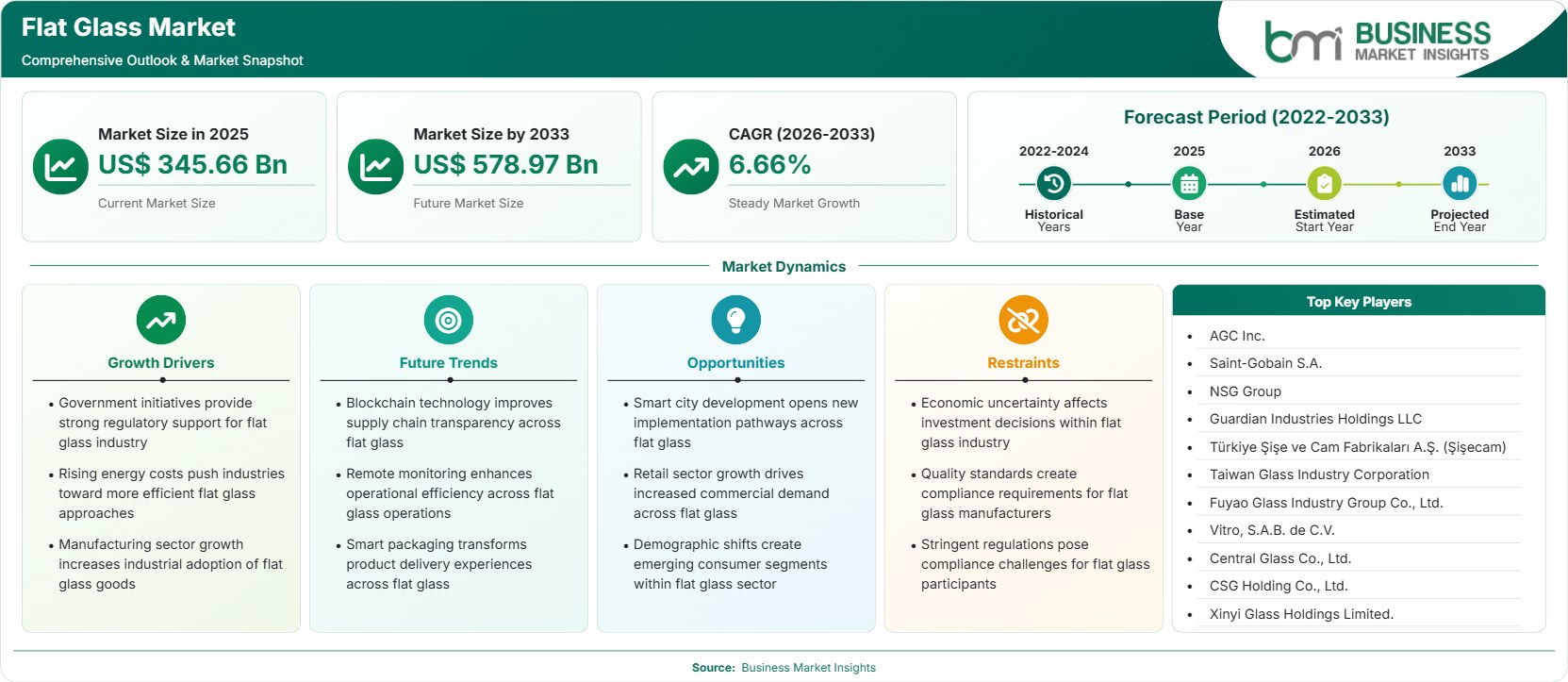
The Flat Glass Market size was valued at US$ 345.66 Billion in 2025 and is projected to reach US$ 578.97 Billion by 2033, growing at a CAGR of 6.66% during 2026–2033, driven by sustainable construction, automotive glazing innovations, solar energy deployment, smart glass adoption, urban infrastructure expansion, and increasing investments in energy-efficient building materials worldwide.

Report Coverage
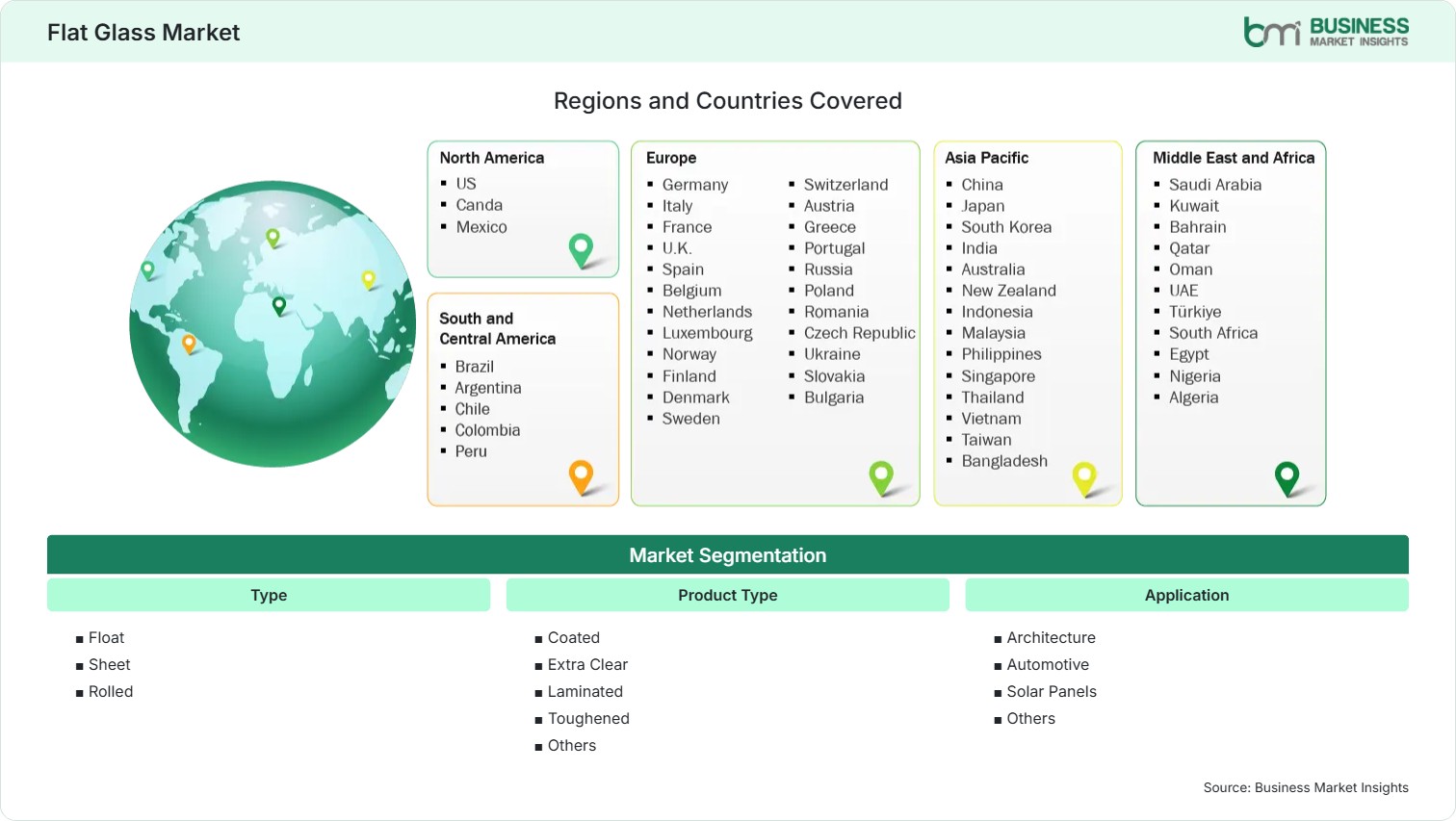
  • Type: Float, Sheet, Rolled
  • Product Type: Coated, Extra Clear, Laminated, Toughened, Others
  • Application: Architecture, Automotive, Solar Panels, Others
US$ 345.66 Bn Market size in 2025
US$ 578.97 Bn Market Size by 2033
6.66% CAGR, 2026 - 2033
2026-2033 Forecast Period

AI Overview

Flat Glass Market Summary

  • North America Region: North America holds a market share of 22%–25% in 2025, growing with a CAGR of 5.8%–6.3% during 2026–2033. Demand is supported by commercial renovation projects, advanced glazing technologies, green building standards, infrastructure modernization, residential construction recovery, and increasing adoption of energy-efficient architectural materials across industries. The US maintains regional leadership with strong construction activity and a projected CAGR of 5.9%–6.4% through 2033.
  • Fastest Growing Region: Asia Pacific holds a market share of 40%–43% in 2025, growing with a CAGR of 7.2%–7.8% during 2026–2033. Rapid urbanization, industrial expansion, renewable energy investments, automotive production growth, smart city initiatives, and increasing residential development continue supporting strong regional demand across key economies.
  • Leading Segment: Float glass accounts for 58%–62% share in 2025, advancing at a CAGR of 6.3%–6.8% during 2026–2033. High optical quality, scalable production, widespread architectural use, automotive applications, cost efficiency, and compatibility with coating technologies sustain leadership across major end-use industries.
  • High Growth Segment: Solar panels account for 14%–17% share in 2025, expanding at a CAGR of 8.4%–9.1% during 2026–2033. Accelerating renewable energy installations, supportive decarbonization targets, utility-scale photovoltaic investments, energy security initiatives, and technological improvements in solar modules drive segment expansion globally.
  • Key Market Opportunity: Increasing deployment of smart buildings, photovoltaic facades, electrochromic glazing systems, and energy-efficient infrastructure creates opportunities for manufacturers to develop advanced, high-performance products serving sustainability-focused construction and transportation sectors.
  • Major Market Players: AGC Inc.; Saint-Gobain S.A.; NSG Group; Guardian Industries Holdings LLC; Türkiye Şişe ve Cam Fabrikaları A.Ş. (Şişecam); Taiwan Glass Industry Corporation; Fuyao Glass Industry Group Co., Ltd.; Vitro, S.A.B. de C.V.; Central Glass Co., Ltd.; CSG Holding Co., Ltd.; Xinyi Glass Holdings Limited.
Strategic Insights

Flat Glass Market: Strategic Insights

Flat Glass Market Strategic Framework
FREE PDF
Request your free sample
Request free sample
Stakeholder View

Key Takeaways

  • The industry value chain is becoming increasingly integrated, with raw material suppliers, processors, coating specialists, and end-use manufacturers collaborating to improve operational efficiency and product performance.
  • Solar energy and advanced architectural glazing applications offer the strongest growth potential due to accelerating renewable energy deployment and stricter energy-efficiency requirements in modern buildings.
  • Product innovation is shifting toward smart glass, vacuum-insulated glazing, low-emissivity coatings, and lightweight automotive solutions designed to enhance energy performance and occupant comfort.
  • Asia Pacific presents the most compelling regional investment opportunity because of large-scale urbanization, industrialization, infrastructure spending, and rapidly expanding renewable energy installations.
  • Strategic acquisitions, joint ventures, and production capacity expansions are reshaping competition as manufacturers seek regional diversification and improved access to high-growth end-use markets.
  • Sustainability initiatives are increasingly influencing purchasing decisions, encouraging manufacturers to invest in low-carbon production processes and recyclable material technologies.
Geographic Outlook

Flat Glass Market Regional Highlights

North America Flat Glass Market

North America accounted for approximately 22%–25% market share in 2025 and is projected to expand at a CAGR of 5.8%–6.3% during 2026–2033. Demand remains supported by commercial building retrofits, residential renovation projects, and growing use of advanced glazing systems. Energy-efficiency regulations continue encouraging adoption of insulated and coated products. The region benefits from mature manufacturing infrastructure, strong investment in green buildings, and increasing solar deployment. The Flat Glass Market share remains significant due to sustained construction activity and technological adoption across major industries.

  • Federal and state-level energy-efficiency standards are encouraging replacement of conventional glazing with advanced low-emissivity and insulated solutions across residential and commercial construction projects.
  • Data center construction, logistics infrastructure development, and institutional building upgrades are creating consistent demand for high-performance architectural products throughout the region.
  • Automotive manufacturers continue integrating lightweight glazing technologies to improve fuel efficiency, safety performance, and electric vehicle range optimization strategies.
  • Increasing solar photovoltaic deployment across utility-scale and commercial installations supports demand for specialized products with enhanced durability and optical performance.
  • Sustainability targets are encouraging manufacturers to modernize production facilities, reduce emissions intensity, and improve recycling rates within regional supply chains.

US Flat Glass Market

The United States represents approximately 72%–76% of North American demand in 2025 and is expected to register a CAGR of 5.9%–6.4% through 2033. Strong non-residential construction activity, renewable energy investments, and modernization of aging infrastructure continue supporting market expansion. Advanced glazing adoption is increasing across healthcare, education, and commercial real estate projects. Government incentives supporting domestic manufacturing and clean energy deployment strengthen long-term prospects. Demand remains diversified across construction, transportation, and solar sectors, providing balanced growth opportunities.

  • Commercial office modernization projects increasingly incorporate energy-efficient facades and smart glazing technologies to reduce operating costs and improve sustainability performance.
  • Utility-scale solar projects continue expanding across multiple states, creating substantial demand for specialized photovoltaic glass products and related technologies.
  • Automotive production investments support consumption of laminated, tempered, and coated products designed for enhanced safety and energy efficiency.
  • Infrastructure improvement initiatives stimulate demand for durable materials in transportation hubs, public facilities, and institutional construction projects.

Europe Flat Glass Market

Europe accounted for approximately 24%–27% Flat Glass Market share in 2025 and is forecast to grow at a CAGR of 5.7%–6.2% during 2026–2033. Decarbonization initiatives, stringent energy-performance standards, and renovation programs continue driving demand across residential and commercial sectors. Germany remains the leading regional market, while Eastern European countries demonstrate stronger growth momentum. Manufacturers are investing in low-carbon production technologies and recycled content utilization. Architectural applications dominate consumption, supported by policy frameworks promoting energy-efficient building upgrades and sustainable urban development.

  • The European Green Deal and regional efficiency regulations encourage adoption of advanced glazing solutions capable of reducing building energy consumption.
  • Germany leads regional demand through extensive industrial capacity, advanced construction activity, and strong automotive manufacturing presence.
  • Poland and Romania represent high-growth markets supported by infrastructure investments, industrial development, and increasing commercial construction activity.
  • Automotive electrification trends continue creating demand for lightweight and high-performance products across vehicle manufacturing applications.
  • Growing emphasis on circular economy principles encourages greater use of recycled materials and environmentally responsible production methods.

Asia Pacific Flat Glass Market

Asia Pacific accounted for approximately 40%–43% Flat Glass Market share in 2025 and is anticipated to register the fastest expansion with a CAGR of 7.2%–7.8% during 2026–2033. Rapid urbanization, infrastructure development, expanding automotive production, and accelerating renewable energy investments continue strengthening regional demand. China remains the dominant consumer and producer, while India and Southeast Asian economies generate substantial incremental opportunities. Manufacturing capacity additions and government-supported construction programs support long-term expansion. Regional leadership is reinforced by integrated supply chains, competitive production costs, and rising adoption of advanced glazing technologies.

  • China maintains regional leadership through large-scale construction projects, automotive manufacturing output, solar module production, and substantial investments in advanced glass processing technologies.
  • India represents one of the fastest-growing national markets, supported by housing initiatives, industrial corridors, commercial developments, and renewable energy infrastructure expansion.
  • Southeast Asian economies continue attracting manufacturing investments that stimulate demand for architectural and industrial glazing solutions across diverse applications.
  • Rising electric vehicle production encourages adoption of lightweight and high-performance products that improve efficiency, safety, and passenger comfort.
  • Solar energy deployment remains a major growth catalyst as governments prioritize renewable electricity generation and energy security objectives.

Rest of World Flat Glass Market

Rest of World accounted for approximately 10%–13% Flat Glass Market share in 2025 and is projected to expand at a CAGR of 6.4%–7.0% through 2033. South and Central America benefit from growing residential construction and infrastructure modernization projects. Meanwhile, Middle East and African markets gain momentum from urban development programs, tourism investments, and renewable energy initiatives. Industrial diversification efforts and increasing construction activity continue creating opportunities for suppliers seeking geographic expansion beyond mature markets.

Brazil remains the leading market in South and Central America, while Saudi Arabia and the United Arab Emirates drive demand across the Middle East. Infrastructure development and energy diversification strategies support long-term growth prospects.

  • Brazil benefits from commercial construction recovery, industrial investment, and increasing demand for energy-efficient building materials across major urban centers.
  • Mexico strengthens regional consumption through automotive manufacturing expansion and growing integration with North American industrial supply chains.
  • Saudi Arabia's Vision 2030 projects generate substantial demand for architectural products used in smart cities and infrastructure developments.
  • The United Arab Emirates continues investing in tourism, commercial real estate, and sustainable construction projects requiring advanced glazing technologies.
  • Utility-scale renewable energy projects across multiple emerging economies create opportunities for specialized solar glass manufacturers.
Global Market Geography
FREE PDF
Request your free sample
Request free sample
Segment Analysis

Flat Glass Market Segmentation

Type

The Type segment remains fundamental to industry structure, with float products accounting for 58%–62% market share in 2025 and advancing at a CAGR of 6.3%–6.8% through 2033. Demand is supported by architectural, automotive, and solar applications requiring optical clarity and processing flexibility. The broad Flat Glass Market scope continues expanding as manufacturers develop advanced coatings and value-added processing technologies.

  • Float: Dominates consumption because of superior surface quality, scalability, processing compatibility, and widespread use across commercial buildings, residential construction, transportation, and photovoltaic applications.
  • Sheet: Maintains relevance in cost-sensitive projects and traditional applications where basic transparency requirements and affordability remain more important than advanced performance characteristics.
  • Rolled: Supports decorative, patterned, and specialty applications requiring textured surfaces, privacy features, and distinctive architectural aesthetics across residential and commercial environments.

Product Type

Product innovation continues reshaping demand patterns, with coated products holding 29%–33% Flat Glass Market share in 2025 and recording a CAGR of 6.8%–7.3% through 2033. Energy efficiency requirements, sustainability goals, and performance-driven specifications encourage adoption of advanced glazing solutions. Manufacturers are increasingly focusing on value-added products that enhance thermal insulation, solar control, and occupant comfort.

  • Coated: Experiences strong adoption due to energy-saving capabilities, improved thermal performance, solar control benefits, and compliance with modern building efficiency regulations.
  • Extra Clear: Gains traction in premium architectural, display, and solar applications requiring enhanced transparency, aesthetics, and light transmission characteristics.
  • Laminated: Benefits from increasing safety standards, security requirements, noise reduction needs, and growing use in transportation and commercial infrastructure projects.
  • Toughened: Remains essential for applications requiring impact resistance, durability, and compliance with stringent building and automotive safety requirements.

Application

Architecture represents the leading application segment, accounting for 47%–51% market share in 2025 while expanding at a CAGR of 6.2%–6.7% through 2033. Urban development, commercial construction activity, and sustainability requirements continue supporting demand. Emerging Flat Glass Market trends indicate growing adoption of smart facades, energy-efficient glazing, and multifunctional building envelope solutions across developed and emerging economies.

  • Architecture: Benefits from urbanization, green building standards, renovation activity, and demand for energy-efficient structures designed to reduce lifecycle operating costs.
  • Automotive: Supports consistent consumption through vehicle production, electrification initiatives, safety requirements, and increasing use of advanced glazing technologies.
  • Solar Panels: Experiences rapid expansion as renewable energy deployment accelerates globally, creating demand for high-transparency and durable photovoltaic glass solutions.
Market Forces

Flat Glass Market Dynamics

Key Market Drivers

Expansion of Sustainable Construction and Green Buildings

Global construction sectors increasingly prioritize energy efficiency, carbon reduction, and environmental certification standards. Programs supporting net-zero buildings encourage adoption of advanced glazing technologies capable of improving thermal insulation and daylight management. The International Energy Agency identifies buildings as a major contributor to global energy consumption, strengthening demand for efficient envelope materials. Growing investments in commercial retrofits and sustainable residential projects support long-term consumption. Regulatory frameworks across North America, Europe, and Asia increasingly require higher-performance building materials. These developments continue supporting Flat Glass Market growth through expanding adoption of coated, insulated, and low-emissivity solutions across diverse architectural applications worldwide.

Growth of Solar Energy Installations Worldwide

Renewable energy deployment continues accelerating as governments pursue energy security and decarbonization objectives. Solar photovoltaic capacity additions require large volumes of specialized products with high transparency and durability characteristics. Projects on a utility scale, generation facilities based on the distributed generation concept, and investments in renewable energy for industrial use will boost demand. Countries with large economies such as China, India, the United States, and European nations have been continuously increasing their capacities in solar power generation with the help of favorable incentives and infrastructural development projects. Suppliers in the market are coming up with products that perform best for photovoltaics.

Automotive Electrification and Advanced Vehicle Design

Electric vehicle production is reshaping material requirements across transportation industries. Manufacturers are employing lightweight, high-quality, and technologically sophisticated glazing systems to optimize efficiency and improve passenger experience. Panoramic roofs, head-up displays, noise-reducing solutions, and other innovative glazing systems contribute to an increase in value content per car. The desire of consumers for luxurious features makes adoption of such products even more probable. Investment in automobiles continues to be substantial, notwithstanding changes in the economic climate, especially in Asia Pacific and North America regions. Such trends spur innovation among glazing system manufacturers who offer differentiated products.

Key Market Opportunities

Smart Glass and Dynamic Glazing Technologies

The incorporation of intelligent building systems brings a lot of potential for electrochromic, thermochromic and digitally controlled glass products. The building owners are looking for options that are able to save energy and make people comfortable. There is the capacity for the windows to provide automation in the management of light, sun and climate. With the increasing need for sustainability certifications by commercial building owners, their use will rise. Long-term Flat Glass Market Forecasts indicate that dynamic glazing solutions could become a key value-added category across premium construction, healthcare, hospitality, and institutional infrastructure projects.

Rapid Urban Infrastructure Development in Emerging Markets

Emerging economies continue investing heavily in transportation networks, commercial districts, residential communities, and industrial facilities. Population growth and urban migration are creating sustained requirements for modern construction materials. Governments of Asia, Middle Eastern countries and Africa are undertaking major development projects aimed at increasing economic competitiveness. These developments facilitate the demand for architectural glazing materials that can improve both aesthetics and efficiency. Global firms have started extending their reach in the region to capitalize on these urbanization trends. The pipeline of long-term infrastructure projects is an encouraging ground for capacity additions and technology transfers.

Increasing Adoption of Building-Integrated Photovoltaics

Building-integrated photovoltaic systems combine renewable energy generation with architectural functionality, creating an attractive growth avenue. The development of facade-integrated solar power systems is becoming more common as a way to ensure maximum energy efficiency and utilization of building surface area. Transparency, appearance, and efficiency advancements enhance commercial potential. The drive towards sustainability and carbon footprint reductions motivates adoption. Regulations that offer incentives for renewables in construction boost attractiveness. As cities seek to achieve their net-zero goals, facade-integrated photovoltaics will be one of the sources of demand for innovative companies.

Market Restraints and Challenges

Energy-Intensive Manufacturing and Cost Volatility

Factor: Production requires substantial energy inputs, including natural gas and electricity, for melting and processing operations. Impact: The instability of energy prices impacts the economics of manufacturing and its margins. Manufacturers working in areas that have high electricity prices find themselves under pressure when compared to manufacturers who manufacture in locations that offer cheaper electricity rates. There are additional policies that could raise the cost of compliance. However, even though there are ways to minimize risk from energy price instability, it is still an issue that needs to be dealt with.

Raw Material Supply Constraints and Logistics Risks

Factor: Manufacturing depends on reliable access to silica sand, soda ash, limestone, and specialized processing materials. Impact: Factors such as disruptions in supplies, transportation difficulties, and geopolitical instabilities may have an impact on production timelines and result in additional expenses when procuring goods. The global supply chain is exposed to such factors as trade barriers, difficulties in transportation, and resource limitations in some regions. In order to reduce the impact of these factors, producers tend to diversify their suppliers. Nevertheless, long-term disruptions will affect capacity utilization and deadlines.

Company Analysis

Competitive Landscape

The competitive environment remains characterized by investments in low-carbon production, advanced coating technologies, solar glass innovation, and capacity modernization. The Flat Glass Market analysis indicates that leading manufacturers are prioritizing sustainability, value-added products, and regional expansion to strengthen market positioning.

Company Name

Overview

Products and Services Relevant to this Market

AGC Inc.

Global materials manufacturer with extensive operations across architectural, automotive, and specialty glass markets, supported by strong R&D capabilities.

Float glass, coated glass, automotive glazing, solar glass products, energy-efficient architectural solutions, and advanced processing services.

Saint-Gobain

Leading building materials company focused on sustainable construction solutions and innovative glass technologies for global markets.

Flat glass, low-emissivity glazing, laminated products, smart glass solutions, insulation-focused glazing systems, and façade applications.

NSG Group

International glass manufacturer serving architectural, automotive, and technical sectors through integrated production and processing capabilities.

Float glass, automotive glass, coated products, solar-control glazing, safety glass, and specialty processing solutions.

Guardian Industries

Major producer of high-performance glass products with strong presence in commercial and residential construction applications.

Float glass, coated glass, architectural glazing, solar-control solutions, and energy-efficient building products.

Şişecam Group

Diversified glass producer with extensive manufacturing footprint and growing investments in sustainable production technologies.

Flat glass, architectural products, automotive glazing, coated solutions, laminated products, and processed glass systems.

Taiwan Glass Industry Corporation

Established manufacturer serving construction, industrial, and transportation sectors across Asia and international markets.

Float glass, construction glass, decorative products, industrial glazing, and specialty processed solutions.

Fuyao Glass Industry Group Co., Ltd.

Leading automotive glass supplier with expanding capabilities across advanced vehicle glazing technologies.

Automotive glass, laminated products, tempered solutions, specialty glazing, and integrated processing services.

Vitro, S.A.B. de C.V.

Major North American producer serving architectural and industrial customers through extensive manufacturing infrastructure.

Architectural glass, coated products, energy-efficient glazing, laminated solutions, and commercial construction applications.

Central Glass Co., Ltd.

Japanese manufacturer supplying construction, automotive, and specialty glass markets with advanced technology capabilities.

Float glass, processed products, architectural glazing, automotive applications, and specialty industrial solutions.

CSG Holding Co., Ltd.

Integrated producer with significant presence in construction and renewable energy supply chains.

Float glass, solar glass, coated products, architectural solutions, and photovoltaic industry materials.

Other Key Players

Regional and specialized manufacturers contribute to innovation, processing services, and localized supply capabilities.

Specialty glazing, decorative products, customized processing, and niche application solutions.

Trust & Transparency

Research Methodology

The market analysis combines proprietary research with secondary data from government agencies, company disclosures, regulatory filings, industry databases and expert interviews. Market estimates are validated through data triangulation, cross-market benchmarking and analyst review.

View Full Research Methodology

Questions Answered

Frequently Asked Questions

Which emerging technology areas offer future revenue opportunities?

Smart glass, electrochromic glazing, vacuum-insulated products, photovoltaic-integrated facades, and advanced solar applications are expected to create significant value-generation opportunities through the forecast period.

What insights does a Flat Glass Market Report provide for investors?

A Flat Glass Market Report helps investors evaluate demand patterns, regional opportunities, technology shifts, competitive positioning, regulatory impacts, and long-term growth potential across major end-use sectors.

How does sustainability influence purchasing decisions in this industry?

Customers increasingly prioritize products with lower embodied carbon, improved energy efficiency, recyclable content, and compliance with green building certifications, encouraging manufacturers to invest in sustainable production technologies.

Which application segment generates the highest revenue contribution?

Architecture remains the largest application area because commercial buildings, residential developments, institutional projects, and renovation activities collectively account for the majority of global consumption volumes.

What factors are accelerating demand for advanced flat glass products?

Demand is increasing due to stricter building energy standards, growth in renewable energy installations, smart building adoption, and expanding automotive applications requiring lightweight and high-performance glazing solutions.

Access the Full Flat Glass Market Report

Get segment-level forecasts, regional estimates, competitive benchmarking, company profiles and downloadable Excel datasets.

Access the full Flat Glass Market Report
350 pages PDF & Excel | 2026-08-28