
EPA & DHA Market Outlook: Size, Share, Trends, Growth Analysis, Competitive Landscape & Forecast, 2026-2033

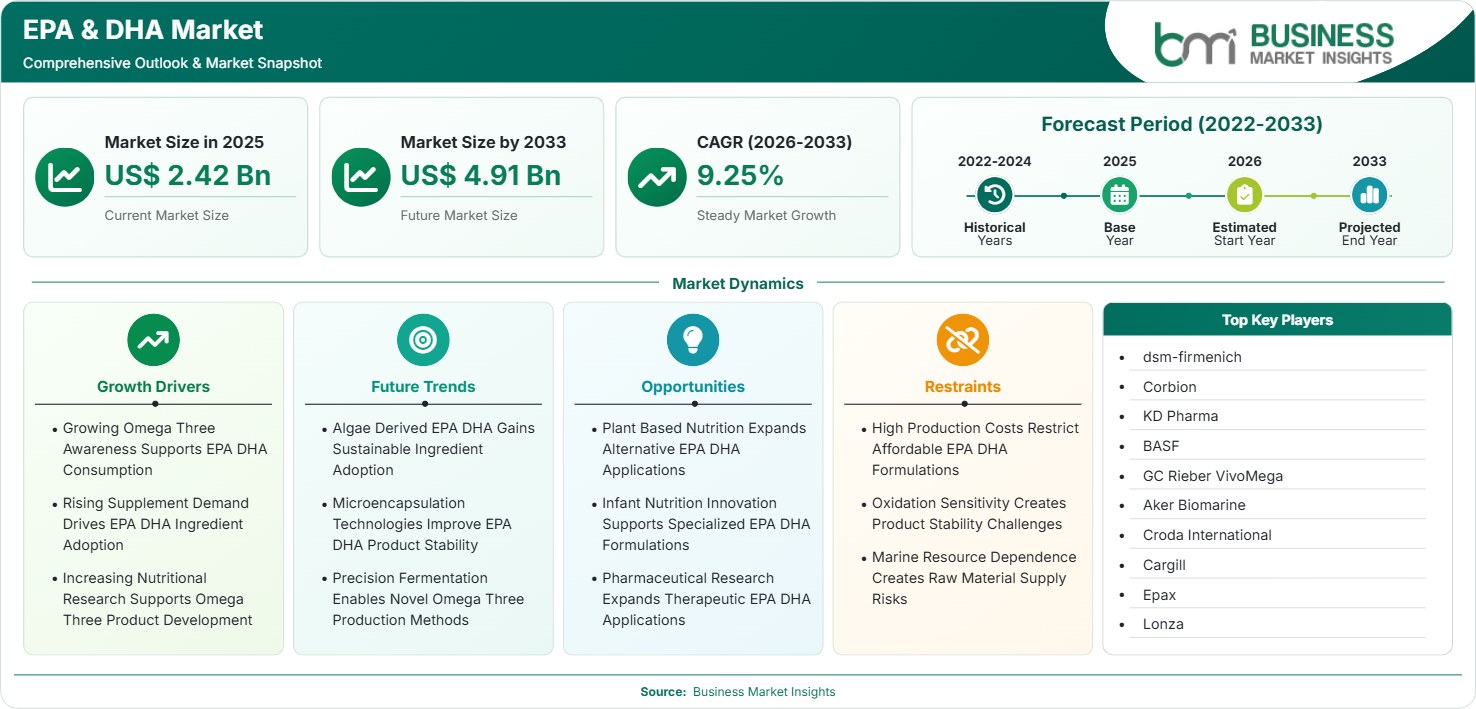
The EPA & DHA Market size was valued at US$ 2.42 billion in 2025 and is projected to reach US$ 4.91 billion by 2033, growing at a CAGR of 9.25% during 2026–2033. Rising omega-3 consumption, expanding nutritional awareness, increasing preventive healthcare adoption, and innovation in sustainable ingredient sourcing are creating new growth opportunities across food, pharmaceutical, and supplement industries.

Report Coverage
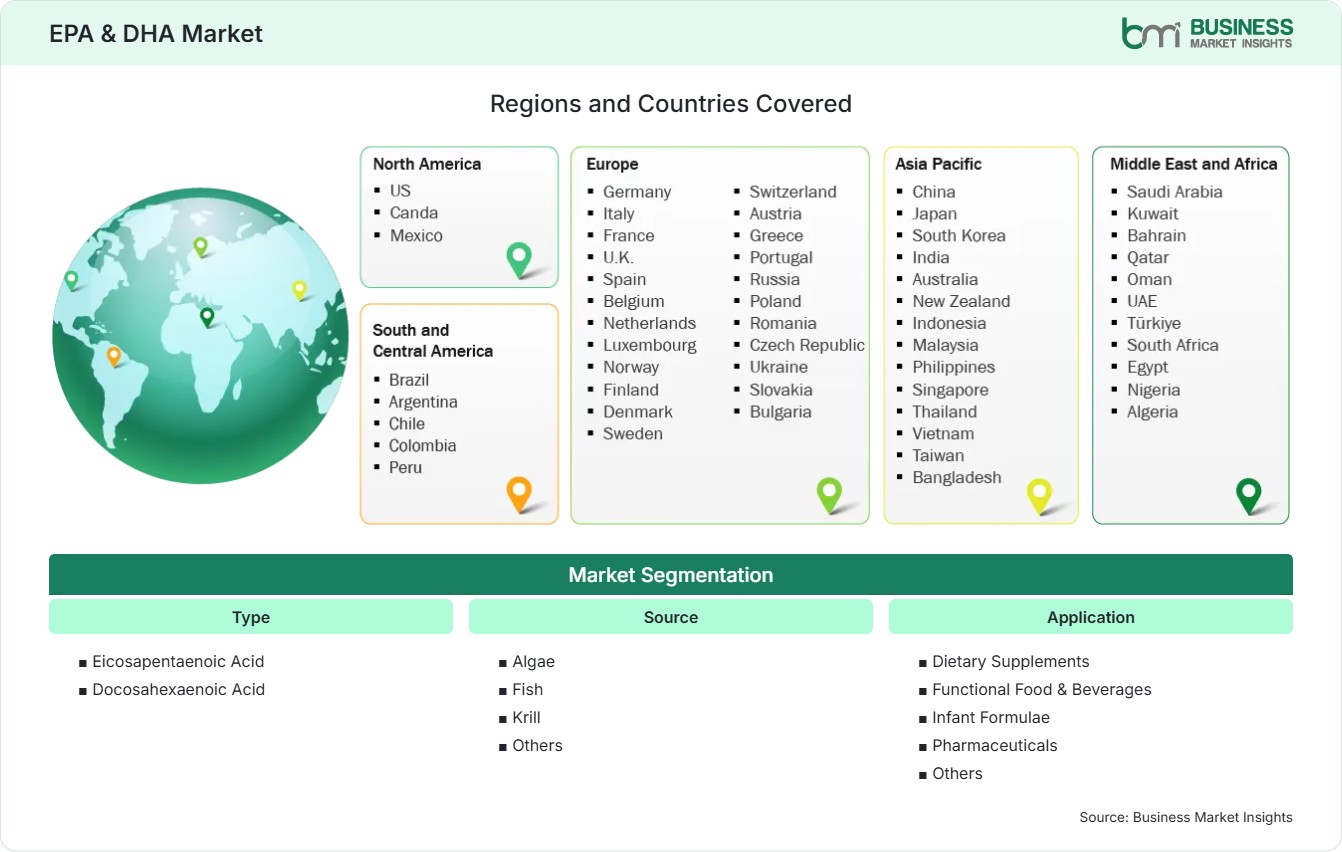
  • Type: Eicosapentaenoic Acid, Docosahexaenoic Acid
  • Source: Algae, Fish, Krill, Others
  • Application: Dietary Supplements, Functional Food & Beverages, Infant Formulae, Pharmaceuticals, Others
US$ 2.42 Bn Market size in 2025
US$ 4.91 Bn Market Size by 2033
9.25% CAGR, 2026 - 2033
2026-2033 Forecast Period

01 AI Overview

EPA & DHA Market Summary

  • North America Region: North America maintains a leading position with a share ranging between 36%–39% in 2025 and is projected to expand at a CAGR of 8.8%–9.4% through 2033. Strong supplement consumption, preventive nutrition trends, and pharmaceutical applications continue supporting market expansion. The U.S. EPA & DHA Market benefits from established wellness industries, clinical nutrition adoption, and advanced ingredient processing capabilities, supporting a CAGR of 8.9%–9.5%.
  • Fastest Growing Region: Asia Pacific represents a rapidly expanding region with a share of 25%–28% in 2025 and is expected to register a CAGR of 10.2%–10.8%. Rising health awareness, increasing disposable income, and growing functional food adoption continue creating opportunities for omega-3 ingredient suppliers.
  • Leading Segment: Docosahexaenoic Acid (DHA) leads with a share of 42%–45% in 2025 and is projected to grow at a CAGR of 9.1%–9.7%. Strong demand from infant nutrition, cognitive health supplements, and specialized nutritional formulations supports segment leadership.
  • High Growth Segment: Algae-based sources demonstrate strong expansion with a share of 18%–21% in 2025 and a CAGR of 11.0%–11.6%. Sustainability preferences, vegetarian nutrition trends, and supply diversification initiatives are encouraging adoption.
  • Key Market Opportunity: Sustainable omega-3 production, advanced extraction technologies, and increasing demand for clean-label nutrition products are enabling companies to develop differentiated EPA and DHA solutions across emerging consumer and healthcare applications.
  • Major Market Players: dsm-firmenich, Corbion, KD Pharma, BASF SE, GC Rieber VivoMega, Aker BioMarine ASA, Croda International Plc, Cargill Incorporated, Epax Norway AS, and Lonza Group Ltd.
02 Strategic Insights

EPA & DHA Market: Strategic Insights

EPA & DHA Market Strategic Framework
FREE PDF
Request your free sample
Request free sample
03 Stakeholder View

Key Takeaways

  • The industry value chain is evolving through integration between raw material suppliers, extraction technology providers, formulation companies, and branded nutrition manufacturers, improving supply reliability and product differentiation.
  • Specialized formulations targeting cardiovascular health, cognitive wellness, maternal nutrition, and sports nutrition are creating attractive opportunities beyond traditional supplement applications.
  • Innovation is increasingly focused on sustainable sourcing, algae-derived ingredients, improved purification methods, and enhanced stability technologies to meet changing consumer expectations.
  • Asia Pacific offers significant expansion potential as urban populations, nutritional awareness, and functional food adoption continue increasing across developing economies.
  • Strategic partnerships, acquisitions, and capacity expansions are becoming important competitive strategies as companies seek stronger sourcing networks and broader application capabilities.
  • Growing collaboration between biotechnology companies and nutrition specialists is accelerating development of alternative omega-3 solutions with improved environmental and commercial advantages.
04 Geographic Outlook

EPA & DHA Market Regional Highlights

North America EPA & DHA Market

North America accounted for approximately 36%–39% of global revenue in 2025 and is projected to grow at a CAGR of 8.8%–9.4% through 2033. The region maintains strong demand due to established dietary supplement markets, healthcare awareness, functional nutrition adoption, and increasing consumer preference for science-backed wellness ingredients across multiple applications.

  • The United States remains the largest contributor due to widespread supplement consumption, advanced nutrition research, and strong presence of ingredient manufacturers supporting diverse omega-3 applications.
  • Canada demonstrates steady demand growth through increasing health-conscious consumers, functional food adoption, and expanding availability of premium nutritional products.
  • Pharmaceutical companies continue exploring high-purity EPA and DHA ingredients for specialized therapeutic formulations targeting cardiovascular and metabolic health applications.
  • Sustainable sourcing initiatives are encouraging companies to invest in algae-based alternatives and environmentally responsible omega-3 production technologies.

US EPA & DHA Market

The United States represents the dominant country-level contributor within North America, supported by mature supplement industries, advanced healthcare infrastructure, and strong consumer demand for preventive nutrition products. The country demonstrates a CAGR of 8.9%–9.5% through 2033, supported by innovation in functional foods, pharmaceutical formulations, and premium nutritional supplements.

  • Growing consumer preference for wellness products continues supporting expansion of omega-3 supplements across retail, e-commerce, and healthcare channels.
  • Pharmaceutical research activities are increasing demand for purified EPA and DHA ingredients in specialized healthcare applications.
  • Manufacturers are investing in sustainable production methods to address environmental concerns associated with traditional marine sourcing.

Europe EPA & DHA Market

Europe represented approximately 27%–30% of global revenue during 2025 and is expected to expand at a CAGR of 8.6%–9.2% through 2033. Germany leads regional demand through strong nutritional supplement consumption, while the United Kingdom demonstrates notable growth through functional food innovation and healthcare-focused nutrition adoption.

  • Germany maintains leadership due to advanced food processing capabilities, established supplement markets, and strong demand for premium nutritional ingredients.
  • The United Kingdom experiences faster adoption through increasing interest in preventive healthcare, functional beverages, and personalized nutrition products.
  • European sustainability regulations encourage companies to explore traceable sourcing and environmentally responsible omega-3 production methods.
  • Research institutions and healthcare organizations continue supporting nutritional science initiatives involving EPA and DHA benefits.

Asia Pacific EPA & DHA Market

Asia Pacific accounted for approximately 25%–28% of global revenue in 2025 and is expected to register the fastest CAGR of 10.2%–10.8% through 2033. China leads regional consumption, while India demonstrates rapid growth due to expanding nutritional awareness, rising income levels, and increasing adoption of health-focused products.

  • China remains a major contributor through growing infant nutrition demand, supplement consumption, and expanding functional food manufacturing capabilities.
  • India experiences strong growth as consumers increasingly adopt preventive healthcare products and nutritional supplements across urban markets.
  • Japan and South Korea continue supporting premium omega-3 demand through advanced healthcare systems and aging population nutrition requirements.
  • Regional manufacturers are increasing investments in sustainable ingredient production to reduce dependence on traditional marine sources.

Rest of World EPA & DHA Market

Rest of World regions contribute approximately 8%–11% of global revenue in 2025 and are projected to grow at a CAGR of 9.0%–9.6% through 2033. Latin America shows increasing demand through health awareness, while Middle East and Africa markets benefit from expanding nutrition programs and improving retail accessibility.

  • Brazil represents a key Latin American market with growing supplement consumption and increasing availability of functional nutrition products.
  • Middle Eastern countries are expanding adoption through healthcare modernization initiatives and rising consumer interest in wellness solutions.
  • Africa presents emerging opportunities as nutritional programs and healthcare investments improve access to omega-3 enriched products.
  • International partnerships are helping regional markets access advanced formulation technologies and sustainable ingredient solutions.
Global Market Geography
FREE PDF
Request your free sample
Request free sample
05 Segment Analysis

EPA & DHA Market Segmentation

Type

The Type segment defines the core ingredient structure of the industry, with Docosahexaenoic Acid (DHA) accounting for 42%–45% EPA & DHA Market share in 2025 and expanding at a CAGR of 9.1%–9.7% through 2033. Increasing demand for cognitive health, infant nutrition, and specialized dietary formulations continues strengthening DHA adoption across global nutrition markets.

  • Eicosapentaenoic Acid (EPA): Supports cardiovascular wellness, inflammation management, and specialized nutritional formulations. Demand continues increasing through healthcare-focused supplements and pharmaceutical applications requiring purified omega-3 ingredients.
  • Docosahexaenoic Acid (DHA): Widely utilized in infant nutrition, brain health supplements, and functional food products. Growing consumer awareness regarding cognitive development continues supporting broader DHA incorporation.

Source

The Source segment reflects changing supply preferences, with fish-derived ingredients maintaining a leading position due to established production networks, while algae-based sources demonstrate faster adoption. The EPA & DHA Market scope continues expanding as manufacturers invest in sustainable extraction technologies, traceable sourcing systems, and alternative production methods addressing evolving consumer preferences.

  • Algae: Gains traction among vegetarian consumers and sustainability-focused brands. Algae-based omega-3 production provides alternative sourcing options while reducing dependence on marine resources.
  • Fish: Remains a major source due to established supply chains, high availability, and extensive application across dietary supplements, functional foods, and pharmaceutical formulations.
  • Krill: Supports premium omega-3 products through enhanced bioavailability positioning and specialized formulations targeting health-conscious consumers seeking differentiated nutritional benefits.
  • Others: Includes emerging sources and specialized extraction approaches supporting innovation in omega-3 production and application development across niche nutrition markets.

Application

The Application segment demonstrates broad adoption across nutrition and healthcare categories, with Dietary Supplements representing the leading application area with 38%–41% share in 2025 and a CAGR of 8.9%–9.5% through 2033. Increasing wellness awareness and preventive nutrition adoption continue driving product innovation across multiple end-user categories.

  • Dietary Supplements: Remains the primary application due to widespread consumer adoption of omega-3 capsules, oils, and specialized formulations targeting general wellness and cardiovascular support.
  • Functional Food & Beverages: Expanding incorporation of EPA and DHA into fortified foods, beverages, and wellness products as consumers seek convenient nutrition solutions.
  • Infant Formulae: Continues gaining importance through increasing focus on early-life nutrition, cognitive development support, and premium infant feeding solutions.
  • Pharmaceuticals: Utilizes high-purity omega-3 ingredients in therapeutic applications requiring controlled formulations and clinically supported nutritional interventions.
  • Others: Includes sports nutrition, animal nutrition, and specialized wellness applications creating additional demand opportunities across emerging markets.
06 Market Forces

EPA & DHA Market Dynamics

Key Market Drivers

Growing Omega Three Awareness Supports EPA DHA Consumption

The increase in consumer awareness of the benefits of omega-3 continues to encourage the use of EPA and DHA products. Consumers are increasingly looking for nutritional products that promote heart and brain health and support prevention. The educational process, health advice, and the availability of health information through digital channels are increasing consumers' understanding of products. Consumers have started taking such products due to manufacturers' introduction of formulations, premium ingredients, and convenient packaging. The EPA & DHA Market trend is also influenced by the increasing demand for scientifically backed nutrition products, which align with shifting lifestyles.

Rising Supplement Demand Drives EPA DHA Ingredient Adoption

Increased use of dietary supplements is prompting more manufacturers to incorporate EPA and DHA as ingredients into their capsules, soft gels, powder formulations, and other nutritional supplements. The aging population, growing awareness of good health, and the availability of wellness products via online retail portals are driving up demand. Manufacturers are investing in developing improved methods for product purification and formulation to enhance quality, address sensory issues, and improve consumer acceptance. Personalized nutrition is also an area that presents potential for customized omega-3 solutions.

Increasing Nutritional Research Supports Omega Three Product Development

Further scientific studies on the uses of omega-3s are promoting innovation in healthcare, nutrition, and the pharmaceutical industry. Clinical research in heart health, brain development, pregnancy nutrition, and metabolism is providing the basis for the further development of new products. Ingredient companies are collaborating with research firms to optimize product formulation and demonstrate the benefits of their applications. Regulatory approvals and guidelines for omega-3 nutrition across various products have provided significant confidence to the market. The growing investments in clinical research are also helping firms create their different products.

Key Market Opportunities

Plant Based Nutrition Expands Alternative EPA DHA Applications

With the rising trend in eco-friendly and plant-based nutritional solutions, there is an emerging opportunity for EPA and DHA produced from algal sources. With consumers demanding vegetarian, vegan, and eco-friendly products, companies are forced to seek diverse approaches to sourcing their ingredients. Innovations in fermentation technology, algal cultivation techniques, and manufacturing processes are increasing the commercialization of these products. The opportunity exists in supplements, functional drinks, and niche nutrition products. Firms that offer transparent sourcing and sustainability solutions are well-positioned to benefit from such trends.

Infant Nutrition Innovation Supports Specialized EPA DHA Formulations

The innovations in infant nutrition are driving demand for EPA and DHA formulations tailored to meet nutritional needs during infancy. Manufacturers are emphasizing the need to make ingredients purer and more stable in infant formula products. An increasing awareness among parents about development nutrition has led to the use of high-quality products in both developed and emerging markets. The potential remains great for companies developing such products that meet the growing requirements for quality infant nutrition.

Pharmaceutical Research Expands Therapeutic EPA DHA Applications

Pharmaceutical research on the uses of omega-3s presents opportunities to utilize high-purity EPA and DHA components in therapeutics. Firms are developing tailored products that focus on treating cardiovascular, metabolic, and inflammation-related conditions. Increased funding for clinical studies, drug delivery systems, and pharmaceutical-grade components improves the potential for commercial success. Pharmaceutical firms capable of purifying ingredients will be able to capitalize on the growing demand for science-based nutritional solutions. Healthcare-oriented applications are expected to create new opportunities beyond conventional dietary supplements.

Market Restraints and Challenges

High Production Costs Restrict Affordable EPA DHA Formulations

Factor: Advanced extraction, purification, and quality control processes increase manufacturing expenses for premium EPA and DHA ingredients. Impact: Increased manufacturing costs pose challenges to affordability and access for price-conscious consumers. Firms need to increase efficiency and adopt better technologies to remain profitable while broadening their customer base. The issue is especially pertinent to sustainable substitutes and highly purified preparations that require additional stages in the processing chain.

Oxidation Sensitivity Creates Product Stability Challenges

Factor: EPA and DHA ingredients are highly susceptible to oxidation due to their chemical structure, requiring careful handling, packaging, and storage conditions. Impact: Stability challenges can affect product quality, shelf life, consumer acceptance, and manufacturing efficiency. Companies need advanced encapsulation technologies, improved packaging solutions, and strict quality management systems to minimize degradation risks. Maintaining ingredient stability remains essential for expanding applications across supplements, functional foods, and pharmaceutical formulations where consistent product performance is critical.

07 Company Analysis

Competitive Landscape

The competitive environment is shaped by ingredient innovation, sustainable sourcing strategies, production expansion, and increasing focus on application-specific formulations. The EPA & DHA Market analysis highlights that leading companies are strengthening capabilities through advanced extraction technologies, diversified supply networks, and partnerships across nutrition, pharmaceutical, and functional food industries to address evolving customer requirements.

Company Name

Overview

Products and Services relevant to this market

dsm-firmenich

Global nutrition and health company providing science-based ingredients and sustainable solutions for food, beverage, supplement, and healthcare applications.

EPA and DHA nutritional ingredients, omega-3 concentrates, customized nutrition solutions, formulation support, and sustainable marine and alternative sourcing technologies.

Corbion

Biotechnology-focused company developing sustainable ingredients and preservation solutions for nutrition and healthcare markets worldwide.

Algae-derived omega-3 ingredients, nutritional lipids, fermentation-based solutions, and specialized formulations supporting sustainable EPA and DHA applications.

KD Pharma

Specialty pharmaceutical and nutritional ingredient company focused on high-quality omega-3 production and advanced lipid technologies.

Pharmaceutical-grade EPA and DHA concentrates, omega-3 formulations, lipid-based ingredients, and customized nutritional ingredient solutions.

BASF SE

Diversified chemical and nutrition company offering science-driven ingredients supporting human health and nutritional applications globally.

Omega-3 concentrates, EPA and DHA ingredients, nutritional solutions, quality testing services, and formulation expertise.

GC Rieber VivoMega

Norwegian omega-3 ingredient manufacturer specializing in high-concentration marine oils and customized nutritional solutions.

High-purity EPA and DHA concentrates, triglyceride omega-3 oils, customized blends, and sustainable marine-derived ingredients.

Aker BioMarine ASA

Marine biotechnology company specializing in krill-based ingredients and sustainable harvesting practices for nutrition markets.

Krill oil ingredients, omega-3 phospholipids, marine nutritional products, and specialized health ingredient solutions.

Croda International Plc

Specialty chemicals company providing high-performance ingredients for healthcare, nutrition, and consumer applications.

Omega-3 concentrates, pharmaceutical lipid ingredients, nutritional solutions, and advanced delivery technologies.

Cargill Incorporated

Global food and agricultural company providing ingredient solutions across nutrition, food, and healthcare industries.

Omega-3 oils, nutritional ingredients, customized formulations, supply chain solutions, and food application support.

Epax Norway AS

Omega-3 specialist producing high-concentration marine ingredients for pharmaceutical and nutritional applications.

EPA concentrates, DHA concentrates, omega-3 blends, purified oils, and specialty nutritional lipid solutions.

Lonza Group Ltd.

Healthcare manufacturing and life sciences company supporting pharmaceutical, nutrition, and biotechnology industries.

Nutritional ingredient solutions, delivery technologies, formulation services, and healthcare manufacturing capabilities.

10 Trust & Transparency

Research Methodology

The market analysis combines proprietary research with secondary data from government agencies, company disclosures, regulatory filings, industry databases and expert interviews. Market estimates are validated through data triangulation, cross-market benchmarking and analyst review.

View Full Research Methodology

11 Questions Answered

Frequently Asked Questions

What future opportunities are emerging in EPA and DHA applications?

According to EPA & DHA Market forecast, future opportunities include sustainable algae-based ingredients, pharmaceutical-grade formulations, infant nutrition innovations, personalized nutrition products, and expanded functional food applications supported by changing consumer health preferences.

What does this EPA & DHA Market report provide for industry participants?

This report provides insights into competitive positioning, segmentation trends, regional opportunities, technology developments, application expansion areas, and strategic factors influencing future business planning.

How are companies improving EPA and DHA product stability?

Manufacturers are adopting advanced encapsulation methods, improved packaging technologies, controlled processing environments, and quality management systems to reduce oxidation risks and maintain ingredient performance across supplements and food applications.

Which source type is gaining higher attention in omega-3 production?

Algae-based production is gaining increased attention because it provides a sustainable alternative to traditional marine sourcing. Growing demand for plant-based nutrition and environmentally responsible ingredients is encouraging investment in algae cultivation and extraction technologies.

What factors are increasing demand for EPA and DHA ingredients across industries?

Growing consumer focus on preventive healthcare, increasing dietary supplement adoption, expanding functional food innovation, and rising interest in nutritional ingredients with scientific support are driving broader EPA and DHA integration across global markets.

Access the Full EPA & DHA Market Report

Get segment-level forecasts, regional estimates, competitive benchmarking, company profiles and downloadable Excel datasets.

Access the full EPA & DHA Market Report
350 pages PDF & Excel | 2026-08-07