Cream Market Regional Highlights
North America Cream Market
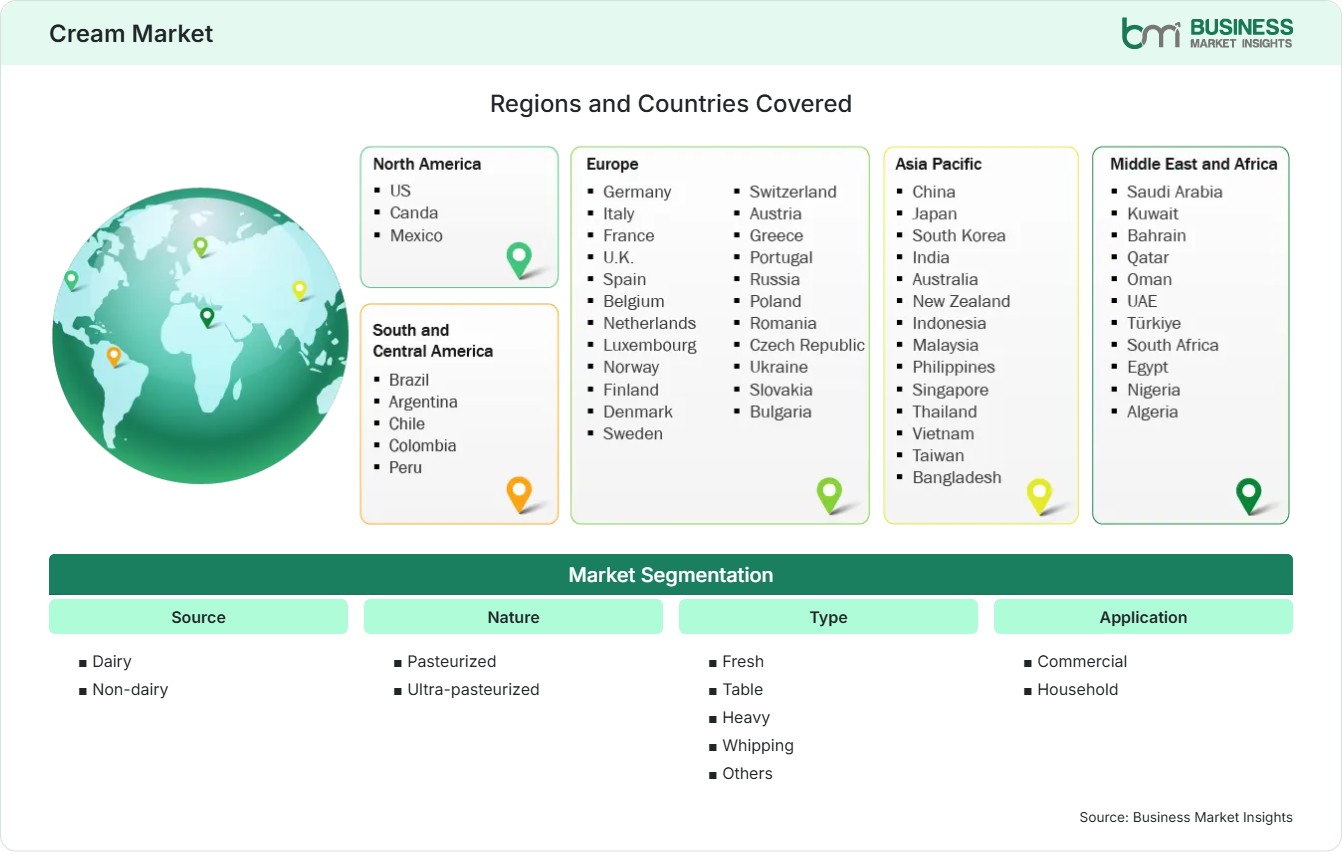
North America holds a 28%–32% share in 2025 and is projected to expand at a 6.80%–7.40% CAGR through 2033. Mature dairy consumption, premium product positioning, established foodservice infrastructure, and broad retail availability support regional demand. The United States remains the largest contributor, while Canada provides additional opportunities through specialty dairy and alternative formulations.
- Premium dairy positioning continues supporting value growth as consumers increasingly differentiate products by quality, processing attributes, ingredient composition, and culinary performance across retail and foodservice channels.
- Foodservice demand remains an important consumption driver, with restaurants, bakeries, cafés, and institutional kitchens requiring consistent cream products for sauces, desserts, beverages, and prepared foods.
- Non-dairy alternatives are expanding shelf presence as manufacturers improve formulation quality and target consumers seeking plant-based or lactose-free choices without compromising texture and functional performance.
US Cream Market
The US holds a 20%–24% share of the global Cream Market in 2025 and is projected to grow at a 6.90%–7.50% CAGR through 2033. Demand benefits from established dairy consumption, extensive foodservice operations, strong bakery and confectionery production, and sophisticated retail distribution.
- Premium cream products benefit from strong consumer interest in higher-quality ingredients, specialized culinary applications, and differentiated product positioning across supermarkets, specialty stores, and foodservice establishments.
- Foodservice operators remain significant buyers, using cream across bakery, confectionery, sauces, desserts, beverages, and prepared meals, creating recurring demand for reliable commercial-grade products.
- Plant-based alternatives are expanding category competition as manufacturers target consumers seeking dairy substitutes, improved nutritional profiles, and products compatible with evolving dietary preferences.
Europe Cream Market
Europe represents a 26%–30% share in 2025 and is projected to grow at a 6.70%–7.30% CAGR through 2033. France and Germany remain leading markets, supported by established dairy industries and strong culinary traditions, while the United Kingdom and Italy offer attractive premium and specialty opportunities. France is estimated to expand at a 6.80%–7.40% CAGR, while Germany is projected at 6.60%–7.20%. Sustainability expectations, premiumization, and alternative formulations continue influencing product development and channel strategies.
- France remains a leading market because established dairy consumption, culinary applications, and sophisticated foodservice channels create consistent demand for fresh, table, heavy, and whipping cream products.
- Germany combines a mature dairy processing base with strong retail infrastructure, supporting broad product availability and opportunities for premium and differentiated cream formulations.
- The United Kingdom is experiencing increasing interest in dairy alternatives, specialty products, and convenient formats, creating opportunities for manufacturers targeting evolving dietary preferences and premium consumption.
- Italy benefits from strong bakery, dessert, and culinary applications, supporting demand for high-quality cream products used across household preparation and commercial food production.
Asia Pacific Cream Market
Asia Pacific holds a 24%–28% share in 2025 and is projected to record a 9.20%–10.00% CAGR through 2033. China and Japan lead regional demand, while India, Indonesia, and Southeast Asian markets provide stronger growth opportunities. China is projected to expand at a 9.50%–10.30% CAGR, while India could achieve 10.00%–10.80%.
- China remains a major regional market as urban consumers increasingly adopt premium dairy products, Western-style desserts, bakery items, and café beverages requiring specialized cream applications.
- India offers strong growth potential through expanding organized retail, rising foodservice activity, increasing household purchasing power, and broader availability of packaged dairy and alternative cream products.
- Japan provides a mature premium market where quality, convenience, product consistency, and specialized applications influence consumer and commercial purchasing decisions across retail and foodservice channels.
- Southeast Asian economies are gaining importance as urbanization and modern foodservice formats expand, supporting greater consumption of cream in beverages, desserts, bakery products, and prepared foods.
Rest of World Cream Market
South and Central America account for a 10%–13% share in 2025, with a 7.80%–8.60% CAGR through 2033. Brazil and Mexico lead regional demand, supported by expanding retail and foodservice channels. Brazil is projected to grow at 8.00%–8.80%, while Mexico could reach 8.20%–9.00%. The Middle East and Africa represent a 7%–10% share in 2025, with a 7.20%–8.20% CAGR. Saudi Arabia and the United Arab Emirates lead premium demand, while South Africa offers broader retail opportunities. Saudi Arabia is projected at 7.50%–8.30%, supported by foodservice investment, tourism-related consumption, and premium food demand.
- Brazil benefits from a large consumer base and established dairy processing capabilities, supporting demand across household cooking, bakery, confectionery, and commercial food applications.
- Mexico is benefiting from foodservice modernization and expanding retail distribution, creating opportunities for premium cream products and convenient formats targeting urban consumers.
- Saudi Arabia and the United Arab Emirates offer premium opportunities as hospitality, tourism, and organized foodservice investment increase demand for specialized dairy ingredients.
- South Africa provides a diversified retail and foodservice environment where premium dairy products can expand alongside growing urban consumption and broader modern trade penetration.