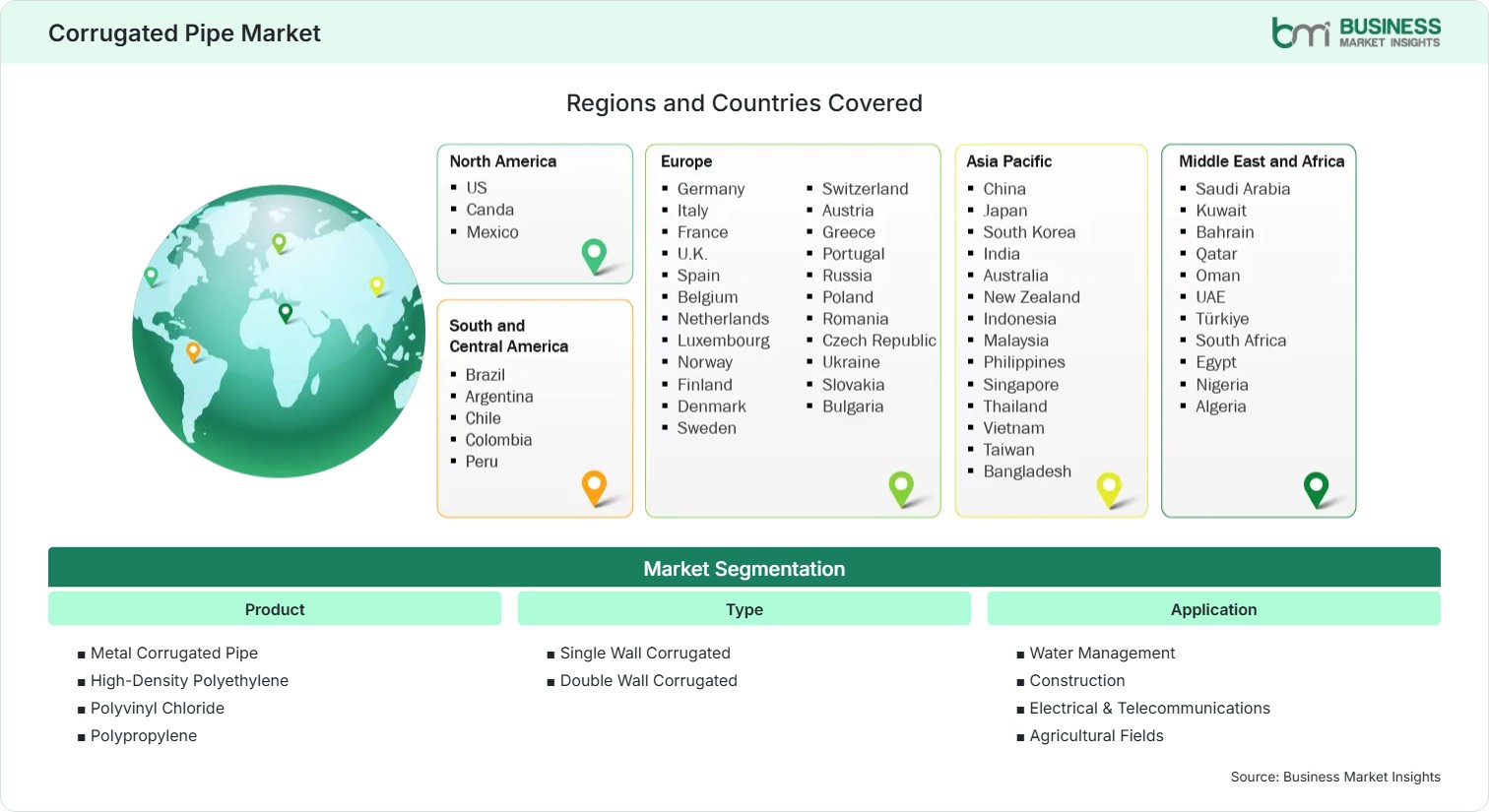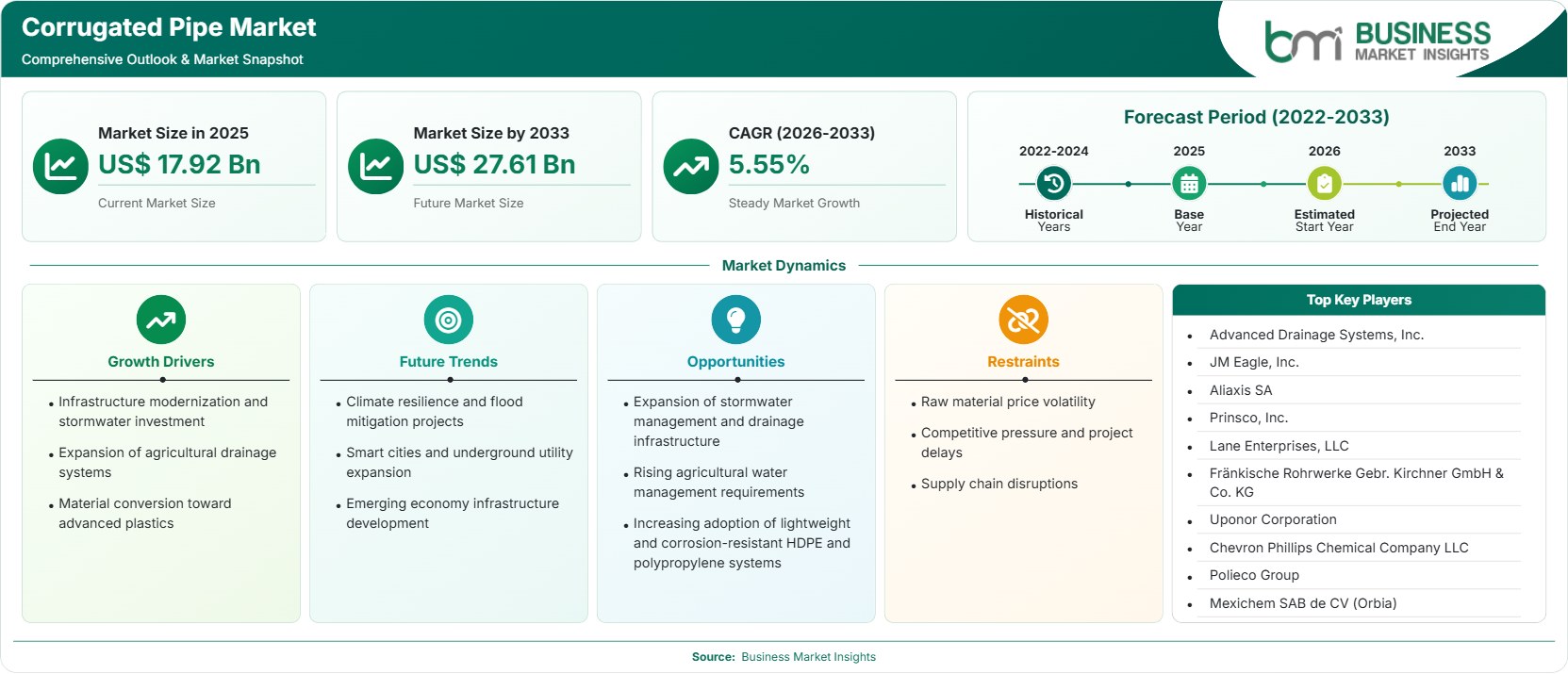
Corrugated Pipe Market Regional Highlights
North America Corrugated Pipe Market
North America accounted for approximately 34%–37% of global revenue in 2025 and is projected to register a CAGR of 5.0%–5.4% through 2033. Significant infrastructure rehabilitation initiatives, federal transportation investments, and stormwater management requirements support demand. The region benefits from widespread adoption of HDPE systems and strong regulatory standards. The Corrugated Pipe Market share remains concentrated within municipal drainage and highway applications, while replacement of aging culvert systems continues supporting long-term infrastructure spending.
- Federal infrastructure programs continue supporting drainage upgrades across transportation corridors and municipal water systems.
- Increasing flood risk encourages municipalities to adopt advanced stormwater management technologies and resilient drainage networks.
- Strong adoption of recycled-material plastic pipe solutions improves sustainability performance and lifecycle economics.
- Agricultural drainage modernization remains an important demand contributor across key farming regions.
US Corrugated Pipe Market
The U.S. represents nearly 78%–82% of North American demand and records a CAGR range of 5.1%–5.5% through 2033. Transportation drainage, residential development, and municipal water infrastructure remain primary application areas. Federal and state funding programs strengthen project pipelines while stormwater regulations encourage broader deployment of engineered drainage systems.
- Highway reconstruction and bridge rehabilitation programs sustain drainage product demand.
- Water resilience initiatives support increased procurement of durable plastic pipe systems.
- Residential development activity contributes to subsurface drainage installations.
- Sustainable infrastructure objectives encourage use of recycled-content materials.
Europe Corrugated Pipe Market
Europe holds 24%–27% market share in 2025 and expands at a CAGR of 4.8%–5.2%. Environmental regulations, wastewater infrastructure modernization, and flood-management initiatives support deployment. Germany leads regional consumption, while Eastern European countries demonstrate higher growth potential approaching 5.5%–6.0% CAGR through the forecast period.
- EU sustainability regulations encourage long-life, recyclable drainage materials.
- Flood prevention investments strengthen utility-sector procurement activity.
- Agricultural water management programs promote drainage modernization.
- Germany remains the largest market, while Poland and Romania show stronger expansion rates.
Asia Pacific Corrugated Pipe Market
Asia Pacific accounts for 30%–33% share in 2025 and achieves the fastest CAGR at 6.4%–6.9% through 2033. Urbanization, industrialization, and major infrastructure investments drive sustained growth. China leads regional demand, while India and Southeast Asia present the highest expansion potential. Strong Corrugated Pipe Market growth reflects continuing utility network development and irrigation investments.
- Smart city programs support broader underground utility construction.
- Irrigation infrastructure upgrades increase agricultural demand.
- Industrial parks and logistics facilities require modern drainage systems.
- India records among the strongest growth rates across major economies.
- Climate adaptation projects elevate demand for flood-resilient infrastructure.
Rest of World Corrugated Pipe Market
The Rest of World region contributes 10%–13% share and is anticipated to increase at a CAGR of 5.6%–6.1%. South & Central America benefit from agricultural development and sanitation investments. Middle East and Africa markets are supported by water infrastructure initiatives and urban expansion projects, particularly in GCC countries.
- Brazil leads South American demand through irrigation and transportation infrastructure projects.
- GCC countries increase investments in drainage and water management systems.
- Mining and industrial developments support specialized pipe requirements.
- Climate-resilience spending improves market prospects across multiple countries.