Rising Demand for Electronics Protection and Miniaturization
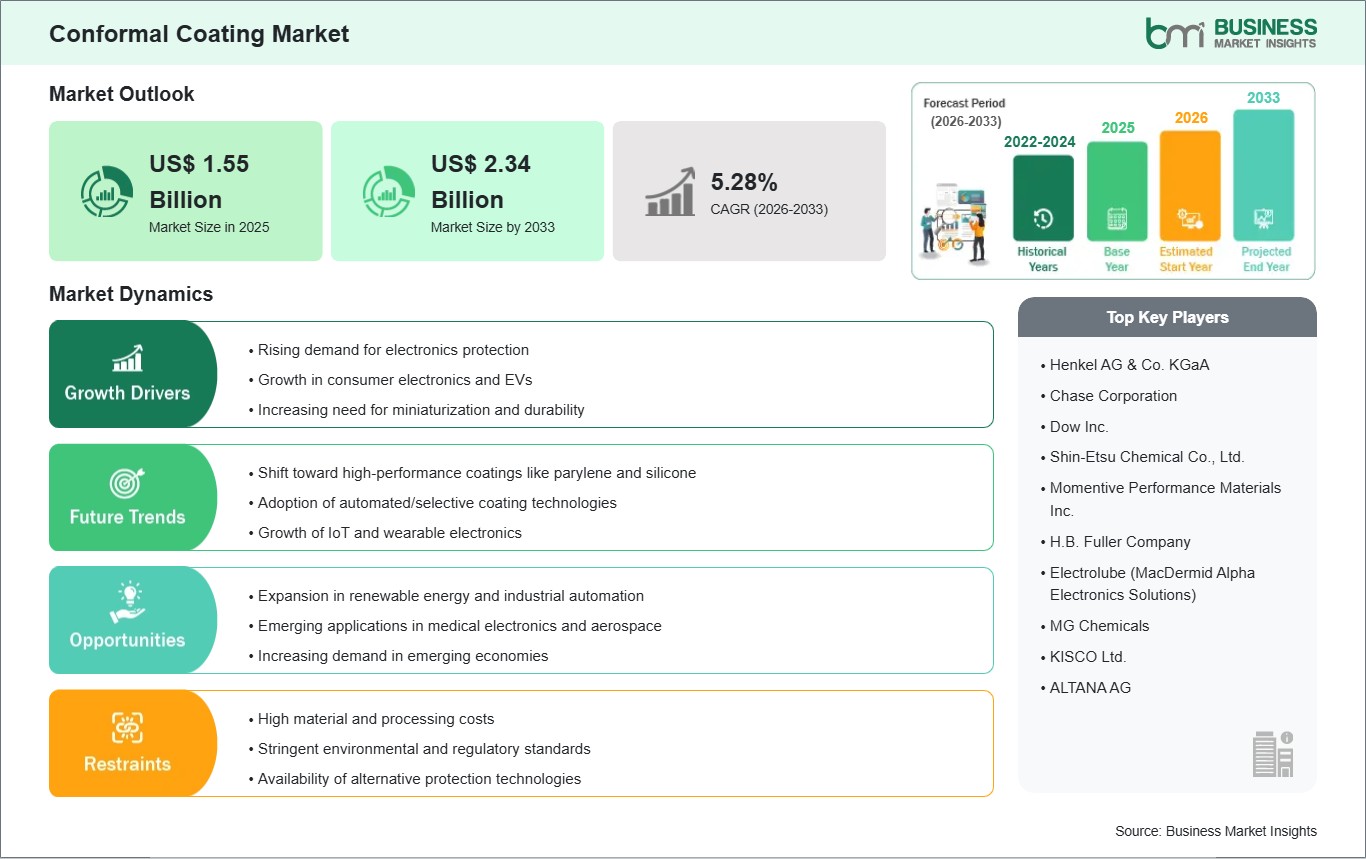
The growing complexity and miniaturization of electronic devices are two key factors driving global growth for conformal coatings. As these smaller and more densely packed electronic components become smaller and more densely populated, so too will they experience larger amounts of environmental damage from moisture, dust, and chemicals. Conformal coatings will provide a barrier to protect electronic components and help to prolong their reliability and durability and provide optimal performance under difficult environmental conditions.
Increased growth in consumer electronics in the form of smartphones, wearable devices, and smart home products are driving the need for high-quality coatings used in manufacturing all of these electronic devices. All of these products require the use of conformal coatings to ensure their continued operation and to extend their lifetime, while the expansion of 5G technologies and other advanced forms of telecommunications create an ever-increasing need for reliable electronic components which, in turn, drive an increasing volume of orders for conformal coatings.
The automotive industry is also playing a very important role in the expansion of the conformal coatings industry, as there is an increasing number of electric vehicles and there has also been an increase in the development of advanced driver assistance systems (ADAS). The electronic components used in vehicles are subjected to some of the harshest operating environments: extreme heat and cold, vibration, and moisture; therefore, a protective coating is very important to ensure the reliability and safety of electronics in today’s automotive designs by using conformal coating technologies.
Advanced Coating Technologies and Emerging Applications
As a result of an increased emphasis on new materials and coatings, there are vast opportunities for growth in the conformal coating industry. Coatings such as parylene and silicone can be considered to have superior attributes such as moisture resistance, thermal stability, and dielectric strength; therefore, it is becoming common practice to utilize these types of coatings in high-reliability industries like aerospace, medical devices, and industrial electronics.
The increased use of renewable energy systems and industrial automation are also providing a great deal of opportunity for market growth. Solarglass panels, windmills, and industrial control systems utilize conformal coatings as a protective measure to ensure long-term performance of electronic components.
Emerging applications using medical electronics, wearables, and Internet of Things (IoT) devices are driving demand for conformal coatings because they need a coating that offers protection as well as flexibility; therefore, the development of new, high performance, and innovative products will be possible with this technology.
Innovation in application methods such as automated coating processes and selective coating methods will allow for improved efficiency and reduced waste of material. These advancements are anticipated to be a large part of conformal coatings growth because of this technology making conformal coatings low-cost and readily available across multiple markets.