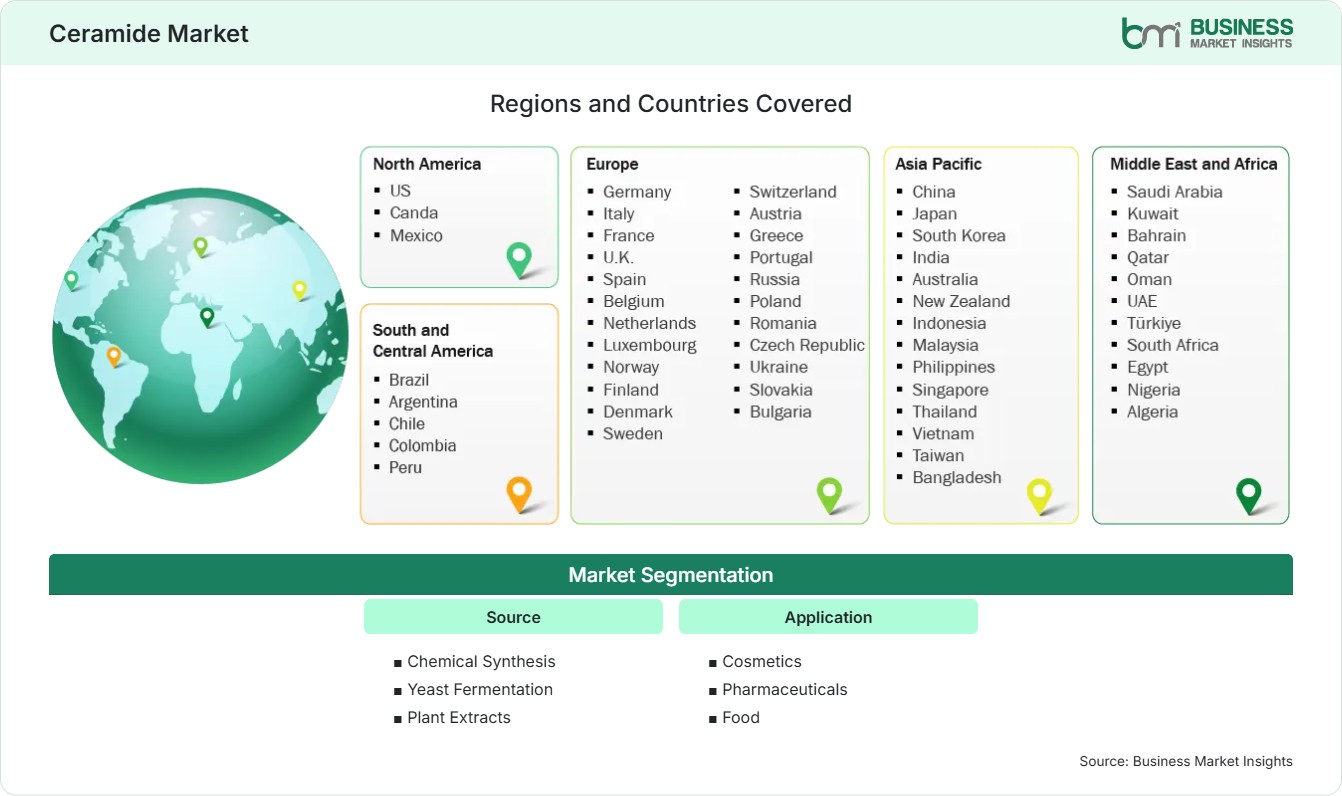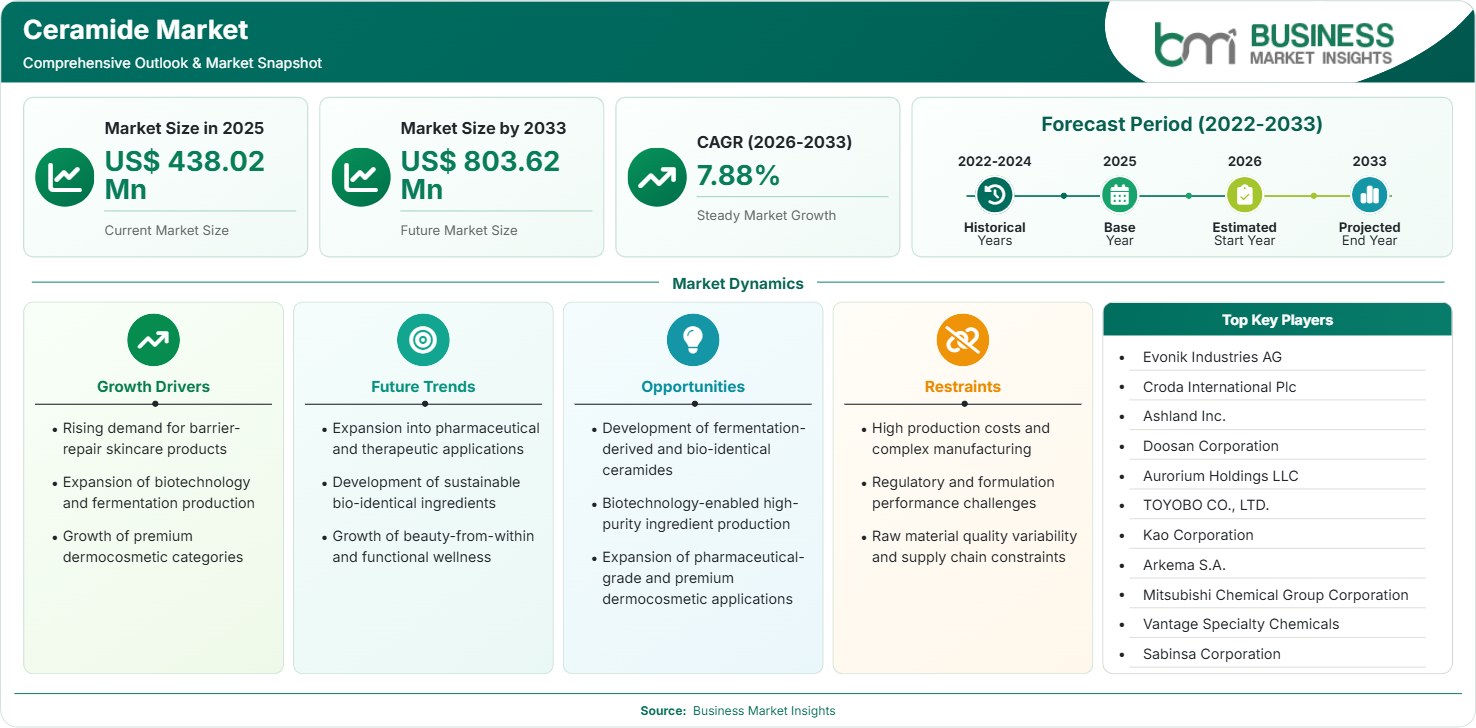
Ceramide Market Regional Highlights
North America Ceramide Market
North America accounted for 34%–37% of global revenue in 2025 and is expected to expand at a CAGR of 7.2%–7.6% through 2033. The region benefits from strong dermatologist influence, premium skincare spending, advanced cosmetic science, and broad consumer awareness regarding skin barrier health. The Ceramide Market share remains supported by innovation-focused ingredient suppliers and established beauty brands. Increasing demand for clean-label formulations, anti-aging products, and therapeutic skincare applications continues reinforcing regional leadership while pharmaceutical research creates additional growth opportunities.
- Growing adoption of science-backed skincare ingredients is encouraging brands to emphasize barrier repair, hydration retention, and clinically validated efficacy in premium product portfolios.
- Specialty chemical suppliers continue expanding biotechnology capabilities to support sustainable production and improve consistency, purity, and scalability of commercial ingredient supply.
- Strong e-commerce penetration accelerates consumer access to premium formulations while supporting direct-to-consumer skincare brands focused on functional ingredients.
- Dermatology-led recommendations increasingly influence purchasing decisions, particularly among consumers seeking solutions for dryness, sensitivity, and environmental skin stress.
US Ceramide Market
The United States represents 78%–82% of North American Ceramide Market revenue and is projected to record a CAGR of 7.3%–7.7% during 2026–2033. High consumer spending on prestige beauty products, expanding dermocosmetic categories, and extensive ingredient innovation support sustained demand. Research into skin barrier restoration and therapeutic dermatology continues driving commercialization opportunities. Ingredient manufacturers also benefit from sophisticated distribution networks, regulatory transparency, and strong collaboration between cosmetic formulators and biotechnology companies focused on next-generation lipid ingredients.
- Premium skincare remains the dominant application, supported by increasing consumer willingness to pay for clinically supported formulations and dermatologist-endorsed brands.
- Biotechnology-driven ingredient production is gaining traction as manufacturers pursue sustainable alternatives to conventional synthetic sourcing approaches.
- Growth in sensitive-skin and eczema-focused products continues creating demand for higher-performance formulations with scientifically validated ingredient profiles.
- Digital beauty channels and influencer-led education campaigns increase awareness of ingredient functionality and formulation transparency.
Europe Ceramide Market
Europe holds 26%–29% Ceramide Market share in 2025 and is expected to expand at a CAGR of 7.0%–7.4% through 2033. Demand is supported by advanced cosmetic manufacturing, stringent product quality requirements, and consumer preference for premium personal care solutions. Germany leads regional consumption, while France maintains strong influence through global beauty brands. The United Kingdom demonstrates among the fastest growth rates at 7.4%–7.8%, supported by expanding dermocosmetic demand and innovation investments. Sustainability priorities increasingly favor fermentation-based ingredient development and traceable supply chains.
- Regulatory emphasis on ingredient safety and transparency encourages investment in validated formulations and advanced manufacturing technologies.
- Germany benefits from a strong specialty chemicals ecosystem supporting research, formulation development, and ingredient commercialization activities.
- France remains a key beauty innovation hub, influencing premium skincare trends and ingredient adoption across global markets.
- Sustainable sourcing and biotechnology investments align with regional environmental objectives while strengthening long-term supply resilience.
Asia Pacific Ceramide Market
Asia Pacific accounts for 30%–33% of global revenue in 2025 and is projected to achieve a CAGR of 8.8%–9.3% through 2033, making it the fastest-growing region. Japan and South Korea lead innovation and premium skincare adoption, while China and India drive volume growth through expanding consumer bases. The region benefits from strong beauty culture influence, increasing disposable incomes, and large-scale manufacturing capabilities. Ceramide Market share gains are further supported by regional expertise in fermentation technologies, ingredient innovation, and advanced skincare formulation development.
- South Korea continues influencing global beauty trends through innovation in barrier-repair and functional skincare categories.
- China's premium skincare sector benefits from growing middle-class purchasing power and increasing demand for science-backed ingredients.
- India records rapid growth due to expanding beauty awareness, digital commerce adoption, and rising consumption of premium formulations.
- Japan maintains leadership in ingredient research, biotechnology innovation, and clinically validated skincare product development.
- Regional manufacturing scale improves cost competitiveness while supporting export opportunities across international beauty markets.
Rest of World Ceramide Market
Rest of World contributes 8%–11% Ceramide Market share in 2025 and is forecast to expand at a CAGR of 7.8%–8.3% through 2033. South and Central America benefit from growing beauty product consumption and expanding premium skincare categories. Brazil remains the leading regional market, while Mexico demonstrates strong growth momentum. In the Middle East and Africa, increasing disposable income, premium personal care demand, and expanding retail infrastructure support market development. Investments in localized distribution and premium beauty portfolios continue strengthening long-term opportunities.
- Brazil's established beauty industry supports adoption of advanced skincare ingredients and premium cosmetic formulations.
- Mexico benefits from expanding retail penetration and growing consumer interest in science-backed personal care products.
- Gulf countries exhibit increasing demand for luxury skincare products supported by high disposable income levels.
- Regional distributors are expanding premium product availability through online channels and specialized beauty retail formats.