Key Market Drivers
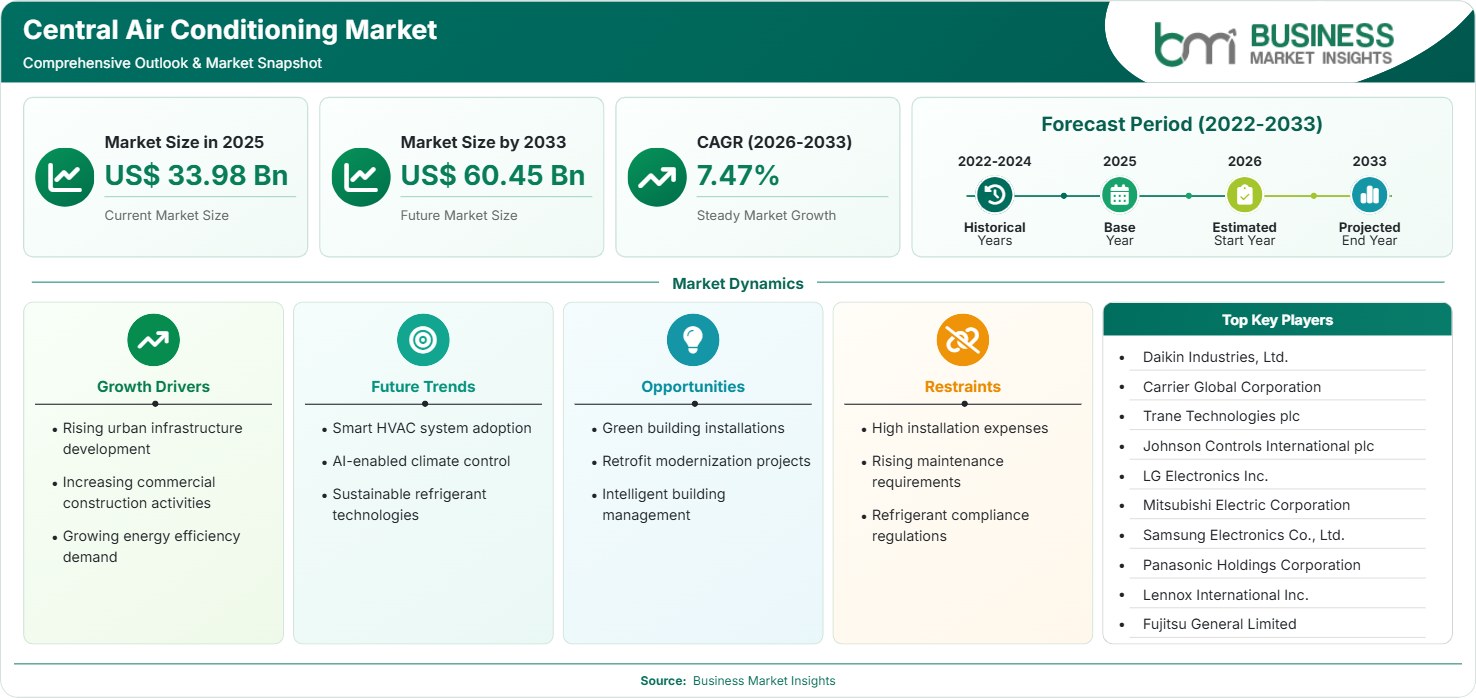
Rising urban infrastructure development
Urbanization and infrastructural development are contributing greatly towards the increased demand for centralized cooling systems in residential buildings, commercial premises, hospitals, hotels, and institutions. There is continuous investment in the construction of smart cities, transport networks, mixed-use projects, and public infrastructure projects, which need efficient HVAC equipment. Population growth, urbanization, and rising construction spending are prompting developers to adopt energy-efficient central air-conditioning systems that provide comfort while reducing operational costs.
Increasing commercial construction activities
The increase in commercial real estate, including office buildings, hospitals, hotels, airports, retail complexes, universities, data centers, and industrial plants, is fueling the need for state-of-the-art central air-conditioning systems. There is a growing emphasis on the importance of occupant comfort, energy efficiency, good indoor air quality, and intelligent building controls in the commercial real estate industry, which can improve performance and reduce the total cost of ownership. The rise in spending on high-end commercial real estate, mixed-use buildings, and intelligent buildings is also driving increased use of centralized HVAC systems with digital controls, Internet of Things-enabled sensors, automation technology, predictive maintenance, and artificial intelligence-powered energy management systems.
Growing energy efficiency demand
The rise in electricity rates, strict environmental laws, and growing concern about sustainable building performance have prompted companies, residents, and facility managers to upgrade old HVAC systems to more modern and efficient ones. The manufacturing sector is coming up with inverter-controlled compressor systems, environmentally friendly refrigerants, variable speed systems, intelligent thermostats, and energy management systems through AI that will help lower the amount of electricity used while sustaining ideal indoor climate levels and providing comfort to occupants. Moreover, IoT-based systems, maintenance predictions, and automation of building management systems make operations easier and improve system performance. Energy-efficient standards set by the government, monetary rewards, and green building certifications will keep boosting demand for advanced central air conditioning systems.
Key Market Opportunities
Green building installations
The growing adoption of green building certifications and sustainable construction practices is creating significant opportunities reflected in the Central Air Conditioning Market forecast, as HVAC manufacturers, component suppliers, and technology providers continue expanding their portfolios of energy-efficient solutions. High-efficiency central air conditioning units of high efficiency are now being included in many new commercial, residential, and hybrid constructions because of the increased pressure towards meeting the required energy performance standards and sustainability goals. Demand for environmentally friendly refrigerants, intelligent air conditioning, Internet of Things (IoT) technology in building management systems, and low-carbon HVAC equipment is propelling innovation in the market. Additionally, the growth in government regulations for energy-efficient equipment, financing for energy-efficient buildings, and green construction is expected to create future opportunities in the construction industry.
Retrofit modernization projects
Aging HVAC infrastructure across commercial buildings, hospitals, educational institutions, hotels, government facilities, and industrial complexes is emerging as a key Central Air Conditioning Market trend, creating strong demand for retrofit and modernization projects. Replacing old HVAC systems with modern ones will increase reliability, boost efficiency, lower maintenance expenses and energy use, and improve comfort levels. In addition, smart control systems that leverage IoT and automated building management systems will help optimize energy use and boost efficiency. More investment in building upgrades and improvements will result in high demand for new HVAC systems.
Intelligent building management
The swift emergence of intelligent building management systems offers numerous opportunities for HVAC integration. Using Internet-of-Things (IoT) sensors, artificial intelligence, cloud connections, predictive analysis, and automation allows for automated temperature regulation, constant monitoring of equipment, energy saving, failure detection, and preventive maintenance of the system. Property and facility managers use digital technologies to increase operational efficiency, reduce life-cycle and energy costs, improve occupant comfort, and support their sustainability goals.
Market Restraints and Challenges
High installation expenses
Factor: Installing central air conditioning systems requires significant investment in equipment, ductwork, controls, electrical infrastructure, engineering design, and skilled installation services, particularly for large commercial facilities and complex building projects. Impact: High initial capital requirements may discourage adoption among budget-conscious residential buyers and small commercial enterprises, extending investment payback periods despite long-term energy savings, improved operational efficiency, and lower lifecycle operating costs.
Rising maintenance requirements
Factor: Central air conditioning systems require regular inspection, preventive maintenance, filter replacement, refrigerant management, equipment calibration, and periodic servicing to maintain peak operational performance and energy efficiency throughout their lifecycle. Impact: Increasing maintenance expenditures, skilled technician requirements, and occasional operational downtime may raise total ownership costs, affecting purchasing decisions and reducing adoption among cost-sensitive customers, particularly in developing markets and smaller commercial facilities.