Camping Equipment Market Regional Highlights
North America Camping Equipment Market
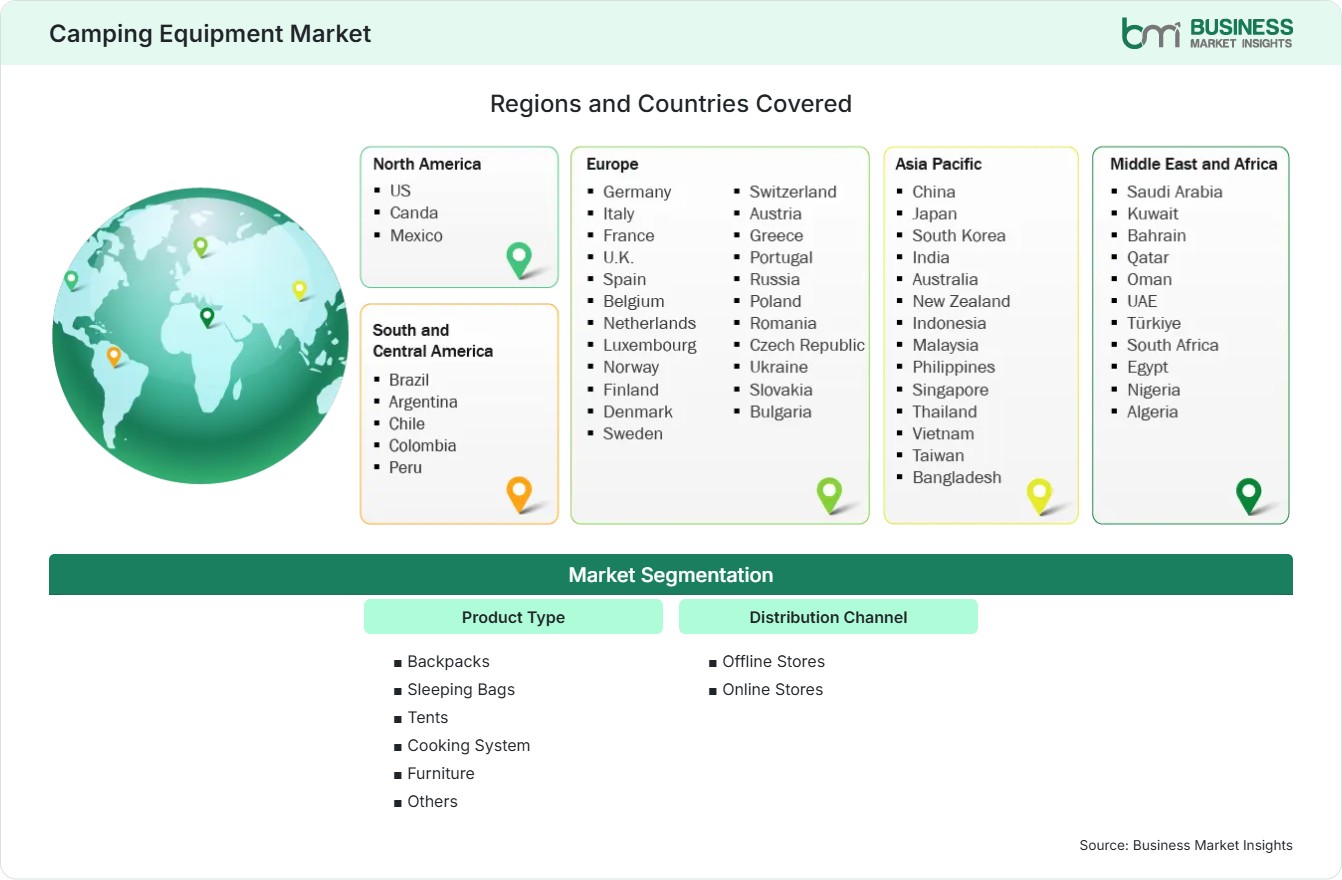
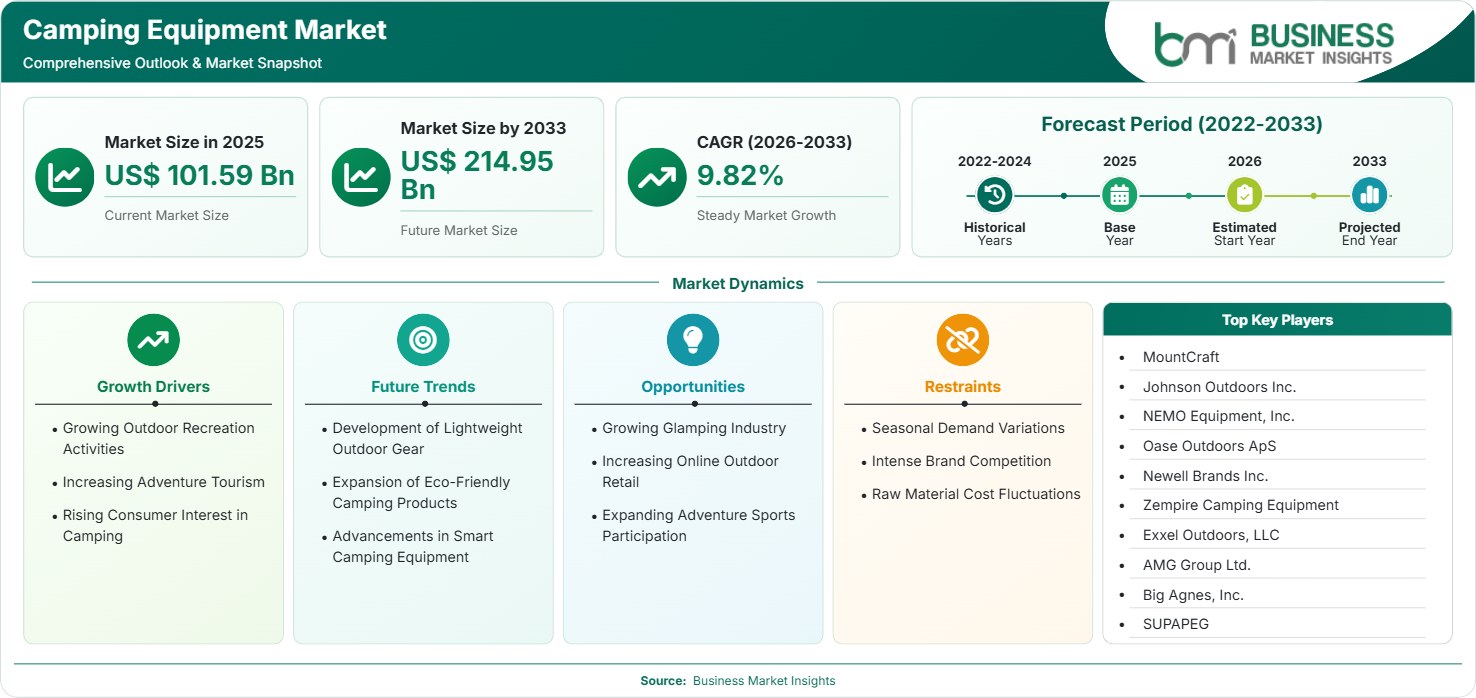
North America Camping Equipment Market accounts for 36%–39% of global demand during 2025 and is projected to expand at a CAGR of 8.8%–9.3% through 2033. The region maintains leadership because of high outdoor recreation participation, established camping infrastructure, premium consumer spending, and continuous product innovation. Camping Equipment Market share remains supported by national parks, recreational vehicle travel, expanding glamping facilities, and strong retail distribution networks. Manufacturers also benefit from high replacement demand and increasing consumer preference for sustainable camping products.
- The United States and Canada continue investing in campground modernization, hiking infrastructure, and recreational tourism programs, encouraging stronger adoption of lightweight tents, camping furniture, portable cooking systems, and advanced outdoor accessories.
- Premium consumers increasingly prefer environmentally friendly equipment manufactured using recycled fabrics, aluminum frames, biodegradable materials, and durable weather-resistant technologies that reduce environmental impact while extending product life.
- Specialty outdoor retailers and direct-to-consumer digital platforms continue expanding omnichannel sales strategies, improving product accessibility, personalized recommendations, equipment rentals, and after-sales customer engagement.
- Recreational vehicle ownership continues supporting complementary camping equipment demand, including portable furniture, compact cooking appliances, sleeping systems, and modular storage products suitable for extended outdoor travel.
US Camping Equipment Market
The United States represents 82%–86% of North American demand and records a CAGR of 8.9%–9.4% during 2026–2033. Strong national park visitation, rising household participation in camping activities, premium outdoor brands, expanding glamping destinations, and well-developed e-commerce infrastructure continue supporting sustained equipment purchases across multiple consumer demographics.
- National parks, forests, and recreational areas continue attracting millions of annual visitors, supporting stable demand for premium tents, backpacks, sleeping bags, and portable cooking equipment.
- Higher disposable incomes encourage consumers to replace existing equipment more frequently with lighter, stronger, and environmentally sustainable alternatives featuring advanced materials and improved functionality.
- Outdoor recreation organizations, sporting goods retailers, and digital marketplaces continuously promote camping participation through educational campaigns, product demonstrations, and seasonal promotional activities.
- Increasing family-oriented camping experiences encourage demand for spacious shelters, folding furniture, portable lighting, cooking solutions, and integrated outdoor comfort products suitable for longer recreational stays.
Europe Camping Equipment Market
Europe represents 27%–30% of the Camping Equipment Market in 2025 and is anticipated to register a CAGR of 9.1%–9.7% during 2026–2033. Germany remains the leading market due to its mature outdoor recreation industry, while Poland records one of the fastest growth rates supported by expanding tourism infrastructure and rising consumer spending on outdoor leisure products.
- Germany maintains regional leadership through established outdoor equipment brands, extensive specialty retail networks, high consumer expenditure on recreational products, and growing interest in sustainable camping equipment across all age groups.
- France, Italy, and the Nordic countries continue expanding eco-tourism initiatives, encouraging demand for lightweight shelters, multifunctional furniture, and compact cooking systems designed for environmentally responsible travel experiences.
- Poland demonstrates one of Europe's highest growth rates as domestic tourism, adventure travel, and online retail penetration continue increasing among younger consumers seeking affordable premium outdoor equipment.
- European manufacturers continue investing in recyclable textiles, low-carbon manufacturing technologies, and repair-oriented product designs that extend equipment life while supporting regional environmental sustainability objectives.
- Outdoor festivals, trekking events, cycling tourism, and caravan holidays continue strengthening seasonal demand for portable camping products across Western and Northern European countries.
Asia Pacific Camping Equipment Market
Asia Pacific accounts for 24%–27% of the global market in 2025 and is projected to expand at the fastest CAGR of 11.1%–11.8% during 2026–2033. Rising disposable incomes, expanding domestic tourism, growing adventure sports participation, and increasing digital commerce continue strengthening regional demand. China leads regional revenue generation because of its manufacturing ecosystem and expanding consumer base, while India records the fastest growth owing to rapidly increasing outdoor recreation participation and government-supported tourism initiatives.
- China dominates regional production and consumption through extensive manufacturing capabilities, expanding domestic tourism, growing premium outdoor brands, and increasing investments in recreational infrastructure.
- India records the fastest regional expansion as trekking, camping festivals, eco-tourism, and weekend outdoor travel gain popularity among young urban consumers supported by improving transportation infrastructure.
- Japan, South Korea, and Australia continue driving premium product demand through technologically advanced equipment, compact designs, and strong consumer preference for durable lightweight camping solutions.
- Government investments in protected parks, mountain tourism, and nature conservation continue encouraging sustainable camping activities across several Asia Pacific destinations.
Rest of World Camping Equipment Market
Rest of the World contributes 9%–11% of global revenue during 2025 and is forecast to register a CAGR of 9.6%–10.2% throughout 2026–2033. South & Central America continue benefiting from expanding adventure tourism, while Middle East & Africa experience growing investment in luxury camping destinations, desert tourism, and eco-lodges. Brazil remains the leading South American market, whereas the United Arab Emirates demonstrates the strongest growth through premium outdoor tourism development and recreational infrastructure investments.
- Brazil continues leading regional demand because of expanding national parks, hiking tourism, recreational camping events, and increasing availability of affordable outdoor equipment through organized retail.
- Chile and Argentina continue attracting adventure travelers through mountain tourism, trekking destinations, and government-supported eco-tourism initiatives encouraging equipment purchases.
- The United Arab Emirates records rapid growth through luxury desert camping experiences, glamping resorts, adventure tourism investments, and premium recreational product demand.
- South Africa strengthens regional opportunities through wildlife tourism, safari camping experiences, and increasing participation in outdoor recreational activities supported by tourism development strategies.