Cable Modem Termination System (CMTS) Size and Share Analysis.
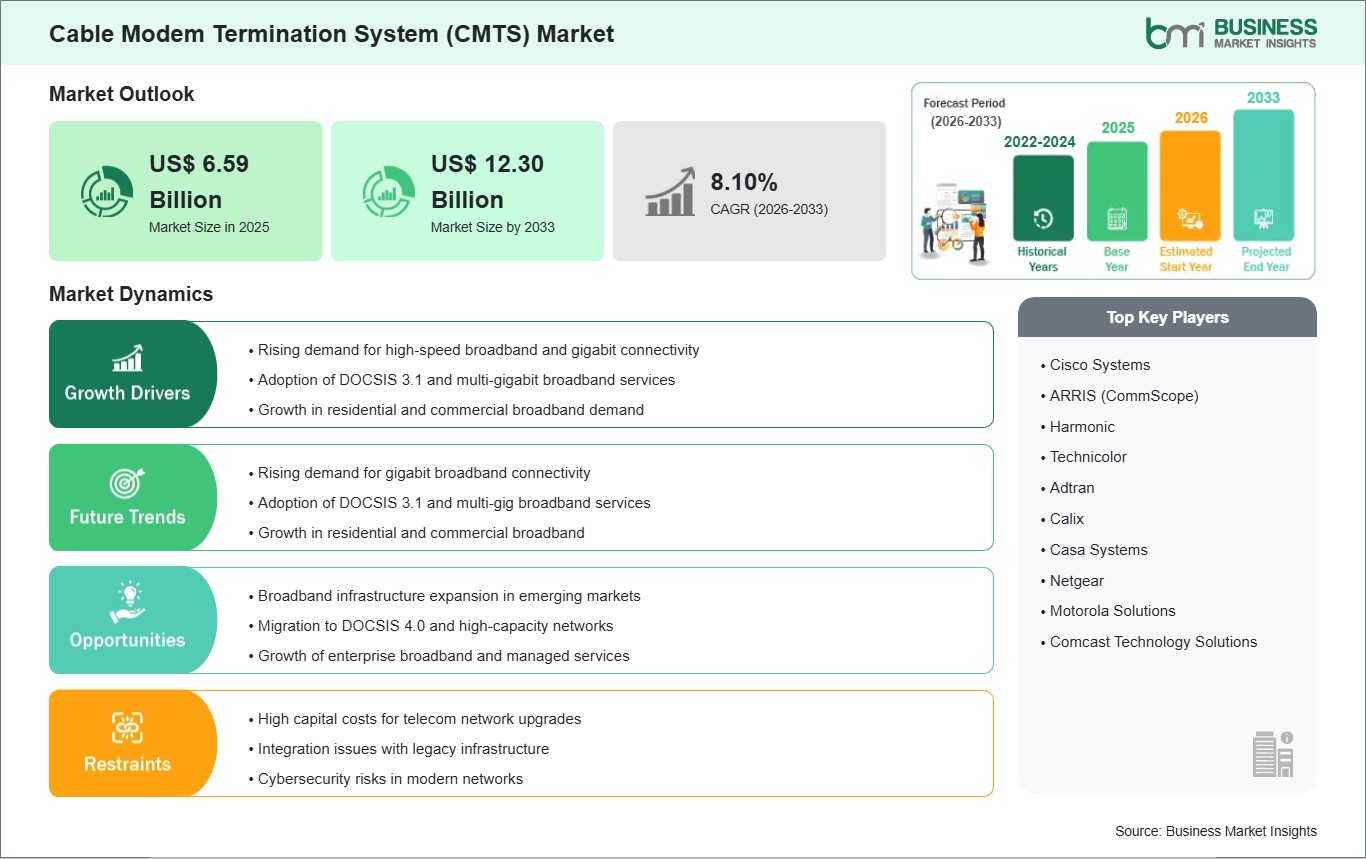
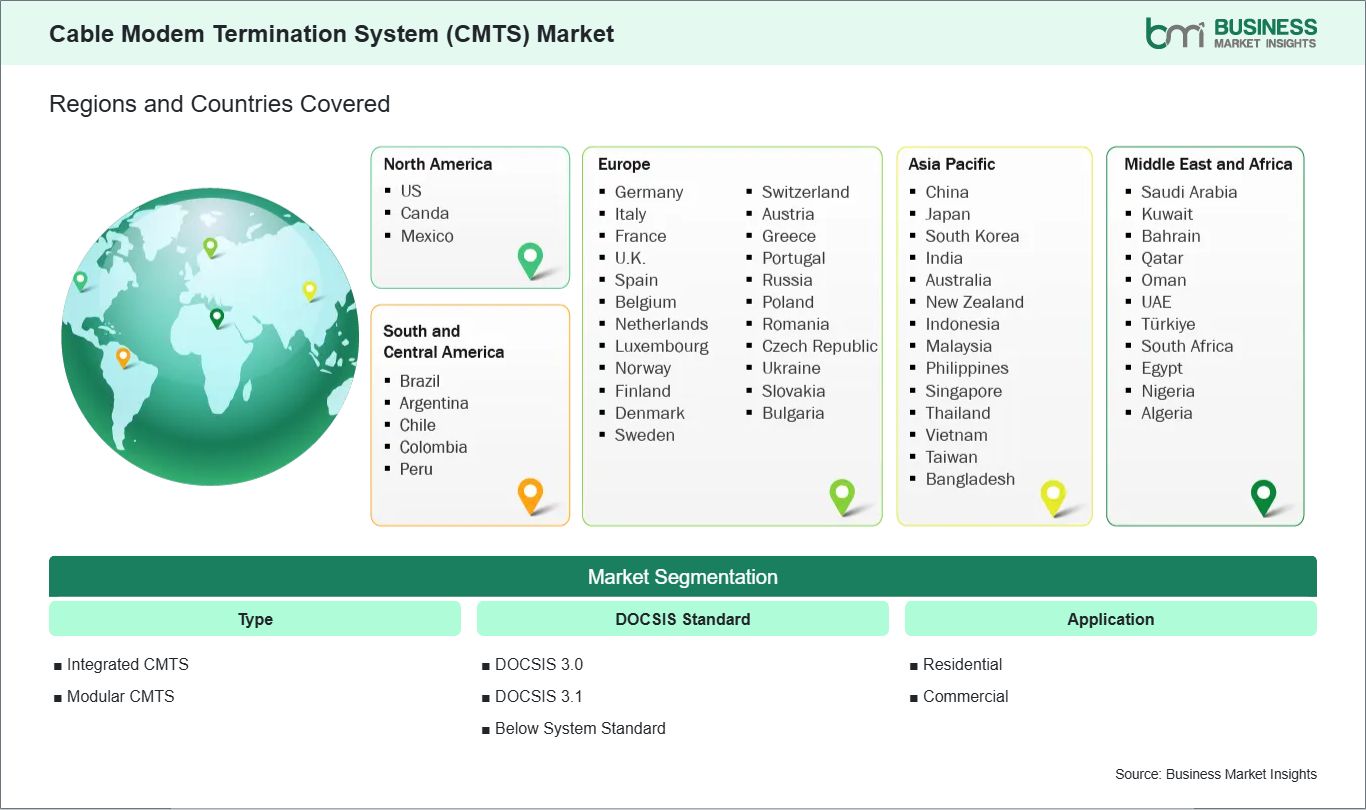
By Type, the Cable Modem Termination System (CMTS) Market is segmented into Integrated CMTS (I-CMTS) and Modular CMTS (M-CMTS). Integrated CMTS (I-CMTS) still accounts for a great number of traditional deployments, especially in legacy and small to mid-scale cable networks. This is due to the fact that it merges the functions of upstream and downstream processing, routing, and RF interfaces into a single chassis platform. Such an all, in, one architecture grants deployment simplicity, decreases the initial integration complexity, and allows cable operators to administer broadband services via a centralized hardware system. In the past, I-CMTS platforms were the mainstay of DOCSIS 2.0 and 3.0 networks and, at present, continue to be supported in areas where it is preferred to do incremental capacity upgrades rather than to carry out the full architectural transformation. One of the main reasons why I-CMTS is considered an easy, attractive option for operators prioritizing stability and predictable capital expenditure is that its relatively simple installation and operational familiarity.
By DOCSIS Standard, the Cable Modem Termination System (CMTS) Market is segmented into DOCSIS 3.0, DOCSIS 3.1, and below DOCSIS 3.0 Standards. DOCSIS 3.1 is leading the market, mainly because it offers support for gigabit-speed broadband services, improved spectral efficiency, and enhanced network reliability. As cable operators continue to see increased demand for high-bandwidth applications such as 4K/8K video streaming, cloud computing, remote work, online gaming, and IoT connectivity, DOCSIS 3.1 is the technology base that allows them to provide much higher downstream and upstream speeds than DOCSIS 3.0.
By Application, the Cable Modem Termination System (CMTS) Market is segmented into Residential and Commercial applications. Residential applications account for most of the market because the main role of a CMTS platform is to connect the individual households with high-speed internet, video, and voice services through hybrid fiber, coaxial (HFC) networks. The rising popularity of streaming services, online gaming, remote work, smart home devices, and multiple connected devices per household has been a major factor in the increase in CMTS adoption in the residential segment. DOCSIS 3.1 allows operators to offer innovative features such as Quality of Service (QoS), bandwidth management, and low-latency performance, which helps them to satisfy the demands of consumers for a fast and reliable broadband service.