
Brown Rice Market Outlook: Size, Share, Trends, Growth Analysis, Competitive Landscape & Forecast, 2026-2033

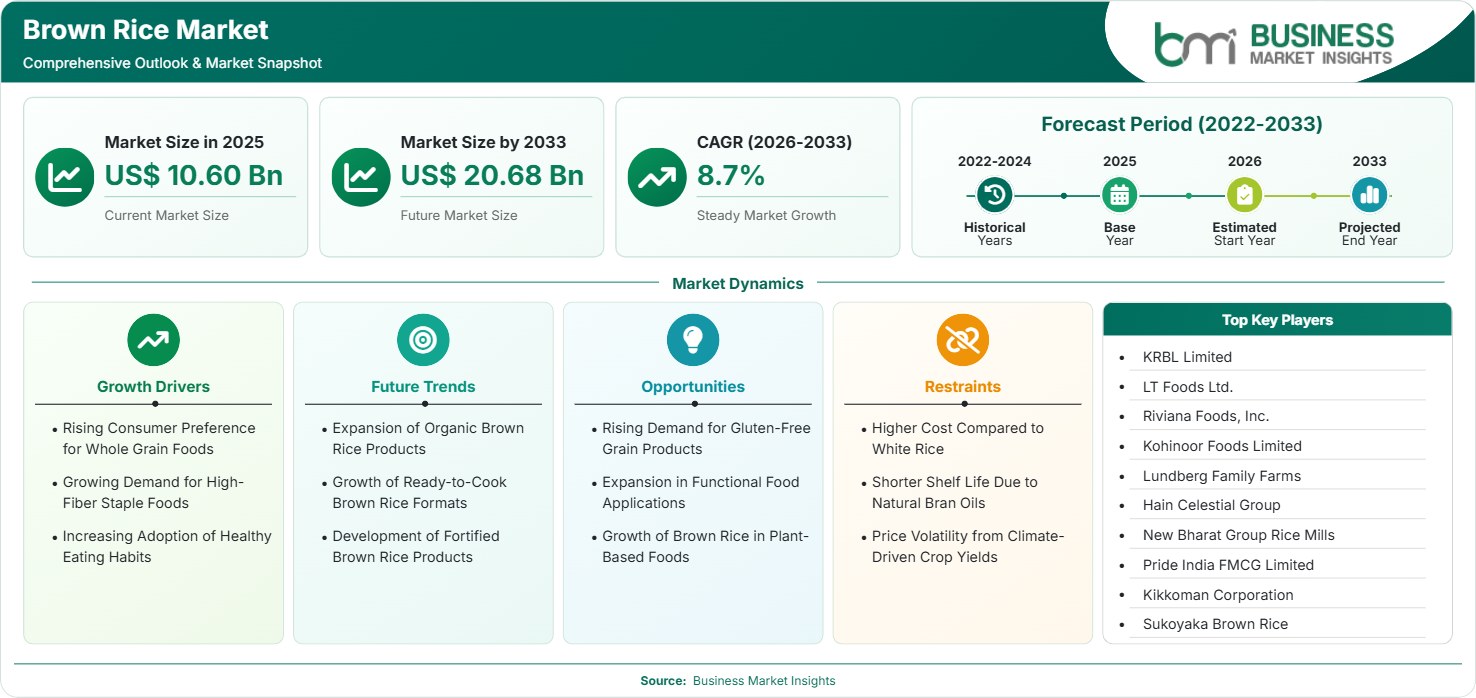
The Brown Rice Market size was valued at US$ 10.60 Billion in 2025 and is projected to reach US$ 20.68 Billion by 2033, growing at a CAGR of 8.7% during 2026–2033. Growth is driven by increasing consumer preference for whole-grain foods, rising awareness regarding digestive and nutritional health, growing demand for organic food products, expanding adoption of healthy dietary lifestyles, and rising utilization of brown rice across retail and foodservice channels.

Report Coverage
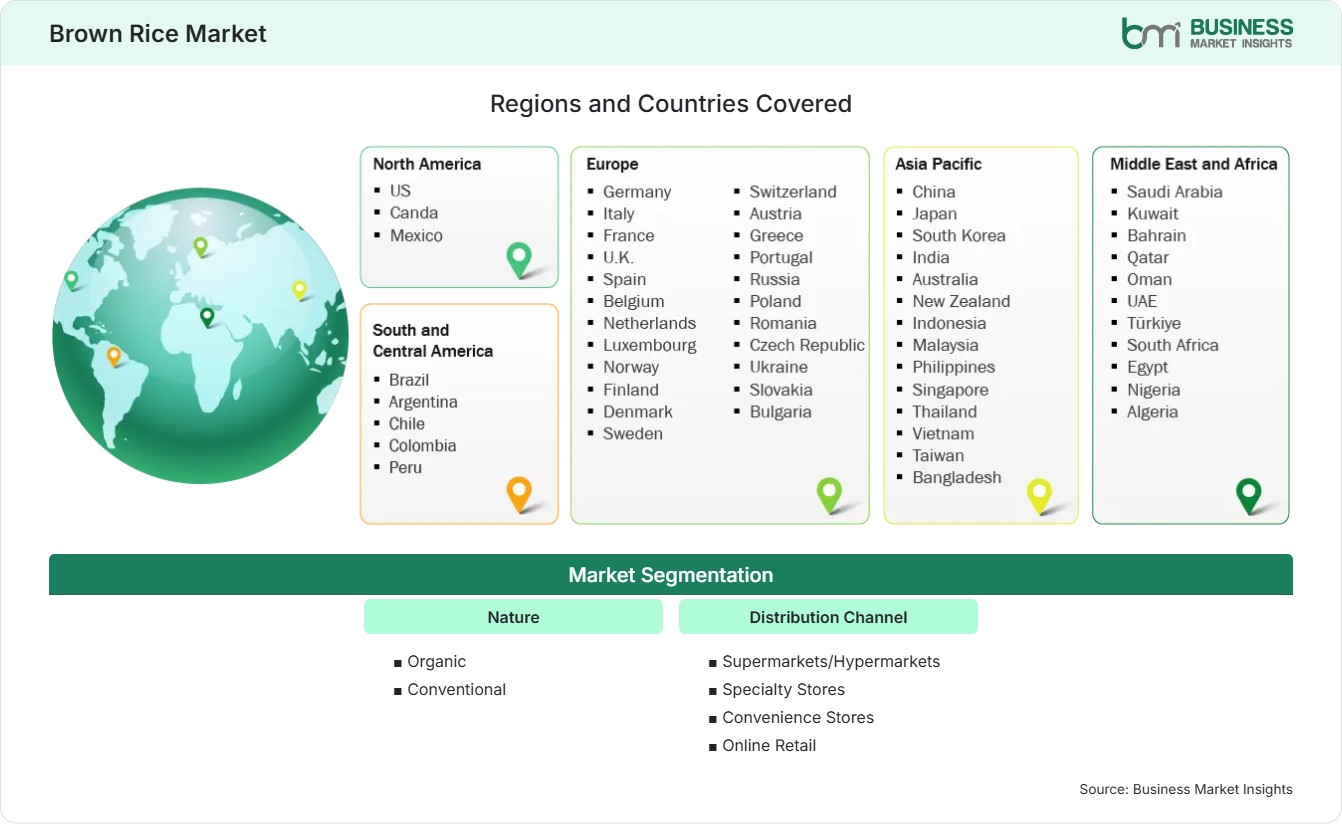
  • Nature: Organic, Conventional
  • Distribution Channel: Supermarkets/Hypermarkets, Specialty Stores, Convenience Stores, Online Retail
US$ 10.60 Bn Market size in 2025
US$ 20.68 Bn Market Size by 2033
8.7% CAGR, 2026 - 2033
2026-2033 Forecast Period

01 AI Overview

Brown Rice Market Summary

  • North America Region: North America holds a market share of 28%–31% in 2025, growing at a CAGR of 8.0%–8.6% during 2026–2033. Demand is supported by increasing health consciousness, growing preference for whole grains, and rising organic food consumption. The U.S. remains the dominant market, advancing at a CAGR of 8.2%–8.8%.
  • Fastest Growing Region: Asia Pacific accounts for 39%–42% of revenue in 2025 and is projected to register a CAGR of 9.3%–10.0% through 2033. Rising population, expanding health-focused consumer segments, and growing retail availability continue supporting market development.
  • Leading Segment: Conventional Brown Rice holds a market share of 68%–72% in 2025 and is expected to grow at a CAGR of 8.4%–9.0%. Demand is driven by affordability, broad availability, and widespread consumption across households and foodservice channels.
  • High Growth Segment: Online Retail accounts for 18%–22% of market revenue in 2025 and is projected to register a CAGR of 10.2%–10.9% during the forecast period. Growing e-commerce penetration and consumer preference for convenient shopping continue supporting expansion.
  • Key Market Opportunity: Growing demand for organic whole grains, clean-label food products, and health-focused diets is creating significant opportunities for brown rice producers and retailers.
  • Major Market Players: KRBL Limited, LT Foods Ltd., Riviana Foods, Inc., Kohinoor Foods Limited, Lundberg Family Farms, Hain Celestial Group, New Bharat Group Rice Mills, Pride India FMCG Limited, Kikkoman Corporation, and Sukoyaka Brown Rice.
02 Strategic Insights

Brown Rice Market: Strategic Insights

Brown Rice Market Strategic Framework
FREE PDF
Request your free sample
Request free sample
03 Stakeholder View

Key Takeaways

  • The market ecosystem includes rice growers, processors, distributors, retailers, foodservice operators, organic food suppliers, and packaged food manufacturers.
  • Conventional brown rice remains the dominant revenue contributor due to its widespread availability, affordability, and established consumer acceptance.
  • Product innovation increasingly focuses on organic offerings, premium varieties, sustainable sourcing, and improved packaging formats.
  • Asia Pacific provides the strongest growth potential supported by high rice consumption, expanding middle-class populations, and growing health awareness.
  • Digital retail channels continue transforming market dynamics by improving product accessibility and supporting direct-to-consumer sales models.
  • Organic brown rice, health-focused food products, and specialty retail offerings are expected to generate significant growth opportunities throughout the forecast period.
  • The brown rice market trend includes growing consumer preference for whole-grain and clean-label foods, rising demand for organic and sustainably sourced brown rice, expansion of value-added product offerings, and increasing adoption of convenient retail and e-commerce distribution channels.
04 Geographic Outlook

Brown Rice Market Regional Highlights

North America Brown Rice Market

North America accounted for 28%–31% of global revenue in 2025 and is projected to expand at a CAGR of 8.0%–8.6% through 2033. The brown rice market forecast suggests that the growth is supported by increasing consumer preference for whole-grain foods, rising organic food consumption, and growing awareness regarding healthy dietary choices. The market share in the region continues benefiting from strong retail distribution networks and expanding demand for natural food products.

  • Consumers across North America are increasingly incorporating brown rice into balanced diets due to its fiber content, nutritional value, and whole-grain health benefits.
  • Rising demand for organic and non-GMO food products continues supporting the adoption of premium brown rice varieties.
  • Retailers are expanding their portfolios with organic, specialty, and convenient brown rice products to meet evolving consumer preferences.
  • Foodservice operators are increasingly offering whole-grain and health-focused menu options featuring brown rice.
  • Growing interest in clean-label, minimally processed, and plant-based foods continues strengthening market demand across North America.
  • Expanding availability through supermarkets, health food stores, and e-commerce platforms is further supporting growth in the North America market.

US Brown Rice Market

The United States represented 24%–27% of global revenue in 2025 and is anticipated to register a CAGR of 8.2%–8.8% during the forecast period. Demand is driven by increased awareness regarding digestive health, rising whole-grain consumption, and growth in organic food categories. Continued consumer interest in nutritional wellness supports market growth.

  • U.S. consumers are increasingly shifting toward minimally processed whole-grain products as part of healthier eating habits.
  • Strong demand for organic, non-GMO, and specialty brown rice products continues supporting market growth.
  • Online retail channels and direct-to-consumer platforms are expanding product accessibility across the United States.
  • Wellness-focused diet trends, including plant-based and high-fiber nutrition, continue encouraging brown rice consumption.
  • Growing preference for clean-label and functional food products is driving demand for premium brown rice offerings.
  • Product innovation in ready-to-cook, flavored, and convenience-focused brown rice products is further strengthening the U.S. market.

Europe Brown Rice Market

Europe held 24%–27% of global revenue in 2025 and is projected to grow at a CAGR of 8.3%–8.9% through 2033. Rising demand for healthy foods, increasing adoption of plant-based diets, and growing consumer awareness regarding whole grains continue to support market expansion. Germany remains the leading market with a CAGR of 8.4%–9.0%, while Poland is the fastest-growing country, expanding at a CAGR of 9.0%–9.6%.

  • Whole-grain consumption continues increasing across major European markets.
  • Consumers are increasingly seeking natural and minimally processed food products.
  • Germany maintains leadership through strong health and wellness food demand.
  • Poland is witnessing accelerated growth due to evolving dietary preferences.
  • Organic food sales continue supporting premium brown rice demand.

Asia Pacific Brown Rice Market

Asia Pacific accounted for 39%–42% of global revenue in 2025 and is expected to remain the fastest-growing region, registering a CAGR of 9.3%–10.0% through 2033. Rising health awareness, expanding urban populations, and strong rice consumption traditions continue driving market growth. China remains the largest regional market with a CAGR of 9.1%–9.8%, while India records the highest growth at 9.8%–10.5%.

  • Growing middle-class populations continue increasing demand for healthier staple food alternatives.
  • China benefits from rising demand for premium and health-oriented rice products.
  • India is witnessing growing awareness regarding the nutritional advantages of brown rice.
  • Modern retail expansion is improving product availability across urban centers.
  • Functional food trends continue supporting market development.

Rest of World Brown Rice Market

The Rest of World region accounted for 6%–9% of global revenue in 2025 and is expected to register a CAGR of 8.1%–8.7% through 2033. Brown rice market growth is supported by increasing health awareness, expanding retail infrastructure, and growing demand for whole-grain products. Demand remains particularly strong among consumers seeking healthier dietary alternatives.

Brazil is the leading market in South & Central America and is forecast to grow at a CAGR of 8.3%–8.9%. In the Middle East & Africa, the United Arab Emirates is expected to be the fastest-growing country with a CAGR of 8.6%–9.2%.

  • Brazil continues benefiting from increasing demand for nutritious staple foods.
  • The United Arab Emirates is witnessing rising interest in premium health food products.
  • Retail modernization continues improving consumer access to brown rice products.
  • Growing wellness trends are supporting adoption across multiple consumer segments.
  • Increasing awareness regarding whole-grain nutrition continues creating market opportunities.
Global Market Geography
FREE PDF
Request your free sample
Request free sample
05 Segment Analysis

Brown Rice Market Segmentation

Nature

Nature-based segmentation continues gaining importance as consumers increasingly differentiate between conventional and organically cultivated food products. Conventional Brown Rice leads the segment with 68%–72% share in 2025 and is projected to grow at a CAGR of 8.4%–9.0% through 2033. The market scope continues expanding due to increasing health awareness, affordability advantages, and broad availability across retail and foodservice channels.

  • Organic: Benefits from growing consumer preference for chemical-free cultivation methods, sustainability considerations, and premium food purchasing trends.
  • Conventional: Dominates market demand owing to wider market penetration, cost-effectiveness, established supply chains, and strong household consumption patterns.

Distribution Channel

Distribution channels play a vital role in product accessibility and consumer purchasing behavior. Online Retail accounts for 18%–22% market share in 2025 and is projected to register the fastest growth at a CAGR of 10.2%–10.9% through 2033. Brown Rice Market share gains are increasingly supported by expanding e-commerce platforms and growing consumer preference for convenient shopping experiences.

  • Supermarkets/Hypermarkets: Remain the dominant sales channel due to broad product availability, strong brand visibility, and consumer convenience.
  • Specialty Stores: Attract health-conscious consumers seeking organic, premium, and specialty grain products.
  • Convenience Stores: Support impulse purchases and localized product accessibility.
  • Online Retail: Benefits from wider product selection, doorstep delivery services, promotional offers, and increasing digital shopping adoption.
06 Market Forces

Brown Rice Market Dynamics

Key Market Drivers

Rising Consumer Preference for Whole Grain Foods

Consumers are increasingly incorporating whole grains into their diets as awareness regarding nutritional wellness continues to grow. Brown rice is gaining popularity because it retains the bran and germ layers that contain fiber, vitamins, minerals, and beneficial plant compounds. Nutrition-conscious consumers are actively replacing refined grains with whole-grain alternatives to support healthier lifestyles. Food manufacturers and retailers are responding by expanding product offerings and promoting whole-grain benefits. As dietary habits continue shifting toward nutrient-rich foods, demand for the brown rice market is expected to remain strong throughout the forecast period.

Growing Demand for High-Fiber Staple Foods

Fiber-rich foods are receiving increased attention due to their association with digestive health, weight management, and overall wellness. Brown rice offers significantly higher fiber content compared with refined rice products, making it an attractive option among health-focused consumers. Rising awareness regarding balanced nutrition and preventive health practices continues encouraging adoption of high-fiber staple foods. Healthcare professionals and nutrition experts increasingly recommend whole grains as part of healthy dietary patterns. This growing focus on fiber intake continues supporting brown rice consumption globally.

Increasing Adoption of Healthy Eating Habits

The global shift toward healthier eating habits is creating substantial demand for minimally processed and naturally nutritious foods. Consumers are paying greater attention to ingredient quality, nutritional content, and long-term health benefits when selecting staple food products. Brown rice aligns with these preferences by offering a more natural alternative to highly refined grain products. Growing adoption of fitness-oriented lifestyles, wellness programs, and health-focused diets is encouraging broader market penetration. These trends continue creating favorable conditions for sustained market growth.

Key Market Opportunities

Rising Demand for Gluten-Free Grain Products

The growing popularity of gluten-free diets is creating significant opportunities for brown rice producers and food manufacturers. Consumers seeking alternatives to wheat-based products increasingly prefer naturally gluten-free grains that provide nutritional benefits without compromising dietary requirements. Brown rice is widely utilized in gluten-free food formulations, including flour blends, snacks, cereals, and prepared meals. Rising awareness regarding food sensitivities and digestive wellness is further supporting demand. As manufacturers continue expanding gluten-free product portfolios, brown rice is expected to play an increasingly important role across multiple food categories and consumer segments.

Expansion in Functional Food Applications

Functional foods represent a major opportunity for brown rice market expansion as consumers increasingly seek products that deliver health benefits beyond basic nutrition. Brown rice contains dietary fiber, essential nutrients, and naturally occurring bioactive compounds that support wellness-oriented product development. Manufacturers are incorporating brown rice into cereals, nutritional snacks, beverages, and health-focused meal solutions to meet evolving consumer preferences. Demand for preventive nutrition continues creating opportunities for premium and value-added food products. As the functional food industry expands globally, brown rice utilization is expected to grow across a diverse range of applications.

Growth of Brown Rice in Plant-Based Foods

Plant-based food categories continue experiencing strong growth as consumers seek sustainable and nutritious alternatives to conventional products. Brown rice is increasingly used in plant-based meals, grain bowls, meat alternatives, snacks, and dairy-free formulations because of its nutritional profile and versatility. Manufacturers are developing innovative products that utilize brown rice as a primary ingredient to enhance texture, nutritional value, and consumer appeal. Growing interest in vegan, vegetarian, and flexitarian diets continues supporting adoption. This trend is expected to create substantial opportunities for brown rice suppliers and food processors throughout the forecast period.

Market Restraints and Challenges

Higher Cost Compared to White Rice

Factor: Brown rice generally carries a higher retail price than white rice because of lower production volumes, premium product positioning, specialized processing and storage requirements, and increasing demand for healthier food alternatives. Organic certification, sustainable farming practices, and higher distribution costs can further contribute to its elevated market price.

Impact: Higher prices can discourage price-sensitive consumers, particularly in developing economies where affordability is a key purchasing factor. Many households may continue choosing conventional white rice due to its lower cost, limiting widespread adoption of brown rice. This pricing challenge may slow market penetration despite growing awareness of its nutritional and health benefits.

Shorter Shelf Life Due to Natural Bran Oils

Factor: Brown rice retains its bran and germ layers, which contain natural oils that are susceptible to oxidation over time. As a result, brown rice has a shorter shelf life than refined white rice and requires more careful storage, handling, and packaging to preserve freshness and nutritional quality.

Impact: The shorter shelf life increases storage, transportation, packaging, and inventory management requirements throughout the supply chain. Manufacturers and retailers often invest in advanced packaging solutions, controlled storage environments, and efficient distribution systems to minimize spoilage. These additional requirements increase operational costs and create logistical challenges for market participants.

07 Company Analysis

Competitive Landscape

The market remains competitive with the presence of established rice processors, packaged food companies, organic food producers, and specialty grain suppliers. Companies are focusing on organic product expansion, premium rice varieties, sustainable sourcing practices, improved packaging solutions, and wider retail distribution networks. Growing consumer demand for whole-grain and health-focused food products continues shaping Brown Rice Market analysis and competitive strategies across the global rice industry.

Company Name

Overview

Products and Services Relevant to this Market

KRBL Limited

Major rice producer and exporter with a broad portfolio of premium rice products.

Brown rice, specialty rice products, packaged grain solutions.

LT Foods Ltd.

Global rice and food company serving retail and foodservice markets.

Brown rice, organic rice products, packaged food offerings.

Riviana Foods, Inc.

Rice processing and food products company supplying multiple rice categories.

Brown rice, specialty grains, consumer packaged rice products.

Kohinoor Foods Limited

Food company focused on rice-based products and packaged food solutions.

Brown rice, premium rice varieties, processed grain products.

Lundberg Family Farms

Producer specializing in organic and sustainably sourced rice products.

Organic brown rice, specialty grain products, natural food offerings.

Hain Celestial Group

Natural and organic food company with a diversified health-focused portfolio.

Organic brown rice, natural food products, wellness-oriented grain offerings.

New Bharat Group Rice Mills

Rice processor serving domestic and international grain markets.

Brown rice, conventional rice products, food-grade grain solutions.

Pride India FMCG Limited

Packaged food company focused on grains, spices, and specialty food products.

Brown rice, organic grains, packaged food ingredients.

Kikkoman Corporation

Food products company with interests in premium food and grain categories.

Brown rice products, specialty food offerings, health-oriented foods.

Sukoyaka Brown Rice

Company specializing in brown rice and wellness-focused rice products.

Brown rice, specialty rice products, health-focused grain solutions.

08 Industry Activity

Recent Developments

July 2026

Tim Hortons India launched Super Meal Bowls, expanding its food menu with protein-rich, customizable meal options to meet growing demand for convenient, wholesome meals across its restaurants.

May 2026

Lundberg Family Farms expanded its organic rice product portfolio by introducing new sustainably sourced whole-grain offerings, addressing rising consumer demand for organic foods while reinforcing its commitment to environmental stewardship and premium-quality rice products.

February 2026

LT Foods Ltd. strengthened its premium and health-focused rice portfolio through expanded distribution networks and product development initiatives, enhancing market reach, meeting evolving consumer preferences for nutritious rice products, and supporting long-term growth in domestic and international markets.

April 2025

ITOCHU Corporation entered a strategic partnership with The Healthy Grain and acquired exclusive trademark and marketing rights for BARLEYMAX Super Barley in Japan and Taiwan, expanding its presence in the growing dietary fiber and health food market.

10 Trust & Transparency

Research Methodology

The market analysis combines proprietary research with secondary data from government agencies, company disclosures, regulatory filings, industry databases and expert interviews. Market estimates are validated through data triangulation, cross-market benchmarking and analyst review.

View Full Research Methodology

11 Questions Answered

Frequently Asked Questions

What challenge has the greatest long-term impact on the industry?

Higher costs compared with white rice remain a significant challenge because price-sensitive consumers may prioritize affordability despite the additional nutritional benefits offered by brown rice.

How is online retail influencing market growth?

Online platforms improve product accessibility, provide broader product selection, support direct-to-consumer sales, and offer greater convenience to consumers purchasing health-focused food products.

Why is Asia Pacific the fastest-growing region?

The region benefits from strong rice consumption traditions, growing health awareness, expanding middle-class populations, and increasing adoption of nutritious food products.

Which nature segment leads the market?

Conventional Brown Rice leads the market due to its affordability, wide availability, strong household consumption, and extensive retail presence.

What is driving growth in the brown rice market report?

Rising consumer preference for whole-grain foods, growing demand for high-fiber staple foods, increasing adoption of healthy eating habits, and expanding awareness regarding nutritional wellness are the primary growth drivers.

Access the Full Brown Rice Market Report

Get segment-level forecasts, regional estimates, competitive benchmarking, company profiles and downloadable Excel datasets.

Access the full Brown Rice Market Report
350 pages PDF & Excel | 2026-07-31