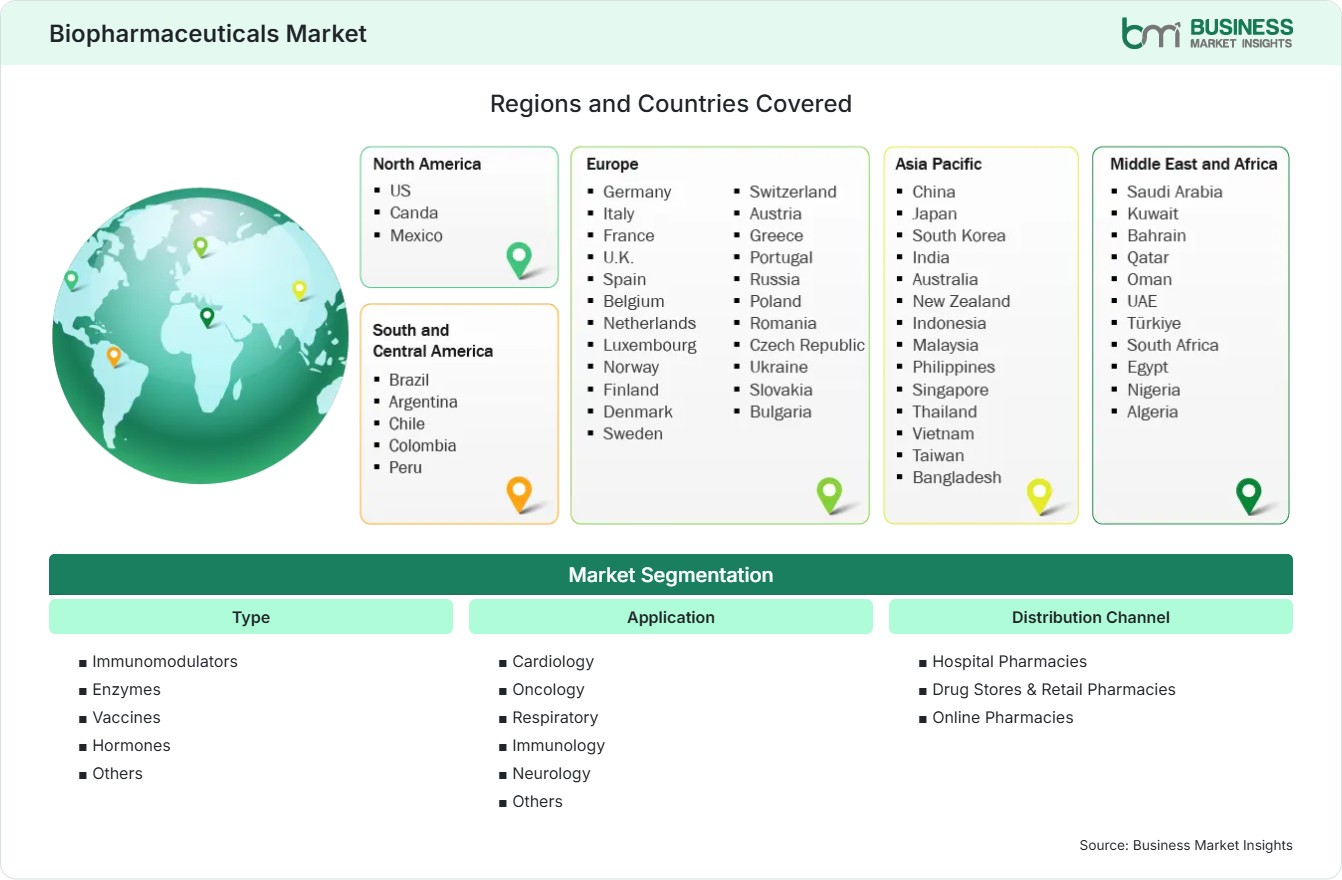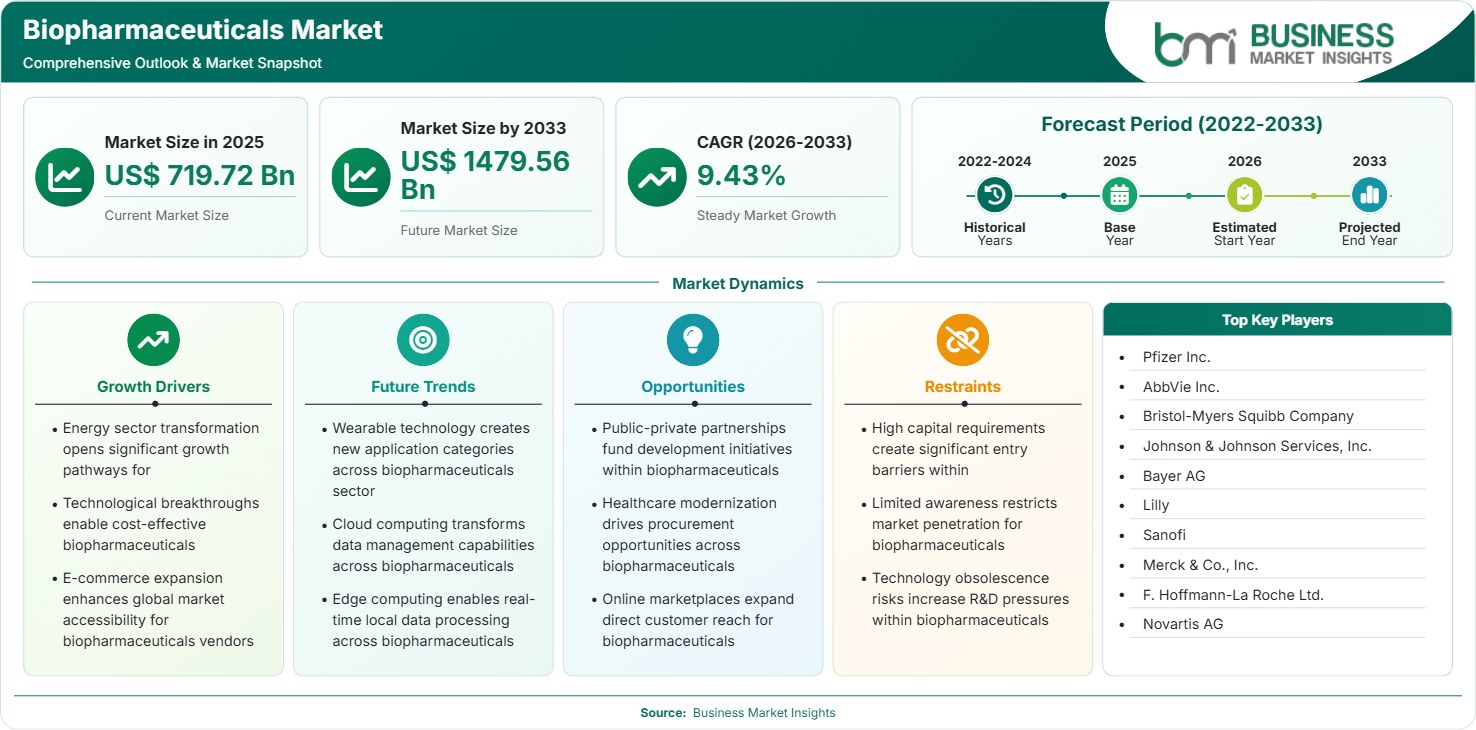
Biopharmaceuticals Market Regional Highlights
North America Biopharmaceuticals Market
North America accounted for 39%–42% of global revenue in 2025 and is projected to expand at a 9.0%–9.5% CAGR during 2026–2033. The region benefits from mature biotechnology ecosystems, advanced biologics manufacturing capacity, strong venture capital investment, and well-established reimbursement frameworks. Continued innovation in monoclonal antibodies, recombinant proteins, cell therapies, and biosimilars supports commercial expansion. The Biopharmaceuticals Market share remains highest in North America because of favorable regulatory pathways, extensive clinical trial infrastructure, and increasing demand for precision medicine across multiple therapeutic areas.
- The United States remains the largest revenue contributor due to world-leading biotechnology companies, extensive R&D spending, advanced manufacturing infrastructure, and increasing approvals for biologics and biosimilars across oncology, immunology, and rare disease applications.
- Canada continues strengthening regional competitiveness through expanding life sciences investments, growing clinical research collaborations, improved biotechnology funding, and supportive government initiatives encouraging commercialization of innovative biologic medicines.
- Increasing adoption of digital manufacturing, AI-assisted drug discovery, and continuous bioprocessing technologies enables manufacturers to improve operational efficiency while reducing development timelines and production costs across commercial facilities.
- Expanding partnerships among pharmaceutical companies, contract development organizations, academic institutions, and healthcare providers accelerate innovation while improving biologics accessibility and manufacturing resilience throughout North America.
- Biosimilar commercialization, value-based healthcare models, and rising healthcare expenditure continue supporting sustainable regional expansion despite increasing pricing pressures and evolving reimbursement policies.
US Biopharmaceuticals Market
The United States represents approximately 79%–82% of North American Biopharmaceuticals Market revenue and is expected to register a 9.2%–9.6% CAGR through 2033. Strong intellectual property protection, advanced manufacturing capabilities, significant biotechnology investments, and an extensive innovation ecosystem position the country as the leading center for biologics research, commercialization, and global exports. Continuous expansion of precision medicine, gene therapies, and immunotherapies further supports long-term industry competitiveness.
- Robust FDA regulatory pathways encourage faster commercialization of innovative biologics while maintaining rigorous quality standards, strengthening confidence among pharmaceutical manufacturers, healthcare providers, and investors.
- Leading universities, biotechnology clusters, and research hospitals generate continuous innovation through translational research, clinical trials, and public-private partnerships supporting advanced therapeutic development.
- Expanding adoption of personalized medicine increases demand for targeted biologics addressing oncology, autoimmune disorders, and rare diseases with improved treatment outcomes and reduced adverse effects.
- Growing investment in domestic biologics manufacturing strengthens supply chain resilience while supporting export competitiveness and reducing dependence on international production networks.
Europe Biopharmaceuticals Market
Europe captured 27%–30% of global Biopharmaceuticals Market revenue during 2025 and is anticipated to grow at a 8.7%–9.3% CAGR through 2033. Strong regulatory harmonization, increasing biosimilar adoption, advanced research institutions, and established pharmaceutical manufacturing capabilities continue supporting innovation. Germany leads regional production, while Switzerland remains a global biotechnology innovation hub. The United Kingdom demonstrates one of the fastest growth trajectories through expanding biotechnology investment and clinical research activities.
- Germany remains the largest European market through strong pharmaceutical manufacturing, biotechnology investment, and industrial automation supporting high-value biologics production across multiple therapeutic areas.
- Switzerland maintains global leadership in innovative biologics development through strong multinational pharmaceutical presence, advanced research infrastructure, and highly skilled scientific talent.
- The United Kingdom records one of the fastest regional expansion rates supported by biotechnology funding, precision medicine initiatives, and increasing academic-industry collaboration.
- France strengthens regional competitiveness through vaccine production, biotechnology innovation, and government-supported pharmaceutical manufacturing modernization programs.
- Growing biosimilar penetration across European healthcare systems improves patient access while creating sustainable long-term opportunities for manufacturers and healthcare providers.
Asia Pacific Biopharmaceuticals Market
Asia Pacific represented 24%–27% of worldwide Biopharmaceuticals Market revenue in 2025 and is forecast to register the fastest 10.8%–11.5% CAGR through 2033. Expanding healthcare infrastructure, rising biotechnology investment, supportive government policies, and increasing domestic biologics production continue accelerating industry development. China leads regional manufacturing capacity, while India records among the highest growth rates because of expanding contract manufacturing capabilities, skilled workforce availability, and favorable production economics.
- China dominates regional manufacturing through substantial biotechnology investments, expanding biologics production capacity, and strong government support for pharmaceutical innovation.
- India emerges as one of the fastest-growing biotechnology destinations because of competitive manufacturing costs, skilled scientific talent, and rapidly expanding contract development services.
- Japan continues strengthening innovation through regenerative medicine, advanced biologics research, and increasing commercialization of high-value specialty therapeutics.
- South Korea expands global competitiveness with growing biosimilar exports, modern manufacturing infrastructure, and strategic investments in biotechnology research and development.
- Regional healthcare expenditure continues rising as governments improve healthcare accessibility, reimbursement systems, and domestic pharmaceutical manufacturing capabilities supporting long-term expansion.
Rest of World Biopharmaceuticals Market
The Rest of World region accounted for 7%–10% of global Biopharmaceuticals Market revenue during 2025 and is projected to grow at a 9.3%–9.9% CAGR through 2033. South & Central America continue expanding biologics accessibility through healthcare modernization and biosimilar adoption.
Meanwhile, the Middle East & Africa strengthen regional competitiveness through increasing healthcare investment, pharmaceutical localization initiatives, biotechnology partnerships, and improved regulatory frameworks. Brazil remains the leading South American market, while Saudi Arabia demonstrates one of the fastest growth rates through expanding domestic pharmaceutical manufacturing and healthcare transformation initiatives.
- Brazil leads regional demand through expanding public healthcare programs, increasing biologics procurement, and improving domestic pharmaceutical production capabilities supporting wider patient access.
- Mexico strengthens manufacturing competitiveness by attracting international pharmaceutical investment, improving export infrastructure, and expanding biotechnology collaboration with multinational organizations.
- Saudi Arabia records one of the fastest regional growth rates supported by healthcare diversification strategies, biotechnology investment, and pharmaceutical localization programs.
- The United Arab Emirates continues attracting biotechnology partnerships through healthcare innovation initiatives, research investments, and advanced life sciences infrastructure development.
- South Africa strengthens biologics adoption through expanding healthcare infrastructure, improving regulatory capabilities, and increasing investment in specialized pharmaceutical manufacturing.