
Bed Runner Market Outlook: Size, Share, Trends, Growth Analysis, Competitive Landscape & Forecast, 2026-2033

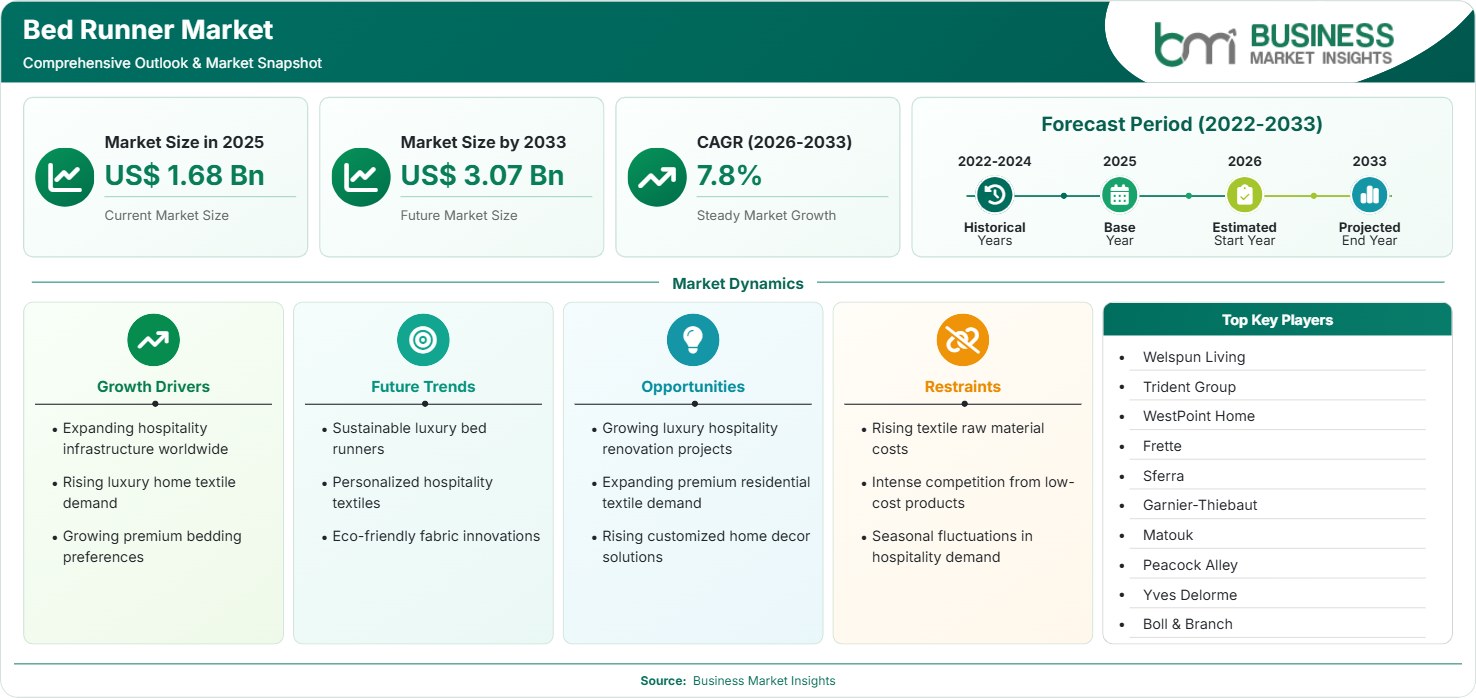
The Bed Runner Market size was valued at US$ 1.68 Billion in 2025 and is projected to reach US$ 3.07 Billion by 2033, growing at a CAGR of 7.8% from 2026 to 2033. Expansion of global hospitality infrastructure, rising luxury home textile demand, increasing premium bedding preferences, renovation of upscale hotels, and growth of customized interior décor solutions are supporting market development.

Report Coverage
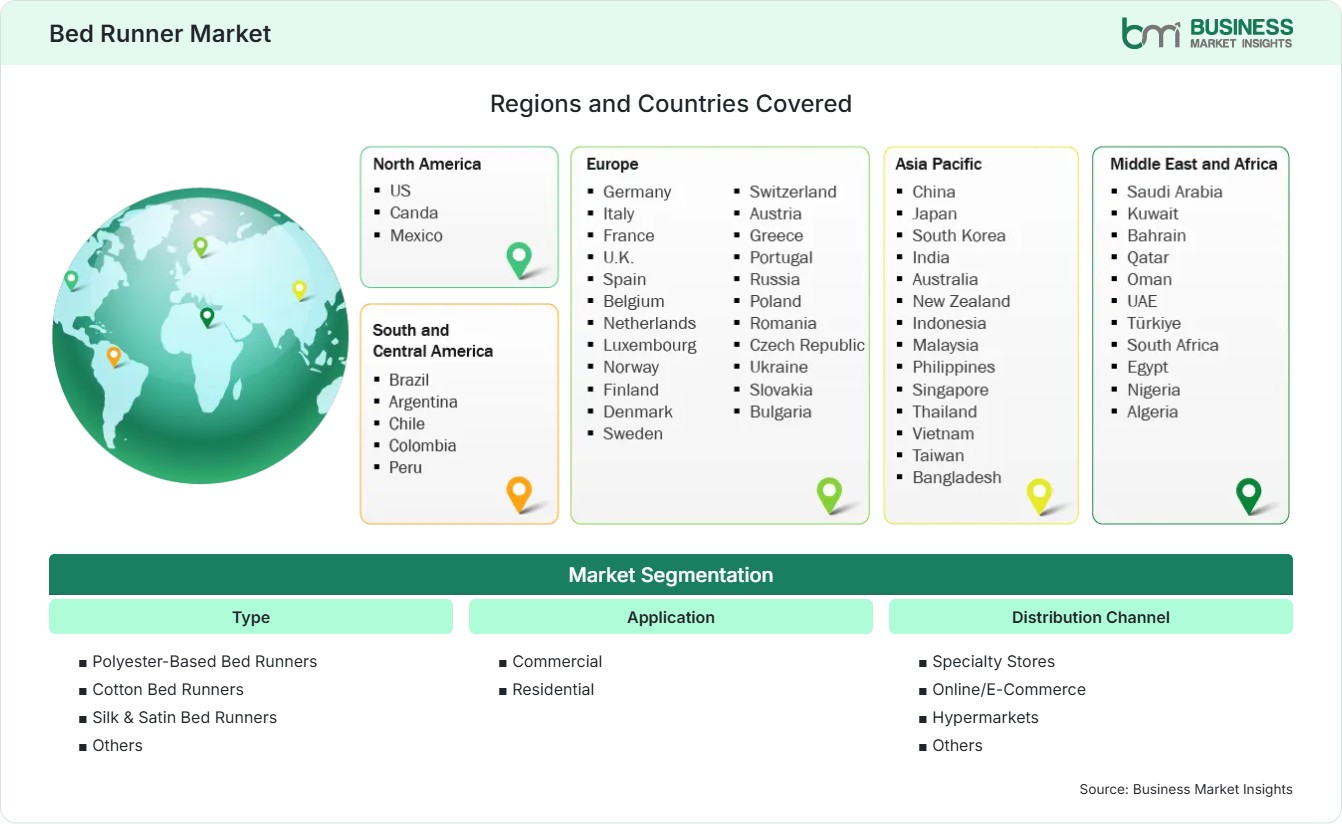
  • Type: Polyester-Based Bed Runners, Cotton Bed Runners, Silk & Satin Bed Runners, Others
  • Application: Commercial, Residential
  • Distribution Channel: Specialty Stores, Online/E-Commerce, Hypermarkets, Others
US$ 1.68 Bn Market size in 2025
US$ 3.07 Bn Market Size by 2033
7.8% CAGR, 2026 - 2033
2026-2033 Forecast Period

01 AI Overview

Bed Runner Market Summary

  • North America Region: North America holds a market share of 31%–34% in 2025 and is projected to grow at a CAGR of 7.2%–7.8% during 2026–2033. Growth is driven by luxury hospitality expansion, premium residential décor demand, boutique hotel development, and consumer preference for designer bedding accessories. The US market is expanding at a CAGR of 7.4%–8.0% due to renovation activity, upscale accommodations, and demand for premium textile products.
  • Fastest Growing Region: Asia Pacific accounts for 34%–37% market share in 2025 and is expected to grow at a CAGR of 8.5%–9.2% during 2026–2033. Growth is supported by hospitality investments, rising disposable income, luxury residential projects, and increasing adoption of premium bedroom furnishings.
  • Leading Segment: Polyester-Based Bed Runners represent 42%–45% market share in 2025 and are projected to grow at a CAGR of 7.5%–8.1% through 2026–2033. Affordability, durability, design flexibility, and easy maintenance support adoption across commercial and residential applications.
  • High Growth Segment: Silk & Satin Bed Runners account for a 20%–23% share in 2025 and are estimated to grow at a CAGR of 8.4%–9.0% during 2026–2033. Increasing demand for luxury aesthetics, premium interiors, and high-end hospitality experiences is strengthening adoption.
  • Key Market Opportunity: Luxury hotel renovation projects, premium residential developments, and customized home décor solutions are creating opportunities for manufacturers offering differentiated designs, sustainable materials, and personalized textile products.
  • Major Market Players: Welspun Living, Trident Group, WestPoint Home, Frette, Sferra, Garnier-Thiebaut, Matouk, Peacock Alley, Yves Delorme, Boll & Branch.
02 Strategic Insights

Bed Runner Market: Strategic Insights

Bed Runner Market Strategic Framework
FREE PDF
Request your free sample
Request free sample
03 Stakeholder View

Key Takeaways

  • The market ecosystem includes textile manufacturers, hospitality suppliers, interior designers, retailers, and e-commerce platforms. Product differentiation, fabric quality, customization capabilities, and brand positioning are becoming critical competitive factors.
  • Luxury hospitality and premium residential applications represent strong growth opportunities as consumers and businesses increasingly invest in visually appealing bedroom furnishings and coordinated décor solutions.
  • Innovation is centered around sustainable fabrics, advanced weaving techniques, customized designs, digital printing technologies, and premium finishes that improve aesthetic value and product differentiation.
  • Asia Pacific provides attractive investment opportunities due to expanding hotel infrastructure, urbanization, rising middle-class spending, and increasing preference for luxury home interiors.
  • Companies are strengthening market positions through partnerships with hospitality groups, direct-to-consumer platforms, and premium retail channels to improve distribution reach and customer engagement.
  • Future competitiveness will depend on balancing premium product quality with cost efficiency, sustainable sourcing practices, and the ability to respond quickly to changing décor trends.
04 Geographic Outlook

Bed Runner Market Regional Highlights

North America Bed Runner Market

North America accounted for a 31%–34% share of the Bed Runner Market in 2025 and is projected to grow at a CAGR of 7.2%–7.8% during 2026–2033. The region benefits from established hospitality infrastructure, premium home décor spending, and strong demand for luxury bedding accessories. The United States remains the largest contributor due to upscale hotel renovations, boutique accommodation growth, and consumer preference for designer bedroom furnishings.

  • The United States drives regional demand through luxury hospitality expansion, premium residential projects, and increasing adoption of designer textile accessories.
  • Canada is witnessing rising demand through boutique hotels, upscale residential developments, and growing consumer interest in high-quality interior décor products.
  • Hospitality operators are upgrading room aesthetics through coordinated bedding accessories that improve guest experience and strengthen brand differentiation.
  • Online retail growth is supporting wider availability of premium bed runners from domestic and international textile brands.

US Bed Runner Market

The US represented a 28%–31% share of the Bed Runner Market in 2025 and is expected to grow at a CAGR of 7.4%–8.0% through 2026–2033. Demand is supported by luxury hotel renovation projects, increasing home décor expenditure, and preference for premium bedroom styling. The market benefits from established retail networks, e-commerce adoption, and strong presence of high-end textile brands.

  • Luxury hotels are adopting premium bedding accessories to enhance room presentation and create differentiated guest experiences.
  • Residential consumers are increasing spending on decorative textiles as home improvement and interior customization trends expand.
  • E-commerce platforms are improving premium access and customized bed runner collections across diverse consumer segments.
  • Interior designers are incorporating textile accessories into upscale residential and hospitality design projects.

Europe Bed Runner Market

Europe held a 24%–27% share of the Bed Runner Market in 2025 and is forecast to grow at a CAGR of 7.6%–8.2% from 2026–2033. The region benefits from strong luxury hospitality, heritage textile production, and demand for premium interior products. France, Italy, Germany, and the United Kingdom represent key markets due to established design industries and upscale accommodation sectors.

  • France demonstrates strong demand through luxury hotels, premium textile brands, and consumer preference for sophisticated interior aesthetics.
  • Italy supports market expansion through renowned textile craftsmanship, hospitality investments, and designer home furnishing trends.
  • Germany is adopting premium bedding accessories through upscale residential projects and hospitality modernization initiatives.
  • The United Kingdom is witnessing demand from boutique hotels, luxury accommodations, and premium home décor consumers.

Asia Pacific Bed Runner Market

Asia Pacific captured a 34%–37% share of the Bed Runner Market in 2025 and is expected to achieve a CAGR of 8.5%–9.2% during 2026–2033. The region represents the fastest-growing market due to expanding hospitality infrastructure, rising disposable incomes, urban housing development, and increasing demand for premium home furnishings. China, India, Japan, and Southeast Asian countries are driving regional growth.

  • China is expanding demand through hotel development, luxury residential projects, and increasing adoption of premium interior furnishing products.
  • India is witnessing growth through hospitality expansion, urban housing development, and rising consumer preference for decorative home textiles.
  • Japan continues adopting premium bedding accessories through luxury accommodation upgrades and refined interior design preferences.
  • Southeast Asian countries are benefiting from tourism growth, resort development, and increasing investment in hospitality infrastructure.

Rest of World Bed Runner Market

Rest of World represented a 8%–11% of the Bed Runner Market share in 2025 and is projected to grow at a CAGR of 7.8%–8.5% during 2026–2033. South America and the Middle East & Africa are witnessing increased adoption due to hospitality investments, tourism expansion, and premium residential development. Brazil, UAE, Saudi Arabia, and South Africa are emerging opportunities.

The Middle East is investing in luxury hotels and resorts, while South American markets are experiencing increased demand for premium home textiles due to improving lifestyle preferences and interior decoration trends.

  • Brazil is expanding adoption through hospitality development, residential décor demand, and growth of premium textile retail channels.
  • Saudi Arabia is creating opportunities through luxury tourism projects, hotel construction, and upscale accommodation developments.
  • The United Arab Emirates is increasing demand through luxury resorts, premium hotels, and high-end residential interior projects.
  • South Africa is adopting decorative bedding products through hospitality modernization and premium household furnishing demand.
Global Market Geography
FREE PDF
Request your free sample
Request free sample
05 Segment Analysis

Bed Runner Market Segmentation

Type

Type segmentation includes Polyester-Based Bed Runners, Cotton Bed Runners, Silk & Satin Bed Runners, and Others. Polyester-Based Bed Runners accounted for the leading share in 2025 due to affordability, durability, easy maintenance, and broad usage across hospitality applications. Premium fabric categories are gaining momentum as luxury hotels and residential consumers seek enhanced aesthetics and comfort. The segment is projected to grow at a CAGR of 7.6%–8.2% from 2026–2033, supported by evolving interior design preferences and rising premium bedding investments.

  • Polyester-Based Bed Runners: Polyester-based products offer durability, cost efficiency, stain resistance, and design flexibility, making them suitable for hotels, resorts, and everyday residential applications.
  • Cotton Bed Runners: Cotton bed runners are preferred for natural texture, breathability, and comfort. Demand is increasing among consumers seeking sustainable and soft decorative bedding solutions.
  • Silk & Satin Bed Runners: Silk and satin products serve luxury hospitality and premium residential segments with elegant finishes, sophisticated appearance, and enhanced decorative value.

Application

Application segmentation covers Commercial and Residential uses, with commercial establishments representing the dominant segment due to extensive adoption across hotels, resorts, and hospitality facilities. Residential demand is increasing as consumers invest in premium bedroom aesthetics and customized décor solutions. The application segment is expected to register a CAGR of 7.7%–8.3% during 2026–2033. Growing renovation activities, lifestyle upgrades, and demand for coordinated interior designs are supporting broader market penetration across both applications.

  • Commercial: Commercial users including hotels, resorts, and serviced accommodations adopt bed runners to enhance room appearance, improve guest experience, and support premium branding strategies.
  • Residential: Residential adoption is increasing through home décor trends, online shopping growth, personalized interiors, and consumer interest in premium bedroom accessories.

Distribution Channel

Distribution channel segmentation consists of Specialty Stores, Online/E-Commerce, Hypermarkets, and Others. Specialty stores will remain significant due to personalized services, high-quality products, and the display of high-quality items, along with customers’ preference for assessing quality before purchasing. The growth of Online/E-Commerce channels is rapid due to convenience and the extensive choice of products. This segment is projected to grow at a CAGR of 8.0%–8.6% from 2026 to 2033 as brands strengthen direct-to-consumer strategies and online customization options.

  • Specialty Stores: Specialty retailers provide premium textile collections, expert recommendations, and personalized purchasing experiences for luxury hospitality and residential customers.
  • Online/E-Commerce: Online platforms are expanding market access through wider selections, competitive pricing, customer reviews, and convenient purchasing options for consumers worldwide.
  • Hypermarkets: Hypermarkets support mass-market distribution by offering affordable bedding accessories, household textile products, and convenient shopping experiences for residential buyers.
06 Market Forces

Bed Runner Market Dynamics

Key Market Drivers

Expanding Hospitality Infrastructure Worldwide

The expansion of hotels, resorts, and serviced accommodation services around the globe is driving high demand for bed-making accessories that enhance beauty and the overall guest experience. Hospitality businesses are investing in high-quality interior elements to make their facilities unique and meet their customers' needs. The market growth will be driven by a recovery in the tourism industry, new hotel construction, and renovation activities in both developed and developing nations. From the Bed Runner Market trends, one can tell that hospitality businesses are focusing on quality textiles.

Rising Luxury Home Textile Demand

The increase in expenditures by consumers on premium furnishings is increasing demand for decorative textiles that improve the aesthetics of the bedroom. Increasing income levels, changes in lifestyles, and rising interest in interior customizations are making consumers consider luxury accessories for their bedrooms. Premium-quality fabrics, distinctive patterns, and designer ranges are being preferred by consumers for personalized interiors. Manufacturers are responding by offering quality products, sustainable textile options, and customization solutions. The growing role of interior design trends and digital inspiration portals is also helping its adoption, as consumers increasingly see bedroom accessories as part of home decor.

Growing Premium Bedding Preferences

Consumers and hospitality operators are increasingly prioritizing premium bedding products that combine visual appeal, quality materials, and enhanced comfort. Luxury hotels utilize decorative accessories and bedding to make their guests experience something unique, while household customers want a bedroom design that will correspond to one’s personal style. Such a trend towards premiumization stimulates textile makers to produce new items, which will be made out of high-quality fabrics and woven professionally with a stylish design. The need for an aesthetically pleasing bedroom environment is increasing in urban areas, where people can afford to upgrade their home interiors.

Key Market Opportunities

Growing Luxury Hospitality Renovation Projects

Luxury renovation projects in the hospitality industry have created ample opportunities for bed runner manufacturers as hotels renovate their rooms to meet customer demands. Renovation activities involve beautifying the rooms' appearance, strengthening the brand image, and delivering quality services through luxurious room arrangements. The use of bed runners provides a relatively inexpensive way to decorate room interiors without altering the rooms' structure. Manufacturers offering flexible customization, premium fabrics, and reliable supply capabilities can benefit from growing demand among luxury hotels, boutique accommodations, and resort operators, supporting the Bed Runner Market forecast.

Expanding Premium Residential Textile Demand

The rising need for luxury fabrics used in homes presents an opportunity due to the growing trend where consumers are allocating more money towards personalizing their living spaces. The growing levels of urbanization, increased consumer expenditure, and the growing interest in home improvement projects are fueling the adoption of decorative bedding accessories. Today’s consumers are looking for high-quality products made of eco-friendly materials, unique designs, and environmentally sound production processes. With luxury fabric brands making their collections available via digital marketing platforms, it becomes easier to target new customer segments based on changes in consumer behavior.

Rising Customized Home Decor Solutions

The growing popularity of personalized interiors has been driving the demand for customized bed runners in varied colors, prints, textures, and customized specifications. Consumers as well as hoteliers are now looking for decor products that will help them personalize their homes and properties. Advances in digital fabrication technology and production processes, as well as changes in consumer channels, make it easier for companies to produce customized textile items. This opens opportunities for manufacturers to offer small-batch production, high-quality finishing, and personalization. The growing demand for bespoke interiors is expected to drive market growth.

Market Restraints and Challenges

Rising Textile Raw Material Costs

Factor: Increasing prices of cotton, synthetic fibers, silk, dyes, and other textile inputs are raising manufacturing expenses for bed runner producers. Impact: Higher production costs can put pressure on profit margins, raise retail prices, and influence purchasing decisions among cost-sensitive consumers. Fluctuating raw material availability and supply chain disruptions create additional challenges for manufacturers managing production schedules and pricing strategies. Companies are exploring alternative materials, efficient sourcing practices, and sustainable production methods to control costs. However, maintaining product quality while managing input price volatility remains a significant challenge, particularly for brands competing in premium and value-oriented market segments.

Intense Competition from Low-Cost Products

Factor: Availability of inexpensive textile products from low-cost manufacturers increases competitive pressure across domestic and international markets. Impact: Premium brands may face challenges maintaining market share as consumers compare prices and seek affordable alternatives. Low-cost offerings can influence purchasing behavior, especially in price-sensitive residential segments and mass retail channels. Established manufacturers must differentiate through superior quality, brand reputation, customization options, and sustainable practices. There is more competition due to the growing number of online marketplaces, which allow many sellers to reach consumers globally. Firms need competitive positioning of their products and good management for this reason.

07 Company Analysis

Competitive Landscape

The Bed Runner Market analysis highlights increasing competition among textile manufacturers, luxury home furnishing brands, hospitality suppliers, and direct-to-consumer companies. Leading players are focusing on premium fabric development, sustainable sourcing, customized designs, expanded distribution networks, and partnerships with hospitality operators. Companies are strengthening their market presence by introducing differentiated collections that address changing consumer preferences for luxury, comfort, and personalized interior décor solutions.

Company Name

Overview

Products and Services relevant to this market

Welspun Living

Global home textile manufacturer supplying bedding and lifestyle products across international markets.

Bed runners, bedding collections, home textiles, towels, and hospitality textile solutions.

Trident Group

Textile company offering home furnishing products for residential and commercial applications.

Bed runners, bed linen, bath textiles, home décor products, and hospitality solutions.

WestPoint Home

Home textile manufacturer serving retail, hospitality, and institutional customers globally.

Decorative bedding, bed runners, sheets, comforters, and premium textile products.

Frette

Luxury linen brand specializing in premium hospitality and residential textile products.

Luxury bed runners, designer bedding, hotel linens, and customized textile collections.

Sferra

Premium Italian-inspired textile brand focused on luxury home furnishings.

Luxury bedding accessories, bed runners, linens, and high-end bedroom textiles.

Garnier-Thiebaut

Textile manufacturer known for premium woven products and hospitality solutions.

Decorative textiles, bedding accessories, luxury fabrics, and customized hospitality products.

Matouk

Luxury home textile company providing premium bedding and lifestyle products.

Designer bed runners, luxury linens, bedding collections, and personalized textile solutions.

Peacock Alley

Home textile brand offering refined bedding and interior décor products.

Bed runners, bedding accessories, luxury linens, and home furnishing collections.

Yves Delorme

Luxury French textile brand specializing in premium bedding products.

Silk and cotton bed runners, luxury bedding, designer linens, and home décor textiles.

Boll & Branch

Premium textile company focused on organic and ethically sourced bedding products.

Organic bedding accessories, bed runners, luxury sheets, and sustainable home textiles.

08 Industry Activity

Recent Developments

September 2025

Coyuchi expanded its organic home textile portfolio by launching its first apparel collection, continuing its strategy of extending its sustainable lifestyle textile offerings beyond traditional bedding products.

June 2025

Nesterra (Sutlej Textiles & Industries) launched its 5.0 Collection featuring new home décor and furnishing designs focused on aesthetics, functionality, and sustainability, supporting growth in premium interior textile applications.

April 2025

Sansaar (D’Decor) launched its first-ever bedding collection and expanded its home décor portfolio with new bedroom textile offerings, strengthening its position in premium bedding and decorative furnishing solutions.

February 2025

Welspun Living expanded its sustainable textile initiatives by introducing eco-friendly textile materials and strengthening its home textile portfolio focused on innovation, sustainability, and premium consumer offerings.

10 Trust & Transparency

Research Methodology

The market analysis combines proprietary research with secondary data from government agencies, company disclosures, regulatory filings, industry databases and expert interviews. Market estimates are validated through data triangulation, cross-market benchmarking and analyst review.

View Full Research Methodology

11 Questions Answered

Frequently Asked Questions

How does the Bed Runner Market Report evaluate competition?

The market report analyzes company strategies, product offerings, distribution approaches, material innovation, market positioning, and growth opportunities across commercial and residential applications.

Why are online channels gaining importance in this market?

Online channels provide broader product availability, convenient purchasing, customer reviews, customization options, and direct access to premium textile brands.

How are hotels using bed runners?

Hotels use bed runners as decorative elements to improve room appearance, enhance guest experience, support branding strategies, and create premium accommodation environments.

Which bed runner material is most widely used?

Polyester-based bed runners are widely used due to affordability, durability, maintenance advantages, and suitability for large-scale hospitality applications.

What factors are increasing demand for bed runner market trends?

Demand is increasing due to hospitality expansion, luxury home décor trends, premium bedding preferences, hotel renovation projects, and consumer interest in personalized bedroom aesthetics.

Access the Full Bed Runner Market Report

Get segment-level forecasts, regional estimates, competitive benchmarking, company profiles and downloadable Excel datasets.

Access the full Bed Runner Market Report
350 pages PDF & Excel | 2026-07-31