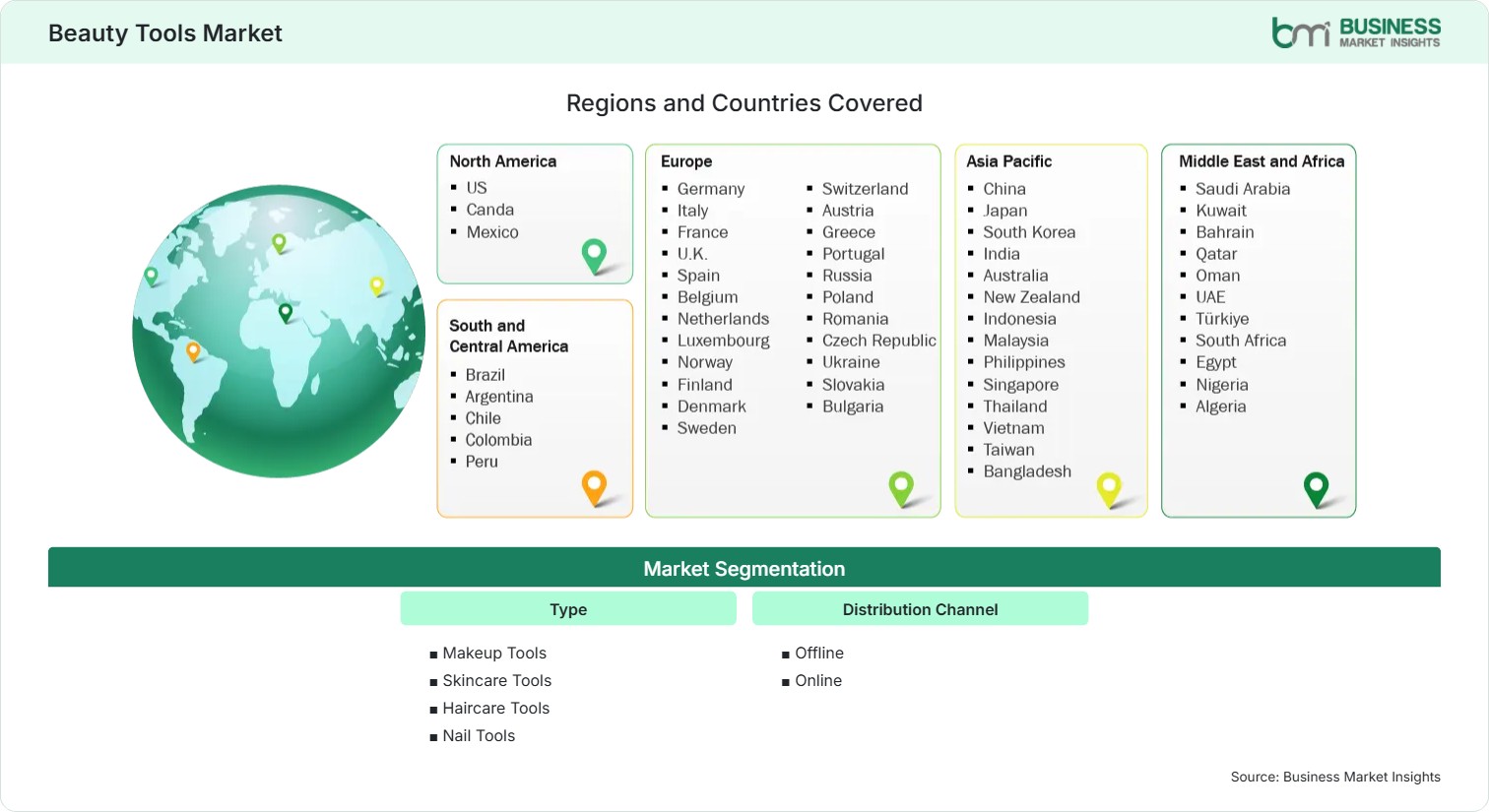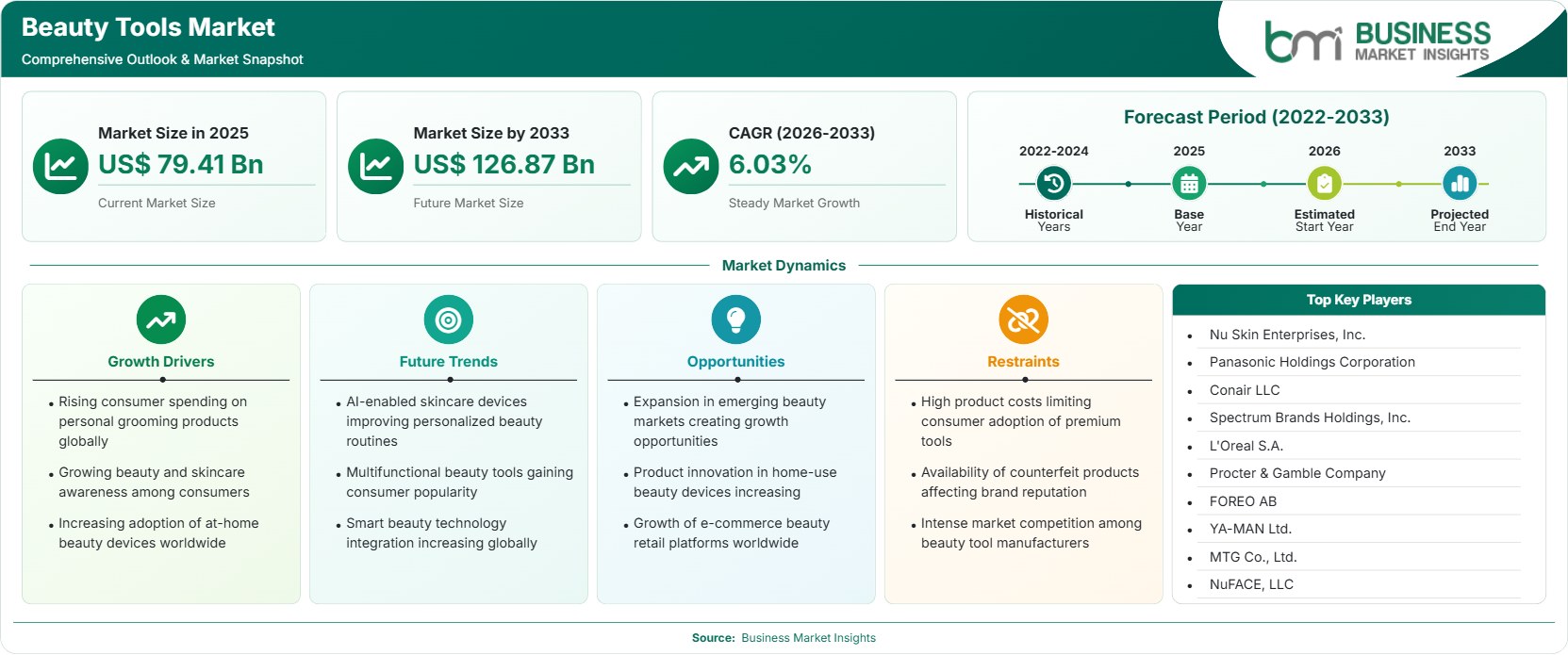
Beauty Tools Market Regional Highlights
North America Beauty Tools Market
North America accounts for 34%–37% of the Beauty Tools Market share in 2025 and is projected to grow at a CAGR of 5.6%–5.9% during 2026–2033. High consumer spending on personal care, premium beauty products, and advanced skincare devices supports regional leadership. Strong retail networks, product innovation, and growing preference for at-home beauty treatments continue driving market expansion.
- The United States leads regional demand through strong adoption of skincare devices, premium haircare tools, and technologically advanced beauty products.
- AI-powered skincare analysis, LED facial devices, and multifunctional beauty tools continue supporting premium product sales across consumers.
- Beauty brands are expanding direct-to-consumer sales through e-commerce, digital marketing, and subscription-based purchasing models.
- Increasing demand for salon-quality beauty treatments at home continues encouraging adoption of advanced personal grooming devices.
US Beauty Tools Market
The U.S. represents 82%–85% of the North American market in 2025 and is projected to register a CAGR of 5.7%–6.1% through 2033. High disposable incomes, strong beauty brand presence, advanced retail infrastructure, and continuous innovation in personal care devices maintain market leadership. Consumer preference for premium home-use beauty technologies continues supporting demand.
- Consumers increasingly purchase facial cleansing devices, anti-aging technologies, and premium grooming products for daily skincare routines.
- Social media and beauty influencers continue accelerating adoption of innovative beauty devices across younger consumers during beauty tools market forecasts.
- Companies are introducing connected beauty tools offering personalized skincare recommendations and improved user experiences.
- Omnichannel retail strategies continue improving accessibility through both online and offline distribution channels.
Europe Beauty Tools Market
Europe holds 25%–28% market share in 2025 and is expected to expand at a CAGR of 5.5%–5.9% during the forecast period. Premium skincare demand, sustainable beauty products, and technologically advanced grooming devices continue supporting market growth. Germany leads regional revenue, while the United Kingdom records comparatively faster growth through expanding online beauty retail.
- Germany remains the largest regional market supported by strong premium beauty product consumption.
- The United Kingdom is witnessing increasing adoption of connected beauty devices and digital beauty retail.
- France and Italy continue supporting demand for luxury skincare and premium beauty products.
- Manufacturers increasingly emphasize sustainable materials and rechargeable beauty devices.
Asia Pacific Beauty Tools Market
Asia Pacific captures 27%–30% market share in 2025 and is projected to register the fastest CAGR of 6.9%–7.4% during 2026–2033. Rising disposable incomes, expanding middle-class populations, increasing skincare awareness, and strong beauty culture continue driving regional growth. China leads market revenue, while India remains the fastest-growing country.
- China dominates regional demand through large-scale beauty product consumption and domestic manufacturing capabilities.
- India continues expanding through rising e-commerce penetration, growing beauty awareness, and increasing disposable incomes.
- Japan and South Korea lead innovation in skincare devices and premium beauty technologies.
- Regional manufacturers are expanding affordable product portfolios through digital marketing and online retail.
Rest of World Beauty Tools Market
Rest of World accounts for 9%–11% market share in 2025 and is expected to grow at a CAGR of 5.8%–6.2% through 2033. South & Central America and the Middle East & Africa continue witnessing increasing beauty product adoption due to expanding retail infrastructure, rising beauty awareness, and improving consumer purchasing power.
- Brazil leads the Latin American market through expanding beauty and personal care consumption.
- International brands continue strengthening regional distribution through retail partnerships and e-commerce platforms.
- Rising disposable incomes continue supporting demand for premium home-use beauty devices.
- Digital retail expansion and influencer marketing are improving product accessibility across emerging markets.