Rising Demand from Hygiene and Healthcare Applications
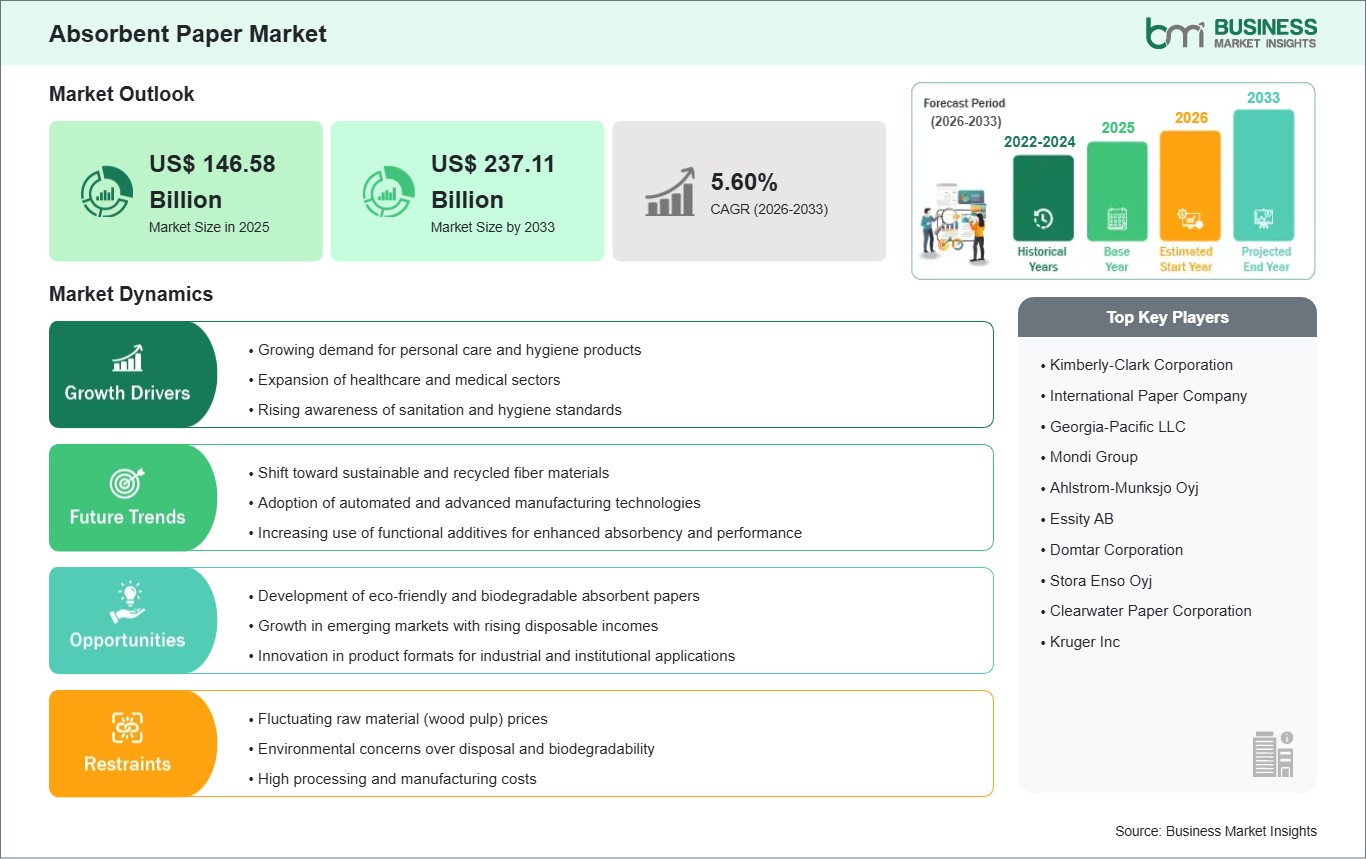
The absorbent paper market is growing due to increased use in hygiene and healthcare. Products like tissue paper, paper towels, medical wipes, and sanitary paper goods are crucial for cleanliness, infection control, and personal hygiene. A rising population, urbanization, and improved living standards are leading to more consumption in homes, businesses, and institutions. In healthcare, the rising number of hospital admissions, a growing healthcare system, and a stronger focus on patient safety are driving the need for disposable absorbent paper products that help reduce contamination risks.
Additionally, greater awareness of hygiene and sanitation in emerging economies, backed by government efforts and public health campaigns, is aiding market growth. The foodservice, hospitality, and commercial sectors depend heavily on absorbent paper for cleaning, spill control, and food handling, which further boosts demand. Overall, the essential role of absorbent paper in everyday life and healthcare makes it a reliable demand driver in the market.
Innovation in Specialty and Functional Absorbent Papers
Beyond basic household and commercial uses, demand is increasing for products that deliver better performance. These include high-absorbency paper towels, antibacterial wipes, oil-absorbing sheets, and moisture-resistant industrial papers. Improvements in material science and processing technology enable manufacturers to create papers with specific traits, such as faster absorption, better strength when wet, and specialized chemical or biological capabilities.
Industries like healthcare, food processing, electronics, and automotive drive this trend. These industries require tailored solutions for cleaning, sterilization, and spill management. By investing in research and development, companies can launch unique products that meet these specialized needs. This can lead to higher prices and increased brand loyalty. Moreover, functional and high-performance papers can support sustainability efforts by using biodegradable additives or recycled fibers. This approach appeals to environmentally aware consumers. Focusing on specialty product innovation allows manufacturers to broaden their product lines, improve profits, and gain a competitive advantage in a growing market.