Tissue Paper Market Regional Highlights
North America Tissue Paper Market
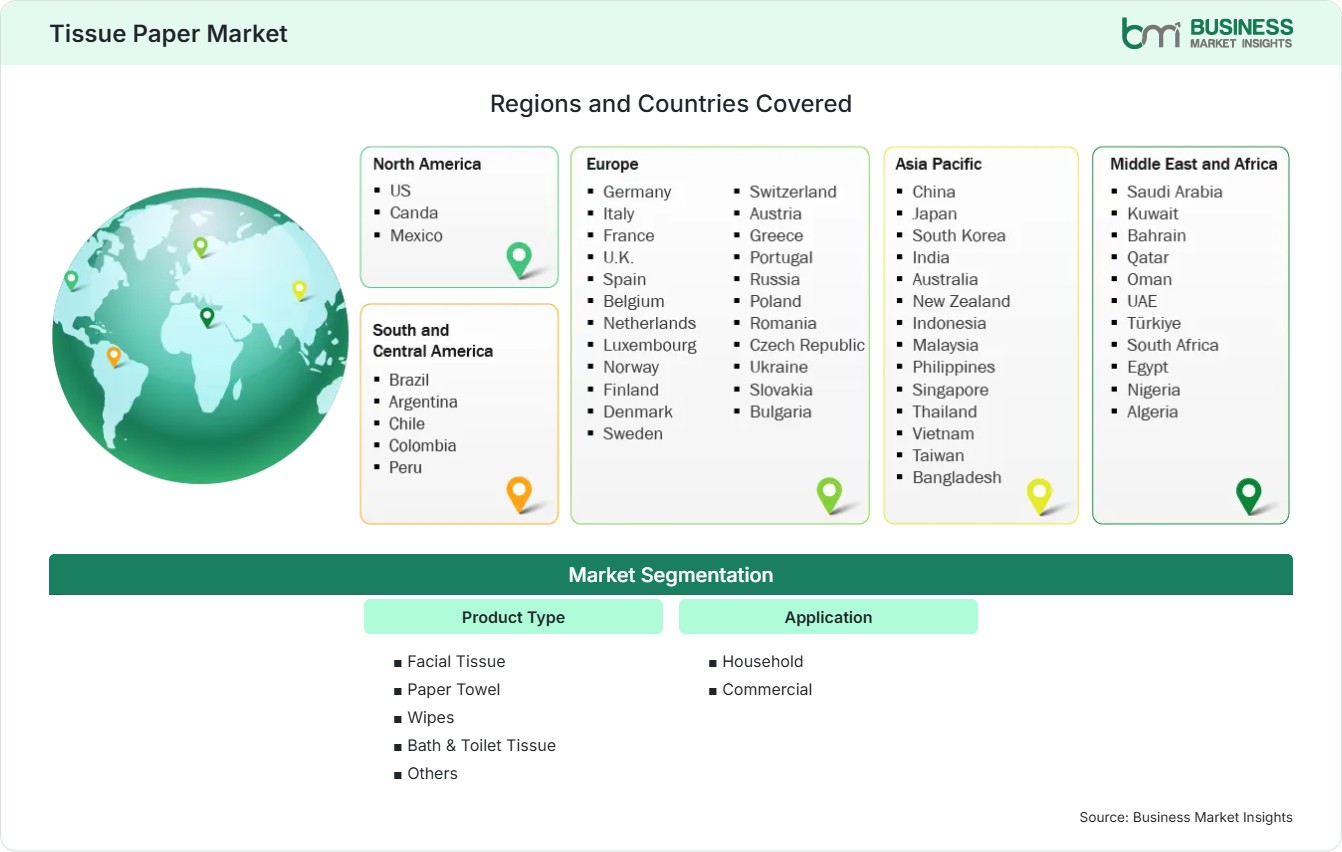
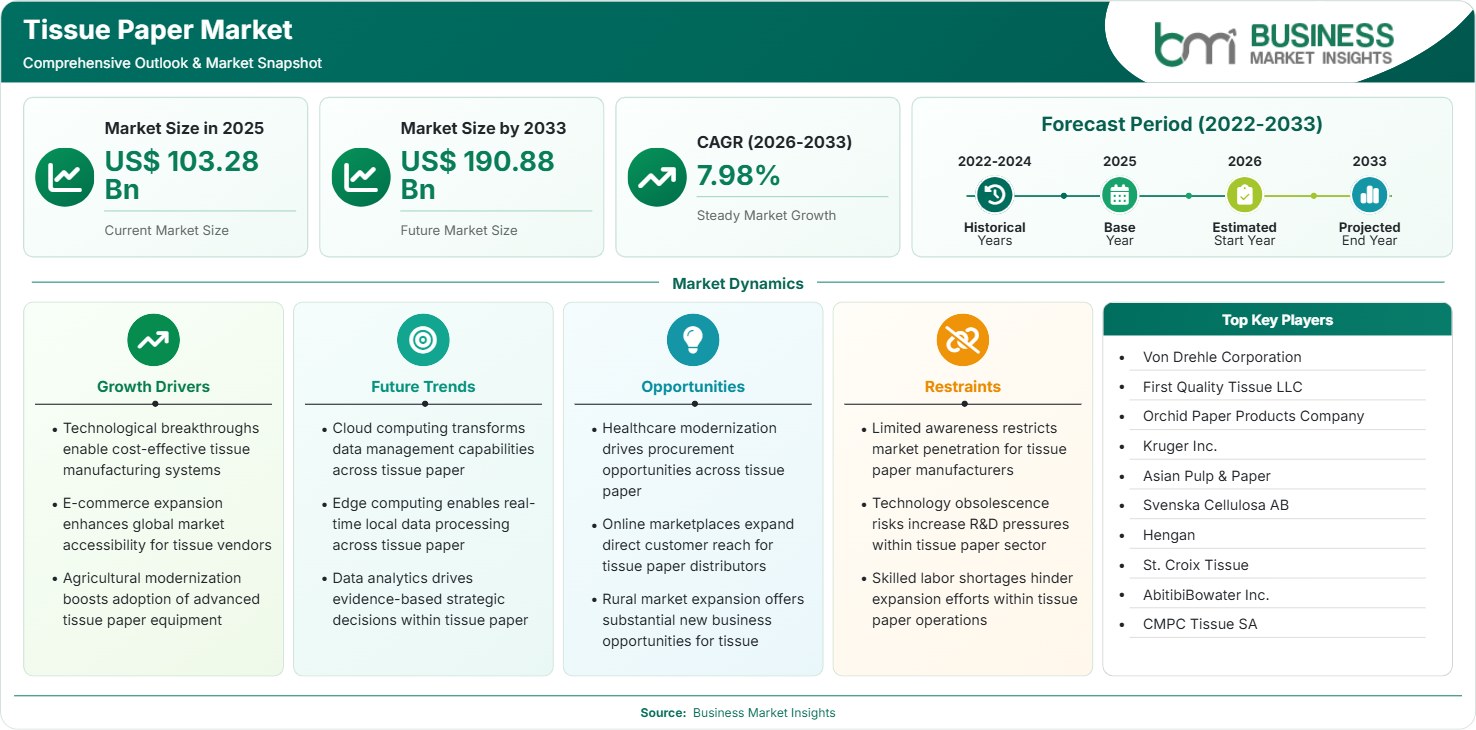
North America accounted for approximately 32%–35% of global demand in 2025 and is projected to expand at a CAGR of 6.8%–7.4% through 2033. Strong household consumption, mature retail distribution, and high institutional hygiene standards support market stability. Tissue Paper Market share remains substantial because of premium product adoption, advanced manufacturing infrastructure, and consistent replacement demand from healthcare, hospitality, and commercial sectors. Sustainability initiatives and investments in recycled-content products continue strengthening regional competitiveness while supporting long-term operational efficiency.
- Consumer preference for premium softness, durability, and sustainable sourcing drives innovation in household tissue categories while supporting higher-value product positioning across retail channels.
- Healthcare facilities and long-term care centers maintain stable procurement volumes, creating recurring demand for hygiene-focused products and institutional-grade tissue solutions.
- Manufacturers continue investing in automation and energy-efficient production systems to reduce costs, improve productivity, and comply with environmental performance standards.
- Private-label expansion by major retailers increases competitive intensity while providing consumers with broader product choices and value-oriented purchasing options.
- Growing recycled-fiber utilization supports corporate sustainability targets and encourages development of environmentally responsible product portfolios.
US Tissue Paper Market
The United States represents roughly 74%–78% of regional demand and advances at a CAGR of 6.9%–7.5% through 2033. Strong purchasing power, developed retail infrastructure, and extensive institutional consumption support continued expansion. Consumer preference for premium tissue products remains a defining characteristic of the national market.
- Expansion of e-commerce platforms improves accessibility for bulk household purchases and subscription-based tissue delivery services.
- Institutional demand from airports, healthcare systems, and office complexes continues supporting stable volume growth and premium product adoption.
- Investments in recycled-fiber processing and sustainable packaging technologies strengthen environmental performance and regulatory compliance.
- Product differentiation through softness enhancement and absorbency improvements remains a major competitive strategy among leading suppliers.
Europe Tissue Paper Market
Europe accounted for 24%–27% of global consumption in 2025 and is expected to grow at a CAGR of 6.5%–7.2% through 2033. The region benefits from strong sustainability regulations, established recycling infrastructure, and widespread adoption of certified forestry products. Germany leads regional demand while Poland emerges as a high-growth Tissue Paper Market with a CAGR of approximately 7.8%–8.4% supported by industrial expansion and retail development.
- Circular-economy policies encourage manufacturers to increase recycled-fiber utilization and reduce production-related environmental impacts.
- Premium tissue categories gain traction as consumers prioritize comfort, product quality, and environmentally responsible sourcing.
- Hospitality and tourism recovery continues supporting commercial demand across hotels, restaurants, and transportation facilities.
- Advanced converting technologies enhance production efficiency and facilitate development of innovative tissue formats and packaging solutions.
- Retailers increasingly prioritize eco-labeled products to align with consumer sustainability expectations and procurement standards.
Asia Pacific Tissue Paper Market
Asia Pacific held 28%–31% of global demand in 2025 and records the fastest CAGR of 9.0%–9.8% through 2033. Rapid urbanization, population growth, and improving disposable incomes drive substantial consumption increases. China remains the largest regional Tissue Paper Market, while India emerges as the fastest-growing country with a CAGR of 10.2%–11.0%. Rising hygiene awareness and expanding modern retail infrastructure continue supporting regional expansion.
- Urban households increasingly purchase premium tissue products as income levels rise and lifestyle patterns evolve.
- Investments in large-scale manufacturing facilities improve supply availability and support regional export opportunities.
- Government sanitation initiatives contribute to stronger adoption of household and institutional tissue products.
- Hospitality, healthcare, and educational infrastructure development expands commercial consumption across emerging economies.
- Digital commerce channels accelerate product accessibility and brand visibility throughout densely populated markets.
Rest of World Tissue Paper Market
Rest of World accounted for approximately 12%–15% of global consumption in 2025 and is projected to expand at a CAGR of 7.3%–8.1% through 2033. South & Central America benefit from improving retail penetration and rising hygiene awareness, while Middle East & Africa experience demand growth through urbanization and commercial infrastructure investments. Brazil remains the leading market in South & Central America, whereas Saudi Arabia demonstrates strong growth potential in the Middle East. Tissue Paper Market share gains are increasingly supported by tourism, healthcare expansion, and hospitality investments.
Growing urban populations across major metropolitan centers continue supporting household consumption and institutional demand. Investments in modern retail formats and regional manufacturing facilities improve product accessibility while reducing import dependency and logistics costs.
- Expanding tourism sectors increase procurement requirements from hotels, airports, restaurants, and commercial establishments seeking consistent hygiene standards.
- Healthcare infrastructure investments strengthen demand for disposable hygiene products across hospitals, clinics, and long-term care facilities.
- Regional manufacturers increasingly adopt sustainable sourcing and recycled-fiber strategies to improve competitiveness and align with environmental expectations.
- Population growth and urban development projects create long-term consumption opportunities for household and institutional tissue products.
- Government sanitation initiatives support wider adoption of hygiene products across residential, educational, and public-service environments.