
Research Antibodies Market Size, Share, Trends & Forecast Report, 2026–2033

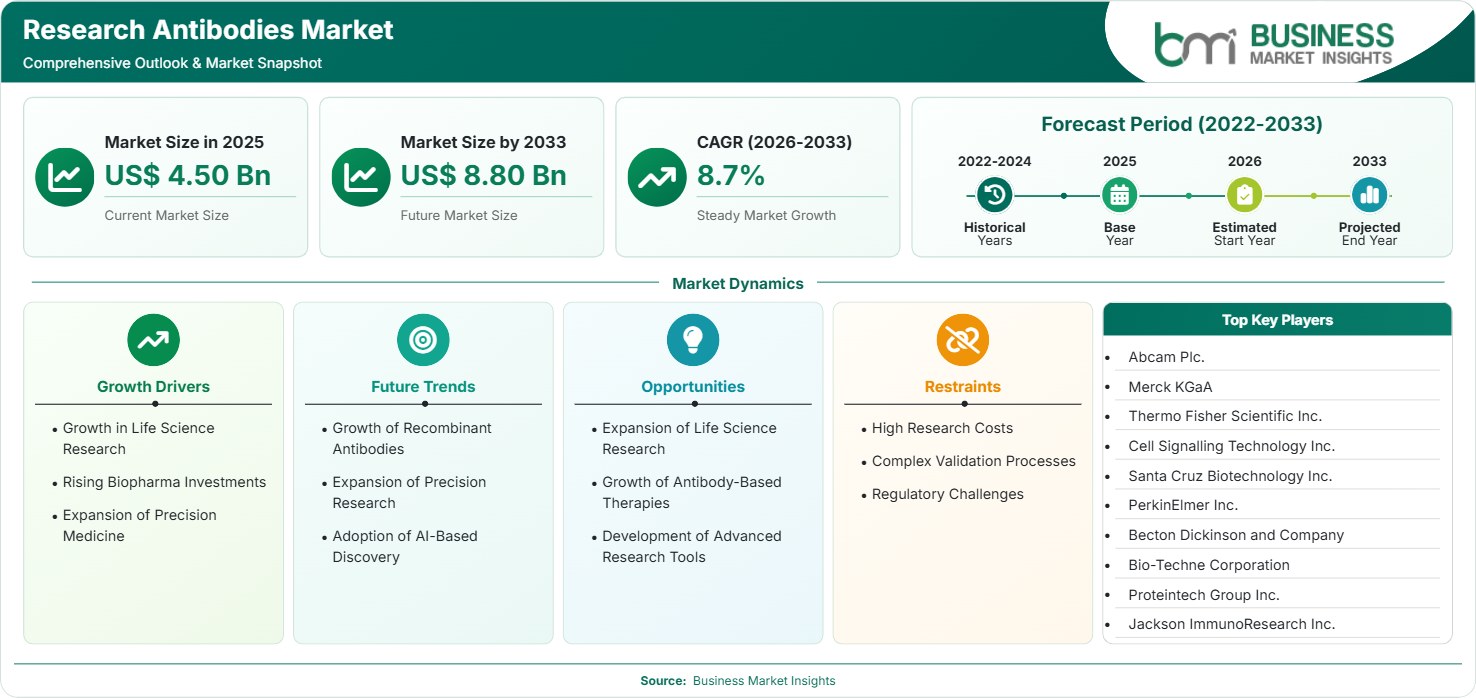
The Research Antibodies Market size was valued at US$ 4.50 Billion in 2025 and is projected to reach US$ 8.80 Billion by 2033, growing at a CAGR of US$ 8.7% during 2026–2033, driven by expanding life science research, biopharma investments, precision medicine adoption, and advanced antibody-based technologies.

Report Coverage
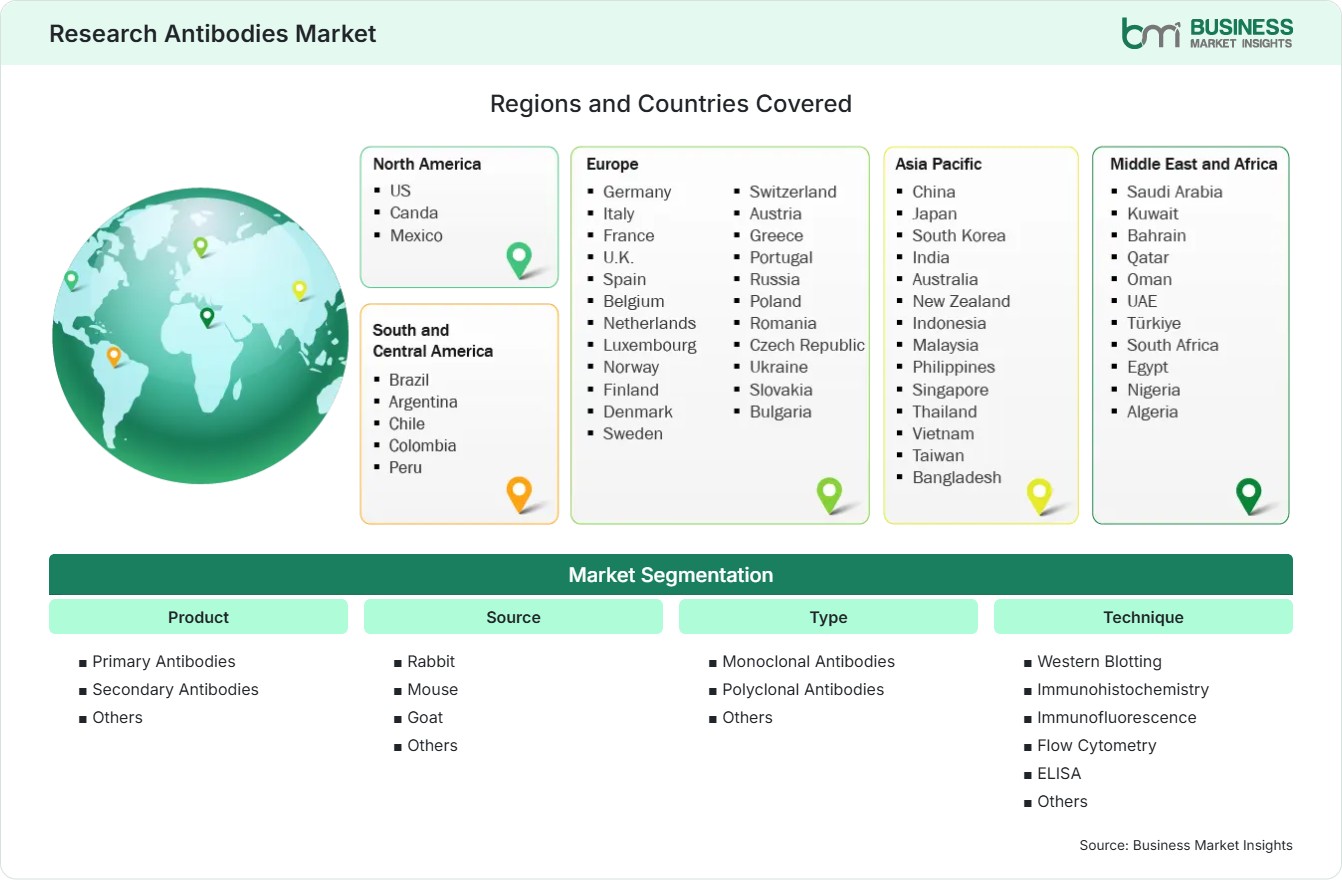
  • Product: Primary Antibodies, Secondary Antibodies, Others
  • Source: Rabbit, Mouse, Goat, Others
  • Type: Monoclonal Antibodies, Polyclonal Antibodies, Others
  • Technique: Western Blotting, Immunohistochemistry, Immunofluorescence, Flow Cytometry, ELISA, Others
  • Application: Infectious Diseases, Immunology, Oncology, Stem Cells, Neurobiology, Others
US$ 4.50 Bn Market size in 2025
US$ 8.80 Bn Market Size by 2033
8.7% CAGR, 2026 - 2033
2026-2033 Forecast Period

AI Overview

Research Antibodies Market Summary

  • North America Region: North America holds a market share of 38%–41% in 2025, growing with a CAGR of 8.0%–9.0% influenced by strong biomedical research infrastructure, pharmaceutical R&D investments, and advanced diagnostic development. The US market shows strong adoption with a CAGR of 8.2%–9.2% during 2026–2033 supported by biotechnology innovation and academic research funding.
  • Fastest Growing Region: Asia Pacific holds a market share of 24%–27% in 2025, growing with a CAGR of 9.5%–10.5% supported by expanding biotechnology sectors, increasing research funding, clinical development activities, and growing investments in molecular biology infrastructure.
  • Leading Segment: Primary Antibodies represent the leading product segment with a share of 45%–48% in 2025, growing with a CAGR of 8.5%–9.5% due to extensive use in immunoassays, molecular research, and disease investigation applications.
  • High Growth Segment: Monoclonal Antibodies represent the high growth type segment with a share of 55%–58% in 2025, growing with a CAGR of 9.0%–10.0% driven by specificity advantages, reproducibility requirements, and increasing adoption in advanced biomedical research.
  • Key Market Opportunity: Growth opportunities are emerging through customized antibody development, artificial intelligence-assisted discovery platforms, antibody validation technologies, and expanding research applications across oncology, immunology, and precision medicine.
  • Major Market Players: Abcam Plc., Merck KGaA, Thermo Fisher Scientific Inc., Cell Signaling Technology Inc., Santa Cruz Biotechnology Inc., PerkinElmer Inc., Becton Dickinson and Company, Bio-Techne Corporation, Proteintech Group Inc., Jackson ImmunoResearch Inc.
Strategic Insights

Research Antibodies Market: Strategic Insights

Research Antibodies Market Strategic Framework
FREE PDF
Request your free sample
Request free sample
Stakeholder View

Key Takeaways

  • The research antibody ecosystem is becoming increasingly integrated, connecting antibody developers, reagent suppliers, research institutions, pharmaceutical companies, and contract research organizations through collaborative innovation models.
  • Growth potential is concentrated in monoclonal antibodies, oncology research, immunology applications, and customized antibody solutions supporting advanced disease investigation and therapeutic discovery programs.
  • Technology advancement is shifting toward recombinant antibodies, artificial intelligence-supported antibody design, improved validation platforms, and automated research workflows enhancing reliability and efficiency.
  • Asia Pacific offers a strong investment opportunity due to expanding biotechnology capabilities, increasing research expenditure, and growing pharmaceutical manufacturing infrastructure in emerging economies.
  • Strategic partnerships and acquisitions are increasing as companies seek to strengthen antibody portfolios, expand application coverage, and access specialized research technologies.
  • Quality validation and reproducibility are becoming critical competitive factors as researchers demand highly specific antibodies with consistent performance across multiple experimental platforms.
Geographic Outlook

Research Antibodies Market Regional Highlights

North America Research Antibodies Market

North America held a market share of 38%–41% in 2025 and is expected to grow at a CAGR of 8.0%–9.0% from 2026–2033. North America remains dominant owing to a well-established biotechnology infrastructure, pharmaceutical R&D activities, and substantial academic expenditures. The Research Antibodies Market Share is driven by widespread use in oncology, immunology, proteomics, and molecular biology research studies.

  • Strong pharmaceutical and biotechnology R&D investments are increasing demand for validated antibody reagents used in drug discovery, biomarker identification, and translational research programs.
  • The presence of leading research universities and medical institutions supports extensive antibody utilization across disease modeling, diagnostics development, and experimental biology applications.
  • Increasing adoption of precision medicine approaches is encouraging researchers to use highly specific antibodies for molecular characterization and targeted therapeutic development.
  • Government and private funding initiatives continue supporting biomedical research activities, strengthening demand for advanced antibody-based research tools.

US Research Antibodies Market

The US represented the largest share within North America, accounting for 33%–36% in 2025 and expanding at a CAGR of 8.2%–9.2% between 2026–2033. The country benefits from strong biotechnology innovation, extensive clinical research networks, and high pharmaceutical investment. The Research Antibodies Market share in the US is strengthened by increasing demand from academic laboratories, biotechnology firms, and contract research organizations.

  • Growth in oncology and immunology research is increasing utilization of antibodies for biomarker discovery, pathway analysis, and therapeutic validation studies.
  • Expanding biotechnology startups and pharmaceutical pipelines are creating demand for specialized antibody products supporting early-stage and advanced research activities.
  • Advanced laboratory technologies including flow cytometry and immunohistochemistry are driving broader adoption of research antibodies across institutions.

Europe Research Antibodies Market

Europe held a market share of 27%–30% in 2025 and is expected to grow at a CAGR of 7.5%–8.5% from 2026–2033. The region benefits from established life science research networks, biotechnology clusters, and increasing investments in biomedical innovation. Germany, the United Kingdom, and France are major markets, with Germany growing at 7.8%–8.8% and the UK expanding at 8.0%–9.0% during the forecast period.

  • European research institutions are increasing antibody adoption through collaborative projects focused on molecular biology, cancer research, and infectious disease studies.
  • Rising biotechnology investments are supporting development of advanced antibody platforms and specialized research reagent portfolios.
  • Regulatory focus on laboratory quality and reproducibility is encouraging demand for validated antibody products with reliable performance.
  • Pharmaceutical companies are expanding discovery programs, increasing requirements for antibody-based screening and analytical research applications.

Asia Pacific Research Antibodies Market

Asia Pacific represented a market share of 24%–27% in 2025 and is anticipated to record the fastest growth with a CAGR of 9.5%–10.5% during 2026–2033. Expansion of biotechnology infrastructure, increasing research expenditure, and rising activities in pharmaceutical development are factors behind regional expansion. The major markets are China, India, and Japan, with India growing at 10.0%–11.0% and China at 9.5%–10.5%.

  • Increasing government support for biotechnology research is accelerating laboratory expansion and adoption of advanced molecular research tools.
  • Growing pharmaceutical manufacturing, capabilities are increasing demand for antibodies used in drug discovery and biological research applications.
  • Rising academic research activities across emerging economies are expanding utilization of immunoassay and protein analysis technologies.
  • International companies are strengthening regional presence through partnerships, distribution networks, and localized research support services.

Rest of World Research Antibodies Market

Rest of World accounted for a Research Antibodies Market share of 7%–9% in 2025, growing at a CAGR of 6.5%–7.5% between 2026–2033. South America, the Middle East, and Africa are witnessing gradual adoption due to improving research infrastructure, healthcare investments, and biotechnology development initiatives. Brazil, Saudi Arabia, and the UAE represent emerging markets, with Brazil growing at 6.8%–7.8% and UAE at 7.0%–8.0%.

  • Increasing investment in healthcare research infrastructure is improving access to advanced laboratory technologies across developing regions.
  • Biotechnology collaborations between international organizations and regional institutions are expanding research capabilities and antibody utilization.
  • Growing infectious disease research programs are creating demand for antibody-based detection and analysis tools.
  • Healthcare modernization initiatives in Middle Eastern countries are supporting adoption of advanced biomedical research solutions.
Global Market Geography
FREE PDF
Request your free sample
Request free sample
Segment Analysis

Research Antibodies Market Segmentation

Product

The product segment accounted for a major portion of the Research Antibodies Market, with a market share of 62%–65% in 2025 and a CAGR of 8.4%–9.2% between 2026–2033. Increasing demand for highly-specific detection kits, advancements in proteomics, and increasing use in molecular biology are aiding the growth in adoption. Innovation within the product involves development of specificity, validation, and platform compatibility of antibodies.

  • Primary Antibodies: Primary antibodies dominate research workflows by enabling direct target detection in applications including immunohistochemistry, western blotting, and molecular analysis studies.
  • Secondary Antibodies: Secondary antibodies support signal amplification and detection accuracy, with increasing use in fluorescence-based techniques and advanced imaging research applications.

Source

The source segment represents a critical factor influencing antibody performance, with a market share of 58%–61% in 2025 and a CAGR of 8.2%–9.0% between 2026–2033. Researchers increasingly prioritize source-specific characteristics such as affinity, specificity, and reproducibility. The Research Antibodies Market scope is expanding through improved antibody engineering, animal model research, and enhanced validation methodologies across laboratories.

  • Rabbit: Rabbit-derived antibodies are widely preferred due to high affinity, broad recognition capability, and suitability for diverse biomedical research applications.
  • Mouse: Mouse antibodies remain widely adopted because of established hybridoma technology, extensive validation data, and compatibility with routine laboratory techniques.
  • Goat: Goat antibodies are utilized in specialized applications requiring unique binding properties and compatibility with secondary antibody detection systems.

Type

The type segment influences product selection based on specificity, reproducibility, and research requirements, accounting for a market share of 70%–73% in 2025 with a CAGR of 8.5%–9.3% through 2026–2033. Increasing demand for reliable experimental outcomes and targeted molecular analysis supports adoption of advanced antibody formats.

  • Monoclonal Antibodies: Monoclonal antibodies are increasingly preferred for their high specificity, consistent performance, and application across complex biological research studies.
  • Polyclonal Antibodies: Polyclonal antibodies remain important due to strong sensitivity, broad antigen recognition, and suitability for multiple experimental environments.

Technique

The technique segment is driven by expanding applications across protein analysis, cellular research, and disease investigation, representing a market share of 64%–67% in 2025 and a CAGR of 8.7%–9.5% between 2026–2033. Researchers increasingly adopt advanced analytical methods requiring dependable antibody reagents and improved assay compatibility.

  • Western Blotting: Western blotting continues as a widely used technique for protein expression analysis, validation studies, and molecular pathway investigations.
  • Immunohistochemistry (IHC): Immunohistochemistry supports tissue-based analysis in oncology and pathology research through visualization of specific biological markers.
  • Immunofluorescence: Immunofluorescence adoption is increasing due to enhanced imaging capabilities and applications in cellular localization studies.
  • Flow Cytometry: Flow cytometry benefits from antibody-based detection for immune profiling, cell analysis, and multiparameter biological research.
  • ELISA: ELISA remains widely used for quantitative analysis of proteins, biomarkers, and immune responses across research applications.

Application

The application segment accounted for a significant Research Antibodies Market share, supported by increasing disease research activities and expanding biological investigations. The segment held 76%–79% share in 2025 and is projected to grow at a CAGR of 8.6%–9.4% during 2026–2033. Rising precision medicine initiatives and therapeutic discovery programs continue influencing application demand.

  • Infectious Diseases: Antibody research supports pathogen identification, immune response studies, and development of advanced infectious disease investigation methods.
  • Immunology: Immunology applications utilize antibodies for immune pathway analysis, cellular studies, and investigation of inflammatory mechanisms.
  • Oncology: Oncology research increasingly depends on antibodies for biomarker discovery, cancer profiling, and targeted therapy development.
  • Stem Cells: Stem cell research uses antibodies for cell characterization, differentiation studies, and regenerative medicine investigations.
  • Neurobiology: Neurobiology applications employ antibodies for studying neuronal markers, neurological pathways, and disease mechanisms.

End User

The end-user segment reflects increasing adoption across commercial and academic research environments, accounting for a market share of 68%–71% in 2025 with a CAGR of 8.3%–9.1% between 2026–2033. Expanding biotechnology investments, research collaborations, and outsourcing activities are supporting broader antibody utilization.

  • Pharmaceutical & Biotechnology Companies: These organizations represent major users due to extensive drug discovery, biomarker research, and therapeutic development activities.
  • Academic & Research Institutes: Academic institutions drive demand through fundamental biology studies, disease research programs, and laboratory innovation initiatives.
  • CROs/CDMOs: CROs and CDMOs increasingly adopt antibodies to support outsourced research, analytical testing, and pharmaceutical development programs.
Market Forces

Research Antibodies Market Dynamics

Key Market Drivers

Growth in Life Science Research

Expanding life science research activities are accelerating demand for validated antibody reagents across molecular biology, immunology, and disease research applications. Global research institutions are increasing investments in genomics, proteomics, and cellular analysis, creating broader requirements for high-performance antibodies. Market growth is supported by rising laboratory automation, advanced assay development, and increasing adoption of multiomics approaches. The Research Antibodies Market trends indicate a shift toward application-specific antibodies with enhanced reproducibility and improved validation standards.

Rising Biopharma Investments

Increasing investment from pharmaceutical and biotechnology companies is strengthening antibody demand for drug discovery, biomarker identification, and therapeutic research. Growing biologics pipelines require reliable analytical tools for target validation and mechanism-of-action studies. Expanding funding for cancer immunology, rare disease research, and personalized therapies is improving adoption across commercial laboratories. These investments are encouraging suppliers to develop specialized antibody portfolios with improved specificity, quality control processes, and compatibility with advanced research platforms.

Expansion of Precision Medicine

The expansion of precision medicine approaches is driving demand for antibodies capable of identifying specific molecular targets and disease markers. Researchers increasingly require accurate detection tools for patient stratification, biomarker analysis, and targeted treatment development. Advances in molecular diagnostics and personalized healthcare research are supporting antibody applications across oncology, immunology, and neurological studies. Growing collaborations between academic institutions and biotechnology companies are further increasing demand for validated antibodies in translational research programs.

Key Market Opportunities

Expansion of Life Science Research

The expansion of global life science research infrastructure creates opportunities for antibody suppliers to address increasing laboratory requirements across emerging and developed markets. The Research Antibodies Market Forecasts indicate continued opportunities from biotechnology expansion, advanced disease research programs, and increasing adoption of high-throughput analytical methods. Manufacturers investing in customized antibody development, improved validation platforms, and digital research support tools can strengthen competitive positioning. Growth in academic collaborations and government-funded research initiatives further supports long-term demand for specialized antibody solutions.

Growth of Antibody-Based Therapies

The growth of antibody-based therapies is creating opportunities for research antibody providers to support discovery and validation activities. Increasing development of monoclonal antibody therapeutics, antibody-drug conjugates, and immune-based treatments requires reliable research reagents during early development phases. Companies focusing on high-quality antibodies for target screening, protein characterization, and pathway analysis can benefit from expanding biologics pipelines. Rising investments in oncology and autoimmune disease therapies are expected to increase demand for advanced research antibody technologies.

Development of Advanced Research Tools

Development of advanced research tools is creating new opportunities through improved antibody engineering, multiplex detection, and automated laboratory workflows. Researchers are seeking solutions that provide higher sensitivity, consistency, and compatibility with next-generation analytical platforms. Innovations in recombinant antibodies and digital assay technologies are supporting improved experimental accuracy. Suppliers that integrate artificial intelligence-based discovery tools, enhanced validation databases, and application-specific solutions can capture emerging demand from pharmaceutical, biotechnology, and academic research users.

Market Restraints and Challenges

High Research Costs

Factor: Complex antibody generation processes, including antigen preparation, screening, and validation, require substantial financial investment and specialized expertise.

Impact: Smaller research organizations may face limitations in accessing premium validated products, affecting adoption rates and slowing experimental workflows. Additional costs associated with quality control testing and advanced characterization methods can increase overall research expenditure. Suppliers must balance innovation investments with competitive pricing strategies to maintain accessibility across diverse end users.

Complex Validation Processes

Factor: Variability in antibody performance across applications requires extensive testing, documentation, and reproducibility assessments.

Impact: Longer validation timelines can delay research activities and increase laboratory costs, particularly for specialized applications. Researchers increasingly demand transparent validation data and application-specific performance information before adoption. Companies that improve quality assurance processes, standardize testing protocols, and provide comprehensive performance documentation can reduce these barriers while strengthening customer confidence in research antibody solutions.

Company Analysis

Competitive Landscape

The Research Antibodies Market analysis highlights a competitive environment shaped by antibody portfolio expansion, validation capabilities, technological innovation, and strategic investments in life science research tools. Leading companies are focusing on developing application-specific antibodies, improving quality control standards, and expanding distribution networks to support pharmaceutical, academic, and biotechnology research requirements.

Company Name

Overview

Products and Services relevant to this market

Abcam Plc.

Global provider of research reagents serving academic, pharmaceutical, and biotechnology laboratories worldwide.

Primary and secondary antibodies, recombinant antibodies, assay kits, and validated research reagents.

Merck KGaA

Science and technology company offering solutions for life science research applications.

Antibodies, immunoassays, molecular biology reagents, and laboratory research solutions.

Thermo Fisher Scientific Inc.

Global life sciences company supporting research and biotechnology innovation.

Antibodies, protein analysis products, immunoassays, and advanced laboratory tools.

Cell Signaling Technology Inc.

Specialist provider focused on high-quality antibodies and cellular signaling research.

Monoclonal antibodies, phospho-specific antibodies, and validated signaling pathway products.

Santa Cruz Biotechnology Inc.

Research reagent supplier serving biomedical laboratories and scientific institutions.

Primary antibodies, secondary antibodies, proteins, and immunology research products.

PerkinElmer Inc.

Technology company providing solutions for life science and diagnostic research.

Antibodies, assay technologies, imaging solutions, and research workflow platforms.

Becton Dickinson and Company

Global medical technology company supporting healthcare and biological research.

Flow cytometry antibodies, cell analysis reagents, and immunology research solutions.

Bio-Techne Corporation

Life science company developing innovative research and diagnostic tools.

Antibodies, proteins, immunoassays, and specialized biotechnology reagents.

Proteintech Group Inc.

Research antibody manufacturer specializing in validated biological reagents.

Primary antibodies, recombinant antibodies, proteins, and immunoassay products.

Jackson ImmunoResearch Inc.

Specialized supplier focused on immunological research reagents and detection tools.

Secondary antibodies, conjugated antibodies, and fluorescence-based research products.

Industry Activity

Recent Developments

June 2026

Abcam plc (a Danaher company) announced a strategic partnership with EpiCypher to co-develop and validate antibodies and ChIC/CUT&RUN reagents for epigenomics research. The collaboration combines Abcam's validated research antibodies with EpiCypher's chromatin profiling technology to improve reproducible epigenetics research workflows.

September 2025

Bio-Techne Corporation announced new spatial biology solutions that bridge translational research and clinical applications, including expanded RNAscope and COMET platforms and new multiplex research assays that support biomarker discovery alongside antibody-based research workflows.

July 2025

Bio-Techne Corporation announced a strategic partnership with Spear Bio to combine Bio-Techne's antibody portfolio with Spear Bio's ultrasensitive immunoassay technology, enabling highly sensitive biomarker detection for life science research and therapeutic development.

April 2025

Abcam plc announced that it received the 2025 CiteAb Award for "Antibody Supplier Succeeding in Genetics Research," recognizing the company's validated research antibody portfolio and its contribution to genetics and spatial biology research.

Trust & Transparency

Research Methodology

The market analysis combines proprietary research with secondary data from government agencies, company disclosures, regulatory filings, industry databases and expert interviews. Market estimates are validated through data triangulation, cross-market benchmarking and analyst review.

View Full Research Methodology

Questions Answered

Frequently Asked Questions

How are suppliers improving antibody quality?

Suppliers are improving quality through recombinant technologies, enhanced validation protocols, application-specific testing, and expanded performance documentation to improve reliability for complex research applications.

What role does the Research Antibodies Market Report provide for stakeholders?

The Research Antibodies Report provides insights into market dynamics, competitive positioning, segmentation trends, growth opportunities, and factors influencing research reagent adoption across global markets.

Which applications are driving future antibody research demand?

Oncology, immunology, infectious disease research, and biomarker discovery applications are expected to remain important areas due to increasing therapeutic development and disease investigation activities.

How are recombinant antibodies changing research workflows?

Recombinant antibodies improve consistency, scalability, and reproducibility compared with traditional antibody production methods, supporting standardized research outcomes across laboratories and large-scale scientific studies.

What factors are influencing the demand for the research antibodies market growth?

Demand is driven by increased biomedical research activities, the expansion of biotechnology pipelines, rising precision medicine initiatives, and the growing use of advanced molecular analysis techniques across pharmaceutical and academic laboratories.

Access the Full Research Antibodies Market Report

Get segment-level forecasts, regional estimates, competitive benchmarking, company profiles and downloadable Excel datasets.

Access the full Research Antibodies Market Report
350 pages PDF & Excel | 2026-08-04